 Skip to content

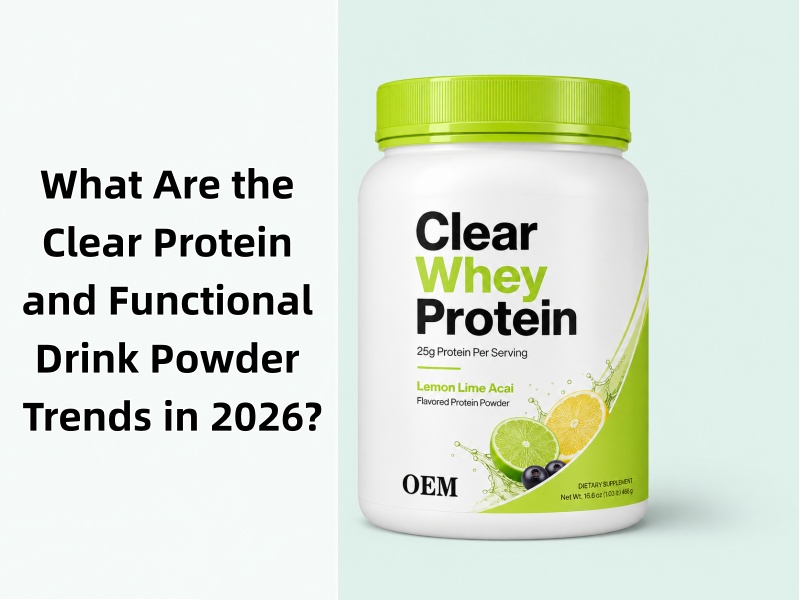
Protein used to come with a familiar set of expectations: a shaker bottle, a creamy texture, chocolate or vanilla flavor, and a fairly obvious place in a gym routine. In 2026, that picture is changing. Clear whey powders, protein hydration mixes, protein-plus-fiber formulas, creatine combinations, and other multifunctional drink powders are moving protein into occasions where a thick shake feels out of place. Consumers may want protein after training, but they may also want it during a commute, in an afternoon water bottle, while traveling, or as part of a lighter daily nutrition routine. The result is not simply another protein trend. It is a broader shift in how nutritional functions are being packaged into drinks that feel easier, lighter, and more familiar to use.
In 2026, clear protein and functional drink powders are moving toward lighter, water-based nutrition that combines meaningful protein with hydration, fiber, electrolytes, creatine, gut-health support, or other targeted benefits. Growth is being supported by demand for more protein, convenient ready-to-mix formats, lower-sugar products, fruit-forward flavors, and multifunctional formulas that fit everyday routines more naturally than traditional creamy shakes or meal-like beverages.
The most interesting part of this market is what happens after the headline. A clear drink may look simple in a social post, yet the commercial product behind it has to solve protein solubility, acid balance, mineral interactions, foam, flavor masking, serving weight, packaging, moisture protection, batch consistency, and market-specific documentation. That is where a trend becomes a real product-development decision. The rest of this article looks at the 2026 signals that matter, the formulations that are gaining traction, and the practical questions brands need to answer before a promising concept reaches bulk production.
What Is Driving Clear Protein in 2026?
Clear protein is growing because protein is moving beyond the traditional creamy shake. Consumers increasingly want lighter drinks that fit hydration, workdays, travel, exercise, weight-management routines, and everyday wellness. Clear whey and similar technologies make protein feel closer to flavored water or juice, creating additional drinking occasions without giving up the nutritional role that made protein important in the first place.
Lighter Everyday Protein
The biggest advantage of clear protein is not that the drink looks transparent. It is that the product feels different to consume. A thick dairy-style shake can be useful after training or as a substantial snack, but it is less natural when someone simply wants a cold, refreshing drink in the afternoon. Clear whey changes that sensory expectation by using highly purified whey protein systems that can perform in acidic, water-based beverages. FoodNavigator described clear whey in 2026 as a route to juice-like, high-protein drinks rather than the milky mouthfeel associated with conventional whey products. That difference gives protein access to occasions that once belonged mainly to flavored water, sports drinks, iced tea, or juice-style beverages. [Source: FoodNavigator, June 2026]
The demand backdrop is also much wider than the gym. Innova Market Insights reports that nearly 60% of global food and beverage consumers are actively incorporating more protein into their diets, while its 2026 protein research says 80% pay attention to protein intake. Those figures point to a mainstream nutrition behavior rather than a specialist sports trend. The practical implication for product teams is simple: a clear protein launch should not be designed only around transparency. It should be designed around an occasion where a conventional shake is inconvenient, too heavy, too sweet, or simply not what the consumer wants at that moment. [Source: Innova Market Insights, 2026]
Protein Meets Hydration
Hydration is becoming one of the strongest bridges between sports nutrition and everyday wellness. FoodNavigator cites Mintel data indicating that 39% of U.S. consumers were paying more attention to hydration than they had a year earlier. Powdered electrolyte packs helped normalize the idea that plain water can become a functional drink in seconds, and that behavior creates a natural opening for protein. Instead of asking someone to add another supplement step, a brand can attach protein to something they already do several times a day: drink water. [Source: FoodNavigator, 2026]
Propel Clear Protein shows how far this idea has moved into mainstream product development. Launched in May 2026, one ready-to-mix packet provides 20 g of whey protein, 3 g of fiber, electrolytes, zero sugar, and 90 calories, with preparation in 12 to 14 ounces of water. The product matters less as a template to copy than as proof of concept: protein, digestion, and hydration can now be presented as one routine rather than three separate products. A successful version still needs a clear hierarchy, however. The strongest formulas usually have one primary job and one or two supporting functions, rather than a crowded label trying to promise everything at once. [Source: PepsiCo, May 2026]
Protein Beyond Sports Nutrition
Sports nutrition remains an important entry point, but clear protein is widening the audience. Innova’s 2026 work links protein with sports performance, weight management, healthy aging, energy, and general wellness. This matters because different audiences define a good protein drink differently. A strength-training consumer may prioritize a higher protein dose and familiar performance ingredients. An office worker may care more about a light flavor, low calories, and easy afternoon drinking. An older consumer may value convenient protein intake without the heaviness of a large shake, while a traveler may care most about portability and simple preparation. [Source: Innova Market Insights, 2026]
Once protein moves outside the gym, it also enters a tougher sensory competition. The product is no longer judged only against another tub of whey. It may be compared with flavored water, electrolyte packets, functional soda, coffee, tea, or juice. That means taste, aroma, appearance, foam, and convenience become commercial performance factors rather than finishing touches. A technically impressive formula can still fail if consumers need to wait five minutes for foam to settle or if the final drink feels harsh and medicinal. In a crowded beverage market, nutritional value earns attention, but the drinking experience earns the second purchase.
GLP-1 and Nutrient-Dense Formats
GLP-1 use is also changing the nutrition conversation, although supplement brands need to handle this area carefully and avoid medical positioning. PwC reported in June 2026 that 21% of U.S. households in its data included a current GLP-1 user, up from 9% in January 2025. Its survey also found grocery spending shifting away from categories such as snacks and sugary drinks and toward areas including protein and supplements. These findings do not make clear protein a GLP-1 treatment, but they do show why convenient protein, fiber, and nutrient-dense formats are attracting more attention from product developers. [Source: PwC, June 2026]
The more durable lesson is broader than any one medication trend. Consumers are looking for nutrition that does more without feeling harder to use. That can favor smaller-volume protein servings, protein-plus-fiber powders, single-serve sticks, or lighter beverages that fit a reduced or more structured eating routine. Brands should still define the product through normal nutritional use cases such as active wellness, daily protein, hydration, or convenient nutrition, and any market-facing claims should be reviewed for the target country. A product built around a real everyday need is more likely to remain relevant after a temporary marketing phrase loses momentum.
Which Functional Drink Powder Trends Matter Most?
The most important functional drink powder trends in 2026 are benefit stacking, hydration, protein, creatine, gut health, fiber, lower-sugar formulation, and easier daily routines. The strongest products usually do not contain the greatest number of ingredients. They combine two or three benefits that naturally belong in the same occasion and deliver them in a flavor and format consumers can understand immediately.
Benefit Stacking
Functional powders are shifting from single-purpose formulas toward combinations that compress routines. Protein plus electrolytes makes sense around active hydration. Protein plus fiber can fit everyday nutrition. Protein plus creatine fits performance. Magnesium plus a calming ingredient can fit an evening drink. These combinations are easier to understand because the ingredients support a recognizable moment rather than competing for attention on the label. FoodNavigator estimates that the functional beverage market could grow at a 7.9% CAGR from 2026 to 2031, from about $164 billion to $239 billion, which helps explain the volume of new concepts now competing for shelf space and consumer attention. [Source: FoodNavigator, April 2026]
That growth also raises the cost of being vague. An overloaded powder containing protein, creatine, collagen, greens, probiotics, caffeine, magnesium, and a long vitamin list may look impressive in a formulation spreadsheet, but every added ingredient changes serving weight, flavor, solubility, cost, stability, and claim complexity. A practical stack normally has a clear order: one primary reason to buy, one supporting benefit, and one obvious occasion. This approach is easier to communicate, easier to sample, and usually easier to manufacture consistently. A shorter functional story can be commercially stronger than a longer ingredient panel when consumers instantly understand what the product is for.
Hydration, Protein and Creatine

The 2026 launch landscape shows how quickly previously separate sports and wellness routines are converging. Propel combines protein, fiber, and electrolytes in one powder. USANA launched a clear protein and creatine mix containing 10 g of clear whey protein isolate, 5 g of micronized creatine monohydrate, and more than 600 mg of electrolytes in a 50-calorie serving. AdvoCare entered the clear-protein space with a 20 g protein powder using whey protein isolate and collagen peptides. These products are not identical, and that is exactly the point: the market is experimenting with different ways to reduce the number of products consumers need to prepare. [Sources: PepsiCo, USANA, AdvoCare, 2026]
| 2026 Product Example | Protein per Serving | Other Functions | Calories / Sugar | Format |
| Propel Clear Protein | 20 g | 3 g fiber + electrolytes | 90 kcal / 0 g sugar | RTM packet |
| USANA Clear Protein + Creatine Mix | 10 g | 5 g creatine + 600+ mg electrolytes | 50 kcal / no added sugar | RTM powder / packets |
| AdvoCare Clear Protein | 20 g | 16 g WPI + 4 g collagen peptides | 90 kcal / 0 g sugar | Powder canister |
The important commercial lesson is routine compression, not ingredient copying. Consumers who previously carried separate protein, creatine, and hydration products may welcome one well-designed drink, but the combined serving still has to taste good and fit the package. A 5 g creatine dose plus 20 g or more protein can quickly create a larger powder serving than a small stick pack comfortably holds. Product architecture therefore matters from the first brief. The desired use case, protein target, active levels, water volume, and package format should be developed together rather than decided one after another.
Fiber and Gut Health
Gut health is one of the strongest adjacent territories for functional powders. Innova ranks “Gut Health Hub” as its second global food and beverage trend for 2026 and reports that 59% of consumers believe gut health is very important for the whole body. Fiber is also gaining visibility as consumers become more aware of dietary gaps, which creates a natural opening for prebiotic fibers and other gut-oriented ingredients in drink powders. The opportunity is especially relevant for products designed for everyday use rather than hard-core performance positioning. [Source: Innova Market Insights, 2026]
The technical challenge is that fiber can change the drinking experience quickly. Depending on the ingredient, it may add body, sweetness, cloudiness, water demand, or digestive tolerance considerations. In a clear-protein concept, those effects can work against the very lightness consumers expect. The 3 g of fiber used in Propel Clear Protein is a useful example of a supporting level rather than an attempt to turn one packet into a high-dose fiber supplement. Product developers should decide whether fiber is the hero benefit, a meaningful secondary benefit, or simply part of nutritional support. That decision should determine the ingredient type and amount before flavor development begins.
Low Sugar and Ingredient Transparency
Low-sugar and zero-sugar positioning is becoming close to a baseline expectation for many clear protein and hydration concepts because the format is supposed to feel lighter than a traditional shake. Propel and AdvoCare both launched clear protein products with zero sugar in 2026, while USANA positioned its clear protein plus creatine mix with no added sugar. This does not make sugar-free formulation automatically easy. Clear whey systems are often acidic, electrolytes can add salty or mineral notes, and high-intensity sweeteners may contribute lingering aftertaste. Removing sugar shifts more of the sensory burden onto flavor and sweetener design. [Sources: PepsiCo, USANA, AdvoCare, 2026]
Ingredient transparency is rising at the same time. Innova reports that 60% of global consumers say they always look at ingredient lists when purchasing products. That does not mean the best functional powder has the shortest possible label. A stable, pleasant clear protein may legitimately require protein, acids, flavor systems, sweeteners, minerals, and other supporting ingredients. The stronger approach is purpose-driven formulation: every major ingredient should have a clear reason for being there, and the consumer should be able to understand the core product promise. A short label attached to a harsh, foamy drink is not a quality advantage if people do not want a second serving. [Source: Innova Market Insights, 2026]
Which Protein Sources and Formats Are Growing?
Clear whey protein isolate currently has the strongest position in high-protein clear beverages, while newer clear pea and alternative protein technologies are expanding formulation choices. At the same time, ready-to-mix powders, stick packs, sachets, and portable single-serve formats are growing because they combine portion control, convenience, easier storage, and lower shipping weight than ready-to-drink products that already contain water overall.
Clear Whey vs. Standard Whey
Clear whey and standard whey may come from the same dairy supply chain, but they are designed for different beverage experiences. Conventional whey concentrates and many standard isolates work well in creamy shakes where opacity and dairy-style body are acceptable. Clear whey typically relies on highly purified whey protein isolate or specially processed systems that minimize particles and components associated with haze. FoodNavigator noted in 2026 that clear whey can create juice-like drinks rather than the thick, milky appearance expected from traditional whey. This difference is central to the category because a clear drink invites fruit-forward flavor and hydration positioning in ways that a creamy shake does not. [Source: FoodNavigator, June 2026]
The ingredient choice also affects economics. FoodNavigator reported June 2026 benchmark figures of roughly EUR 31,750 per metric ton for WPI and EUR 27,315 for WPC80 at that point in the market, a gap of about 16%. Those figures are market-specific and should not be treated as permanent quotations, but they show why a clear-whey concept should be built with target retail price and margin in mind. A 20 g protein drink, a 10 g everyday hydration mix, and a premium single-serve stick all place different demands on ingredient cost. Protein dose should therefore be a commercial decision as well as a nutritional one. [Source: FoodNavigator, June 2026]
Clear Plant Protein
Plant-based clear protein is one of the more interesting technical white spaces because it could bring the clear-beverage experience to consumers avoiding dairy. Historically, plant proteins have made that difficult. Pea and other plant sources can bring earthy notes, astringency, larger particles, haze, sediment, or foam, all of which are more obvious in a product that is supposed to look crisp and water-like. That is one reason clear whey currently has the stronger market position: it combines a familiar amino-acid profile with a more mature route to high-protein, transparent beverages.
Ingredient technology is improving, however. Prinova reported ahead of IFT FIRST 2026 that the number of high-protein drink launches grew 122% between 2020 and 2024 and highlighted newer clear pea protein technology for RTD and RTM products. The company notes a cleaner taste profile at protein levels of 15 g or less, reduced foaming, and favorable cost-in-use compared with some alternatives. That “15 g or less” point is useful because it reminds product teams that plant-based clear drinks do not have to imitate a 20 to 25 g whey shake. A moderate protein target may create a better balance of plant-based positioning, clarity, flavor, serving size, and cost. [Source: Prinova, June 2026]
RTM Powders and Stick Packs

Ready-to-mix powder fits functional nutrition unusually well because consumers already expect to add water. Shipping water is avoided, serving size can be controlled precisely, and one formulation can be adapted to tubs, pouches, sachets, or individual sticks depending on the use case. A tub suits larger servings and home use. A stick pack suits travel, hydration, office drawers, gym bags, and subscription routines. Sachets offer flexibility for samples and medium single servings, while stand-up pouches can support refill or value positioning. The format should be chosen around the serving rather than around packaging fashion.
Powder behavior determines whether that choice works at scale. Zoxizo’s documented manufacturing scope includes protein powders, electrolyte powders, and functional drink powders, with powder operations that cover blending, stick-pack filling, pouch filling, jar filling, weight checking, sealing, and batch coding. Its internal production guidance highlights blend uniformity, moisture control, powder flow, fill-weight consistency, and seal quality as practical checkpoints for powder products. These capabilities are relevant to functional drink development, although a specific clear-protein formula should still be validated through project-level sampling rather than assumed from general protein-powder capability.
Fruit-Forward Flavors
Clear protein is changing the flavor vocabulary of protein supplements. Chocolate, vanilla, cookie, and caramel remain logical in creamy shakes, but a water-based clear system naturally opens the door to citrus, berries, watermelon, peach, apple, tropical fruit, and more adult fruit-botanical combinations. Propel entered the market with Peach Ginger, Apple Pear, and Watermelon, while AdvoCare launched Blue Razz and Dragon Fruit. USANA’s clear protein plus creatine mix uses Twisted Citrus and Green Apple. These launches show a category moving closer to hydration and flavored-water behavior than to dessert-style sports nutrition. [Sources: PepsiCo, USANA, AdvoCare, 2026]
Flavor novelty still has to serve the formula. Acidity may help citrus and berry profiles feel bright while making some soft, creamy flavors difficult. Electrolytes can add saltiness or metallic notes. Protein ingredients can contribute bitterness, sulfur-like notes, or astringency, and high-intensity sweeteners may leave a long finish. A useful flavor brief therefore includes water volume, sweetness intensity, acidity, expected color, aftertaste tolerance, and the consumer occasion. The final product should also be tested under realistic home mixing conditions. A flavor that only works at laboratory-perfect dilution is likely to create complaints once consumers start using different bottle sizes and water temperatures.
How Do Brands Solve Clear Protein Formulation Challenges?
Clear protein formulation depends on controlling protein source, pH, mineral load, solubility, foam, acidity, flavor, and stability as one system. The most common development mistake is optimizing each ingredient separately. A protein may appear clear in plain water but become hazy after electrolytes are added, while the low pH that helps clarity may also increase sourness, astringency, or unwanted off-flavor in the final drink.
Clarity and Solubility
A powder dissolving quickly does not automatically mean the final beverage is stable or truly clear. Protein molecules can aggregate and scatter light, creating haze or sediment that may appear immediately, after standing, or later during storage. The protein source, concentration, acid system, minerals, processing, and water quality can all affect what the consumer sees in the bottle. For RTM products, this becomes even more variable because consumers mix with different water temperatures and shake with different levels of force. Development therefore needs to define what “clear enough” actually means rather than relying on a subjective first impression.
The practical targets should include protein per serving, final dilution volume, pH range, expected appearance, dissolution time, foam behavior, and acceptable sediment after standing. Clear whey generally performs best in acidic systems, but the final formula must be evaluated as a complete drink. The same protein can behave differently after flavor, sweetener, minerals, or fiber are added. This is also where supplier documentation matters. A generic specification for whey protein isolate does not guarantee performance in a clear acidic beverage, so ingredient selection should consider the intended application rather than protein percentage alone.
pH and Mineral Load
Research shows why pH has such a strong influence on clear whey systems. A Journal of Food Science study on heat-treated whey protein beverages found that samples at pH 3.6 and below were essentially clear across the tested ingredient conditions. At pH 3.8 and above, ingredient selection became much more important, and at pH 4.0 the addition of salts at both 10 and 50 mM significantly increased turbidity compared with the whey-protein control. These are experimental findings rather than a universal commercial recipe, but they illustrate the interaction between acidity and mineral load. [Source: LaClair & Etzel, Journal of Food Science, 2010]
| Formulation Variable | Published Reference Point | Practical Development Meaning |
| Clear acidic whey zone | pH 3.6 and below was essentially clear in the cited heat-treated model | Low pH can support clarity, but sensory impact still needs testing |
| Salt sensitivity | 10 and 50 mM salts increased turbidity at pH 4.0 in the cited study | Electrolytes should be evaluated inside the full protein system |
| Commercial acidic WPI reference | pH 3.3 is commonly used in clear acidic WPI sensory research | Acidity can expose off-notes as well as support solubility |
| Consumer preparation | Often 8-14 oz water in recent RTM launches | Dilution volume changes flavor intensity, acidity, and perceived body |
This interaction is particularly important for protein-plus-electrolyte products. Sodium, potassium, magnesium, and calcium are not simply marketing additions; they can alter ionic strength, flavor, and physical stability. The sensible development sequence is iterative: establish the protein system, add the required minerals, rebalance pH and flavor, and then check clarity again. Brands should approve the complete beverage, not approve protein, electrolyte, and flavor components in isolation and hope they cooperate during bulk production.
Foam and Mouthfeel
Foam is one of the most visible ways a technically acceptable clear-protein powder can feel inconvenient. Consumers often shake RTM products vigorously, and some protein systems can produce a thick foam cap that takes several minutes to settle. That is especially frustrating in a product positioned around quick hydration or on-the-go use. Foam behavior depends on protein source, instantization, acid system, sweeteners, flavors, minerals, and mixing energy, so it should be measured during development rather than dismissed as a minor cosmetic issue.
A useful bench test can record foam height immediately after shaking and again after one, three, and five minutes, while also observing whether the drink can be consumed comfortably before the foam fully disappears. Mouthfeel requires the same discipline. Clear protein should generally feel lighter than a creamy shake, but it should not feel aggressively thin, drying, or harsh. Prinova’s emphasis on reduced foaming in newer clear pea systems shows how important this property has become to ingredient selection. Testing should also include ordinary consumer bottles rather than only laboratory mixers, because real use conditions often reveal problems earlier than controlled bench preparation.
Taste and Stability
Taste is where many technically impressive formulas lose commercial value. Clear acidic whey can reveal sensory notes that are less noticeable at neutral pH. A 2025 Journal of Food Science study examined “soapy” off-flavor in clear acidic WPI beverages and found that the effect appeared at pH 3.3 but was not detected in the same way at neutral pH. The study linked the sensory effect to low concentrations of specific medium-chain fatty acids associated with WPI, showing that acidification can change not only solubility but also how protein flavor is perceived. [Source: Journal of Food Science, 2025]
The challenge becomes harder when more functions are added. Electrolytes may contribute saltiness or bitterness, creatine increases solids, fiber can change body, botanicals may add earthiness, and acids used for clarity raise sourness. This is why a formula should be treated as an optimization problem rather than an ingredient checklist. Zoxizo’s documented powder-development framework considers functional purpose, active level, market requirements, dosage-form fit, taste, stability, cost, production feasibility, and label positioning together. For powders specifically, its development checks include flavor, solubility, powder fineness, moisture uptake, caking, sweetness, color, and cold- or hot-water performance. Those are the kinds of practical details that decide whether a promising sample remains pleasant after storage and repeat production.
Which Product Concepts Have the Most Potential?
The strongest 2026 concepts combine a growing nutritional need with an obvious drinking occasion. Protein plus hydration, protein plus fiber, and protein plus creatine have clear commercial logic, while daily wellness powders create room beyond sports nutrition. The best opportunity is rarely the formula with the most fashionable ingredients. It is the one consumers can understand, enjoy, and use repeatedly without adding friction to their routine.
Protein + Hydration
Protein hydration may be the clearest bridge between established demand and new beverage behavior. Both needs are already understood, so the brand does not need to explain what protein is or convince people to drink water. The development job is to combine the two without making either side feel compromised. A training-focused formula might use a more substantial electrolyte system and a higher protein dose. An everyday version might use moderate minerals, lighter protein, fewer calories, and a crisp fruit flavor. A travel concept may prioritize compact single-serve packaging and fast dissolution over maximum protein content.
The use case should decide which function leads. If the product is primarily protein, hydration can support it. If it is primarily hydration, a moderate protein dose may be more appropriate than forcing a traditional 20- to 25-g shake target into a small packet. This distinction helps keep serving size, taste, and cost under control. It also makes the product easier to position on a website or shelf. “Clear protein for active hydration” is easier to understand than a long list of unrelated actives. When the occasion is obvious, the formulation team can make better decisions about mineral levels, water volume, flavor intensity, and package size.
Protein + Fiber

Protein and fiber sit at the intersection of two highly visible 2026 nutrition conversations. Innova places protein and gut health at the top of its trend framework, which makes protein-plus-fiber a logical platform for everyday functional nutrition. The concept can fit consumers who want a lighter morning supplement, an afternoon nutrition drink, or a more structured daily routine. It also offers a different story from conventional sports protein without forcing the brand into more complex herbal or stimulant positioning. [Source: Innova Market Insights, 2026]
The formulation should still be conservative enough to remain enjoyable. Some fibers increase viscosity, some change sweetness, and some are more likely to affect clarity or gastrointestinal tolerance. A brand should decide whether fiber is the primary benefit, a meaningful secondary benefit, or a supporting nutritional detail. Those are three different briefs. Propel’s use of 3 g fiber alongside 20 g protein provides one current example of balanced stacking rather than maximum loading. The better target is not the largest number that fits on a Supplement Facts panel; it is the amount that supports the product promise without turning a refreshing drink into a thick or difficult serving. [Source: PepsiCo, 2026]
Protein + Creatine
Protein plus creatine has strong potential because creatine is moving further into mainstream active nutrition while remaining closely aligned with performance. Historically, many consumers bought protein and creatine separately. A combined powder removes one preparation step and gives the product a straightforward message. USANA’s 2026 launch demonstrates this approach with 10 g clear whey protein isolate, 5 g micronized creatine monohydrate, and more than 600 mg electrolytes in a 50-calorie serving. The product mixes with 8 to 10 ounces of water and is sold in both multi-serving bags and single-serve packets. [Source: USANA, August 2026]
The design trade-off is worth noticing. The formula does not attempt to deliver 25 or 30 g protein plus a full creatine serving and minerals in a compact drink. The protein level is moderate, which keeps the serving, calories, and sensory load more manageable. That is a useful principle for custom development. If the package must be a slim stick, the formula may need a different protein target than a tub. If a 5 g creatine dose is non-negotiable, the team should account for that mass before finalizing flavor and package dimensions. One-product convenience only works when the combined product remains easy to mix and pleasant to drink.
Everyday Wellness White Space
Some of the most interesting opportunities are outside the traditional sports-nutrition language altogether. FoodNavigator’s 2026 functional beverage review highlights hydration, gut health, fiber, energy, focus, relaxation, immunity, and healthy aging as active areas of beverage innovation. That leaves room for clear protein plus daily hydration, protein plus prebiotic fiber, collagen plus electrolyte beauty hydration, electrolyte-vitamin blends, functional morning powders, evening magnesium drinks, and other routine-based concepts. The common thread is not the ingredient list. It is a clearly defined moment when the product earns a place in someone’s day. [Source: FoodNavigator, April 2026]
“Daily wellness powder” is too vague unless the consumer immediately understands the occasion. Morning, commute, training, afternoon, travel, or evening is more useful because each routine creates different technical priorities. An afternoon drink should be refreshing and easy to finish. A training product may tolerate a larger serving. A travel stick needs compact packaging and strong moisture protection. Zoxizo’s documented development scope includes protein powders, electrolytes, functional drink powders, flavor adjustment, ingredient selection, and sample iteration, which can support this type of concept exploration. The most productive conversation still begins with the consumer occasion and works backward toward formula, serving size, and packaging.
How Should Brands Scale Functional Drink Powders?
Brands should scale functional drink powders through a controlled sequence: define the commercial brief, confirm formula feasibility, develop sensory prototypes, choose packaging, establish specifications, test the finished product, and transfer the approved formula into repeatable bulk production. The most expensive mistakes usually appear when packaging, ingredient supply, testing, or production behavior are considered only after the sample has already been approved.
Validate Before Sampling
A strong sample starts with a precise brief. “Make a clear protein powder” leaves too many technical and commercial questions unanswered. The development team needs to know the target country, sales channel, intended consumer, drinking occasion, preferred protein source, grams of protein per serving, required electrolytes or other actives, sugar target, flavor direction, water volume, package type, cost target, and required testing. Those inputs determine whether a concept should use a high-protein clear whey system, a lighter protein-hydration blend, a plant-based approach, or a different functional architecture altogether.
For complex projects, formulation resources reduce expensive trial-and-error. Zoxizo documents a 25+ person R&D team, a 20,000+ formula library, and approximately 1,000 square meters of R&D trial space used for formula trials, sensory evaluation, solubility checks, and early-stage stability observation. Those capabilities are relevant to drink-powder development, but clear protein should still be handled as its own project because pH, protein choice, mineral load, and sensory targets need validation together. A realistic development brief should make those requirements explicit before samples are made rather than assuming a standard protein formula can simply be made transparent.
Choose the Right Pack
Packaging affects much more than appearance. It determines how much powder can physically fit, how the serving is protected from moisture, how easy the product is to carry, how many units must be ordered, and how efficiently the line can fill the product. A 4 g hydration powder and a 25 g high-protein serving should not be forced into the same package architecture simply because stick packs are fashionable. Bulk density matters, and the final serving volume needs to be tested with the actual powder rather than estimated from ingredient weights alone.
| Format | Best Fit | Main Scale-Up Questions |
| Stick pack | Hydration, portable functional powder, daily routine | Does the serving physically fit, flow consistently, and meet printed-film MOQ? |
| Sachet | Samples, trial kits, medium single servings | Is the seal reliable, and does the powder pour cleanly without excessive dust? |
| Tub / jar | Higher-dose protein and multi-serving products | Is scoop accuracy acceptable, and is moisture controlled after opening? |
| Stand-up pouch | Refill, value pack, larger powder quantities | Does the zipper maintain protection, and can the powder be filled consistently at scale? |
The sensible sequence is to confirm serving weight and powder behavior before committing to custom printed packaging. Changing a formula from 10 g to 18 g after film dimensions, cartons, and artwork are finalized can trigger a chain of avoidable changes. Zoxizo’s documented powder lines support stick packs, pouches, and jar filling together with weight inspection, sealing, and coding, making it possible to compare formats during development rather than treating packaging as a purely graphic decision. Final suitability, MOQ, and lead time should still be confirmed for the exact formula and package because printed materials and specialized ingredients can change the economics of a project.
Quality and Documentation
Functional powders require quality control at several levels because every serving depends on many small operations working together. Raw materials should have suitable specifications and supplier documentation. Ingredients need accurate weighing. Multi-component blends require adequate uniformity. Powder must flow into the selected package without creating large fill-weight variation, and sealing must protect the product from moisture and contamination. Depending on the product and target market, finished testing may also include microbiological parameters, heavy metals, selected active ingredients, or other project-specific checks. Traceability becomes more important as formulas use more specialized functional ingredients from multiple suppliers.
Zoxizo’s documented quality organization includes 30+ quality and testing personnel supporting raw-material review, in-process checks, finished-product inspection, and batch documentation. Its materials also describe support for COA, MSDS/SDS, raw-material documents, finished-batch files, testing records, and export-related documentation depending on the project. GMP, HACCP, FSSC22000, and FDA-registration-related support are also listed in the company facts. These systems should be understood as evidence of manufacturing and food-safety controls, not proof that a supplement can diagnose, treat, prevent, or cure disease. Serious brands should confirm the exact documentation package before bulk production because market, platform, formula, and testing requirements are not identical for every SKU.
Move From Pilot to Bulk
An approved laboratory sample is not yet a commercial product. The next question is whether the same sensory and physical performance can be reproduced in a larger mixer, filled into thousands of units, tested, packed, shipped, and reordered without meaningful drift. Powder behavior can change with scale because ingredients differ in particle size, density, flow, and moisture sensitivity. A small bench blend may look uniform while a large batch reveals segregation. A flavor that tastes balanced in a fresh sample may change during storage, and an easy-flowing laboratory powder may behave differently at production-line speed.
A practical scale-up sequence usually moves from concept and market brief to ingredient feasibility, laboratory samples, sensory revisions, approved master sample, packaging confirmation, specification setting, pilot or pre-production verification, bulk blending, filling, finished-product checks, batch documentation, shipment, and post-launch feedback. Before production, brands should define objective standards for appearance, flavor reference, serving weight, mixing instructions, package specification, and relevant test requirements. The strongest 2026 product will not necessarily have the longest ingredient list. It will be the one that still tastes right, mixes well, stays stable, and can be reproduced reliably when the second, fifth, and twentieth order arrive.
Clear protein and functional drink powders are not one isolated 2026 fad. They are part of a larger shift toward nutrition that fits naturally into normal beverage behavior. Protein is becoming lighter and more portable, hydration is becoming more functional, and consumers are increasingly comfortable combining several credible benefits in one drink. The brands most likely to build durable products will be those that start with a real use occasion, choose ingredient levels that make technical and commercial sense, and treat taste, solubility, packaging, quality, and repeatability as part of the product idea from the beginning. A trend may earn the first click, but a product that people enjoy using and can be manufactured consistently is what earns the repeat order.
Frequently Asked Questions
What is clear protein powder?
Clear protein powder is a ready-to-mix protein format designed to create a lighter, juice-like or flavored-water-style drink rather than the creamy appearance of a traditional whey shake. Most high-protein clear products currently use specially processed whey protein isolate or hydrolyzed whey systems that remain soluble in acidic conditions. The category is expanding because it gives consumers another way to increase protein intake when they want something refreshing, fruit-forward, and easier to drink throughout the day.
Is clear whey the same as whey protein isolate?
Clear whey is usually based on whey protein isolate, but the two terms are not completely interchangeable. Standard WPI describes a highly purified whey protein ingredient, while clear-whey systems are selected or processed specifically for acidic, water-based applications where low haze, clean flavor, and light mouthfeel matter. A conventional WPI can work very well in a creamy shake without being suitable for a clear beverage, so brands should evaluate the ingredient’s application performance rather than relying only on protein percentage.
Are clear protein drinks suitable for hydration products?
Clear protein can work well in hydration-focused products because its lighter sensory profile fits the same water-based drinking occasions as electrolyte powders. Recent 2026 launches combine protein with sodium, potassium, magnesium, fiber, or broader electrolyte systems, showing that the concept is commercially viable. The formulation still requires careful compatibility testing because minerals can influence protein clarity, flavor, and stability. A good hydration-protein product should therefore be built as one system rather than combining a finished protein base with a finished electrolyte blend at the end.
Can clear protein be combined with creatine or fiber?
Yes, and both combinations are already appearing in commercial 2026 products. USANA combines 10 g clear whey protein isolate with 5 g creatine and more than 600 mg electrolytes, while Propel combines 20 g protein with 3 g fiber and electrolytes. The practical limit is not whether the ingredients can appear on the same label, but whether the serving remains easy to mix, pleasant to drink, stable, and suitable for the chosen package. Each additional ingredient changes solids, taste, and formulation behavior.
Which packaging formats work best for functional drink powders?
Stick packs are particularly useful for hydration-style products, travel, subscriptions, and portable daily routines, while tubs or jars are usually easier for larger protein servings. Sachets can work well for trial packs or medium single servings, and stand-up pouches can offer value-oriented multi-serving formats. The best choice depends on serving weight, bulk density, moisture sensitivity, printed packaging MOQ, and how consumers will use the product. Package development should therefore begin before the formula is completely locked.
What should a brand test before bulk production?
Before bulk production, a brand should confirm protein and active levels, pH, flavor, sweetness, mixing volume, dissolution, foam, sediment, powder flow, moisture behavior, serving weight, package sealing, and finished-product specifications. The team should also lock an approved sample reference, test plan, labeling requirements, and batch documents. A laboratory sample is only ready to scale when the factory can reproduce the same sensory and physical performance consistently.



