 Skip to content

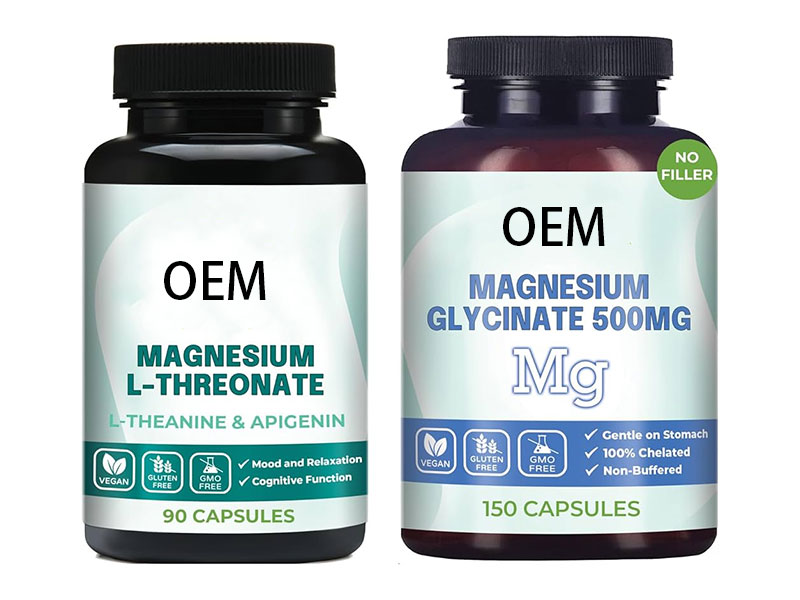
Choosing ingredients is only the beginning of supplement formulation. The more difficult decision often comes one step later: deciding which exact form of each ingredient should enter the formula. Magnesium can be supplied as oxide, citrate, glycinate, malate, chloride, and several other forms. Folate may be supplied as folic acid or 5-MTHF. Botanical ingredients may be whole powders, concentrated extracts, standardized extracts, or proprietary preparations. These choices can change the amount of raw material required, capsule count, taste, solubility, stability, manufacturing behavior, evidence relevance, finished-product cost, and even whether the original product concept remains practical.
The right ingredient form is the form that provides an appropriate balance of active content, scientific support, bioavailability, dosage-form compatibility, stability, sensory performance, manufacturing feasibility, regulatory suitability, supply reliability, and finished-product cost. A form should therefore be selected for the complete commercial formula rather than because it sounds premium, has the highest theoretical absorption, or carries the lowest raw-material price.
This is where many promising supplement concepts either become stronger or begin collecting hidden problems. A form may look excellent on a supplier presentation but occupy too much capsule space. Another may dissolve well but create an unpleasant mineral taste. A standardized botanical may support a stronger evidence story but add enough raw-material cost to change the entire retail price architecture. The best formulation decisions happen before those compromises are buried inside finished packaging. They begin with one practical question: Which form works best in this exact product?
What Is an Ingredient Form in Supplement Formulation?
An ingredient form is the specific chemical, physical, biological, or standardized version of a dietary ingredient used in the formula. The form can influence how much active material is delivered, how much raw material is required, how the ingredient behaves during manufacturing, how stable it remains, how it tastes or dissolves, and whether it fits the intended supplement format.
Ingredient Form vs. Dosage Form
Ingredient form and dosage form describe two different parts of product development. Ingredient form answers the question, “What exact raw material goes into the formula?” Dosage form answers, “How will the consumer take the finished product?” Magnesium citrate and magnesium oxide are ingredient forms, while capsules, tablets, drink powders, gummies, drops, and softgels are finished dosage forms. Confusing these two decisions can lead to a formula that looks attractive on paper but becomes difficult to manufacture.
The two decisions are closely connected because an ingredient form that works well in one product format may create problems in another. A bulky mineral may be manageable in a powder but require too many capsules at the intended dose. A botanical extract that is easy to encapsulate may produce unacceptable bitterness and sediment in a beverage. An oil-soluble nutrient may fit naturally in a softgel but require an encapsulated or emulsified system before it can be used in a water-based product.
For this reason, ingredient-form selection should normally happen before capsule count, tablet size, gummy weight, serving volume, flavor system, or final packaging claims are locked. The earlier the technical team understands what the raw material actually contributes to the formulation, the fewer compromises need to be made later in development.
Salts, Chelates, Extracts, and Active Forms
Minerals are often supplied as salts, complexes, or chelated forms. Vitamins may appear as different vitamers, salts, esters, stabilized preparations, or coenzyme-related forms. Botanical materials can range from simple ground plant powder to concentrated extracts, standardized extracts, and proprietary preparations produced through specific extraction or delivery technologies. Probiotics add another layer because strain identity, viable count, stability, and carrier system can all matter alongside the species name.
These differences change far more than the terminology printed on the label. A mineral compound contains both the elemental mineral and the rest of the compound, meaning that two forms delivering the same elemental amount may require very different raw-material weights. A standardized botanical extract can provide a defined concentration of a marker compound, while ordinary herb powder may contain much lower and naturally variable concentrations. A microencapsulated nutrient can be easier to handle or more stable, but the coating material reduces the percentage of active substance in each gram of raw material.
That is why a supplier specification should be treated as part of the formula rather than as a document reviewed only by purchasing. The specification should identify the exact form, source, assay, relevant carrier system, physical characteristics, storage conditions, and appropriate contaminant limits. Two quotations that carry the same familiar ingredient name can still represent two technically different formulation options.
Are Different Forms Interchangeable?
Different forms of the same nutrient should not automatically be considered interchangeable. Replacing one form with another can change the total compound weight, solubility, taste, flow, density, stability, evidence relevance, finished serving size, and cost. A substitution that looks minor on a purchase order can therefore create a meaningful change in the finished product.
Calcium provides an easy numerical example. Calcium carbonate contains roughly 40% elemental calcium by weight, while calcium citrate contains about 21%. To deliver 500 mg of elemental calcium, the theoretical raw-material requirement is therefore approximately 1,250 mg of calcium carbonate or about 2,381 mg of calcium citrate before excipients, manufacturing tolerances, or other formula components are considered. That difference of more than one gram can determine whether the planned product fits into a particular capsule count or tablet size.
Botanical substitutions can be even more complicated. Replacing a standardized extract with ordinary plant powder may change marker-compound concentration, extract ratio, odor, color, bulk density, dose weight, evidence relevance, and batch consistency. A proprietary extract may also rely on a specific manufacturing process that is part of the published research, meaning that a generic botanical with the same plant name should not automatically be treated as technically equivalent.
Any change in ingredient form should therefore trigger a formulation review. At minimum, the team should recalculate active input, assess physical load, review specifications, confirm sensory effects, and determine whether stability, labeling, testing, or evidence assumptions have changed.
Which Ingredients Need the Most Care?
Minerals deserve particularly careful form selection because elemental content, compound weight, solubility, gastrointestinal tolerance, and manufacturing load can vary substantially. Magnesium is a common example: citrate, glycinate, oxide, chloride, malate, and other forms do not have identical elemental percentages, solubility profiles, cost structures, or sensory characteristics. A form that works well in a capsule can behave very differently in an effervescent or flavored powder.
Botanicals require a different type of technical review. The formulation team should identify the plant species, plant part, extraction process, extract ratio, standardized marker content, carrier materials, residual-solvent specifications where relevant, and the degree to which available research applies to that exact preparation. “Ashwagandha extract,” for example, is not a complete raw-material description if the product strategy depends on a specific concentration or research profile.
Probiotics require strain-level attention, viable count, storage conditions, manufacturing tolerance, moisture control, and expected potency at the end of shelf life. Lipid ingredients require attention to carrier oils, oxidation, light exposure, and packaging. Specialty delivery technologies can include large amounts of coating or carrier material that significantly alter formula load.
The more complex the ingredient, the less useful the generic name becomes. Technical formulation works best when every important raw material is understood as a complete specification rather than a marketing label.
Which Factors Should You Compare Before Choosing an Ingredient Form?
Ingredient forms should be compared across several dimensions at the same time: active content, solubility, bioavailability, required raw-material weight, scientific evidence, target users, dosage form, stability, sensory impact, manufacturing behavior, regulatory position, supply reliability, and cost per finished serving. The strongest form is usually the one that performs well across the entire product rather than the one that wins one isolated comparison.
Bioavailability and Solubility
Bioavailability matters because two forms supplying the same declared nutrient amount may not be absorbed or utilized identically. Solubility is often related to this question because a compound usually has to dissolve before it can become available for absorption. Magnesium illustrates the relationship clearly: more soluble magnesium salts are generally considered more readily bioavailable than poorly soluble forms such as magnesium oxide, although actual performance still depends on dose, formula, user characteristics, and study conditions.
The mistake is turning a meaningful scientific factor into a single universal ranking. A more bioavailable form can still be a poor choice if it requires an impractical serving size, contributes unacceptable taste, creates instability, costs significantly more per serving, or has limited commercial availability. Form selection therefore needs context rather than a simple “higher absorption equals better product” rule.
Solubility also matters independently of human absorption. In a drink powder, it directly affects clarity, sediment, grittiness, mixing time, and consumer experience. In liquids, poor solubility can result in precipitation during storage. In tablets and capsules, dissolution behavior can influence how quickly the material becomes available after ingestion. The same property can therefore affect both physiological performance and physical product quality.
A useful formulation comparison should examine supplier solubility data, bench-scale dissolution behavior, the intended serving concentration, pH, temperature, co-ingredients, flavor system, and what happens after the mixed product stands for several minutes. An ingredient that dissolves well by itself may behave differently inside a multi-mineral formula.
| Ingredient Example | Approximate Form Data | Practical Formulation Effect |
| Calcium carbonate | ~40% elemental calcium | Lower compound weight for a given elemental dose |
| Calcium citrate | ~21% elemental calcium | Higher raw-material load for the same elemental dose |
| 500 mg elemental calcium | ~1,250 mg carbonate vs. ~2,381 mg citrate | Can materially change tablet size or capsule count |
| More soluble magnesium salts | Generally better dissolution than poorly soluble forms | May improve formulation and absorption characteristics |
| Standardized botanical extract | Defined marker concentration | Allows more controlled input than ordinary plant powder |
| Encapsulated active | Active diluted by carrier or coating | More raw material may be required to deliver target active |
Values are approximate formulation references. Final calculations should always use the approved supplier specification and lot-specific assay.
Active Content and Formula Load
One of the most expensive formulation errors is comparing raw materials only by their price per kilogram. The more meaningful calculation is how much material must be added to deliver the intended active amount in each serving. A lower-priced raw material can become more expensive if its assay is lower, its elemental percentage is smaller, or a large amount of carrier material is present.
The basic calculation is straightforward: required raw material equals the desired active amount divided by the verified active fraction. If a delivery system contains 25% of the desired active, the theoretical requirement is four grams of raw material for every gram of active delivered. A material containing 50% active requires approximately two grams. These differences can quickly become important in high-dose products.
Capsules and gummies are particularly sensitive to load. An extra 300 to 500 mg may not matter much inside a drink powder, but it can make a planned two-capsule serving impossible. Gummies also have limited space because active ingredients compete with the gel system, acids, flavors, sweeteners, water, colors, and processing aids. High ingredient loading can alter texture, taste, cooking behavior, and finished-piece weight.
A commercial review should therefore calculate raw-material cost per finished serving, then add meaningful consequences such as flavor-masking requirements, capsule count, testing costs, minimum raw-material purchasing quantities, and inventory risk. A supplier quotation may look attractive, yet the full product economics can tell a different story.
Scientific Evidence
Scientific evidence is most useful when it matches the material that will actually be used. A paper that studies a particular mineral form does not automatically establish equivalent behavior for every other mineral form, and a clinical trial on a standardized proprietary botanical does not automatically validate ordinary plant powder simply because the botanical species is the same.
When research matters to the product strategy, the team should compare the exact ingredient form, dose, standardization, manufacturing technology, study population, treatment duration, delivery format, and co-ingredients. If the proposed commercial formula differs significantly, the evidence should be interpreted more cautiously. This is particularly important when a brand intends to use language such as “clinically studied” or when the ingredient itself is a central part of product differentiation.
The opposite mistake is equally common. Some ingredient forms become fashionable because they sound more advanced, yet direct comparative evidence may be limited. A strong formulation process separates market popularity from scientific certainty and does not automatically assume that the more expensive or newer form is superior.
Branded ingredients can offer meaningful value when the exact material has controlled specifications, human studies, validated analytical methods, technical support, trademark recognition, and reliable commercial supply. Generic ingredients can offer lower cost, flexible sourcing, and broader availability. The useful comparison is not branded versus generic; it is whether the specific form provides a measurable advantage relevant to the finished product.
Target User and Market Position
The intended consumer changes the ingredient decision. A professional adult capsule, a children’s gummy, a senior-focused mineral product, and a sports hydration powder may all contain similar nutrient categories but require very different ingredient forms.
For older users, swallowability, capsule count, stomach tolerance, and ease of use can become important. A high elemental-dose mineral that requires several large capsules may not suit the product even if its scientific profile is attractive. For sports powders, dissolution, taste, serving size, osmolality, and sediment may matter more. For children’s gummies, bitterness, color, heat stability, and the total quantity that can be incorporated into each gummy can become the limiting factors.
Market positioning also affects the decision. A premium practitioner-oriented formula may support an ingredient with stronger research or proprietary technology even if the raw-material cost is higher. A high-volume retail product may place greater emphasis on supply continuity, predictable specifications, and cost stability. Neither decision is automatically more professional; the correct choice depends on the business model and intended customer experience.
A useful development brief should therefore define the target market, consumer group, preferred dosage form, expected serving, price architecture, and main product differentiators before ingredient-form discussions move too far into procurement.

Do More Bioavailable Forms Always Make Better Formulas?
No. A more bioavailable form can be valuable, but bioavailability is only one component of a successful supplement. The form must still fit the target dose, serving size, dosage form, sensory profile, stability target, evidence base, production process, regulatory requirements, supply plan, and product budget. An ingredient that performs well biologically but poorly inside the finished product is not automatically the better choice.
Bioavailability vs. Practicality
Bioavailability can easily become the most persuasive number in an ingredient presentation because it sounds directly connected to performance. The problem arises when that single property is allowed to override everything else. A form that shows better absorption in a study may still require substantially more raw material, create stronger bitterness, reduce manufacturing efficiency, or make the intended serving inconvenient.
Calcium demonstrates this tradeoff clearly. Citrate and carbonate differ substantially in elemental calcium percentage, meaning the same elemental target can create very different tablet or capsule loads. The most appropriate choice therefore depends on more than absorption. Product format, target consumer, intended serving, digestive considerations, and the planned use conditions all matter.
Magnesium produces similar choices. Some forms are popular because of their solubility or consumer perception, while others offer higher elemental density or lower cost. A sleep-support capsule and an electrolyte drink powder can therefore reach different conclusions even when both formulas contain magnesium.
A better formulation question is not “Which form has the best bioavailability?” It is “Does the bioavailability advantage create enough real value in this particular product to justify the consequences for dose load, taste, manufacturing, cost, and positioning?” That question usually produces a more durable commercial decision.
Cost per Serving
Price per kilogram often hides the true economics of ingredient selection. A lower-priced form can require more raw material per serving, a larger package, more capsules, additional flavor masking, or more expensive processing. A higher-priced material may reduce inclusion rate, support stronger differentiation, or provide documentation that lowers development uncertainty.
For a realistic comparison, calculate the raw-material cost per finished serving using the actual assay and intended active amount. Then add any meaningful consequences: testing requirements, expected yield, carrier load, special processing, additional excipients, packaging changes, and purchasing minimums. If the ingredient is proprietary, licensing or trademark conditions may also affect commercial use.
Supply risk should be included in the calculation as well. A material supplied by only one producer may be acceptable for a premium niche formula but create vulnerability for a high-volume product that requires regular replenishment. Conversely, a conventional material available from several qualified suppliers can provide purchasing flexibility and reduce the risk of reformulation during growth.
Established product teams therefore look at the cost of keeping the formula stable over time, not simply the cost of placing the first order. A formulation that repeatedly needs substitutions, artwork changes, or technical revalidation is rarely as economical as the initial raw-material quotation suggests.
Tolerability and Sensory Performance
Consumers do not experience a formula as a spreadsheet. They experience the number of capsules, the size of the tablet, the taste of the powder, the chew of the gummy, the smell of the softgel, or the aftertaste of the liquid. Ingredient form therefore affects repeat use in ways that technical specifications may not capture.
Minerals can contribute metallic, chalky, bitter, salty, or sour notes. Botanical extracts may introduce bitterness, earthy odor, astringency, strong natural color, and insoluble particles. Amino acids can be challenging to flavor at useful doses. Oil-based materials can produce unpleasant odor if oxidation is not adequately controlled. These are not minor cosmetic issues when the formula is intended for daily use.
Sensory evaluation should therefore be performed at the intended serving strength. A powder tested in 500 mL of water may seem acceptable, while the same product becomes harsh when consumers use 250 mL. A gummy sampled immediately after production can taste and chew differently after several weeks of storage. Liquids can develop stronger aftertaste or visible sediment over time.
An ingredient form that produces a slightly less impressive technical story but a much better consumer experience can be the stronger long-term choice. Product adherence and repeat purchase depend on whether consumers are willing to keep taking the supplement.
Premium vs. Standard Forms
Premium ingredient forms are most valuable when they solve a clearly defined technical or commercial problem. That can include lower serving burden, improved solubility, better tolerance, stronger evidence, greater stability, or meaningful product differentiation. If the premium form does not produce a measurable advantage relevant to the finished formula, the extra cost deserves scrutiny.
Standard forms often offer advantages that do not appear prominently in marketing materials. They may be available from several qualified suppliers, supported by familiar analytical methods, easier to source at scale, and predictable during manufacturing. Those advantages become more important when a brand moves from an initial launch to repeated high-volume production.
Specialty materials can still be excellent choices. A patented botanical with human research, a microencapsulated vitamin that solves stability problems, or a mineral form that substantially improves a specific product format may justify a higher cost. The useful question is what practical problem the ingredient solves.
A premium name by itself is not a technical specification. A conventional ingredient is not automatically inferior. The best form is the one that gives the product a defensible advantage while remaining stable, manufacturable, commercially available, and economically sustainable.
How Do Ingredient Forms Affect Stability and Dosage-Form Compatibility?
Ingredient form has a major effect on whether a supplement can be manufactured consistently and remain acceptable during shelf life. Particle size, density, flow, solubility, hygroscopicity, compressibility, pH response, oxidation sensitivity, heat tolerance, and carrier composition can make one form suitable for capsules but difficult in gummies, powders, liquids, tablets, or softgels.
Capsules and Tablets
Capsules are flexible, but their volume is limited. Formulators therefore need to consider bulk density as well as weight. Two ingredients that both contribute 500 mg may occupy very different volumes. A low-density botanical powder can fill a capsule quickly, while a dense mineral may take much less space. The final formula also needs room for flow aids or other excipients when required.
Mineral formulas make the physical constraint easy to understand. Using approximate calcium composition values, a 500 mg elemental target requires around 1.25 g of calcium carbonate or roughly 2.38 g of calcium citrate before the other ingredients are added. A marketing concept built around “two capsules per serving” may therefore need to be reconsidered depending on the form selected.
Tablets introduce additional requirements. The blend has to flow consistently, compress without excessive sticking or capping, maintain appropriate hardness, and disintegrate as intended. Hygroscopic materials may absorb moisture during processing or storage, while poorly flowing powders can contribute to weight variation. Large differences in particle size can also increase segregation risk.
Before a capsule or tablet formula is approved, the development team should review the required inclusion weight, bulk density, particle-size distribution, moisture behavior, flow, compressibility, and expected serving count. The question is not simply whether an ingredient is supplied as a powder, but whether the entire blend can become a repeatable production formula.
Powders, Gummies, and Liquids
Drink powders reveal formulation problems immediately because the consumer can see whether the product dissolves, clumps, floats, foams, changes color, or settles. A raw material that appears highly soluble on a technical data sheet may behave differently at the actual serving concentration, especially when acids, minerals, sweeteners, flavors, and other active ingredients are present.
Gummies are even less forgiving. Active ingredients must share limited product mass with the gelling system, sweeteners, acids, flavors, water, and processing aids. Mineral forms can alter taste and texture, botanical extracts can darken the gummy or produce bitterness, and heat-sensitive nutrients may lose potency during processing or storage. Highly hygroscopic ingredients can also contribute to stickiness or moisture migration.
Liquids create another group of challenges. The formulator must consider solubility limits, pH, precipitation, microbial stability, oxidation, preservative compatibility, flavor, and interaction with the packaging system. A material that remains stable as dry powder may perform very differently once it is dissolved or suspended in water.
| Dosage Form | Important Ingredient-Form Checks | Typical Development Problems |
| Capsule | Density, flow, dose volume, moisture | Excess capsule count, poor fill consistency |
| Tablet | Compressibility, particle size, flow, disintegration | Capping, sticking, hardness variation |
| Powder | Solubility, dispersion, taste, hygroscopicity | Sediment, clumping, bitterness |
| Gummy | Heat tolerance, pH, active load, taste | Texture changes, stickiness, potency loss |
| Liquid | Solubility, pH stability, oxidation | Precipitation, haze, color or odor change |
| Softgel | Oil compatibility, viscosity, oxidation | Settling, leakage, shell interaction |
These checks are development considerations rather than universal specifications. The exact test plan should be based on the formula, ingredient risks, packaging, target market, and intended shelf life.
Heat, Moisture, pH, and Oxygen
Stability needs to be considered at three separate stages: the raw ingredient, the manufacturing process, and the finished product. Supplier shelf-life data show how the unopened raw material performs under defined conditions, but they do not automatically prove that the same material will remain stable inside an acidic liquid, heated gummy process, multi-vitamin tablet, or moisture-sensitive powder.
Heat can accelerate degradation or alter physical properties. Moisture can contribute to clumping, hydrolysis, microbial risk, color changes, or loss of probiotic viability. pH can change both solubility and chemical stability. Oxygen can damage sensitive oils, flavors, vitamins, botanical components, and colors. Light can create additional risk for certain nutrients and natural pigments.
Packaging is therefore part of ingredient-form selection. Moisture-sensitive powders may need stronger barrier materials or desiccant strategies. Oxidation-sensitive lipid products may need appropriate antioxidants, oxygen control, or light-protective packaging. A formula that performs well in one container is not automatically guaranteed to perform the same way in another.
Stability should be evaluated as an ingredient–formula–process–package system. This mindset is especially important for products intended for long distribution chains, warmer climates, or multiple sales channels where storage conditions may be less predictable than in the development laboratory.
Ingredient Interactions
Ingredients behave differently when combined. A material that is stable and soluble by itself can change once minerals, acids, botanical extracts, proteins, flavors, or other actives are added. Some ingredients influence pH, some compete for water, and others increase oxidation or precipitation risks.
Mineral formulas offer both physical and nutritional examples. A high concentration of several minerals can create strong taste and increase the possibility of precipitation in drinks. Certain mineral combinations may also affect absorption when consumed together at particular doses. These interactions should be considered in the context of the complete formulation rather than interpreted as blanket reasons to avoid combinations.
Physical interactions can be especially important during manufacturing. Hygroscopic materials can increase moisture throughout the blend. A strongly colored botanical may change the appearance of a gummy or beverage. One poorly flowing component can affect the behavior of an otherwise acceptable capsule blend. A high-acid flavor system may improve taste but change the solubility of another ingredient.
This is one reason pilot samples are so useful. A specification sheet describes the individual material; the prototype reveals how that material behaves in the real formula.
How Do You Verify Ingredient Quality, Evidence, and Regulatory Fit?
Ingredient quality should be verified through specifications, supplier qualification, traceable documentation, appropriate testing, evidence review, and market-specific regulatory assessment. A familiar ingredient name or supplier COA alone does not establish that the material is suitable for the formula. The exact identity, assay, purity, standardization, carrier system, manufacturing history, and target-market status all matter.
Specifications and COA Review
A useful raw-material specification converts a commercial ingredient name into measurable acceptance criteria. Depending on the ingredient, this can include identity, assay, source, particle size, physical appearance, moisture, microbiological limits, heavy metals, pesticides, residual solvents, allergens, carriers, storage conditions, and analytical methods.
The specification needs to reflect the type of raw material. A probiotic specification should include strain and viable-count considerations rather than being reviewed like a simple mineral. A botanical may require species, plant part, extraction details, and marker-compound information. Oil-based ingredients may require parameters related to oxidation. Minerals often require identity, assay, elemental content, and contaminant review.
A Certificate of Analysis should then be compared against the agreed specification rather than accepted simply because every line says “Pass.” The meaningful questions are what was tested, what the acceptance limit was, which method was used, whether the lot is traceable, and whether the scope is appropriate to the risk of that ingredient.
For Zoxizo projects, the documented quality-control framework covers supplier and raw-material review, production checks, finished-product inspection, batch records, and document support rather than treating quality control as a single end-of-line test. This broader approach is particularly useful for ingredient-form changes because problems can originate long before finished-product testing.
Assay, Purity, and Standardization
Assay tells the formulation team how much of the intended active substance is actually present. If assay or standardization changes, the manufacturing input may need to change as well. That is why formula calculations should use the approved specification rather than a generic value copied from a product brochure.
Botanical ingredients make the difference especially visible. A 10:1 extract describes a processing concentration ratio but does not automatically establish the level of every compound that matters to the product. A standardized extract provides a defined concentration or range for selected markers, but the technical team should still understand what the marker represents and how the standardization relates to the intended formulation.
Carrier materials also affect the calculation. Spray-dried extracts, encapsulated oils, beadlets, and other delivery systems may contain meaningful amounts of maltodextrin, gum, starch, protein, phospholipids, oils, or coating materials. If the final raw material contains 30% active, substantially more material is needed than with a material containing 90% active.
A practical comparison should always record the verified assay, target amount per serving, required raw-material input, and cost at that inclusion level. These values provide a much clearer picture than price per kilogram alone.
Evidence Matching
Evidence is strongest when the ingredient in the paper closely matches the ingredient used in the product. The review should identify the exact chemical form, botanical preparation, standardization, dose, study population, duration, delivery format, and co-ingredients.
This prevents two common problems. The first is borrowing evidence from one form to support another form that may behave differently. The second is exaggerating a difference that has not actually been demonstrated. Both reduce credibility.
Proprietary botanical ingredients are a good example. If the research was conducted on a specific extract standardized to defined markers using a particular manufacturing process, ordinary plant powder should not automatically be described as equivalent. Similarly, data from one mineral salt should not be generalized to every salt simply because they deliver the same elemental mineral.
A strong product story therefore aligns three things as closely as possible: the ingredient named in the research, the ingredient specified in manufacturing, and the ingredient described on the finished label. When those pieces drift apart, the marketing language usually needs to become more cautious.
Regulatory Fit
Ingredient-form review should take place before the product is locked for manufacturing because an ingredient that is familiar in one market may require different assessment in another. Exact identity, source, manufacturing process, intended dose, population, claims, and regulatory history can all affect suitability.
The United States, European markets, the Middle East, Asia, and other regions do not necessarily treat every ingredient or permitted level identically. Novel forms, unusual botanical extracts, new delivery technologies, or materials without a clear history of use may require additional review. Market-specific maximum levels, warnings, labeling rules, importer requirements, and platform policies can also affect whether the proposed formula is commercially practical.
Regulatory review should therefore be part of early formulation rather than a final packaging exercise. The team should know whether the selected form can be appropriately named, whether the planned dose is suitable for the target market, whether additional documentation may be needed, and whether the intended claims remain supportable.
The company’s project documentation takes the same cautious approach: market access is assessed according to formula, ingredients, claims, documentation, packaging, importer requirements, and local rules rather than promising automatic compliance across every country. This type of qualification is more useful for serious product development because it addresses the conditions that actually determine whether a formula can move forward.

How Do You Finalize the Best Ingredient Form for Production?
An ingredient form should be finalized only after its scientific value, active load, physical behavior, manufacturing feasibility, stability, sensory performance, specification quality, regulatory position, commercial availability, and cost have been reviewed together. Once approved, the exact material should be controlled so future purchasing changes do not silently alter the formula or finished-product performance.
Balance the Full Product
Different departments naturally look at ingredients from different angles. R&D may prefer stronger evidence. Purchasing may focus on cost and availability. Marketing may favor recognizable or differentiated forms. Production needs good flow, stability, mixing behavior, or process tolerance. Quality teams need specifications that can be verified consistently. None of these priorities is wrong, but allowing one of them to control the entire decision can create a weak product.
A simple scoring process can make the tradeoffs visible. Teams might compare candidate forms across evidence, manufacturing fit, stability, specification quality, cost, sourcing reliability, consumer experience, and differentiation. The weighting should depend on the product. Taste and dissolution may carry much more weight in an electrolyte drink, while density and flow can dominate a capsule project.
| Decision Area | Questions Before Approval | Typical Evidence |
| Active delivery | Can the intended dose be delivered in the serving? | Assay and formulation calculation |
| Manufacturing | Will it mix, flow, compress, dissolve, or process correctly? | Bench and pilot results |
| Stability | Can potency and physical quality be maintained? | Stability data and packaging review |
| Sensory | Is taste, color, odor, and texture acceptable? | Controlled sensory samples |
| Quality | Can identity and specification be consistently verified? | Supplier qualification, COA, testing |
| Regulatory | Is the exact form suitable for the target market? | Regulatory and label review |
| Commercial supply | Can it be sourced repeatedly at required scale? | Supplier capacity and lead time |
| Economics | Does it fit the cost structure per serving? | Full formula costing |
This prevents the common situation where the “best” form is selected because of one impressive advantage while several practical disadvantages remain unexamined.
Sampling and Comparative Trials
When two or three forms remain technically credible, controlled sampling can answer questions that supplier literature cannot. The most useful comparison keeps the rest of the formula as consistent as possible and changes only the ingredient form or other variable under investigation.
For powders, samples can be tested using the same serving weight, water volume, temperature, mixing method, and observation times. Dissolution, sediment, color, foam, taste, and mouthfeel can then be compared after 0, 5, 15, and 30 minutes. That produces more useful information than tasting each sample under different conditions.
Gummies can be compared for processing behavior, taste, color, gel texture, surface stickiness, and analytical recovery where applicable. Tablets can be reviewed for flow, compression, appearance, weight consistency, hardness, friability, and disintegration. Capsules can be compared for fill volume, flow, powder leakage, odor, appearance, and the number of units required to achieve the intended serving.
The purpose of the sample is not simply to create something that looks good enough to show a customer. It is to answer the unresolved technical questions before bulk production makes them more expensive to solve.
Zoxizo’s documented sampling approach allows sample feedback to inform adjustments to taste, texture, color, solubility, packaging, and cost, while recognizing that sample timing depends on formula complexity, raw-material availability, dosage form, and customization level.
Lock the Specification
After an ingredient form has passed technical review and sampling, the approved material should become a controlled part of the production standard. Supplier, grade, form, assay, relevant specifications, formula input, processing instructions, testing requirements, and labeling information should all be aligned before bulk production begins.
Change control is especially important. Purchasing departments may receive an alternative quotation for a material with the same nutrient name and assume that substitution is harmless. The new material may have a different elemental percentage, density, particle size, carrier system, taste, assay, or stability profile. Without technical review, the product can change even though the label appears identical.
The final pre-production review should therefore verify the exact ingredient identity, approved supplier, specification, target serving amount, input calculation, sensory standard, manufacturing instructions, test plan, packaging system, and label declaration. A substitution procedure should also define which changes require R&D, quality, or regulatory review.
The documented quality model for Zoxizo follows a similar sequence: evaluate risk during development, verify feasibility through sampling, lock the version before production, control the manufacturing process, inspect the finished product, and maintain traceability afterward. That sequence is particularly useful for ingredient forms because it prevents procurement changes from bypassing the technical decisions made during development.
Scale-Up and Manufacturing Support
Bench samples are valuable, but commercial manufacturing creates new conditions. A powder that mixes easily in a laboratory beaker may behave differently when hundreds of kilograms move through industrial blending equipment. A tablet blend that works during a short pilot can develop flow or sticking problems during a long production run. Gummies can experience changes in residence time, heat exposure, deposit accuracy, or cooling behavior at scale.
Scale-up should therefore confirm whether the selected ingredient form still performs under realistic processing conditions. The team should look at blend uniformity, equipment behavior, processing time, yield, finished appearance, and any critical product attributes identified during development. When analytical testing is required, the scale-up batch should also demonstrate that the intended active level can be achieved within the agreed specification.
Supply continuity deserves equal attention. An ingredient can perform beautifully in development yet become a poor commercial choice if the supplier cannot support repeat orders, qualification documents change frequently, or replacement materials require repeated reformulation.
Zoxizo’s documented development capabilities include a 25+ person R&D team, a formulation library exceeding 20,000 formulas, ingredient-development support, multiple dosage-form capabilities, and quality personnel supporting raw-material review, production checks, finished-product inspection, and batch documentation. These capabilities are most useful when ingredient decisions need to be carried from concept through sampling and into repeatable production rather than evaluated only at quotation stage.
Final Thoughts
Selecting an ingredient form is not about finding the most expensive raw material, the newest delivery technology, or the form with the strongest marketing language. It is about finding the material that works inside a specific commercial product. Bioavailability matters, but so do dose load, taste, stability, supply reliability, quality specifications, regulatory suitability, and what happens when the ingredient reaches real production equipment.
A successful formulation keeps the entire product in view. The exact ingredient must fit the intended serving, dosage form, consumer, market, production process, packaging system, quality standard, and cost structure. Scientific evidence should match the material as closely as practical, while supplier documentation and analytical testing should make the specification verifiable. If a change in form alters any of those assumptions, it deserves technical review.
The most useful question is therefore not, “What is the best form of this ingredient?” It is, “Which form gives this product the best combination of technical performance, evidence, consumer experience, manufacturing reliability, and commercial sustainability?” When that question guides development from the beginning, ingredient selection becomes one of the strongest tools for turning an attractive supplement concept into a formula that can be sampled, scaled, tested, produced repeatedly, and supported over the life of the product.

Frequently Asked Questions
What is the difference between ingredient form and supplement dosage form?
Ingredient form describes the exact version of a raw material, such as magnesium citrate, magnesium oxide, methylcobalamin, folic acid, or a standardized botanical extract. Dosage form describes the finished delivery format, such as a capsule, tablet, powder, gummy, liquid, or softgel. The two decisions are connected because the selected ingredient form affects how much space it occupies, how it tastes, how it behaves during manufacturing, and whether it is practical in the intended dosage form.
Which ingredient form has the best bioavailability?
There is no single ingredient form that can be described as having the best bioavailability across all nutrients and products. Different forms may show different dissolution or absorption characteristics, but the significance depends on the ingredient, dose, consumer population, study conditions, and complete formula. A more bioavailable form may still be impractical if it creates excessive serving size, poor taste, difficult processing, higher cost, or limited supply. Bioavailability should therefore be compared together with formulation feasibility.
How do I calculate the amount of an ingredient form needed in a supplement?
Start with the desired amount of active substance per serving and divide it by the verified active fraction of the raw material. If a material contains 25% active, approximately four grams of raw material are theoretically required to supply one gram of active before any manufacturing adjustments are considered. For minerals, use the verified elemental percentage from the supplier specification. Final production calculations should also consider assay results, manufacturing tolerances, and any scientifically justified overage strategy where appropriate.
Are chelated minerals always better than mineral salts?
No. Chelated minerals can provide useful properties in certain products, but the term “chelated” does not automatically establish superior absorption, tolerance, stability, or commercial value. The exact chelate, molecular composition, evidence, elemental percentage, dosage, manufacturing behavior, and cost still need to be reviewed. Conventional salts may sometimes provide higher elemental density, easier sourcing, or more practical economics. The best choice depends on the product rather than the ingredient category alone.
Should I choose a standardized botanical extract or whole herb powder?
A standardized botanical extract is often more appropriate when the product needs a defined concentration of selected marker compounds, tighter batch consistency, or evidence tied to a particular extract. Whole herb powder may be appropriate when a less concentrated botanical profile is intended and the required serving size is practical. The decision should consider plant species, plant part, extraction method, marker content, dose, evidence, sensory effects, regulatory position, and manufacturing load rather than assuming that one format is universally superior.
How do ingredient forms affect capsules, gummies, powders, and liquids?
Different formats place different demands on raw materials. Capsules are sensitive to bulk density and dose volume. Tablets require suitable flow and compression behavior. Powders need acceptable dissolution, dispersion, flavor, and moisture control. Gummies are constrained by heat, pH, texture, taste, and limited active loading. Liquids require careful control of solubility, precipitation, oxidation, pH, and microbial stability. A form that performs well in one format may therefore need to be changed when the dosage form changes.
When should a supplement manufacturer be involved in ingredient-form selection?
A manufacturer should ideally become involved before the final ingredient forms, serving size, and dosage form are locked. Early technical review can identify problems involving raw-material load, solubility, flavor, stability, processing, testing, packaging, sourcing, and target-market requirements before large costs are committed. For more complex formulas, comparing candidate forms through controlled samples and pilot-scale evaluation can reduce the risk of discovering major technical problems after packaging artwork or bulk raw materials have already been ordered.



