Skip to content

For years, probiotics meant one thing to most consumers: gut health. Supplement shelves filled with digestive probiotic capsules, fiber powders, fermented products, and synbiotic blends, while oral care remained largely divided among toothpaste, floss, mouthwash, whitening products, and breath fresheners. That separation is now becoming less clear. Consumers are increasingly learning that the mouth has its own complex microbial ecosystem, and supplement developers are asking whether supporting that ecosystem could become another practical part of a daily wellness routine.
Oral probiotics are growing because several trends are meeting at the same time: greater awareness of the oral microbiome, stronger interest in preventive wellness, increasing research into strain-specific applications, and consumer-friendly formats such as lozenges and slow-dissolving tablets. The opportunity is promising, but product credibility depends on appropriate strains, delivery systems, viable-count stability, realistic claims, and consistent manufacturing rather than the word “probiotic” alone.
That combination makes oral probiotics unusually interesting from a product-development perspective. A brand launching another general digestive probiotic may enter an extremely crowded category. An oral probiotic can occupy a more distinctive position between microbiome science, daily oral care, fresh-breath routines, and broader preventive wellness. The real story, however, begins after the trend report. A successful product still has to answer much harder questions: Which strain belongs in the formula? How should it be delivered? Will the viable count remain stable? What claims can actually be supported? Those questions determine whether oral probiotics become a durable supplement category or simply another short-lived wellness trend.
What Are Oral Probiotics?
Oral probiotics are products containing selected live microorganisms intended to interact with the microbial environment of the mouth. Unlike conventional digestive probiotics, their development focuses more heavily on oral-specific strain evidence, contact time, delivery format, viable count, stability, and realistic oral-wellness applications. They sit at an increasingly important intersection between dietary supplementation, microbiome science, and everyday oral care.
How Oral Probiotics Work
The mouth is not a sterile space that becomes healthy only when bacteria are eliminated. It contains a highly diverse microbial community living across the tongue, saliva, tooth surfaces, gingival areas, and other oral tissues. These organisms compete for nutrients and attachment sites, produce metabolites, interact with biofilms, and respond to changes in diet, hygiene, saliva, medication, and lifestyle. Oral-probiotic development starts from the idea that selected microorganisms may help influence this environment rather than simply attempting to remove every bacterium from it.
Several biological mechanisms have been proposed. Selected probiotic strains may compete with other microorganisms for adhesion sites, produce bacteriocins or other antimicrobial compounds, influence microbial biofilms, modify local metabolic activity, or interact with host immune responses. Current evidence suggests that some of these mechanisms may contribute to changes in Streptococcus mutans, volatile sulfur compounds, and other oral-health markers, although effects differ considerably by strain and study design. A 2026 umbrella review found promising but generally modest effects across several oral outcomes and emphasized that strain, dose, delivery vehicle, and intervention duration varied substantially.
This distinction matters commercially because “contains probiotics” is not a meaningful development strategy by itself. A formulation may contain a microorganism with a long history of use in foods yet have little evidence for the specific oral application being promoted. A 2024 critical review of oral probiotic strains highlighted significant differences in the quality and quantity of evidence behind microorganisms used in commercial oral-care products. The review warned that safe historical use does not automatically demonstrate oral-health efficacy, reinforcing the importance of working at the strain level rather than relying only on a familiar genus or species name.
Oral vs. Gut Probiotics
Gut and oral probiotics may share familiar genera such as Lactobacillus, Bifidobacterium, or Streptococcus, but they are developed around different biological destinations. A digestive probiotic is generally expected to survive manufacturing, storage, swallowing, gastric conditions, and intestinal transit. An oral probiotic may instead benefit from prolonged contact with saliva, tongue surfaces, dental biofilms, or other parts of the oral cavity, which makes delivery format and usage instructions much more central to the product concept.
This is one reason a digestive probiotic formula should not simply be moved into a new package and marketed for the mouth. If the relevant research used a slow-dissolving tablet or lozenge that remained in the oral cavity for several minutes, a capsule swallowed immediately may not recreate the same exposure conditions. Likewise, a high total CFU count does not establish oral relevance if the organisms themselves have little strain-specific evidence related to the intended application.
Experienced product teams therefore look beyond front-label numbers. They ask whether the exact strain is documented, which human studies are relevant, what daily dose was tested, how long participants used the product, and whether the research format resembles the commercial dosage form. Those questions are especially important in oral probiotics because consumers can easily compare two products labeled “probiotic” even when their strain rationale, delivery method, stability profile, and evidence base are very different.
Where They Fit in Oral Care
Oral probiotics occupy an unusual position because consumers can mentally place them in both the supplement cabinet and the oral-care routine. A slow-dissolving tablet may legally be sold as a dietary supplement while being used after brushing before bedtime. That allows a brand to connect one familiar behavior—taking a daily supplement—with another deeply established behavior—maintaining oral hygiene every morning and evening.
That overlap can support stronger consumer routines, but it also makes claims discipline important. In the United States, dietary supplement structure/function claims may describe support for normal body structure or function, but claims that imply diagnosis, treatment, cure, mitigation, or prevention of disease can cross into disease-claim territory. FDA guidance makes this distinction particularly important when products are marketed around health conditions rather than general wellness.
A statement about supporting a healthy oral environment therefore needs to be treated very differently from a promise to treat periodontal disease or prevent cavities. Responsible positioning does not weaken a product. In a category where knowledgeable consumers are already asking whether probiotics genuinely work, clear boundaries can increase trust. Oral probiotics are most credible when presented as complementary to brushing, flossing, appropriate dental products, and professional dental care rather than as replacements for established oral-health practices.
Why Is the Market Growing?
The market is growing because oral probiotics benefit from several trends at once: consumers already understand probiotics through digestive health, awareness of the oral microbiome is expanding, preventive wellness is becoming more mainstream, and oral-friendly dosage forms are easier to integrate into daily routines. Current market forecasts indicate meaningful growth, although broader oral-microbiome estimates should not be mistaken for probiotic supplement sales alone.
Microbiome Awareness Is Expanding
The gut-health market spent more than a decade teaching consumers a powerful idea: microorganisms are not simply germs to eliminate. They can form complex ecosystems that influence health and daily function. Once that concept became familiar, microbiome language began spreading into skin care, women’s wellness, personalized nutrition, and now oral care. The educational work done by gut probiotics has therefore lowered the barrier for consumers encountering an oral-microbiome product for the first time.
Commercial forecasts reflect that wider shift. Grand View Research estimated the global oral microbiome products market at approximately USD 1.4 billion in 2025, with an estimated value of USD 1.5 billion in 2026 and a projected USD 3.6 billion by 2033. The firm forecasts a 13.1% compound annual growth rate from 2026 through 2033, with North America representing 35.5% of 2025 revenue. Probiotics were reported as the largest formulation segment within this broader market in 2025.
The narrower U.S. oral-health probiotics market provides another useful reference point. Grand View Research estimated the category at USD 111.0 million in 2025, with a projected value of USD 224.3 million by 2033 and a forecast CAGR of 9.2% from 2026 to 2033. Tablets accounted for 48.1% of U.S. revenue in 2025, showing that solid oral dosage forms already play a major role in commercial products.
| Market Indicator | Reported Figure | Practical Meaning |
| Global oral microbiome products, 2025 | USD 1.4B | Broad category, not oral probiotics alone |
| Global oral microbiome products, 2033 forecast | USD 3.6B | Indicates substantial category expansion |
| Global forecast CAGR, 2026–2033 | 13.1% | Strong projected growth |
| U.S. oral-health probiotics, 2025 | USD 111.0M | Narrower probiotic-focused market |
| U.S. oral-health probiotics, 2033 forecast | USD 224.3M | Roughly double the 2025 estimate |
| U.S. tablet share, 2025 | 48.1% | Solid oral formats are commercially important |
These figures require careful interpretation because research firms do not always define the market in the same way. “Oral microbiome products” can include probiotics, prebiotics, postbiotics, synbiotics, toothpaste, rinses, and other formats. Market numbers should therefore be treated as directional evidence of expanding interest rather than combined into one oversized “oral probiotic supplement market” figure.
Preventive Wellness Is Changing Oral Care
Traditional oral care is often reactive. A consumer notices bad breath and buys a mint, experiences sensitivity and changes toothpaste, or seeks professional help when discomfort appears. Preventive wellness encourages a different behavior: building routine practices before a problem becomes severe. That mentality already drives daily multivitamins, fiber supplements, hydration products, sleep routines, and gut-health supplements, so oral microbiome products fit naturally into an existing pattern of preventive self-care.
The scale of oral-health concerns helps explain the interest. The World Health Organization reported in 2025 that oral diseases affect nearly 3.7 billion people worldwide, while untreated caries in permanent teeth remains the most common health condition identified in the Global Burden of Disease 2021. These figures do not mean probiotics can prevent or treat the world’s oral diseases, but they do show how large and persistent the underlying consumer concern is.
For an oral probiotic brand, the strongest opportunity may therefore be routine rather than rescue. A consumer can brush and floss, then use a lozenge as part of a regular evening wellness habit. That is a much more sustainable positioning model than waiting for an acute concern to trigger a one-time purchase. It also gives companies room to talk about microbial balance, everyday freshness, and oral wellness without turning the supplement into something that appears to replace professional dental treatment.
E-Commerce Makes Education Easier
Oral probiotics benefit from channels where a product can explain itself. A vitamin C bottle requires little education, but an oral probiotic immediately creates questions. Consumers want to know what the oral microbiome is, how these products differ from digestive probiotics, which strain is included, whether the tablet should be swallowed or dissolved, and how long the product should remain in the mouth. Those questions are difficult to answer on a crowded retail shelf but much easier through a detailed product page, educational article, marketplace listing, video, or AI-assisted search result.
Current market projections also suggest that online distribution will play a growing role. Grand View Research forecasts the U.S. online oral-health probiotics channel to grow at a 10.3% CAGR from 2026 to 2033, compared with the broader U.S. category forecast of 9.2%. Digital commerce gives brands space to explain strains, dosage forms, directions, research, testing, and product differentiation in a way that conventional packaging alone cannot accomplish.
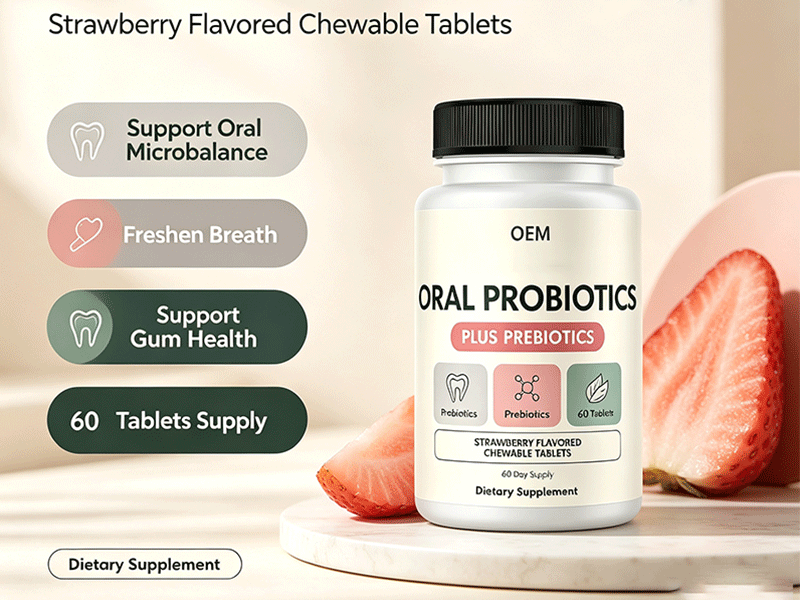
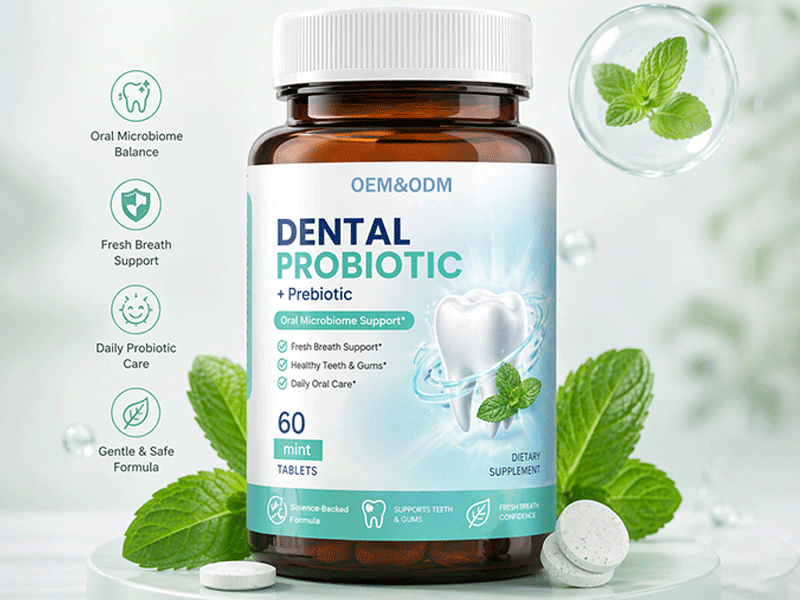
Format innovation strengthens that advantage. Brands can explore lozenges, slow-dissolving tablets, chewables, powders, gummies, toothpaste, mouthwash, and other microbiome-oriented formats. Not every format is equally appropriate for every probiotic strain, but the variety allows developers to match a product more closely to a specific consumer routine. A mint-flavored lozenge can fit fresh-breath positioning, while a science-led slow-dissolving tablet can support a more technical oral-microbiome proposition.
This is where commercial research becomes useful before formulation begins. Product developers can compare marketplace reviews, price per serving, dosage form, package count, ingredient combinations, serving instructions, and common complaints instead of simply copying a competitor’s Supplement Facts panel. Zoxizo’s documented development framework, for example, includes benchmark analysis of Amazon products, DTC brands, ingredient combinations, packaging directions, review pain points, and potential differentiation opportunities as part of product planning.
Which Consumer Needs Drive Demand?
Consumer interest in oral probiotics comes from several overlapping needs rather than one universal benefit. Fresh-breath concerns provide one of the clearest entry points, while gum wellness, microbiome awareness, preventive oral care, and convenient daily routines broaden the audience. Strong products generally focus on one primary need and a believable usage occasion instead of attempting to make every possible oral-health claim at once.
Fresh Breath Is an Accessible Entry Point
Fresh breath is commercially important because consumers immediately understand the problem and the desired outcome. Bad breath can affect social confidence during conversations, meetings, dates, travel, and everyday interactions, so people already spend money on mouthwash, gum, mints, sprays, tongue-cleaning products, and specialized toothpaste. Oral probiotics introduce a microbiome-based approach into a problem category consumers already recognize without needing extensive education about the emotional relevance of the concern.
Recent human research has helped bring more scientific attention to this area. A 2026 randomized, double-blind, placebo-controlled study enrolled 80 adults with gingivitis or early Stage I–II periodontitis and assigned them to Weissella cibaria CMU or placebo. Participants consumed two slow-dissolving tablets daily for eight weeks, and the primary endpoint was the change in total volatile sulfur compounds associated with halitosis.
The broader 2026 umbrella review also found that probiotics improved halitosis-related measures in the majority of comparisons it evaluated. The organisms represented across the underlying studies included Lactobacillus, Weissella cibaria, and Streptococcus species, but results differed by study and measured outcome. This is encouraging evidence for the category, yet it should not be converted into the claim that every oral probiotic eliminates bad breath.
For product developers, that limitation is useful. It encourages a more precise evidence chain: identify the strain, understand the studied dose and delivery format, determine whether the commercial directions resemble the research conditions, and make claims that fit what the evidence actually supports. A carefully designed fresh-breath product can be more compelling than a formula that promises fresh breath, gum treatment, cavity prevention, whitening, stronger enamel, digestive benefits, and complete microbiome restoration all on one label.
Gum Wellness Broadens the Routine
Fresh breath may attract initial interest, but gum wellness can help expand oral probiotics into a broader daily-care category. Consumers generally understand that gums are part of long-term oral health, even if they do not know the microbiology behind periodontal conditions. A probiotic used alongside brushing and flossing can therefore be positioned as part of an everyday oral-wellness routine without asking the consumer to abandon familiar dental practices.
The current evidence needs to be handled carefully. The 2026 W. cibaria trial reported improvements in certain periodontal and halitosis-related measures, while not every endpoint showed the same pattern of change. The researchers also called for longer-term studies to understand the persistence and broader relevance of the findings. That mixed outcome is a useful reminder that clinical research rarely supports a long list of equally strong marketing promises.
The wider evidence base shows similar complexity. The 2026 umbrella review synthesized meta-analyses that included diverse populations, strains, doses, delivery vehicles, and intervention periods. Some microbial and halitosis outcomes were favorable, while certainty was reduced by heterogeneity and reliance on surrogate markers. From a commercial perspective, this favors narrower, more transparent positioning instead of exaggerated oral-disease language.
A product centered on daily oral microbiome support, for instance, can discuss how the formulation was selected and how it fits into an established routine. The brand can then support that core message with appropriate strain information and testing rather than stretching one research paper across five unrelated claims. This kind of discipline usually improves both credibility and long-term brand defensibility.
Daily Use Supports Repeat Purchasing
The economics of oral probiotics are particularly interesting because oral care is already built around repetition. Consumers brush one or more times every day, often floss regularly, and may use additional products such as mouthwash or tongue cleaners. An oral probiotic can join an existing routine instead of asking people to remember an entirely new wellness occasion at an unfamiliar time of day.
Serving design has a direct commercial impact. A once-daily product containing 30 tablets naturally creates approximately a 30-day replenishment cycle, while a twice-daily formula requires roughly 60 units to cover the same period. That difference affects bottle size, cost per serving, package weight, subscription intervals, freight, margins, and the perceived value of the finished product. Formulation decisions therefore influence the business model long before a product reaches the consumer.
Sensory experience also matters more than many formulation teams expect. An oral tablet may remain in the mouth for minutes, so sweetness, cooling effect, chalkiness, acidity, bitterness, aroma, texture, and aftertaste become part of the product experience. A technically excellent formula that consumers dislike using every night may struggle to achieve consistent repeat purchasing.
That is one reason oral-probiotic development works best when consumer experience and microbiological specifications are considered together. Strain selection may attract the technical team, while flavor and format attract the customer. Neither side can be ignored. A product becomes commercially durable when the science is credible enough to support trust and the everyday experience is pleasant enough to support continued use.
Do Oral Probiotics Have Scientific Support?
Certain oral-probiotic strains and applications have meaningful human research, particularly around microbial markers and halitosis, but the evidence is not uniform across all products. Current systematic evidence supports cautious optimism rather than universal claims. Strain identity, dose, delivery vehicle, population, intervention duration, and the measured endpoint all influence whether research can reasonably support a specific commercial oral-probiotic formulation.
What Current Research Shows
One of the most useful recent summaries is the 2026 umbrella review published in Frontiers in Oral Health. The researchers examined 11 meta-analyses of clinical trials involving participants ranging from infancy to adulthood. Reported probiotic doses ranged from approximately 5 × 10⁵ to 5 × 10¹⁰ CFU, while intervention periods ranged from 7 days to 24 months. Commonly represented organisms included Lactobacillus, Bifidobacterium, and Streptococcus salivarius.
Across the reviewed analyses, probiotics were associated with reductions in S. mutans in many comparisons and improvements in halitosis measurements in the majority of comparisons. The review also reported modest effects in some caries-related pooled analyses. Importantly, most of the included meta-analyses received moderate methodological-quality ratings, and the authors emphasized considerable differences in strain identity, dosage, delivery method, participant characteristics, and study endpoints.
| Evidence Variable | Reported Finding | Practical Interpretation |
| Meta-analyses in 2026 umbrella review | 11 | Evidence base is substantial enough for serious evaluation |
| Reported probiotic doses | ~5 × 10⁵ to 5 × 10¹⁰ CFU | No single universal CFU target exists |
| Intervention durations | 7 days to 24 months | Study designs vary widely |
| Common organisms | Lactobacillus, Bifidobacterium, S. salivarius | Strain selection remains crucial |
| Major evidence areas | S. mutans, halitosis, caries-related outcomes | Evidence strength differs by endpoint |
| Overall certainty | Modest benefits with significant heterogeneity | Broad claims should remain cautious |
This profile is typical of a category that is moving from emerging science toward broader commercial adoption. There is enough human research to justify thoughtful formulation, but not enough uniformity to treat all oral probiotics as equivalent. A brand should therefore resist using one favorable study as proof for an unrelated strain, dose, format, or consumer population.
Strain Specificity Changes the Meaning of the Evidence
The importance of strain specificity cannot be overstated. Two microorganisms belonging to the same species may differ in genetics, metabolite production, attachment behavior, environmental tolerance, interactions with other microbes, and clinical documentation. The functional evidence attached to one strain should therefore not automatically be transferred to every other strain with a similar name.
The 2024 critical review of oral-care probiotics examined candidate organisms from Streptococcus, Lactobacillus, Bifidobacterium, and Bacillus. It concluded that documentation varied considerably among strains and noted that some commercially used organisms have much stronger evidence for oral applications than others. The review specifically raised concern that the expanding market includes products whose organisms may have a history of safe use but lack similarly strong documentation for the oral benefits being implied.
This changes how an experienced development team reads a label. “Ten billion probiotics” may sound impressive to a shopper, but it tells the formulator very little. The more important questions are which strains contribute those CFUs, whether their identity is traceable, whether relevant studies exist, and whether the finished product reproduces a realistic dose and delivery model.
The same logic applies to multi-strain blends. Adding five or ten organisms does not automatically create a stronger oral probiotic. A long strain list may increase formulation complexity, stability challenges, raw-material costs, and documentation requirements while weakening the clarity of the product story. In some projects, one or two well-supported strains can create a more coherent formulation than a large blend assembled mainly to produce an impressive Supplement Facts panel.
The Evidence Still Has Important Limits
Scientific support should be interpreted according to what the studies actually measured. Many oral-probiotic trials use surrogate outcomes such as bacterial counts, volatile sulfur compounds, plaque-related indicators, organoleptic breath scores, or short-term inflammatory markers. These are useful research endpoints, but they are not automatically equivalent to demonstrating long-term prevention or treatment of dental disease.
The 2026 umbrella review specifically identified reliance on surrogate outcomes, substantial heterogeneity, variable strain and delivery systems, and moderate methodological quality as important limitations. It also noted that many studies had relatively short follow-up periods, making it difficult to determine how long observed effects continue after supplementation stops.
Population differences create another challenge. Results observed in adults with gingivitis cannot automatically be applied to healthy children, older adults, pregnant consumers, people receiving periodontal treatment, or consumers with unrelated medical conditions. Likewise, evidence from an eight-week trial should not automatically become a promise about lifelong use.
The final limitation is commercial language. Scientific researchers can legitimately discuss gingivitis, caries, periodontitis, bacterial pathogens, or halitosis because those are their study outcomes. Dietary supplement marketing operates under a different framework. In the United States, structure/function claims require appropriate substantiation and cannot simply become claims to diagnose, treat, mitigate, cure, or prevent disease.
These limitations do not make the category weak. They make careful formulation more valuable. Brands that accurately distinguish between promising science and proven clinical outcomes are more likely to maintain credibility as consumers become better informed.
Which Strains and Formats Matter?

Strain and dosage form are central to oral-probiotic development because the product must deliver viable microorganisms in a way that makes biological and practical sense. The best option depends on strain-specific evidence, target application, CFU requirements, flavor, moisture sensitivity, oral contact time, packaging, and shelf-life expectations. A familiar probiotic organism in the wrong format can be less compelling than a well-documented strain delivered appropriately.
Strains with Oral-Specific Evidence
Several organisms appear repeatedly in oral-probiotic research, including selected strains of Streptococcus salivarius, Lactobacillus or reclassified related species, and Weissella cibaria. The most important word is “selected.” Development should identify the exact strain rather than assuming that evidence belonging to one organism automatically applies to every member of the same species.
Streptococcus salivarius K12 and M18 are among the better-known examples used in oral-probiotic discussions. The 2024 critical review found comparatively strong oral-health documentation around selected Streptococcus strains while identifying a more mixed evidence profile across many commonly used Lactobacillus, Bifidobacterium, and other candidate probiotics. That does not make one entire genus inherently better than another; it shows that commercial formulation decisions need to move beyond genus-level ingredient naming.
Weissella cibaria CMU has also received attention through controlled human research related to halitosis. In the 2026 randomized controlled trial, participants consumed two slow-dissolving tablets daily for eight weeks. The study reported improvement in the primary volatile sulfur compound endpoint and several secondary measures compared with placebo.
The practical development rule is straightforward: evidence first, positioning second, formulation third. Beginning with a fashionable marketing phrase and then searching for the cheapest probiotic powder that can fit on the label reverses the process. A stronger project begins by defining the intended consumer need, identifying organisms with relevant evidence, evaluating whether the studied dose and format are commercially feasible, and only then building the finished formula and packaging concept.
Delivery Format Can Affect Product Logic
Lozenges and slow-dissolving tablets are particularly attractive for oral probiotics because they can increase the time a product remains in the mouth. That does not prove they are universally superior to every other format, but they make intuitive sense when the intended microbial interaction begins in the oral cavity.
The 2026 W. cibaria CMU trial is a useful example because participants used slow-dissolving tablets rather than swallowing a conventional capsule immediately. The format and directions were therefore part of the intervention itself, not merely packaging decisions made after the formula had been developed.
Other formats can still be appropriate depending on the strain and product concept. Chewable tablets can offer familiar consumer use, powders can create flexible serving formats, and gummies can provide strong sensory appeal. However, high-moisture or heat-intensive systems may create additional viability challenges for certain live microorganisms, while swallowed capsules may provide less direct oral exposure than a product designed to dissolve in the mouth.
| Format | Main Advantage | Key Development Questions |
| Slow-dissolving tablet | Longer oral contact | Compression, dissolution time, taste, CFU stability |
| Lozenge | Familiar oral-care use | Moisture barrier, hardness, flavor, residence time |
| Chewable tablet | Convenient daily routine | Texture, sweetness, compression, viability |
| Powder or sachet | Flexible serving and formulation | Moisture, dosing accuracy, storage, portability |
| Capsule | Familiar supplement format | Limited oral contact when swallowed immediately |
| Gummy | High sensory appeal | Water activity, heat, viable-count stability |
Sensory design should be considered early because an oral dosage form remains in direct contact with taste receptors. Bitterness, chalkiness, excessive acidity, poor dissolution, or an unpleasant aftertaste can reduce compliance quickly. Technical specifications alone cannot create a strong daily-use product if the consumer dislikes taking it.
CFU, Shelf Life, and Packaging Work Together
CFU is one of the most visible numbers in probiotic marketing, yet it is also one of the easiest to oversimplify. A very high manufacturing count may look impressive on a package, but the more meaningful question is how much viable material remains under the conditions and at the point in shelf life relevant to the product specification.
The 2026 umbrella review demonstrates how much dosing varies across published research. Studies included in the review reported doses from approximately 5 × 10⁵ to 5 × 10¹⁰ CFU. That range should not be treated as a generic formulation target. It shows instead that dosage needs to be linked to strain, delivery method, intended application, and available evidence.
Commercial development also needs to distinguish initial potency from end-of-shelf-life expectations. Depending on the microorganism, formulation, packaging, and storage conditions, manufacturers may need to consider appropriate overage, moisture control, oxygen exposure, protective excipients, barrier materials, and defined storage conditions. International distribution can make these issues more important because a finished product may spend weeks passing through warehouses, trucks, ports, fulfillment centers, and climates very different from the environment in which the original sample was developed.
Zoxizo’s documented probiotic-development framework identifies strain stability, live-count management, storage conditions, packaging sealing, moisture control, shelf life, transport temperature, labeling, and target-market requirements as areas requiring evaluation in probiotic projects. These factors explain why a probiotic concept cannot be evaluated from the ingredient list alone. The microorganism, excipients, dosage form, package, storage specification, transport plan, and testing strategy function as one connected system.
How Should Supplement Brands Evaluate the Opportunity?
Brands should evaluate oral probiotics by connecting six questions: Is there a clear consumer need? Does the selected strain have relevant evidence? Does the dosage form suit oral use? Can viable counts remain appropriate through shelf life? Can claims be supported in the target market? And can commercial production reproduce the approved product consistently as demand increases?
Start with Market Fit, Not the Ingredient List
The first question should not be which probiotic strain is available at the lowest cost. It should be what product the brand is trying to create and who is expected to buy it. A fresh-breath lozenge for an Amazon audience has different commercial requirements from a premium microbiome product sold through a dental network, a family chewable distributed through pharmacies, or a subscription product developed for a DTC wellness brand.
A useful concept can usually be summarized in one clear sentence. The development team should know whether the primary proposition is fresh breath, daily microbiome support, gum wellness, or a broader oral-care routine. If the concept cannot choose among those purposes, the finished product often accumulates too many ingredients and too many claims.
Market analysis can then become practical rather than superficial. Product teams can compare the exact strains used by competitors, CFU per serving, serving frequency, number of tablets per package, price per serving, dosage form, flavor, packaging, customer reviews, subscription options, recurring complaints, and the way competitors explain their science. The purpose is not to duplicate the category leader. It is to identify what consumers already understand and where existing products still leave unanswered questions.
For established brands, this stage is also where commercial viability should be tested. A premium patented or heavily documented strain may support differentiation but increase ingredient cost. A twice-daily format can change package count and margins. A custom blister or high-barrier bottle can improve protection but raise packaging MOQ. These issues are much easier to solve before the formula and artwork are locked.
Validate the Product Technically Before Scaling
Once the market proposition is clear, the project needs to move from marketing language into measurable specifications. Strain identity should be traceable. The formula needs a defined serving size, target viable count, dosage form, flavor system, excipients, storage condition, packaging format, shelf-life objective, and test plan. Those elements should be considered together because changing one may affect several others.
Testing requirements should also be discussed before the first commercial order. Depending on the product, ingredient, customer requirement, and target market, a project may involve microbiological testing, heavy-metal testing, active-ingredient or viable-count verification, identity documentation, raw-material documentation, and other project-specific tests. Special testing can add time and cost, but discovering those requirements after bulk production creates a much larger problem.
The manufacturer’s quality infrastructure therefore matters. Zoxizo’s company documentation describes 30+ quality and testing personnel supporting raw-material review, in-process checks, finished-product inspection, batch documentation, and broader production quality control. Its documented R&D resources also include a 25+ person research team and a 20,000+ formula library, alongside ingredient development, sample revision, cost optimization, and compliance-focused product work.
For an oral-probiotic project, those capabilities are most useful when they support specific technical decisions rather than appearing as general factory statistics. The development conversation should examine whether the selected organism can tolerate the intended process, whether the proposed dosage form provides appropriate oral use, whether taste needs adjustment, what packaging environment is required, and which specifications need to remain consistent between sample approval and commercial production.
Evaluate Manufacturing and Compliance as One System
A probiotic manufacturer should be evaluated on more than the ability to fill powder into a bottle. Oral probiotics require coordination among ingredient sourcing, formulation, manufacturing conditions, dosage-form processing, moisture control, packaging, finished-product testing, documentation, storage, and international delivery. Weakness in one part of that chain can undermine work completed in all the others.
According to its documented company facts, Zoxizo operates an approximately 17,000 m² supplement manufacturing facility supporting R&D, controlled production, packaging, quality control, warehousing, and scalable bulk-order delivery. The company’s documentation also states that support can include COA, MSDS/SDS, raw-material files, batch documentation, testing discussions, and export-related materials depending on product type and project requirements.
Those capabilities do not remove the need for project-specific verification. An experienced brand should still discuss the exact strain, raw-material specification, target CFU, dosage form, package, testing scope, market, claims, expected volume, shelf life, storage condition, and shipping route before committing to production.
Compliance should begin at the concept stage rather than after the label has been designed. U.S. dietary supplements, for example, are not pre-approved by FDA in the way prescription drugs are, and manufacturers remain responsible for lawful labeling and substantiated claims. Structure/function language needs to remain distinct from disease-treatment promises. Similar care is needed in other markets because ingredient status, labeling requirements, permitted claims, probiotic terminology, and import conditions can vary by jurisdiction.
The strongest oral-probiotic launches therefore connect market insight with technical feasibility before large investments are made. A brand that validates its consumer proposition, strain, dose, format, sensory experience, stability, packaging, test plan, claims, and production requirements early has a much better chance of building a product that can be repeatedly manufactured and confidently explained to consumers.
Oral probiotics are attracting attention because they bring microbiome science into one of the most familiar wellness routines in daily life. The category combines an understandable consumer need with growing scientific interest, expanding oral-microbiome awareness, and dosage forms that can become part of regular oral care. Current market forecasts suggest meaningful commercial growth, while controlled trials and systematic reviews provide enough evidence to justify serious development rather than treating the category as pure marketing.
The next stage of the market will probably be less about novelty and more about execution. Products built around vague “good bacteria” messaging may struggle as consumers become more informed and competition increases. Brands that can explain the exact strain, sensible serving, appropriate delivery method, viable-count strategy, packaging protection, evidence boundaries, quality controls, and realistic claims will have a stronger foundation. For companies evaluating an oral-probiotic line, the best time to involve an experienced development and manufacturing partner is before those decisions become expensive to change, not after the formula and packaging have already been finalized.
What are oral probiotics used for?
Oral probiotics are generally developed to support the microbial environment of the mouth and may be positioned around areas such as daily oral wellness, microbiome balance, fresh-breath routines, and other carefully substantiated oral-health applications. Research has examined outcomes including halitosis measures, Streptococcus mutans levels, and certain periodontal or caries-related markers, but benefits are strain-specific and should not be generalized to every probiotic product.
Are oral probiotics different from gut probiotics?
Yes. Digestive probiotics are generally developed with gastrointestinal survival and activity in mind, while oral probiotics may require direct or prolonged exposure within the mouth. This makes strain selection and dosage form particularly important. Lozenges and slow-dissolving tablets can provide oral contact that a rapidly swallowed capsule does not. The evidence supporting one digestive probiotic strain should therefore not automatically be applied to an oral-health product.
Do oral probiotics really work?
Research suggests that certain strains can produce modest improvements in specific oral-health markers, particularly some measures associated with halitosis and cariogenic bacteria. A 2026 umbrella review of 11 meta-analyses found generally promising but heterogeneous results, with differences in strains, doses, formats, participant groups, study duration, and outcomes. Oral probiotics should therefore be evaluated strain by strain rather than treated as a single proven intervention.
Which probiotic strains are commonly studied for oral health?
Research frequently discusses selected strains from Streptococcus salivarius, Lactobacillus and related reclassified species, Bifidobacterium, and Weissella cibaria. Strains such as S. salivarius K12 and M18 and W. cibaria CMU have recognizable oral-health research histories. However, the amount and strength of evidence differ substantially among strains, so a familiar species name alone should not be used as proof of a specific oral benefit.
Are oral probiotic lozenges better than capsules?
Lozenges and slow-dissolving tablets can make practical sense because they keep the probiotic in the mouth longer than a capsule that is immediately swallowed. Some oral-probiotic clinical studies have deliberately used slowly dissolving tablets for this reason. That does not mean a lozenge is automatically better in every product. The appropriate format depends on the strain, intended application, evidence, viable-count stability, consumer experience, manufacturing process, and packaging conditions.
How many CFUs should an oral probiotic contain?
There is no universal CFU number that defines an effective oral probiotic. The 2026 umbrella review included studies reporting doses from approximately 5 × 10⁵ to 5 × 10¹⁰ CFU, demonstrating how widely dosing varies among strains and study designs. A commercially appropriate target should be based on strain-specific evidence, serving frequency, dosage form, stability, and the viable-count specification expected throughout the product’s intended shelf life.
What should a brand check before developing an oral probiotic?
A brand should define the target consumer and primary use first, then evaluate exact strain identity, supporting evidence, CFU target, serving frequency, dosage form, flavor, manufacturing feasibility, shelf-life stability, packaging protection, testing requirements, labeling, claims, and target-market regulations. These decisions are interconnected. Resolving them before custom packaging and bulk production helps reduce reformulation, compliance, stability, and supply-chain problems later in the project.