Skip to content

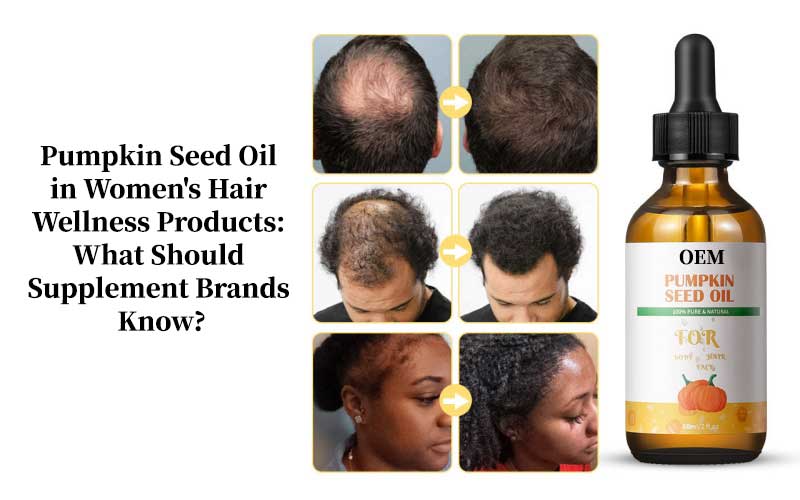
Pumpkin seed oil has moved from a traditional edible oil into a surprisingly visible hair wellness ingredient. Search results now place softgels, botanical capsules, scalp oils, serums, beauty formulas, and DHT-focused products side by side, which makes the category look simpler than it really is. The ingredient does have human research behind it, but the studies do not all test the same population, delivery route, formula, or endpoint. For a supplement brand, those differences matter because a topical study in women cannot automatically validate an oral softgel, and a multi-ingredient oral trial cannot prove that pumpkin seed oil alone produced the observed result. The practical opportunity is therefore not to make the loudest hair-loss promise, but to build a product whose ingredient story, serving format, quality specifications, and claims all match the available evidence.
Pumpkin seed oil can be a credible ingredient in women’s hair wellness products when it is positioned as part of an evidence-aware supplement strategy rather than as a universal treatment for hair loss. The strongest development approach separates topical and oral evidence, considers DHT-related mechanisms without overstating them, chooses a dosage form that can deliver the intended oil payload, and pairs the ingredient only with nutrients or botanicals that have a clear role.
That distinction becomes obvious when three competing products are placed on the same desk. One is a simple pumpkin seed oil softgel, another combines the oil with saw palmetto and micronutrients, and the third is a beauty gummy that uses pumpkin seed oil mostly as a front-label story. All three may be commercially viable, yet they require different technical decisions and support very different claims. The useful question is not whether pumpkin seed oil is trending. It is whether the finished product makes sense for a defined woman, a defined market, and a realistic daily routine. The rest of this article follows that product-development logic from ingredient chemistry to evidence, format, supporting ingredients, quality, and claims.
What Is Pumpkin Seed Oil?
Pumpkin seed oil is a lipid-rich botanical ingredient obtained from pumpkin seeds, commonly from Cucurbita species. It contains substantial amounts of unsaturated fatty acids together with phytosterols, tocopherols, carotenoids, and other minor compounds. In hair wellness supplements, it is better understood as a naturally complex oil matrix than as one perfectly standardized active ingredient with the same composition in every commercial raw material.
What Does Pumpkin Seed Oil Contain?
The largest part of pumpkin seed oil is its fatty-acid fraction. Reviews of different pumpkin seed oils have reported linoleic acid at roughly 32.57% to 60.6% and oleic acid at about 21.0% to 46.75%, with palmitic and stearic acids making up smaller portions. These ranges are not proposed purchasing specifications; they show how much natural and process-related variation can exist under one ingredient name. Seed variety, growing conditions, drying or roasting, extraction method, refining, and storage can all influence the final oil. For a commercial product, this means a raw-material specification should be treated as a real technical document rather than a formality. The brand should know what it is buying, how each lot is released, and which parameters are expected to remain consistent from production run to production run.
The smaller fractions are especially interesting for hair wellness positioning. Pumpkin seed oil contains phytosterols, including beta-sitosterol and characteristic delta-7 sterols, as well as tocopherols, carotenoids, phenolic compounds, and squalene. Published reviews have reported beta-sitosterol values ranging from approximately 49.25 to 208.2 mg per 100 g of oil in different samples, again illustrating why one supplier’s material cannot be assumed to be chemically identical to another. A brand does not necessarily need to turn every minor component into a front-label claim, but understanding the profile helps the formulation team judge ingredient quality, compare suppliers, and decide whether a general pumpkin seed oil specification is enough or whether a more defined phytosterol profile is commercially important.
| Component | Reported Range | Product-Relevant Meaning |
| Linoleic acid | 32.57%-60.6% | Major polyunsaturated fatty acid and a large part of the oil matrix |
| Oleic acid | 21.0%-46.75% | Major monounsaturated fatty acid that contributes to the lipid profile |
| Palmitic acid | 10.0%-19.08% | One of the main saturated fatty-acid fractions |
| Stearic acid | 5.16%-10.98% | Smaller saturated fatty-acid fraction |
| Beta-sitosterol | About 49.25-208.2 mg/100 g in reviewed samples | A phytosterol often discussed in pumpkin seed oil research; not a universal specification |
How Is Pumpkin Seed Oil Used in Supplements?
For ingestible products, softgels are usually the most natural technical fit because pumpkin seed oil is already a liquid lipid ingredient. The oil can be used as the main fill or become part of a broader oil-compatible blend, which reduces the need to convert it into a dry carrier before encapsulation. Hard capsules are still possible, but the oil generally has to be adsorbed onto a carrier, microencapsulated, or otherwise transformed into a free-flowing material. That conversion takes up capsule space, so a formula that looks compact on a spreadsheet can become bulky once the actual carrier ratio and other botanicals are included. This is one reason dosage form should be selected after the desired daily ingredient payload is defined, not simply because a particular format is fashionable.
Gummies create a different set of trade-offs. They are familiar, visually attractive, and well suited to beauty-oriented routines, but substantial amounts of oil are not naturally easy to disperse in a conventional gummy matrix. Emulsification, flavor masking, texture, water activity, processing temperature, and long-term separation all need to be considered. A small amount of pumpkin seed oil may be technically manageable, but a formula designed around a larger oil serving may become more practical as a softgel or a multi-format regimen. Topical pumpkin seed oil belongs to a separate development pathway altogether. A scalp oil or serum can be relevant to the same consumer concern, yet its formulation, evidence route, and regulatory framework should not be treated as interchangeable with an oral dietary supplement.
Why Is Pumpkin Seed Oil Gaining Attention for Hair Wellness?
Pumpkin seed oil sits at an attractive intersection of botanical wellness, beauty-from-within, healthy aging, and hair support. It has a recognizable food-based origin, naturally occurring phytosterols and antioxidant-associated compounds, and human studies connected with hair outcomes. That combination is commercially useful because consumers increasingly want ingredients that feel understandable while still having more substance than a purely fashionable botanical story. The wider concern is also significant: female pattern hair loss becomes more common with age, although prevalence varies by population and diagnostic method. Published reviews have reported rates that rise sharply from younger adulthood into later life, reinforcing how many women eventually become interested in hair density, shedding, and changes in visible volume even when they do not think of themselves as medical hair-loss patients.
For brands, the addressable audience is therefore broader than women actively seeking a treatment for diagnosed alopecia. Many consumers enter the category because ponytails feel thinner, part lines look wider, seasonal shedding seems heavier, or age-related changes are becoming noticeable. Pumpkin seed oil can fit that everyday wellness conversation without pretending to solve every cause of hair thinning. It can anchor a focused botanical softgel, support a multi-ingredient women’s hair formula, or sit inside a broader beauty range alongside skin and nail products. The strongest commercial story is not that one oil reverses hair loss. It is that a well-designed product combines a credible botanical ingredient with a sensible format, a clear target consumer, and claims that stay within what dietary supplement evidence can reasonably support.
Does Pumpkin Seed Oil Support Women’s Hair Wellness?
Pumpkin seed oil has encouraging human evidence, but the strongest female-specific randomized study evaluated topical use rather than an oral supplement. Oral research has also reported improved hair counts, mainly in men or multi-ingredient formulations. For women’s ingestible products, the evidence supports careful interest and evidence-aware positioning, but it does not justify presenting every pumpkin seed oil supplement as clinically proven to treat female hair loss.
What Does the Research in Women Show?
A randomized comparative study published in 2021 is particularly relevant because it enrolled 60 women with female pattern hair loss. Thirty participants used pumpkin seed oil topically and 30 used 5% minoxidil foam for three months, with clinical and dermoscopic assessment at baseline and during follow-up. In the pumpkin seed oil group, mean hair-shaft diversity declined from 30.5 +/- 6.2% to 24.0 +/- 4.02%, measured vellus hairs decreased from 22.5 +/- 4.9 to 15.8 +/- 2.2, and upright regrowing hairs increased from 0.13 +/- 0.5 to 0.9 +/- 1.0. These findings are genuinely interesting because the participants were women and objective hair measures were used rather than relying only on self-reported satisfaction.
The important limitation is the delivery route. The pumpkin seed oil was applied topically, so the study does not demonstrate that swallowing a pumpkin seed oil softgel will produce the same outcome. Oral ingestion and scalp application expose the body to the ingredient in very different ways, and a finished dietary supplement may also use a different oil source, dose, carrier system, and supporting ingredients. For product developers, the study is best used as evidence that pumpkin seed oil is relevant to women’s hair research, not as permission to label an oral product as clinically proven for female pattern hair loss. The route should be stated whenever the study is discussed in consumer-facing education, because leaving it out can create a misleading impression even when the study itself is legitimate.
What Does Oral Supplement Research Show?
The best-known oral randomized trial involved 76 men with mild-to-moderate androgenetic alopecia. Participants received either placebo or a pumpkin-seed-oil-containing supplement providing 400 mg per day for 24 weeks. Mean hair counts increased by about 40% in the active group compared with roughly 10% in the placebo group, and self-rated improvement and satisfaction were also higher in the treatment group. The numbers help explain why pumpkin seed oil became so visible in hair supplement marketing, but the study should be interpreted with two major qualifications for a women’s product. The participants were men, and the tested commercial product was not simply a pure single-ingredient pumpkin seed oil softgel, which makes direct transfer to a different female formulation inappropriate.
More recent research has also evaluated multi-ingredient oral approaches that include Cucurbita pepo alongside ingredients such as Serenoa repens, L-cystine, Pygeum africanum, vitamins, and micronutrients. Some of these studies include both men and women and report improvements in measures such as hair density or anagen hair counts. Commercially, that is useful because real hair supplements are often multi-ingredient systems rather than laboratory-style single-actives. Scientifically, however, the same complexity makes attribution more difficult. If several ingredients are given together, the study cannot tell a brand how much of the result came from pumpkin seed oil. Product claims therefore need to follow the evidence for the exact type of formula being sold rather than borrowing the strongest result from any study that happens to mention pumpkin seed.
Are the Current Studies Conclusive?
The evidence is better described as promising, limited, and route-dependent than conclusive. A female topical study, a male oral study, and multi-ingredient oral studies each answer different questions. They collectively support continued interest in pumpkin seed oil as a hair wellness ingredient, but they do not establish one universally proven oral dose for women, nor do they show that all commercial pumpkin seed oils perform the same way. This is a useful distinction for serious brands because it separates a credible emerging ingredient from an overpromised treatment claim. The product can still have a strong scientific story while acknowledging that the research base is developing rather than complete.
Evidence quality can become part of the brand experience. Consumers increasingly see dramatic before-and-after advertising, yet many rarely learn whether a study was performed in women, whether the product was swallowed or applied to the scalp, how long the trial lasted, or whether multiple ingredients were tested together. Explaining those details in plain language can create more trust than simply writing clinically proven on the label. It also makes the product more resilient when retailers, marketplaces, regulators, healthcare professionals, or knowledgeable consumers look closely at the claims. A useful internal rule is to map every important marketing statement to the exact population, route, formula, and endpoint behind it. If that chain breaks, the claim should usually be narrowed.
| Evidence | Participants | Route | Duration | Key Result | Interpretation for Women’s Supplements |
| 2021 randomized comparative trial | 60 women | Topical | 3 months | Significant changes in several dermoscopic measures | Relevant female evidence, but not proof for an oral softgel |
| 2014 randomized placebo-controlled trial | 76 men | Oral | 24 weeks | Mean hair count increased about 40% vs about 10% with placebo | Supports oral research interest, but population and formula limit extrapolation |
| Recent multi-ingredient oral research | Men and women in mixed cohorts | Oral | Several months | Hair density and related measures improved in some studies | Useful for combination-formula context, but effects cannot be assigned to pumpkin seed oil alone |
How May Pumpkin Seed Oil Affect DHT-Related Hair Thinning?
Pumpkin seed oil is linked with DHT-related hair research because its phytosterols have been discussed in relation to 5-alpha-reductase, the enzyme that converts testosterone into dihydrotestosterone. That proposed mechanism helps explain scientific interest in androgen-sensitive follicles, but it should not be presented as proof that pumpkin seed oil clinically blocks DHT or that DHT is the main cause of hair thinning in every woman.
What Is DHT?

Dihydrotestosterone, or DHT, is a potent androgen formed when 5-alpha-reductase enzymes convert testosterone into DHT. In genetically susceptible hair follicles, androgen signaling can contribute to progressive miniaturization, meaning that terminal hairs gradually become shorter, finer, and less pigmented. This mechanism is especially well characterized in male androgenetic alopecia, which is one reason the phrase DHT blocker has become so common in men’s hair products. In women, the biology is less uniform. Female pattern hair loss can share follicular miniaturization with male-pattern loss, yet many affected women do not show elevated circulating androgen levels, and androgen involvement varies between individuals. That makes DHT biologically relevant without making it a complete explanation for every case of female thinning.
For a supplement brand, this difference matters because a consumer who notices shedding may be dealing with many other possibilities, including telogen effluvium, postpartum changes, nutritional deficiency, thyroid-related conditions, medication effects, scalp disorders, acute illness, significant stress, or other causes. A women-focused wellness product should not silently diagnose the consumer with excess DHT just because pumpkin seed oil is present in the formula. The more defensible approach is to treat androgen biology as one possible mechanism within a broader hair wellness picture. This keeps education accurate and leaves room for a formula that addresses nutrition, botanical support, and healthy aging without pretending that all women share the same endocrine pathway.
How May Phytosterols Be Relevant?
Pumpkin seed oil contains several phytosterols, including beta-sitosterol and characteristic delta-7 sterols. Experimental and review literature has proposed interaction with 5-alpha-reductase pathways as one explanation for the ingredient’s interest in androgen-related hair biology. That mechanistic idea is useful because it gives researchers a reason to investigate the oil rather than treating it as a completely random hair ingredient. It is not, however, equivalent to demonstrating that an ordinary commercial softgel reduces scalp DHT to a clinically meaningful degree in women. Cell-based enzyme studies, animal models, topical experiments, and oral human trials all sit at different levels of evidence, and brands should avoid collapsing them into one simple statement about blocking hormones.
Raw-material variability makes the issue even more important. If phytosterols are part of the commercial rationale, the development team should ask whether the supplier provides any relevant sterol data or whether the material is sold simply as general pumpkin seed oil. Two oils can carry the same botanical name while differing in processing, fatty-acid profile, oxidation status, and minor compounds. The product does not necessarily need a highly standardized sterol specification, but the decision should be deliberate. A general wellness softgel may be perfectly appropriate with a conventional food-grade oil that meets agreed quality parameters. A formula built around a specific phytosterol story may need a more defined specification so the technical file actually supports the marketing narrative.
Is DHT Relevant to Every Woman?
No single DHT explanation can account for all female hair thinning. Even within female pattern hair loss, hormone involvement is variable, and visible changes in density may overlap with age, genetics, menopause, nutritional status, stress, illness, or other physiological events. This is one reason women-focused products often benefit from a broader wellness framework instead of a narrowly anti-androgen message. A botanical formula can still acknowledge androgen-related mechanisms, but the consumer does not need to be told that her hair concern is caused by excessive DHT unless that diagnosis has actually been established by a qualified clinician.
The target consumer also changes how much emphasis DHT deserves. A younger beauty customer may be primarily interested in daily nutritional support, visible hair quality, and a convenient routine. A mature woman experiencing age-related changes may respond more strongly to a formula that acknowledges life-stage wellness and changes in hair density. A consumer specifically researching female pattern hair loss may want a more evidence-heavy explanation and may already be using medical treatments. These are different needs, so one formula and one marketing message will not serve them equally well. The more useful product-development sequence is consumer first, evidence second, formulation third, and claims last. Starting with a dramatic mechanism and trying to build a product around it afterward usually creates unnecessary scientific and regulatory risk.
Which Pumpkin Seed Oil Format Is Best?
A softgel is usually the most efficient ingestible format when pumpkin seed oil is the main ingredient because the oil can be filled directly into a lipid-compatible capsule system. Hard capsules and gummies can work when the product concept requires different ingredient combinations or consumer experiences, while topical scalp products should be treated as a separate category with their own evidence, formulation, and regulatory considerations.
Are Softgels Suitable for Pumpkin Seed Oil?

Softgels fit pumpkin seed oil well because they are designed for liquid and semi-liquid fills. The oil can be delivered without first being converted into a dry powder, which preserves more space for the actual lipid ingredient and can make daily serving design easier. The frequently cited oral study used a 400 mg daily intake of a pumpkin-seed-oil-containing supplement, and that number is often seen in commercial discussions. It should be treated as a research reference rather than an automatic recommended dose for every women’s product. A final serving needs to consider the exact raw material, the finished formula, intended positioning, target market, consumer characteristics, and any supporting evidence the brand plans to rely on.
A softgel project still involves more than filling a capsule with oil. The development team needs to consider fill viscosity, shell compatibility, antioxidant strategy, capsule size, leakage risk, moisture transfer, manufacturing temperature, oxygen exposure, and packaging. If dry powders or insoluble ingredients are added to the fill, the product may become a suspension rather than a simple oil solution, creating new requirements for mixing and fill uniformity. Consumer experience matters as well. A technically excellent formula that requires several very large softgels every day may have weaker adherence than a slightly simpler formula that fits into one or two comfortable units. Format selection is therefore a balance between payload, swallowability, stability, production efficiency, and the story the brand wants consumers to understand.
Do Capsules or Gummies Make Sense?
Hard capsules can be useful when pumpkin seed oil is only one component of a larger dry-ingredient formula. Standardized botanical extracts, amino acids, zinc, selenium, biotin, or other micronutrients are generally easier to combine in a hard capsule system than in a conventional oil-only softgel. The constraint is that liquid oil normally has to be converted into a flowable powder by adsorption or microencapsulation. If, for example, a converted powder contained 50% oil, delivering 400 mg of actual oil would theoretically require about 800 mg of that powder before any other actives or excipients were added. That is only an illustrative calculation; actual carrier ratios must come from the specific ingredient supplier. It shows why capsule size can become a limiting factor quickly.
Gummies solve a different commercial problem. They are pleasant, familiar, and visually compatible with beauty and women’s wellness branding, but they are rarely the easiest way to deliver a substantial oil payload. A gummy system has to keep an oil phase dispersed while maintaining acceptable texture, flavor, appearance, and shelf stability. Heat during processing may also influence sensitive ingredients, while added vitamins and minerals can introduce metallic, bitter, or sulfur-like notes that are harder to hide in a chewable format. A low-oil gummy may still be commercially attractive, but it should not be designed by simply copying a softgel formula into a gummy brief. The dosage form changes the whole product architecture, including achievable dose, excipient system, production process, packaging, and cost.
How Do Oral and Topical Products Differ?
Oral and topical pumpkin seed oil products belong to separate evidence and product-development pathways. An oral dietary supplement is designed around ingestion, daily serving size, ingredient intake, dietary supplement labeling, and systemic exposure. A topical scalp oil or serum is designed around skin and scalp contact, spreadability, sensory feel, oxidation, preservative strategy where relevant, and the regulatory rules that apply to that product type. The distinction becomes especially important because the strongest randomized study specifically involving women used topical pumpkin seed oil for three months. Citing that study on an oral product without clearly identifying the route can make consumers think the ingestible formula itself was tested, even when that is not what happened.
The same problem appears when products are compared with minoxidil. The female trial compared topical pumpkin seed oil with topical 5% minoxidil foam. It did not establish that an oral pumpkin seed oil supplement is a substitute for minoxidil therapy. Accurate education should therefore identify at least three pieces of information whenever a study is used: who was studied, how the ingredient was administered, and what exact formula was tested. Those details are not academic trivia. They determine whether a claim is a reasonable summary of evidence or an overextension. Brands that keep the distinction clear can still benefit from the strong search interest around pumpkin seed oil while avoiding a common credibility problem in the hair wellness category.
How Do Stability and Serving Size Affect Format?
Pumpkin seed oil contains a substantial proportion of unsaturated fatty acids, so oxidation control deserves attention throughout manufacturing and storage. Heat, oxygen, light, time, and metal contamination can all influence oxidative deterioration. Published storage research on specific pumpkin seed oils has shown peroxide values rising over time, with faster deterioration at warmer conditions. Those laboratory values should not be copied into a finished-product specification, because the oil source, packaging, antioxidants, headspace, and test conditions are different. They do illustrate a practical point: shelf life is not created by printing an expiration date. It has to be supported by an ingredient, process, packaging, and stability plan that makes sense for an oxidation-sensitive lipid product.
Serving size interacts with stability and consumer use in a more commercial way. A formula that needs four large softgels every day may deliver an impressive oil amount but create poor adherence and an expensive bottle count. Reducing the serving merely to claim one softgel per day can make the package cleaner while weakening the formulation rationale. Packaging can also change the equation. Opaque or light-protective bottles, suitable closures, blister systems, and control of oxygen exposure may help create a more appropriate storage environment than visually attractive but poorly protective packaging. The best finished format is therefore not simply the smallest capsule or the trendiest delivery form. It is the format that can deliver a defensible amount, remain stable for the intended shelf life, fit the desired cost structure, and feel realistic as a daily habit.
| Format | Best Fit | Main Advantage | Main Development Constraint | Evidence Note |
| Softgel | Oil-led formula | Efficient delivery of liquid oil | Oxidation, shell compatibility, capsule size, packaging | Oral female-specific evidence remains limited |
| Hard capsule | Broader multi-ingredient blend | Easy combination with dry botanicals and micronutrients | Oil requires a dry carrier or encapsulation system | Do not transfer topical findings directly to the capsule |
| Gummy | Beauty and lifestyle positioning | High consumer familiarity and sensory appeal | Oil loading, emulsion, flavor, texture, heat, stability | Claims still require evidence relevant to an oral product |
| Topical oil or serum | Scalp-focused routine | Direct scalp application | Sensory profile, oxidation, skin compatibility, topical rules | The main randomized female PSO trial used topical application |
Which Ingredients Can Complement Pumpkin Seed Oil?
Pumpkin seed oil can stand alone or sit inside a broader women’s hair wellness blend. Saw palmetto may fit formulas built around androgen-related pathways, while biotin, zinc, selenium, and selected antioxidants can broaden the nutritional story. The strongest formulas do not chase the longest ingredient list; they give each ingredient a clear role, a realistic amount, and a reason to be there.
How Does Saw Palmetto Fit?
Saw palmetto is one of the most obvious botanical partners for pumpkin seed oil because both ingredients are frequently discussed in relation to 5-alpha-reductase and androgen pathways. That overlap can make a formula easy to explain, but it can also produce a product that repeats the same marketing idea several times without adding real nutritional breadth. A stronger design gives each botanical a defined job. Pumpkin seed oil may provide the lipid-based botanical foundation, while a standardized saw palmetto extract contributes a different phytochemical profile. The combination can then be supported by nutrients or other ingredients selected for separate roles rather than simply stacking three or four so-called DHT blockers on the same label.
Multi-ingredient human research also shows how real-world hair products are commonly structured. Recent oral studies have evaluated combinations containing Cucurbita pepo, Serenoa repens, L-cystine, Pygeum africanum, vitamins, and micronutrients rather than relying on one ingredient. The trade-off is scientific attribution: when several ingredients are administered together, the study cannot tell the brand exactly how much of the outcome came from pumpkin seed oil or saw palmetto. Women-focused formulas also deserve extra care around hormone-related botanicals because the target audience may include premenopausal women, postmenopausal women, people taking medications, or those with hormone-sensitive health concerns. Appropriate warnings and regulatory review should be part of development rather than an afterthought added after the packaging design is finished.
Do Biotin, Zinc, and Selenium Fit?
Biotin, zinc, and selenium are familiar hair supplement ingredients, but familiar does not mean more is always better. For adult women, the U.S. Adequate Intake for biotin is 30 mcg per day, yet beauty products often use amounts measured in thousands of micrograms. The NIH Office of Dietary Supplements notes that biotin deficiency can cause hair thinning, but deficiency is uncommon and evidence for high-dose supplementation in otherwise well-nourished people is limited. High supplemental biotin can also interfere with some laboratory tests, which is particularly relevant when products are intended for routine daily use rather than short-term experimentation.
Zinc and selenium require equally thoughtful dosing because excessive intake can create its own problems. The U.S. Recommended Dietary Allowance for zinc is 8 mg per day for adult women and the adult Tolerable Upper Intake Level is 40 mg per day. Selenium has a U.S. adult RDA of 55 mcg per day and a U.S. adult upper level of 400 mcg per day, while European guidance uses a lower adult upper level. Chronic excessive selenium intake can itself contribute to hair and nail changes, which makes indiscriminate high dosing particularly counterproductive in a hair wellness product. These reference values are not ready-made formula targets. They are context for evaluating total intake, target population, ingredient stacking, and whether the proposed amount is proportionate to the product’s purpose.
Are Tocotrienols and Antioxidants Relevant?
Antioxidant-oriented ingredients can be useful when the product concept is broader than a DHT story. A beauty-from-within formula may be positioned around healthy hair structure, general nutritional support, and healthy aging, while a mature-women’s product may use a different combination of botanical and antioxidant ingredients. Pumpkin seed oil already contains naturally occurring tocopherols, carotenoids, phenolic compounds, and other minor constituents, although levels vary between raw materials. Published analyses of commercial oils have shown substantial variation in total tocopherols and sterols, reinforcing the point that the ingredient name alone does not tell a formulation team exactly what it is receiving.
If a brand adds separate vitamin E, tocotrienols, or another antioxidant ingredient, the development team should be clear about whether it is intended as a consumer-facing active, part of the technical oxidation-control system, or both. Those roles are not automatically interchangeable. An antioxidant used primarily to help protect an oil matrix during shelf life should not be marketed as though it is present at a clinically meaningful nutritional amount unless that is actually true. This distinction sounds technical, but it creates cleaner labels and more defensible product stories. It also allows the formulation team to manage stability with the tools it needs without turning every excipient or protective component into another exaggerated front-label benefit.
How Can Brands Avoid Overloaded Formulas?
Ingredient accumulation is one of the most common weaknesses in hair wellness products. A formula may begin with pumpkin seed oil, then add saw palmetto because competitors use it, biotin because consumers recognize it, zinc and selenium because they appear in hair products, and several beauty ingredients because the front label still has room. The result can be a long Supplement Facts panel with impressive names but weak serving logic. Some ingredients end up present at tiny amounts, capsule count rises, gummies become difficult to manufacture, cost increases, and the product becomes harder to explain. A focused formula can be stronger commercially because the consumer can understand what each ingredient is doing and the manufacturer can control it more consistently.
A practical screening process is to ask four questions for every proposed ingredient: what exact role does it play, what amount can the dosage form realistically deliver, what evidence or nutritional rationale supports that amount, and what does the ingredient cost in terms of capsule space, stability, testing, sourcing, and label complexity. Ingredients that cannot answer those questions are often better removed. The goal is not minimalism for its own sake. A sophisticated formula may legitimately contain many components, but each should earn its place. Consumers usually do not reward an ingredient simply because it is number fourteen on the panel. A formula with five or six understandable, adequately dosed components can be more credible than a fifteen-ingredient blend dominated by label decoration.
How Should Brands Develop a Hair Wellness Formula?
A commercial hair wellness formula should start with the target consumer, market, channel, format, and claims before the ingredient list is finalized. From there, the team can define a technically feasible pumpkin seed oil serving, supporting ingredients, raw-material specifications, quality controls, packaging, and stability requirements. The finished product should work scientifically, operationally, commercially, and within the regulatory rules of its intended market.
What Is the Target Consumer?
Women is still too broad to be a complete development brief. A 27-year-old beauty consumer buying through a creator-led Shopify brand may care about routine, visual identity, convenient serving, and lifestyle language. A 55-year-old consumer purchasing through a pharmacy or established wellness retailer may place more weight on ingredient familiarity, conservative claims, documentation, and long-term use. An Amazon shopper may compare cost per serving, capsule count, review volume, and front-label ingredients within seconds. Those differences affect formulation decisions before the first sample is made. A useful brief should define the target country, main sales channel, approximate age range, preferred dosage form, target retail price, daily serving expectation, hero ingredient, supporting ingredients, excluded ingredients, packaging direction, competitor references, and intended structure/function claims.
Once those variables are clear, the dosage form can be tested against the commercial concept. A brand may initially request pumpkin seed oil gummies because the format feels suitable for women, then discover that the intended oil serving, several supporting nutrients, and target price do not fit a stable gummy system. A softgel or capsule combination may serve the concept better. The important point is timing. These decisions are inexpensive when the product is still a development brief and laboratory sample; they become expensive after printed labels, custom bottles, cartons, molds, or large ingredient purchases have been committed. Experienced supplement development therefore treats consumer definition as a technical input, not merely a marketing exercise.
How Should the Formula Be Structured?
A clear formula usually has an ingredient hierarchy. The hero ingredient defines the main product identity; in this case, that may be pumpkin seed oil. Supporting ingredients broaden the nutritional or botanical rationale, while technical ingredients make the dosage form stable and manufacturable. From there, dose, format, cost, and claims have to be balanced together. A scientifically ambitious formula may exceed the target cost. A compact formula may fit into two capsules but become impractical in gummies. A product with a strong ingredient story may create claim problems in the intended market. None of these issues can be solved well if the ingredient list is finalized before the commercial boundaries are understood.
For brands working with a manufacturing partner, the most useful starting package is often simple: target market, preferred format, expected positioning, target price, approximate order plan, and two or three competitor labels. That is enough to compare several formula routes before committing to one. A serious development conversation can then address oil source, supporting botanicals, micronutrient amounts, daily unit count, capsule or gummy feasibility, packaging, and testing. Zoxizo can be brought into this stage when a brand wants formulation, sampling, format evaluation, packaging, and production considerations reviewed as one connected project rather than after each decision has already been made separately. The value of early collaboration is not more ingredients; it is fewer expensive reversals later in the launch process.
What Quality Controls Matter?

Pumpkin seed oil quality begins with supplier qualification and an agreed raw-material specification. Depending on the project, the technical file may address botanical identity, country or region of origin, extraction method, appearance, odor, fatty-acid profile, relevant sterol information, acid value, peroxide value, and other suitable parameters. Not every test needs to appear on every lot for every product, but the team should know which tests are routine release criteria, which are periodic verification tests, and which require third-party confirmation. A supplier certificate of analysis is useful only when the brand and manufacturer understand what it represents and have a defined process for reviewing incoming material against the agreed specification.
Finished-product control then needs to match the dosage form and market. A softgel program may include fill-weight control, capsule appearance, leakage checks, microbial and heavy-metal testing where appropriate, oxidation-related monitoring, packaging integrity, lot coding, and stability evaluation. Hard capsules or gummies will have different in-process controls and performance risks. Traceability also matters for repeat orders because a successful hair product may remain on the market for years rather than one production run. If the oil source, carrier system, capsule shell, or supporting ingredients change silently from batch to batch, the formula on paper may remain the same while consumer experience shifts. Strong quality systems therefore connect approved suppliers, incoming review, production records, in-process checks, finished-product release, batch documentation, complaint handling, and change control into one chain.
How Should Hair Wellness Claims Be Written?
Hair wellness claims should describe the supported role of a dietary supplement without turning the product into an unapproved treatment for a medical condition. In the United States, structure/function claims can describe how a nutrient or dietary ingredient supports the normal structure or function of the body when the company has substantiation that the claim is truthful and not misleading. Applicable claims also require the appropriate disclaimer and notification process. Language such as supports healthy hair, supports hair, skin and nail wellness, or formulated for women’s daily hair wellness is conceptually different from saying a product treats female pattern hair loss, cures alopecia, prevents baldness, or replaces minoxidil.
Study citations need the same discipline as front-label language. The three-month randomized female trial involved topical pumpkin seed oil, so it should not be presented as clinical proof for an oral softgel. The well-known 24-week oral study involved men and a particular tested product, so it does not automatically validate every women’s pumpkin seed oil formula. A useful claim-development chain is exact ingredient, exact finished formula, relevant evidence, and exact wording. If one link is missing, the claim usually needs to become narrower. This process may feel conservative compared with aggressive marketplace advertising, but it gives the brand a more durable foundation for retailer reviews, marketplace scrutiny, advertising compliance, professional recommendations, and long-term consumer trust.
Pumpkin seed oil deserves its growing place in women’s hair wellness, but its value is greater when the ingredient is treated with precision rather than hype. The available research gives brands several legitimate reasons to be interested: there is female-specific topical evidence, oral human research, a plausible phytosterol-related mechanism, and a format that works naturally in oil-based supplements. At the same time, the evidence does not support a shortcut from pumpkin seed oil to guaranteed hair regrowth. A credible product keeps the route of evidence clear, defines the target consumer, selects a format that can deliver the intended serving, controls oxidation-sensitive raw materials, and uses supporting ingredients at amounts that make sense rather than simply filling the label.
For brands developing the next generation of women’s hair wellness products, that discipline can become a commercial advantage. A focused formula with a clear ingredient hierarchy, documented raw materials, sensible quality controls, realistic claims, and a daily routine consumers can actually follow is easier to explain, manufacture, and scale than an overloaded trend formula. Pumpkin seed oil can be the hero ingredient, a supporting botanical, or part of a broader beauty-from-within system; the correct role depends on the market and product brief. The strongest launch is not the one that promises the most. It is the one whose science, formulation, packaging, and message continue to make sense after the consumer, retailer, quality team, and regulator all look at the same product.
Does pumpkin seed oil help women’s hair growth?
Pumpkin seed oil has promising hair-related research, including a randomized three-month study in 60 women, but that female study used topical pumpkin seed oil rather than an oral supplement. Oral research has also reported favorable hair-count outcomes, mainly in men or multi-ingredient products. For an ingestible women’s supplement, pumpkin seed oil is therefore better positioned as an emerging hair wellness ingredient than as a clinically proven treatment for female hair loss. Consumers with sudden, severe, or unexplained shedding should consider medical evaluation because many different conditions can affect hair density.
Is pumpkin seed oil better as a softgel or a capsule?
When pumpkin seed oil is the main ingredient and the product needs to deliver a meaningful oil payload, a softgel is usually the most efficient format because the liquid oil can be used directly in the fill. Hard capsules can be useful when the formula contains several dry botanical extracts or micronutrients, but the oil normally needs to be converted into a powder or adsorbed onto a carrier. That conversion takes additional capsule space, so serving size, daily capsule count, and the desired amount of actual oil should be calculated before the format is finalized.
How much pumpkin seed oil is used in hair supplements?
There is no universally established oral pumpkin seed oil dose for women’s hair wellness. A frequently cited 24-week oral study in men used a pumpkin-seed-oil-containing supplement providing 400 mg per day, but that research should not be treated as a universal recommended dose for women or for every raw material. Commercial serving decisions should consider the exact ingredient specification, finished formula, target population, dosage form, supporting evidence, capsule size, and intended claims. Copying a competitor’s milligram number without understanding the tested product or raw material can create a weak formulation rationale.
Can pumpkin seed oil be combined with saw palmetto and biotin?
Yes, pumpkin seed oil can be combined with saw palmetto, biotin, and other nutrients or botanicals when the formula has a clear rationale and the dosage form can accommodate the intended amounts. Saw palmetto is often used in androgen-pathway concepts, while biotin is a familiar hair, skin, and nail nutrient. The formula should still avoid unnecessary ingredient stacking. Biotin does not become more useful simply because the dose is extremely high, and hormone-related botanicals may require additional caution for certain populations. The best combination gives every ingredient a defined role rather than using a long list mainly for front-label impact.
Can a pumpkin seed oil supplement claim to block DHT?
A dietary supplement should be very careful with a direct DHT-blocking claim. Pumpkin seed oil contains phytosterols and has been investigated in relation to 5-alpha-reductase pathways, which provides a plausible mechanistic reason for research interest. That does not automatically prove that a specific finished oral product clinically reduces scalp DHT in women. Claims should be reviewed against the evidence for the exact formula and the regulations of the target market. Broader structure/function language around healthy hair or women’s hair wellness is often easier to support than statements that sound like drug-like hormone modification or treatment of androgenetic alopecia.
What should brands test in a pumpkin seed oil hair supplement?
Testing should be designed around both the oil and the finished dosage form. Raw-material review can include identity, supplier documentation, sensory characteristics, fatty-acid or sterol information where specified, and oxidation-related parameters such as peroxide or acid value when appropriate. Finished products may require in-process weight controls, microbial and heavy-metal testing based on product and market requirements, packaging integrity, batch traceability, and stability evaluation. Softgels also need attention to shell compatibility, leakage, and oil quality over time. The exact test panel should be agreed with the manufacturer and laboratory rather than copied from an unrelated supplement category.
Is pumpkin seed oil suitable for a women’s beauty-from-within product?
Yes, pumpkin seed oil can fit a beauty-from-within concept particularly well when the brand wants a botanical oil story connected with hair wellness rather than a narrowly medical hair-loss message. It can be used as the hero ingredient in a softgel or combined thoughtfully with selected nutrients and botanicals in a broader hair, skin, and nail system. The product is stronger when the target consumer, serving format, supporting ingredients, and claims are defined together. A beauty-oriented product should still maintain the same standards for evidence, raw-material quality, stability, batch consistency, and compliant labeling as any other dietary supplement.