 Skip to content

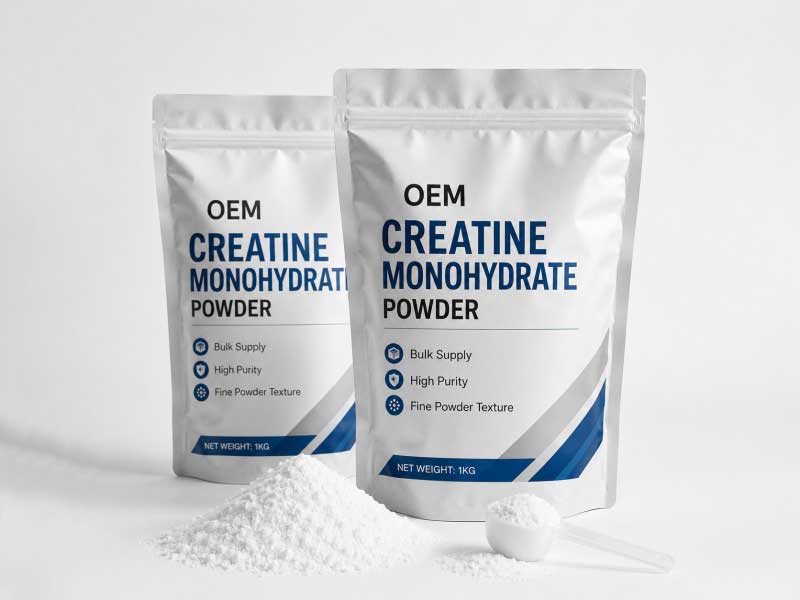
A creatine powder can look excellent when it leaves the blending room and still become a hard, frustrating lump weeks later. For a supplement brand, the immediate problem is a consumer who cannot scoop a normal serving. Behind that complaint may be a more expensive concern: an ingredient change, a packaging weakness, or a production condition that was never tested against real storage conditions. A product does not become commercially reliable simply because its first sample looks good.
Creatine powder caking occurs when particles form persistent connections through moisture-related bridges, surface adhesion, crystallization, or pressure. Risk depends on the creatine grade, particle-size distribution, other formula ingredients, manufacturing exposure, and packaging performance. Prevention starts with identifying the dominant mechanism, then verifying improvements through controlled comparisons, documented moisture measurements, practical powder-flow testing, and stability studies using the intended retail package.
At Zoxizo, creatine powder belongs to a broader sports nutrition manufacturing program that includes ingredient selection, custom formulation, sampling, blending, filling, packaging, and batch quality checks. That combination matters because a change that makes powder flow more easily may also change its mouthfeel, serving weight, ingredient statement, or production cost. Imagine two tubs made with the same creatine monohydrate: the unflavored one stays loose, while the fruit-flavored version develops hard pockets. The useful question is not whether creatine is inherently defective; it is what changed in the complete product and how that difference can be measured.
What Causes Caking in Creatine Powder?
Creatine powder cakes when separate particles become attached strongly enough to form clumps or compact masses. Moisture, soluble ingredients, particle size, surface forces, mechanical pressure, and storage time can all contribute. A useful investigation compares the affected powder with an acceptable reference batch and examines manufacturing records, environmental exposure, and the actual packaging before changing the formula or the packaging design.
What Is Powder Caking?
Caking is the loss of a powder’s loose, manageable structure as particles join into larger clusters. A soft cluster that breaks apart with gentle tapping is different from a hard block that must be crushed. The first may reflect mild cohesion; the second may involve stronger bridges between particles or long-term consolidation. Recording those differences is useful because “clumping” is often used to describe several distinct physical problems, and those problems do not always respond to the same corrective measure.
For a creatine supplement, the consequences extend from production to the customer experience. Cohesive material can discharge unevenly from a hopper or interrupt filling equipment. Once packaged, it may be hard to scoop consistently, and consumers may mistake a physical change for a loss of potency. Neither a pleasant first-day appearance nor a normal creatine assay guarantees acceptable physical behavior over time. The finished product needs a specification for appearance and usability, not just identity and active-ingredient content.
How Does Moisture Cause Caking?
Moisture can create thin liquid connections between adjacent particles. If part of a soluble ingredient dissolves in that moisture and later recrystallizes, those connections may turn into stronger solid bridges. A powder repeatedly exposed to humid and dry conditions can therefore become firmer over time. The mechanism depends on what is present in the formula: creatine, organic acids, sweeteners, flavor carriers, and mineral ingredients do not necessarily take up water or crystallize in the same way.
It helps to distinguish total moisture content from water activity. A powder might contain little water overall but still have enough available moisture at sensitive particle surfaces to encourage adhesion. Conversely, similar moisture-content readings do not mean two formulations will cake at the same rate. Zoxizo’s powder-production documentation identifies moisture control, blending uniformity, and packaging seals as practical quality checkpoints. Those checks become more informative when the sampling method, room conditions, and time since blending are recorded together.
Do Particle Size and Pressure Affect Caking?
Fine particles have more surface area relative to their mass, so surface forces can become more important than they are for larger particles. That does not make a coarse grade automatically superior: particle shape, distribution, and density also affect flow. A micronized creatine may feel smoother during drinking but behave differently during conveying, filling, and storage. Particle-size measurements such as D10, D50, and D90 are more useful than a vague claim that a material is “extra fine” because they reveal the distribution, including the potentially troublesome fine fraction.
Pressure changes how particles contact one another. Powder at the bottom of a large filled tub experiences different consolidation forces from powder in a lightly filled laboratory jar; transportation vibration can increase settling as well. These differences are a reason to test the intended package and fill weight, not just a small open sample. If a grade change improves hopper discharge but increases sediment or produces a gritty drink, the formulation team has traded one problem for another rather than finding a complete solution.
Is Caking Different From Poor Dissolution?
Yes. Caking describes the behavior of dry particles during storage and handling, while dissolution describes a substance entering solution after it is added to liquid. Creatine monohydrate is not infinitely soluble in water, particularly when a large serving is mixed into a small amount of cool liquid. Visible sediment after stirring can therefore occur without any prior caking, and a caked dry powder may still disperse after mixing. These observations require separate tests and should not be reported as the same defect.
There is also a difference between dissolving and dispersing. Very fine creatine may stay suspended briefly, making a drink look uniform even though not all particles have dissolved. During development, a realistic preparation test should specify serving size, water volume, temperature, mixing method, and observation time. The dry-powder assessment should separately record clump hardness, flowability, and any change after storage. Keeping these measurements separate prevents unnecessary reformulation and supports accurate product descriptions.
Which Ingredients Increase Caking Risk?
Ingredients can increase creatine powder caking when they absorb moisture, become sticky, dissolve and recrystallize, or change how particles pack together. Flavor carriers, certain sweeteners, organic acids, minerals, and other active ingredients may influence the finished blend. The actual risk depends on material grade and concentration, so a successful unflavored creatine formula cannot automatically validate every flavored variation or ingredient combination.
Is Creatine Monohydrate Hygroscopic?
Creatine monohydrate should not automatically be described as a highly hygroscopic raw material. It is a crystalline hydrate with documented solid-state stability, but the behavior of a commercial supplement depends on more than the creatine molecule. Particle characteristics, added flavor materials, the moisture environment, and packaging all influence the finished blend. The water held within the monohydrate crystal structure is also not the same as unwanted water picked up on particle surfaces during storage.
A useful comparison is pure creatine monohydrate against the complete flavored blend. If the pure material remains free-flowing while the final formula becomes sticky, the investigation should examine additions and processing history before blaming creatine itself. Incoming material review can include identity and assay, supplier documentation, particle-size distribution, bulk density, and relevant moisture information. Testing each materially different finished formula gives a brand a stronger basis for shelf-life decisions than repeating a supplier’s general ingredient description.
Does the Form of Creatine Matter?
Different creatine solid forms can behave differently when exposed to humidity. Research on creatine polymorphs reported that a particular anhydrous form converted toward creatine monohydrate above approximately 35% relative humidity, while two other studied anhydrous forms transformed above approximately 60% under the researchers’ controlled conditions. Those figures describe specific crystalline forms and experiments, not universal humidity limits for all creatine ingredients, production rooms, or finished dietary supplements.
This distinction is important when comparing creatine monohydrate with anhydrous creatine. A product label may identify the general ingredient category without revealing every detail of raw-material crystal form, particle morphology, or processing history. A change of supplier or grade can therefore alter powder behavior without changing the broad product concept. The sensible choice is based on verified identity, regulatory suitability, physical stability, processing performance, and sensory results, rather than an unsupported claim that one creatine form never cakes.
How Do Sweeteners and Flavors Affect Caking?
Flavored powders often contain much more than the ingredients named on the front label. Powdered flavors may use carriers, and sweetening systems can include ingredients with different crystal structures and moisture sensitivities. Some amorphous carbohydrate materials become more adhesive as absorbed moisture increases molecular mobility. Certain soluble crystalline materials can form bridges after partial dissolution and subsequent drying. The same “fruit flavor” description may therefore conceal quite different physical properties between suppliers and grades.
A controlled comparison is more helpful than assuming that all sweeteners or flavor systems are problematic. Keep the creatine source, active amount, serving size, package, and storage conditions the same while comparing flavor carriers or sweetening options. Check powder appearance and flow, but also assess taste, aftertaste, mouthfeel, and cost. A formulation that remains loose but tastes noticeably worse is not a successful result for a brand seeking repeat purchases. This is especially relevant when extending one successful creatine product into several flavors.
Can Other Ingredients Increase Moisture Sensitivity?
Complex sports nutrition powders create more opportunities for ingredient interactions. Electrolytes, acids, amino acids, botanical materials, vitamins, and flavor systems may each have different moisture and particle characteristics. A multi-ingredient pre-workout containing creatine is therefore a different stability project from an unflavored creatine monohydrate tub. Still, ingredient categories are not enough to predict behavior: material grade, coating, concentration, and the surrounding formula all matter.
When a blend starts caking after a new ingredient is added, small-scale elimination or substitution trials can isolate the likely contributor. Changing four ingredients at once makes it hard to know which change helped. It also creates more work when the formula must be reproduced at commercial scale. Zoxizo’s custom formulation work encompasses ingredient selection, sample adjustments, powder production, and packaging, making it possible to evaluate a proposed composition as a complete manufactured product rather than as a list of attractive ingredients.

How Can Formulation Reduce Caking?
Formulation reduces caking by addressing the cause of unwanted particle adhesion. Options include selecting less moisture-sensitive ingredients, adjusting particle-size distribution, changing flavor carriers, and evaluating permitted anti-caking agents. A successful change must preserve declared creatine content, sensory quality, label accuracy, and manufacturing consistency. Improving initial flow alone does not establish long-term stability without product-specific packaged stability and realistic handling tests.
Which Anti-Caking Agents Are Suitable?
Silicon dioxide is one recognized anti-caking ingredient used in food powders, but its suitability depends on the formulation, its technical function, and the applicable market rules. Under U.S. 21 CFR 172.480, silicon dioxide used for its anti-caking effect must not exceed the amount reasonably needed and is subject to a 2% by-weight maximum in the relevant food use. That 2% figure is a regulatory ceiling, not a recommended creatine dosage or evidence that every lower concentration will work. The manufacturer’s ingredient declaration and the target market’s rules must also be checked.
An efficient development approach compares a control batch with a limited number of justified alternatives. The figures below are hypothetical screening levels that illustrate calculation and experimental design; they are not Zoxizo’s validated recipes or published effective doses. The final blend must still total 100%, meaning any added excipient displaces some other ingredient or requires a formally revised serving composition. Results should consider cohesion after storage, filling performance, sensory impact, cost, and the smallest amount that provides a reproducible benefit.
| Illustrative trial | Silicon dioxide (% of blend) | Amount in 1 kg blend | Purpose |
| Control | 0.00% | 0 g | Establish untreated baseline |
| A | 0.25% | 2.5 g | Evaluate a low screening level |
| B | 0.50% | 5.0 g | Compare response at a higher level |
| C | 1.00% | 10.0 g | Check whether further addition is justified |
Not every formula needs an anti-caking additive. If the main problem is a moisture-sensitive flavor carrier, an unsuitable package, or long exposure before sealing, changing those conditions may provide greater value. The best decision follows comparative results rather than an assumption that more silicon dioxide automatically means better protection. The U.S. regulation can be checked directly at https://www.ecfr.gov/current/title-21/section-172.480.
How Does Particle Size Affect Flowability?
Particle engineering can improve powder handling, but the target is not simply the largest or smallest particle. Finer particles may increase cohesion, while a broad mixture of small and large particles can change packing density and segregation behavior. Two incoming creatine grades with similar median particle sizes can still act differently if one has substantially more fines. For that reason, D10, D50, and D90 measurements should be paired with actual flow tests rather than used as stand-alone quality claims.
A comparison should hold room conditions, sample mass, test equipment, and handling history constant. Bulk density, tapped density, hopper flow, and powder appearance can then be assessed alongside mouthfeel and preparation behavior. Particle changes can also affect how ingredients distribute within a multi-component blend. A grade that flows beautifully on its own may segregate when combined with a much coarser or denser ingredient. Formulation approval is stronger when the raw-material choice works in the final mixture, through the filling equipment, and in the consumer’s glass.
Can Ingredient Ratios Reduce Caking?
Changing ingredient proportions sometimes reduces caking, particularly if a comparatively small portion of the formula contains highly moisture-sensitive material. One option may be to change the flavor carrier rather than lower the declared creatine content. Another may be to select a different acidulant or sweetening combination that retains the intended taste with better powder handling. These changes need controlled testing because moisture-related effects are not always proportional to an ingredient’s percentage in the formula.
Small changes are easier to interpret when expressed precisely. In a 1,000 g laboratory batch, replacing 10 g of one component changes the formula by 1 percentage point. That can be meaningful, but it does not establish how much caking will decrease. Keep the creatine amount and major test conditions fixed, and record both the technical outcome and taste feedback. A commercially sound choice balances stability, serving accuracy, ingredient cost, consumer preference, and the ability to reproduce the formulation in larger batches without unwanted separation.
Do Anti-Caking Agents Affect Taste or Labeling?
An anti-caking material may influence more than how powder pours. Depending on its type and loading, it can alter mouthfeel, density, dispersion, visible sediment, or the appearance of an unflavored product. The differences may be difficult to notice in a strongly flavored sports drink but more obvious in a simple creatine formula containing very few ingredients. Sensory checks are therefore not optional extras when the product is intended for daily use.
Labeling is equally important. Adding a functional excipient can change the ingredient statement and may conflict with a brand’s positioning around minimal ingredients or no added anti-caking agents. U.S. dietary supplement labels must meet applicable requirements, including ingredient-declaration rules in 21 CFR 101.4 where relevant. Market-specific permissions also need review before an ingredient is approved. Zoxizo can evaluate formula adjustments alongside packaging and label development, but the final ingredient choice should always be supported by product-specific tests and the rules of the destination market.
How Does Manufacturing Affect Powder Caking?
Manufacturing conditions can influence creatine caking through moisture exposure, blending, material transfer, powder consolidation, and delays before sealing. A suitable formula may still perform poorly if production introduces uncontrolled environmental exposure or inconsistent handling. Effective control means documenting relevant room conditions and process settings, then confirming that the finished powder remains within documented, agreed physical and quality specifications over time.
How Does Humidity Affect Powder Blending?
Weighing, screening, blending, sampling, and filling can expose powder to surrounding air. Whether that exposure causes trouble depends on the formula’s moisture sensitivity and the time spent open to the environment. A short operation in one room may be acceptable while a long hold in the same room may not be. It is therefore misleading to publish a single humidity limit for every creatine powder without product-specific evidence. Temperature matters as well, because relative humidity changes with temperature even when the absolute amount of moisture in the air is similar.
Practical controls include logging temperature and humidity at relevant production stages, minimizing open handling, protecting intermediate containers, and reducing avoidable delays between blending and sealing. Deviations need a documented response rather than an automatic assumption that the batch is safe to release. Zoxizo’s powder-manufacturing scope covers the sequence from incoming material review through mixing, sampling, filling, and package sealing. Recording conditions at those steps makes differences between batches easier to investigate and supports more dependable repeat production.
Can Mixing and Handling Cause Caking?
Blending is necessary for consistent composition, but handling can also change powder characteristics. Repeated transfer may increase contact with humid air, attrition can create extra fine particles, and powder can accumulate on equipment surfaces. Depending on the product and equipment, vibration and prolonged storage may increase settling or consolidation. These possibilities do not establish that a longer blend time or a faster mixer will always worsen caking; each process needs to be examined on its own terms.
The key is to compare acceptable and problematic batches using specific records. Ingredient lot, mixer loading, mixing duration, transfer steps, hold time, observed deposits, and filling interruptions can all help reconstruct what happened. A powder may leave a mixer looking uniform yet bridge above the filling equipment or become difficult to discharge later. Changing the formula without reviewing those process details can waste time and leave the original defect untouched. When ingredient distribution is also critical, any process adjustment must preserve blend uniformity rather than optimizing flow at its expense.
How Can Production Conditions Be Controlled?
A useful process specification defines what is measured, where it is measured, what range is acceptable, and what happens when a condition changes. Environmental readings are only one part of that system. Powder-hold times, blending settings, transfer practices, fill-weight variation, and seal checks may all influence the final result. Establishing those conditions requires evidence from a particular formula and production line; simply copying a set of numbers from another powder product can create false confidence.
Repeat orders deserve extra attention because raw-material substitutions and lot-to-lot particle differences can affect a previously stable process. A brand should know whether material specifications are fixed, whether changes require approval, and how deviations are investigated. Zoxizo’s documented work includes raw-material selection, sampling, production QC, and finished-product inspection. For a creatine project, those services are most valuable when connected through agreed specifications, recorded outcomes, and clear decisions about whether a batch may proceed to filling or release.
Which In-Process Checks Prevent Caking?
In-process checks help detect changes that could lead to caking, although they cannot guarantee how a product will behave months after shipment. A practical inspection sequence can include incoming powder appearance, moisture results where appropriate, blend uniformity, signs of material buildup, filling consistency, and package closure integrity. When a parameter changes unexpectedly, the quality team should investigate before assuming that the issue is merely cosmetic or that an anti-caking additive will solve it.
The value of measurement depends on traceability. A moisture result without a batch identity, method, sampling time, and relevant environmental conditions is harder to interpret. The same applies to an isolated photograph of a clump. The FDA’s dietary supplement current good manufacturing practice rules in 21 CFR Part 111 address specifications, manufacturing records, appropriate testing, and quality-control responsibilities. Zoxizo’s company materials describe a quality and testing team, powder-specific QC checks, and batch documentation support. Those capabilities should be linked to the agreed inspection plan for each formula rather than treated as a claim that every possible test is performed in-house.

Which Packaging Methods Prevent Creatine Caking?
Packaging helps prevent creatine caking by limiting water-vapor entry and protecting powder from repeated exposure, poor sealing, and unsuitable distribution conditions. Barrier materials, closures, package geometry, and consumer use all affect performance. Tubs, pouches, and stick packs can be effective when properly specified, but the complete filled package should be tested rather than assuming that one format always provides superior protection.
How Do Moisture Barriers Protect Creatine?
A packaging material acts as a barrier that slows the movement of water vapor into the product. Water vapor transmission rate, or WVTR, is commonly expressed as grams passing through a square meter of material per day under stated test conditions. Lower WVTR generally indicates stronger moisture resistance when the test conditions are comparable. It is not enough to compare numbers from different suppliers without confirming temperature, humidity difference, material construction, and test method.
ASTM F1249-25 is a recognized method for measuring WVTR through applicable flexible films using a modulated infrared sensor. As the illustrative calculation below shows, even a simple difference in material transmission rate can produce a large theoretical difference over time. These numbers are examples, not actual Zoxizo package test reports. The calculation assumes an unchanged test gradient and excludes defects, seams, closures, and changes in the moisture balance, so it must not be treated as a prediction of finished-product shelf life.
| Illustrative parameter | Barrier film A | Barrier film B |
| WVTR at identical test conditions | 0.20 g/m²/day | 2.00 g/m²/day |
| Assumed effective film area | 0.04 m² | 0.04 m² |
| Illustration period | 90 days | 90 days |
| Calculated vapor transmission | 0.72 g | 7.20 g |
A better laminate cannot compensate for an open seal or poorly fitting closure. Finished-package inspection and material specifications belong in the same discussion. Zoxizo supports tubs, pouches, and stick packs, allowing the packaging format to be evaluated during product development rather than chosen solely because it looks attractive on a retail shelf. The ASTM method is described at https://store.astm.org/standards/f1249.
Are Tubs, Pouches, or Stick Packs Better?
A multi-serving tub is convenient for consumers who scoop creatine every day. Its pre-opening protection depends on the container and closure system, while performance after opening also depends on how promptly the lid is replaced and whether moisture enters during use. A pouch can provide strong protection when made with an appropriate barrier laminate, but resealable closures vary in effectiveness. Both formats also need sufficient structural strength to survive normal distribution without compromising the product.
Individually sealed stick packs and sachets reduce repeated exposure of unopened servings because consumers open only the portion they intend to use. They can be particularly useful for travel packs or flavored single-serving products, although they may add packaging and filling costs. The right comparison should include actual serving size, package materials, sealing method, unit economics, intended sales channel, and how people will use the product. Testing all candidate formats with the same formula is much more reliable than declaring a universal winner based on package type alone.
Do Desiccants Help Prevent Caking?
Desiccants can help reduce moisture in the headspace of an appropriately sealed package, but they have limited capacity and do not repair a weak formula or a damaged barrier. Their effectiveness depends on the desiccant material, initial moisture level, package size, moisture transmission through the package, and expected storage duration. A sachet that performs adequately in one container may not provide the same protection in a larger tub or a package used repeatedly in a humid environment.
For a complete assessment, the desiccant should be evaluated with the intended package rather than tested alone. Its placement and containment must avoid contamination and other consumer safety problems. A product already packed with excessive moisture may consume part of the desiccant’s capacity immediately, while a poorly sealed tub can admit moisture faster than the system can manage. Selecting desiccant size from a generic rule of thumb may therefore be misleading. The question is whether the finished package maintains acceptable powder condition for the planned shelf life.
How Do Storage and Shipping Affect Caking?
A creatine supplement does not remain in one environment after production. It may pass through a warehouse, freight container, regional distributor, fulfillment center, and consumer’s home. Temperature fluctuations, humidity gradients, stacking pressure, and vibration can affect packaging performance and particle consolidation. Even a product that leaves the factory in excellent condition may show different behavior after a long journey, especially if the package is damaged or the formulation is sensitive to moisture cycling.
Storage trials should represent the actual distribution plan as closely as practical. That may involve monitoring physical appearance and flow after controlled temperature or humidity exposure, assessing seals after handling, or comparing retained factory samples with returned product. The intent is to identify which condition contributes to the observed issue, not to recreate every possible climate in a single test. Zoxizo’s international shipping and packaging support can be considered during product development so that transport risks are addressed before a launch rather than investigated only after complaints arrive.
How Is Creatine Caking Tested and Controlled?
Creatine caking is evaluated by combining physical powder tests, moisture analysis, controlled storage, packaging studies, and appropriate chemical testing. Bulk and tapped density, Hausner ratio, Carr index, caking-strength observations, and water activity can provide different pieces of evidence. Results should be compared with product-specific requirements, and visible clumping should never be treated as automatic proof of creatine degradation, loss of potency, or contamination.
Which Tests Measure Caking and Flowability?
No single number fully describes powder handling. Bulk density measures how much powder mass occupies an unsettled volume, while tapped density measures the mass divided by a more compacted volume after a defined tapping procedure. These values can be used to calculate the Hausner ratio and Carr index, two common screening indicators of powder flow behavior. Their interpretation depends on sample preparation, equipment, and the powder itself; they are not universal release criteria for creatine supplements.
The formulas are Hausner ratio = tapped density / bulk density and Carr index (%) = [(tapped density – bulk density) / tapped density] × 100. For example, a hypothetical powder with bulk density of 0.60 g/mL and tapped density of 0.75 g/mL has a Hausner ratio of 1.25 and a Carr index of 20%. These calculated values are illustrative, not measurements from Zoxizo’s products. Flow screening should be accompanied by direct observations of stored-powder agglomeration and, where appropriate, controlled tests of the force required to break a consolidated sample.
| Common flow description | Carr index (%) | Hausner ratio |
| Excellent | ≤10 | 1.00–1.11 |
| Good | 11–15 | 1.12–1.18 |
| Fair | 16–20 | 1.19–1.25 |
| Passable | 21–25 | 1.26–1.34 |
| Poor | 26–31 | 1.35–1.45 |
| Very poor | 32–37 | 1.46–1.59 |
| Very, very poor | ≥38 | ≥1.60 |
These conventional screening categories are associated with pharmacopeial discussions of powder flow, including USP General Chapter <1174>. They help compare test results, but a powder that flows acceptably on day zero may still cake during storage. A brand should therefore consider the actual filling process, sample hardness after storage, and expected consumer use before defining its acceptance criteria. The strongest evidence comes from repeatable, relevant tests performed on representative formula and package combinations.
How Are Moisture and Water Activity Measured?
Moisture content and water activity describe related but different properties. Moisture content indicates the amount of water present in the sample, often reported as a percentage by mass. It may be measured using a suitable loss-on-drying procedure, Karl Fischer titration, or another validated method. Loss on drying can include volatile materials other than water, so the method should be chosen with the complete formulation in mind, particularly for flavored products.
Water activity describes the thermodynamic availability of water and is expressed from 0 to 1. At equilibrium, water activity = equilibrium relative humidity (%) / 100 at the specified temperature. Thus, a measured water activity of 0.30 corresponds to approximately 30% equilibrium relative humidity. That relationship does not create a universal caking threshold: a creatine blend might remain manageable at one condition while another formulation cakes because of different ingredients and particle interactions. Moisture measurements are most informative when paired with flow, appearance, and controlled exposure observations.
Does Caking Mean Creatine Has Degraded?
No. Caking is a physical change; degradation is a chemical change. Both can be influenced by storage conditions, but a visible lump does not reveal whether creatine content has decreased. Published research on solid creatine monohydrate reports no detectable conversion to creatinine after more than three years at temperatures up to 40°C under the cited study conditions. Those results support the distinction between solid-state chemical stability and physical powder quality, but they do not guarantee the shelf life of every flavored supplement or package.
Creatine in aqueous solutions behaves differently, with conversion toward creatinine influenced by conditions such as pH, temperature, and time. A drink prepared from powder should therefore not be used as a direct model for dry-product stability. When potency is in question, validated analytical methods are needed to measure creatine and relevant degradation products; sight and touch are not enough. A product can also be chemically acceptable while failing a legitimate physical-use specification because it is too hard to scoop or dispense. Both outcomes deserve appropriate testing and documented decisions. A review of creatine stability is available at https://pmc.ncbi.nlm.nih.gov/articles/PMC3080578/.
How Is Caking Evaluated During Shelf-Life Testing?
Shelf-life testing should use the actual finished formula in representative commercial packaging. The initial sample establishes a baseline for appearance, moisture, flow, ingredient content when applicable, and packaging integrity. Later samples are compared with that baseline to identify trends, not merely to note whether any lump is visible. Open-powder humidity screening may help reveal a mechanism, while closed-package testing answers how the product behaves in the package that customers will receive. Those are different experiments with different purposes.
Illustrative screening conditions might include 25°C at several controlled relative humidity levels, with checks after 7, 14, and 28 days, followed by justified elevated-temperature studies and longer real-time observations. These numbers are examples of study design rather than standardized creatine acceptance limits or validated Zoxizo procedures. An accelerated result should not be converted automatically into a 12- or 24-month shelf-life claim because the relationship between moisture, crystallization, temperature, and packaging is not always linear. FDA dietary supplement CGMP guidance explains that any expiration or shelf date used should be supported by appropriate data: https://www.fda.gov/regulatory-information/search-fda-guidance-documents/small-entity-compliance-guide-current-good-manufacturing-practice-manufacturing-packaging-labeling.
For a brand investigating an existing caking complaint, the most useful starting materials are the approved formula, current ingredient specifications, manufacturing and batch information, a retained acceptable sample if available, the retail packaging specification, and representative affected product. Zoxizo’s documented services include creatine powder development, production, powder QC, packaging, and batch documentation support. The exact testing scope should be agreed for the project, including whether a particular analysis is performed through an appropriate external laboratory. This keeps the investigation tied to evidence instead of assuming that one additive, one humidity number, or one packaging upgrade will solve every case.
Creatine powder should be judged by how it performs throughout its commercial life, not just by how it looks when the lid is first applied. A useful solution can involve a different flavor carrier, a tighter raw-material specification, shorter open handling, better package integrity, or a combination of changes. Those decisions should follow controlled comparisons and be checked again in the full formulation and final package. The objective is a powder that meets its declared composition, runs consistently through manufacturing, remains practical to use, and earns confidence when customers open it at home.
Zoxizo approaches creatine and other powder supplements through product development, sampling, manufacturing, packaging, and quality-control coordination. For a brand planning a new creatine line or correcting an existing caking issue, the most productive conversation begins with the formula, the observed defect, the sales market, and the intended package. With that information, the development team can assess relevant options without promising a result before testing. Consistent performance is built by making those decisions early and documenting what the finished product actually does.

Frequently Asked Questions
Is clumpy creatine still safe to use?
Clumping alone does not prove that creatine is unsafe or has lost its potency. Powder may form soft or hard lumps because of physical adhesion, especially after moisture exposure, while its chemical composition may remain substantially unchanged. However, an unusual smell, visible contamination, damaged packaging, evidence of water entry, or product-specific storage concerns warrant caution. Consumers should follow the labeled instructions and avoid using a product when contamination or spoilage is suspected. For manufacturers, physical appearance and analytical quality must be evaluated separately before deciding whether an affected batch meets its established specifications.
Does creatine monohydrate absorb moisture from the air?
Creatine monohydrate is a crystalline hydrated material and should not be assumed to behave like every other moisture-sensitive supplement ingredient. Its overall moisture response depends on the actual grade, particle properties, storage environment, and other materials in the blend. Flavored formulas may cake more readily than the raw creatine because their sweeteners, flavor carriers, or acids behave differently. A useful test compares the raw ingredient with the finished product under controlled exposure, then checks flowability and caking alongside moisture measurements. Packaging and handling still matter even when the creatine raw material itself is chemically stable.
What is the best anti-caking agent for creatine powder?
There is no single best anti-caking agent for every creatine formulation. Silicon dioxide is a recognized option in applicable food uses, but its effectiveness depends on ingredient grade, loading, mixing, and the rest of the powder system. Product labeling and local regulatory rules must also be considered. The U.S. regulation in 21 CFR 172.480 includes a maximum of 2% by food weight under its stated conditions, which should not be mistaken for a standard recommended inclusion level. Small comparative trials, sensory checks, and packaged stability results provide a stronger basis for selecting an agent or deciding that no agent is needed.
Can creatine powder cake even inside a sealed container?
Yes. A sealed product may still cake if it was packed with unfavorable moisture conditions, contains moisture-sensitive ingredients, experiences particle consolidation, or is enclosed in packaging that admits water vapor over time. Sealing quality and barrier performance are separate considerations: a secure closure does not make every container material equally moisture resistant. A proper investigation examines the formulation, initial material condition, package components, and actual storage history. Testing should use the intended commercial container, not only an open laboratory sample, because the package and powder interact throughout distribution and storage.
Are stick packs better than tubs for preventing creatine clumping?
Stick packs can reduce repeated exposure because each unopened serving remains sealed until use. Multi-serving tubs, by contrast, are opened and closed many times, so consumer habits and closure performance become important. That advantage does not mean every stick pack has a better moisture barrier than every tub. The laminate, seal quality, package integrity, and initial product condition still determine performance. Brands should compare the formats using the same formula, representative storage conditions, and realistic opening patterns. Serving convenience, filling cost, and product positioning also matter when choosing between individual portions and bulk packages.
How should a manufacturer test creatine powder for caking?
Testing should combine direct observations of clump formation and strength with relevant moisture and flow measurements. Useful methods may include bulk and tapped density, Hausner ratio, Carr index, controlled humidity exposure, water activity, and package-integrity evaluation. Chemical assays are a separate requirement when a concern involves creatine potency or degradation rather than physical texture. Samples should include an initial reference and the actual finished product held under justified conditions, with repeat observations over time. Acceptance criteria must be tailored to the product and supported by evidence instead of borrowed from an unrelated powder formula.



