Skip to content

Fish oil is one of those supplement categories almost everyone has heard of, yet not everyone knows how to judge. One bottle may look clean and premium. Another may look cheap and simple. Both may say “fish oil,” yet the real product value can be very different.
The main value comes from omega-3 fatty acids, especially EPA and DHA. These nutrients are commonly linked with heart health, brain function, eye wellness, and normal inflammation response. NIH ODS explains that getting EPA and DHA directly from foods or supplements is the most workable route for raising these fatty acids in the body, and EPA/DHA intake can help lower triglyceride levels.
For your supplement line, fish oil is not only a health topic. It is a product planning question. EPA/DHA content, softgel size, serving count, label clarity, testing, packaging, MOQ, and reorder cost all decide whether an omega-3 product can be explained clearly, sold confidently, and reordered without pressure.
You may wonder, “Is fish oil too common now?” Not always. Mature categories can still work when the route is sharp. The formula, label, packaging, target channel, and price band need to support the same story.
What Do Fish Oil Supplements Do for the Body?
Fish oil supplements help provide EPA and DHA, two omega-3 fatty acids many daily diets may not supply in enough amounts. People who rarely eat fatty fish such as salmon, sardines, or mackerel often choose fish oil softgels as an easier way to add omega-3s to their routine.
We should describe fish oil as daily nutritional support, not medicine. A safer message may connect fish oil with heart wellness, brain function, eye health, and normal inflammation response, while avoiding disease-treatment claims.
Picture someone comparing two bottles online. One bottle shows “1000 mg fish oil” in large print, but the actual EPA and DHA level may be much lower. Another bottle may show clearer active content, cleaner serving directions, stronger odor control, and better softgel stability. The second product may cost more, yet it is often easier to explain.
For your project, the key point is clear: you do not only need a fish oil product. You need a product story you can bring to Amazon, Shopify, a pharmacy shelf, a clinic recommendation channel, or a social media audience.
Weak wording like “fish oil is good” does not help much. A stronger product discussion connects EPA/DHA level, dosage form, label language, testing, packaging, MOQ, and channel fit. Once these points are clear, the conversation moves from a common supplement idea to a real product plan.
Why Are Omega-3, EPA, and DHA Important in Fish Oil?
Fish oil matters because of its omega-3 fatty acids, mainly EPA and DHA. These nutrients carry most of the value behind the category. They also shape the formula story, label strength, and market positioning.
EPA and DHA Are the Main Active Components
EPA and DHA are the real working nutrients behind most fish oil supplements. Many people see “fish oil” on a bottle and assume all products are similar. The front label may show total fish oil weight, yet the actual EPA and DHA amount can vary a lot.
A better product question is not only, “How much fish oil is in each softgel?” A stronger question is, “How much EPA and DHA does each serving provide?” That number makes the product easier to compare and easier to position.
EPA/DHA level affects several project decisions:
- Formula positioning: daily wellness or stronger omega-3 support
- Serving size: one softgel, two softgels, or more per day
- Label clarity: total fish oil weight versus active omega-3 content
- Cost structure: higher concentration often raises raw material cost
- Sales channel: Amazon, Shopify, retail shelf, pharmacy, or clinic route
At ZOXIZO, we check these details early. When the active content is unclear, the sales story becomes weak. A cheaper formula may look attractive during quotation, but too many softgels per day can make the real cost per serving less attractive.
Fish Oil vs. Other Omega-3 Supplements
Fish oil is one omega-3 source, not the whole omega-3 category. NCCIH explains that fish oil supplements contain EPA and DHA. Cod liver oil may also contain vitamins A and D. Algal oil can provide vegetarian DHA and sometimes EPA. Flaxseed oil provides ALA, a plant-based omega-3.
| Product Type | Main Omega-3 Source | Common Positioning |
|---|---|---|
| Fish oil | Marine oil | Daily omega-3, heart, brain, eye support |
| Krill oil | Krill | Premium marine omega-3 positioning |
| Cod liver oil | Cod liver | Omega-3 plus vitamins A and D |
| Algal oil | Algae | Vegetarian DHA/EPA route |
| Flaxseed oil | Plant ALA | Plant-based omega-3 route |
The right route depends on your market. A Shopify wellness brand may prefer a cleaner lifestyle story. A pharmacy or clinic channel may focus more on dosage clarity and testing. An Amazon listing needs fast comparison points because people scan product pages quickly.
Fish oil should not be selected only because the category is familiar. Better decisions come from target market, dietary preference, retail price band, dosage form, certification needs, and reorder cost.
Dosage and Serving Size Shape the Product Experience
Dosage is where many fish oil products gain or lose trust. A front label can look strong, but the Supplement Facts panel tells the real story. Low EPA/DHA content may require more softgels per day, which affects user experience, monthly cost, bottle count, and repeat purchase.
Think of two products:
- Product A: 1,000 mg fish oil per softgel, but low EPA/DHA concentration
- Product B: higher EPA/DHA per serving, with clearer label information
Product A may look cheaper during early comparison. Product B may be easier to sell because the active content is clearer and the daily serving feels more reasonable.
For ZOXIZO-style project planning, dosage and serving size affect raw material cost, bottle count, label layout, softgel size, MOQ, shipping weight, retail price, and reorder pressure. A serious fish oil project needs benefits, serving design, label language, and price structure to work together.
What Benefits Do Fish Oil Supplements Usually Support?
Fish oil supplements are usually linked with heart health, brain function, eye wellness, and normal inflammation response. Strong content should explain these support areas clearly while avoiding treatment-style promises.
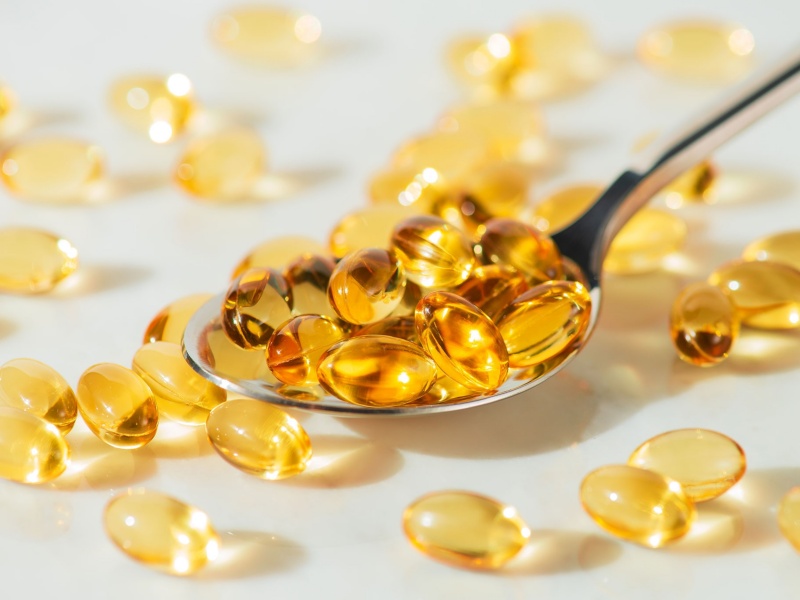
Heart Health and Triglyceride Support
Heart-health support is often the strongest commercial angle for fish oil, especially around triglyceride support. Many people already connect omega-3 products with cardiovascular wellness. Claims still need care. Fish oil should not be positioned as a product that prevents heart disease.
A safer route describes fish oil as daily nutritional support for people who want more EPA and DHA in their routine. NIH ODS states that EPA and DHA from foods or supplements can lower triglyceride levels.
A stronger heart-health product page should show:
- EPA/DHA amount per serving
- Clear serving instructions
- Clean Supplement Facts panel
- Testing support for mass production batches
- Market-compliant wording for the target country or platform
A page that only says “supports the heart” may feel too thin. A better product route explains the active omega-3 level, daily serving, and quality control without making disease claims that may create platform review risk.
Brain Function and Cognitive Wellness
Brain support is another common fish oil direction, yet the wording should stay in daily wellness territory. DHA is an important structural fat in the brain and retina, which is one reason DHA often appears in cognitive wellness, family nutrition, and healthy-aging products.
For adult products, safer wording includes brain function, nervous system support, and healthy-aging wellness. These expressions fit Amazon, Shopify, pharmacy, and nutrition-consultant channels better because they sound clear without crossing into medical claims.
| Product Position | Better Wording | Risky Wording |
|---|---|---|
| Daily wellness | Supports brain health | Improves intelligence |
| Healthy aging | Supports cognitive wellness | Prevents dementia |
| Family nutrition | Provides DHA for daily nutrition | Treats learning issues |
| Lifestyle brand | Omega-3 support for daily routine | Fixes brain fog |
Brain-health positioning also affects packaging and cost. A premium softgel line may need cleaner label design, stronger odor control, and clearer EPA/DHA display. When the product is aimed at Shopify, clinic, or nutrition-consultant channels, the story must feel more reliable than a low-price fish oil listing.
Eye Health and Daily Wellness
Eye-health positioning should focus on nutritional support, not symptom treatment. DHA is naturally related to eye wellness because of its role in the retina. That gives fish oil a reasonable place in vision-support product lines, especially when the label language is clean and the dosage is clear.
Evidence does not support every eye-related claim equally. NCCIH takes a cautious view of omega-3 supplement benefits across many conditions, so eye support should not become a dry-eye or disease promise.
Safer product wording can include:
- Supports eye wellness
- Provides DHA for daily nutrition
- Helps increase daily omega-3 intake
- Suitable for people who do not eat fatty fish often
From a manufacturing and label view, eye-health products often need careful claims and a clean Supplement Facts panel. Some projects may combine omega-3 with lutein, zeaxanthin, or antioxidant ingredients. In that case, formula feasibility, dosage, softgel size, and cost need to be checked before quotation.
Normal Inflammation Response and Joint Comfort
Fish oil is often discussed for inflammation response and joint comfort, but the message should remain moderate. NCCIH notes that omega-3s from seafood and fish oil may be modestly helpful for rheumatoid arthritis symptoms, while many other studied areas remain unclear.
For supplement marketing, safer language avoids “treats arthritis.” Better wording includes supports a normal inflammation response, supports joint comfort, or fits active-aging and sports-recovery wellness lines.
Fish oil can match several product directions:
- Active aging: daily joint comfort and mobility support
- Sports recovery: omega-3 support for training routines
- General wellness: balanced fat intake and daily nutrition
- Premium formulas: omega-3 combined with other support ingredients
A fish oil supplement can carry several wellness stories, but too many claims on one label can make the product feel scattered. A clearer route chooses one main positioning, then builds the formula, serving size, packaging, MOQ, and testing plan around that direction.
What Should You Check Before Making Fish Oil Supplements?
Before making fish oil supplements, you should check formula quality, dosage form, label compliance, testing needs, packaging MOQ, and reorder cost. A good omega-3 product is not built by price alone. It needs stable quality, clear communication, and a realistic production route.
Formula Quality Comes Before Price
Fish oil quality starts with raw material control, oxidation risk, and active content accuracy. Omega-3 oils are sensitive to heat, oxygen, and storage conditions. Weak oil quality may lead to strong fishy odor, poor taking experience, or unstable shelf life.
The lowest quote is not always the safest route. Early checks should include:
- EPA/DHA concentration
- Raw material source
- Odor control
- Softgel stability
- Heavy metal and microbial testing
- Batch traceability
- Shelf-life support
At ZOXIZO, we guide the conversation back to formula level, testing expectations, target market, and retail price band when you only ask for a cheaper fish oil quote. A low unit price can become expensive later if the product creates complaints, returns, or weak reorder performance.
Diversified Product Dosage Forms
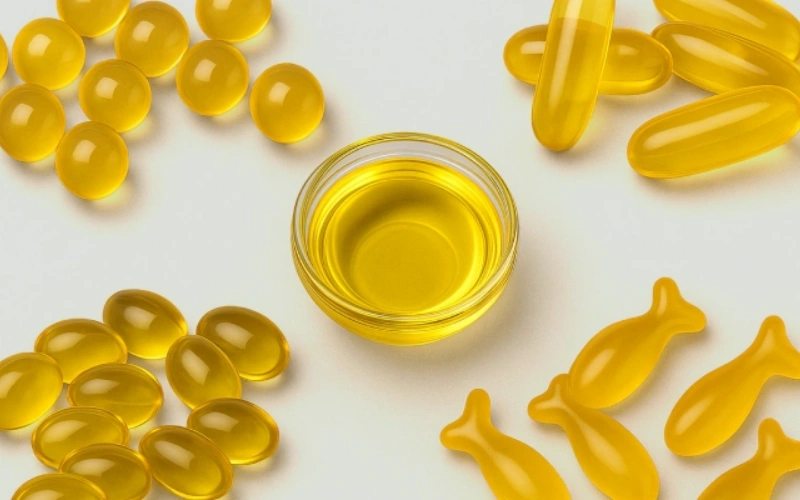
Dosage form affects cost, user experience, MOQ, and logistics. Fish oil is most commonly sold as softgels because oil-based ingredients fit the format well. Softgels are familiar across Amazon, Shopify, pharmacy shelves, and clinic channels.
| Dosage Form | Best Fit | Main Risk |
|---|---|---|
| Softgel | Mainstream fish oil products | Higher production planning requirements |
| Liquid oil | Family or large-volume use | Taste, leakage, oxidation, shipping risk |
| Capsule blend | Mixed formula projects | Oil loading may be limited |
| Advanced combination | Premium heart, eye, or joint support | Cost and label complexity |
For many new omega-3 supplement projects, softgel is the more manageable route. The next questions are softgel size, daily serving, bottle count, label language, and whether your target market can accept the final retail price.
A product may look simple at formula level. Once bottle type, label, outer box, carton packing, and testing are added, the launch order can become heavier. That is why we check packaging and MOQ together instead of treating them as separate decisions.
Label, Testing, and Compliance Need Early Planning
A fish oil supplement label must be clear, compliant, and easy for your market to understand. FDA’s Dietary Supplement Labeling Guide applies to dietary supplements sold in the United States, including products made in foreign countries. FDA also states that the nutrition label for a dietary supplement is called a Supplement Facts panel.
A standard fish oil label usually needs:
- Product name
- Serving size
- Supplement Facts panel
- Amount per serving
- EPA and DHA declaration
- Other ingredients
- Net content
- Manufacturer or distributor information
- Caution statements
- Storage guidance
- Barcode, when required by channel
Label planning should start before production. Amazon, Shopify, retail shelves, pharmacies, and cross-border platforms may review product information in different ways.
Some projects may also involve GMP, HACCP, FSSC, FDA-related documentation, COA, MSDS, Halal, Organic, or Kosher support depending on the market. Product-level certificates such as Halal, Organic, and Kosher usually require separate planning, cost, and certificate-holder details.
Packaging Can Lift MOQ Faster Than the Formula
Many supplement projects become expensive because of packaging, not only because of the formula. Fish oil products often use bottles, labels, cartons, shrink film, and shipping cartons. Custom bottle colors, special caps, premium boxes, foil stamping, laser effects, or small-volume trial packaging can raise MOQ quickly.
I have seen small wellness teams start with a clean softgel idea, then lose control of the launch budget after adding printed boxes, custom caps, and premium finishing too early. The formula was not the problem. The packaging route became too heavy before the product had market proof.
A safer launch route usually looks like:
- Use a stable bottle option
- Keep the label clean and compliant
- Avoid too many custom packaging effects at launch
- Confirm bottle count, carton size, and shipping weight early
- Calculate reorder cost, not only launch cost
For fish oil brands, a better question is: Can the product be produced, labeled, packed, shipped, and reordered without making the launch order too heavy?
How Can ZOXIZO Support Your Fish Oil Supplement Project?
ZOXIZO helps turn a fish oil idea into a workable supplement project by checking formula direction, EPA/DHA positioning, dosage form, packaging route, MOQ, testing needs, lead time, and sales channel fit before production starts.
Start with Your Target Market, Not Only the Formula
A fish oil supplement should be planned around the sales channel early. An Amazon product, a Shopify wellness brand, a pharmacy shelf item, and a clinic-recommended supplement do not need the same route.
A search may begin with “what do fish oil supplements do?” The brand decision goes deeper: who will use it, where will it be sold, and what level of trust does your market expect?
An Amazon page needs clear comparison points, clean label information, and competitive serving value. A pharmacy or clinic channel may care more about testing, compliance documents, and stable supply. A premium Shopify brand may need stronger packaging design, a cleaner product story, and a more polished visual style.
At ZOXIZO, we usually ask you to share:
- Target country or region
- Sales channel
- Benchmark product or product link
- Preferred dosage form
- Expected bottle count or serving count
- Target retail price
- Packaging direction
- Expected order quantity
These details help avoid a common project mistake: making a product that looks good during sampling discussion but becomes too expensive, too hard to explain, or too heavy for the launch order.
Check Formula Feasibility Before Quoting
A serious quote needs more than a product name. For fish oil or omega-3 supplement projects, price may change based on raw material grade, EPA/DHA concentration, softgel size, bottle count, label requirements, packaging style, and testing expectations.
When you ask, “How much is fish oil?” the discussion is still too early. A better conversation should confirm whether the product is for daily wellness, heart-health positioning, eye support, active aging, or another market direction.
ZOXIZO can help review:
- Whether the active content fits your product positioning
- Whether the serving size is easy to follow
- Whether the dosage form matches the formula
- Whether the target price is realistic
- Whether the label and claims need compliance review
- Whether packaging choices will raise MOQ too early
Factory-side judgment matters here. A formula can be technically possible but commercially difficult. If the serving size feels awkward, the bottle count becomes too high, or packaging cost pushes the retail price too far, the project may need adjustment before sampling.
Plan Packaging, MOQ, and Sample Route Together
Packaging should be discussed early because it can change the launch structure. Many supplement projects become heavy because of bottles, labels, cartons, special finishes, printed boxes, and custom colors.
For a new fish oil supplement launch, a cleaner packaging route often works better than an overly customized one. A stable bottle, clear label, and suitable carton plan may give your brand more room to test the market and prepare the next order.
ZOXIZO can support bottle choices, label layout, outer box planning, and design direction when needed. For many supplement projects, packaging decisions include labels, boxes, bottles, cartons, and shipping arrangements.
The goal is not to make the launch order look expensive. The goal is to make it sellable, compliant, and easier to reorder.
Build the Project for Reorder, Not Only Launch
A fish oil supplement is not successful just because production is finished. The real test comes after launch: can the product sell, receive stable feedback, and move into repeat orders without breaking the cost structure?
ZOXIZO looks at the whole route:
| Project Point | Why It Matters |
|---|---|
| Formula direction | Keeps the product story clear |
| Serving size | Affects daily use and monthly cost |
| Packaging plan | Controls MOQ and launch pressure |
| Testing support | Builds trust for platforms and your market |
| Lead time | Helps you plan launch and restock |
| Logistics route | Reduces delivery and customs uncertainty |
| Reorder cost | Decides whether the product can scale |
If you already have a benchmark product, formula idea, or market plan, ZOXIZO can help check whether the project is ready for sampling and quotation. If your plan is still early, we can help narrow the product direction, packaging route, MOQ expectation, and sample plan before the project becomes too heavy.
A strong fish oil supplement project should not stop at “omega-3 is good.” It should become a clear product plan: who it is for, what it supports, how it is labeled, how it is packed, how much the launch order costs, and how easily it can be reordered.
If you are planning a fish oil, omega-3, softgel, or heart-health supplement line, click to contact ZOXIZO and send us your target market, sales channel, benchmark product, formula idea, packaging direction, and expected quantity. We can help you check the route before sampling, quotation, and production.