Skip to content
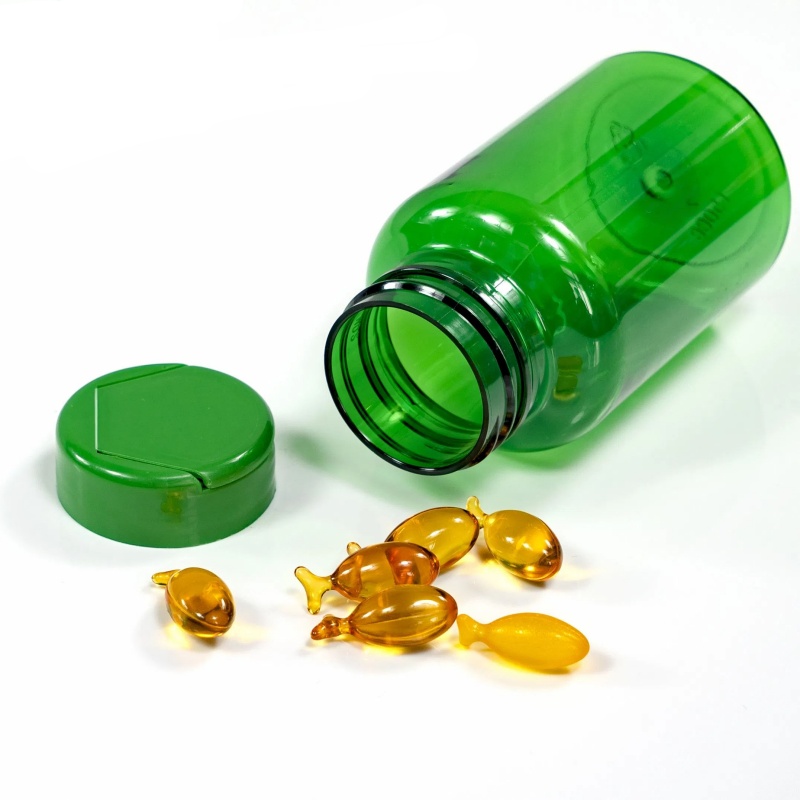
A softgel looks simple enough to fit on a fingertip, yet producing it reliably is one of the more coordinated jobs in dietary supplement manufacturing. The shell must be flexible but not weak, the fill must flow without separating, the dose must remain consistent, and the finished capsule has to survive drying, packaging, transportation, and months of storage. A good-looking capsule on day one is not enough; commercial manufacturing is judged by whether the same product can be made again and again without drifting away from its specifications.
Softgel dietary supplements are manufactured by preparing a compatible fill and shell system, forming the shell material into two ribbons, accurately metering the fill between those ribbons, and using rotary-die equipment to form, fill, seal, and cut each capsule. Fresh softgels are then dried, conditioned, inspected, tested against product specifications, documented by batch, and packed in packaging selected for the formula and intended shelf life.
The interesting part is that none of those stages stands alone. A small change in carrier oil can alter viscosity, a shell adjustment can change drying behavior, and a faster production setting can increase rejects rather than improve output. That is why experienced product teams tend to ask about the complete manufacturing chain instead of focusing only on capsule price. Follow one softgel from raw materials to the finished bottle and the product starts to look less like a simple capsule and more like a carefully balanced manufacturing system.
What Are Softgel Supplements Made Of?
Softgel supplements are made from two coordinated systems: a flexible outer shell and a measured internal fill. Traditional shells commonly use gelatin, water, and a plasticizer, while vegetarian systems use alternative film-forming materials. The fill may be an oil, liquid solution, suspension, or compatible semi-solid. Successful manufacturing depends on the shell and fill remaining compatible during encapsulation, drying, storage, and normal distribution.
What Is in the Softgel Shell?
Traditional softgel shells are commonly built around gelatin, purified water, and a plasticizer such as glycerin or sorbitol. Gelatin forms the structural film, water allows the gel mass to be processed and cast into ribbons, and the plasticizer keeps the dried shell flexible enough to bend rather than crack. Colors, opacifying ingredients, flavors, or other permitted components may be added when product appearance, light protection, or market positioning requires them. The exact proportions are adjusted to the capsule size, fill composition, manufacturing conditions, and desired finished-shell properties.
The shell is therefore part of the dosage form rather than decoration around the formula. A shell that retains too much moisture may remain soft and tacky, while a shell that becomes too dry can lose flexibility and become brittle. Plasticizer balance also matters because it influences elasticity, sealing behavior, and the way the capsule changes during storage. Experienced manufacturers look at shell performance across mixing, ribbon formation, encapsulation, drying, and shelf-life evaluation instead of approving a shell simply because the first samples appear clear and glossy.
| Shell Component | Typical Function | Manufacturing Concern |
| Gelatin or alternative polymer | Forms the capsule film | Strength, sealing behavior, ribbon formation |
| Water | Enables gel processing and film formation | Drying rate, final flexibility, moisture migration |
| Plasticizer | Keeps the shell flexible | Brittleness, softness, storage behavior |
| Color or opacifier | Controls appearance and light exposure | Visual consistency, ingredient compatibility |
| Optional functional additives | Support specific product requirements | Stability, process compatibility, market requirements |
Which Fill Materials Work Best?
Softgels are especially useful for oil-based ingredients and formulas that can be maintained as stable liquids or suspensions. Common dietary supplement examples include fish oil, vitamin D3, CoQ10, lutein, evening primrose oil, CLA, and other lipid-soluble or oil-carried ingredients. The important point is that an ingredient being oil-soluble does not automatically make the full formulation easy to manufacture. Concentration, carrier selection, density, viscosity, oxidation sensitivity, particle behavior, and temperature response all influence how well a fill performs on commercial equipment.
Clear oil solutions are often straightforward to keep uniform, while suspensions require closer attention because solid particles can settle over time. When a suspension is needed, manufacturers may control particle size, agitation, hold time, and temperature so the formula remains sufficiently homogeneous throughout the filling run. Water content and solvent choice also deserve careful review because the fill stays in direct contact with the shell. A formulation that slowly changes shell softness, promotes migration, or creates seal problems can fail even if the initial encapsulation run appears successful.
How Large Can a Softgel Be?
Softgel size is chosen after the required dose, formula density, fill volume, consumer experience, and packaging plan are understood. Tooling is often described in minims, with one minim equal to approximately 0.0616 mL. A 10-minim cavity therefore represents roughly 0.62 mL of nominal internal volume, while 20 minims is about 1.23 mL. These figures describe volume rather than finished weight, because a milliliter of one oil can weigh differently from a milliliter of another formulation.
That distinction matters when a brand wants a high active dose in a small capsule. If the formula cannot hold the target amount at a practical concentration, the options may include increasing capsule size, using two capsules per serving, changing the carrier system, or adjusting the target dose. Very large softgels can hold more fill but may be harder for some consumers to swallow and may reduce the number of capsules that fit in a bottle. Size therefore affects formulation, consumer use, bottle dimensions, carton size, shipping efficiency, and overall product cost.
Are Plant-Based Shells Different?
Plant-based soft capsules follow the same broad idea as gelatin softgels but rely on alternative film-forming systems, and those materials can behave differently during heating, ribbon formation, sealing, and drying. A vegetarian shell is not simply conventional gelatin replaced with one plant ingredient while every machine setting stays unchanged. The manufacturer needs to understand the specific shell technology, its processing window, its interaction with the fill, and how the finished capsule behaves under the planned storage and distribution conditions.
The shell decision also connects to market positioning and certification. A plant-based shell can support vegetarian product development, but it does not automatically make the entire finished supplement Halal, Kosher, allergen-free, organic, or suitable for every market. The fill ingredients, processing aids, flavors, capsule materials, manufacturing practices, and documentation may all need separate review. For a custom project, the most practical approach is to choose the shell after defining the target consumer, destination market, formula, certification goals, and expected commercial volume.
How Is the Softgel Formula Prepared?
Softgel formula preparation starts by developing the fill and shell as separate systems and then confirming that they can work together during commercial manufacturing. Product developers consider dose, solubility, viscosity, particle behavior, fill volume, shell composition, temperature response, moisture movement, stability, and packaging. A formula is not truly production-ready when the ingredient list is complete; it is ready when the same product can be manufactured repeatedly within defined specifications.
How Is the Fill Formula Developed?
Fill development usually begins with the target amount of each active ingredient per capsule. From there, formulators calculate the concentration needed, select a carrier or vehicle, decide whether ingredients will be dissolved or suspended, and estimate the resulting fill volume. This step often reveals the first practical trade-off. A marketing team may want a very strong formula in one small capsule, yet the physical properties of the ingredients may require more liquid volume than the requested capsule can comfortably hold.
Carrier selection is equally important. The carrier must support the active ingredients while maintaining suitable flow, stability, and process behavior. For oxidation-sensitive oils, the development team may also consider antioxidant systems, raw-material quality, oxygen exposure, packaging barrier properties, and storage conditions. A practical pre-production review should confirm the dose per softgel, fill volume, density, physical state, expected viscosity, settling tendency, sensitivity to heat or oxygen, compatibility with the proposed shell, and whether the formulation can be pumped and metered consistently on production equipment.
Which Physical Properties Matter Most?
Viscosity is one of the most visible manufacturing variables because it changes how easily the fill moves through pumps, hoses, and dosing systems, but it is not the only property that matters. Density influences the relationship between volume and fill weight. Suspended particle size affects uniformity and pumpability. Sedimentation can create early-to-late batch variation. Temperature can change flow behavior, while dissolved gases or trapped air can contribute to filling problems. Oxidation-sensitive formulas may require additional attention to handling time and exposure conditions.
Two formulas can display nearly identical Supplement Facts panels and still behave very differently in production. One may be a clear, stable oil solution that stays uniform for hours. Another may contain suspended material that starts settling within minutes. The second formula may still be entirely manufacturable, but it needs more deliberate mixing, agitation, hold-time control, and restart procedures. This is one reason development trials are valuable: they expose physical behavior before the project reaches commercial scale, where corrections become slower, more expensive, and more disruptive to production schedules.
Do Shell and Fill Need Compatibility Testing?
Yes. The fill and shell stay in direct contact for the entire shelf life, so a formulation that works during encapsulation can still develop problems later if the two systems interact poorly. Moisture migration, solvent movement, plasticizer redistribution, oxidation, and ingredient diffusion can gradually change shell softness, hardness, appearance, sealing performance, or disintegration behavior. Compatibility therefore needs to be evaluated as a property of the finished softgel, not as two unrelated formulations that happen to touch each other.
Compatibility becomes particularly important when a project introduces a new carrier oil, concentrated botanical extract, unusual solvent system, high active load, hygroscopic ingredient, volatile component, or alternative shell material. Even a small formula substitution can change viscosity or moisture behavior enough to alter processing. A sensible development program looks at the complete chain: fill preparation, shell preparation, encapsulation, drying, finished-capsule appearance, packaging, and stability. That broader view often prevents a minor cost-saving change from becoming a much larger quality issue several months after launch.
How Is a Formula Scaled Up?
Scale-up is the point where a formulation has to behave like a manufacturing system rather than a laboratory sample. In a small beaker, ingredients can be mixed aggressively, sampled immediately, and filled within minutes. In commercial production, a larger batch may remain in a vessel much longer, experience different mixing forces, pass through pumps and transfer lines, sit during in-process checks, and run continuously for hours. Those differences can reveal settling, foaming, temperature sensitivity, viscosity changes, or other weaknesses that were invisible at bench scale.
A practical scale-up review considers mixing order, agitation rate, temperature, deaeration, hold time, transfer conditions, sampling, and the way production restarts after a routine pause. Robust formulations should tolerate normal manufacturing realities without becoming unusable. This is also the stage where teams establish working process ranges and record what conditions produced acceptable results. The goal is not merely to prove that one successful batch can be made. The real objective is to make the next batch, and the one after that, look and perform like the approved product.

How Are Softgels Encapsulated?
Commercial softgels are commonly produced by rotary-die encapsulation. Two continuous shell ribbons move toward matched rotating dies while a precisely metered quantity of fill is delivered between them. The dies form the capsule shape, bring the shell films together, seal the perimeter around the fill, and separate the newly formed capsule from the surrounding ribbon. Reliable production depends on coordinated control of ribbon thickness, fill delivery, temperature, alignment, sealing conditions, and machine speed.
How Does Rotary-Die Encapsulation Work?
The rotary-die process combines several operations in one continuous movement. Prepared gel mass is converted into two ribbons of controlled thickness, and those ribbons travel toward opposing die rolls containing cavities shaped like the finished capsule. At the forming zone, the dosing system delivers the intended volume of fill between the ribbons. As the dies rotate, the films are pressed together around the fill, the capsule takes its final shape, the seam is created, and the capsule is separated from the surrounding web.
The sequence is easy to describe but demanding to keep stable. Shell temperature influences ribbon behavior, fill viscosity influences dosing, die alignment affects the seam, and machine speed changes how much time the materials spend in each part of the process. Increasing speed does not automatically improve efficiency if it raises leakage, weight variation, or reject rates. Experienced operators therefore focus on a controlled process window rather than one headline production speed. The best-performing line is the one that produces consistent capsules with acceptable yield, stable in-process measurements, and repeatable quality from batch to batch.
What Does the Injection Wedge Control?
The injection wedge sits at the point where fill delivery meets shell formation, so it is one of the key interfaces in rotary-die production. It helps direct the fill into the forming capsule while the two shell ribbons are brought together by the dies. Because the system links temperature, flow, dosing, and sealing, changes in one variable can quickly show up as another type of defect. A fill that becomes more viscous as temperature falls, for example, may need different processing conditions to maintain consistent metering.
The surrounding shell behavior has to remain equally predictable. Uneven ribbon thickness can create weak areas even when the fill dose is correct, while poor die alignment can produce irregular seams. A manufacturer therefore watches a group of variables rather than relying on one machine setting. The useful question is not whether a line runs at a certain speed, but whether it holds fill weight, shell thickness, seam quality, appearance, and defect rates inside established limits while the batch moves from the first capsules to the last.
| Process Variable | What It Influences | Common Sign of Poor Control |
| Ribbon thickness | Shell strength and uniformity | Weak spots, uneven capsules |
| Fill temperature | Viscosity and metering | Fill-weight variation |
| Fill homogeneity | Dose consistency | Early-to-late batch drift |
| Die alignment | Shape and seam formation | Irregular or weak seams |
| Sealing conditions | Capsule closure | Leakage or seam defects |
| Machine speed | Overall process balance | Higher rejects or unstable output |
| Fill volume | Capsule geometry | Underfill, overfill, distorted shape |
Which Parameters Need In-Process Checks?
Fill weight is one of the most important in-process checks because the dosing system must repeatedly deliver the intended amount of formula. Operators may also monitor total capsule weight, seam appearance, ribbon condition, capsule shape, surface defects, fill homogeneity, and equipment behavior at defined intervals. The exact sampling frequency and limits depend on the facility’s procedures and product specifications, but the underlying principle is the same: detect a trend while the batch is still running rather than after the entire lot has been completed.
Trend information is particularly useful. A single cosmetic defect may be removed, but a growing number of leakers can suggest changing seal conditions. Gradual weight drift can point to dosing or fill-property changes. More bubbles may indicate mixing or deaeration issues, while irregular shapes can signal ribbon or die problems. Good production teams treat inspection data as feedback to the process. They do not wait until final sorting to discover that something changed halfway through the run, because sorting can remove bad capsules but cannot recover time, raw materials, or lost manufacturing yield.
How Are Shape and Size Chosen?
Softgels are produced in oval, oblong, round, and specialty shapes, but shape is most useful when it follows the formula rather than leading it. The required fill volume determines how much internal space is needed, while the intended consumer experience determines how large the finished capsule should reasonably be. A design that looks premium in a product photograph can still be inconvenient if consumers find it difficult to swallow, while an extremely small capsule may force an impractical number of units per serving.
Size also affects packaging economics. A larger capsule can reduce the number of units that fit into a standard bottle, which may require a larger container, larger label, larger carton, and different case packing. Those changes can influence fulfillment and freight costs long after the formulation work is finished. Product teams therefore benefit from confirming capsule size before final bottle tooling, artwork, and shipping configurations are locked. The best softgel shape balances dose, manufacturability, seal performance, consumer use, packaging density, tooling availability, and the commercial cost of the complete finished product.
How Are Softgels Dried and Finished?
Freshly encapsulated softgels contain more moisture in the shell than the finished product can retain, so they must be dried and conditioned before packaging. Initial tumble drying removes surface moisture and reduces sticking, while further controlled drying brings the shell toward its intended physical condition. The goal is not to remove as much moisture as possible; it is to reach a stable balance that preserves shape, flexibility, seam strength, appearance, and storage performance.
How Does Tumble Drying Work?
Newly formed softgels are soft and physically delicate when they leave the encapsulation machine. They are commonly transferred into tumble dryers, where moving air contacts the capsules while the rotating drum keeps them separated. This first stage begins moisture removal, reduces surface tackiness, and helps the capsules retain their shape. The motion also prevents a large mass of fresh capsules from sitting together in a way that could encourage sticking or deformation before the shell has gained enough strength for further handling.
Tumble drying is controlled rather than aggressive. Airflow, temperature, humidity, residence time, capsule loading, shell formulation, fill properties, and capsule size can all influence the result. A plant-based shell may not respond exactly like a conventional gelatin shell, and a large oil-filled capsule may behave differently from a smaller unit. Environmental conditions also matter, which is why controlled production areas are important. The objective is a repeatable first drying stage that prepares the capsule for final conditioning without creating surface damage, excessive hardness, or uneven moisture loss.
How Does Final Drying Work?
After tumble drying, softgels commonly require additional conditioning under controlled temperature and humidity until the shell reaches appropriate physical properties. The exact time and endpoint are product-specific. Shell composition, capsule dimensions, plasticizer level, fill formulation, ambient conditions, and packaging requirements all influence how moisture moves and where the final equilibrium settles. There is no single drying time or moisture percentage that can be copied across every softgel product without considering the formulation and process that produced it.
What matters is consistent finished performance. Capsules that remain too soft may stick, flatten, or deform during packaging and distribution, while capsules that become too dry can lose flexibility and become more prone to cracking. Manufacturers may evaluate appearance, shell feel, weight stabilization, sticking tendency, deformation, seal performance, and moisture-related specifications where applicable. This is also one reason realistic production schedules matter. Drying is not idle time that can always be compressed to meet a marketing deadline; it is a manufacturing step that protects the final dosage form.
What Problems Come From Poor Drying?
Poor drying does not produce one universal defect because the problem depends on the direction and severity of the imbalance. Excess moisture can leave capsules soft, tacky, or prone to deformation, while excessive moisture loss can make the shell harder and more brittle. Uneven drying can create differences within the same batch, with some capsules behaving normally and others showing dents, wrinkles, cracking, sticking, or seam stress. Problems may not appear immediately and can become more noticeable after packaging or transport.
The important point is that a drying defect can have an upstream cause. Shell formulation, ribbon thickness, sealing, fill-shell interaction, capsule size, and environmental conditions all influence how the capsule responds during conditioning. A good investigation therefore does more than reject damaged pieces. It looks at the full production history and asks what changed. For repeat products, comparing drying behavior, environmental records, defect rates, and release data across multiple lots provides a much stronger picture of control than judging one batch by appearance alone.
How Are Softgels Finished?
Once capsules reach the required physical condition, they move through finishing and inspection before packaging. Depending on the production system, this can include surface cleaning or polishing, visual inspection, sorting, and removal of units with visible defects. Inspectors commonly watch for leakage, twins, malformed shapes, uneven seams, dents, bubbles, surface damage, significant color variation, or other defects defined in the product’s acceptance criteria. The purpose is both to protect the batch and to provide feedback about the process that created it.
Inspection data become much more valuable when defects are categorized and trended instead of simply removed. Repeated leakage may point to sealing, shell, or handling problems. Increasing deformation may trace back to drying conditions. Persistent twins can indicate separation or tooling issues. Sorting can protect the lot that is currently being packed, but corrective action protects future production. After acceptable capsules pass the required inspection and laboratory review, the product can move into bulk or retail packaging selected for light protection, oxygen exposure, moisture control, closure integrity, and the expected distribution environment.
Which Quality Tests Are Used for Softgels?
Softgel quality control combines raw-material review, in-process measurements, finished-product inspection, and laboratory testing selected for the formula and target market. Typical concerns include fill consistency, appearance, seal integrity, identity, active-content testing where applicable, microbiological quality, contaminants, oxidation-sensitive parameters, and stability. The exact test panel should come from established specifications and product risk rather than a generic checklist that is automatically applied to every softgel formula.
How Is Fill Weight Controlled?
Fill-weight control begins during encapsulation because each capsule is intended to contain a defined quantity of formula. The dosing system is set to deliver the target amount, and samples are checked throughout the run according to the manufacturer’s procedures. Since die cavities are fundamentally volume-based, formula density becomes important. If density changes between development and commercial production, the same volumetric setting can produce a different actual fill weight and may require adjustment before the batch is considered under control.
Uniformity matters just as much as gross weight. A suspension that settles can gradually change composition even when the total fill quantity stays stable, so agitation and hold conditions are part of the control strategy. Production teams may review total capsule weight, calculated or measured fill weight, visual appearance, batch mixing conditions, and dosing performance together. Staffing numbers or equipment claims are less informative than understanding how results are recorded, what limits are used, and what action occurs when measurements begin drifting toward or beyond the established operating range.
Which Laboratory Tests May Be Needed?
Laboratory testing should reflect the ingredients, risks, target claims, destination market, and specifications established for the product. Depending on the formula, the finished softgel may require identity testing, assay or potency testing, microbiological analysis, heavy-metal testing, oxidation-related measurements, contaminant testing, or other product-specific evaluations. Oil-based products such as fish oil may need a different analytical focus from a simple vitamin D3 oil formula, while botanical ingredients can introduce different raw-material and contaminant considerations.
Testing scope is best agreed before commercial production because specialized analyses can add both cost and lead time. It is also important to distinguish routine batch-release testing from longer-term stability studies or special third-party work. A credible manufacturer should be able to explain which tests are standard for the product, which are triggered by the formula or destination market, which are completed in-house, and which require an external laboratory. That is more useful than promising that one generic certificate automatically covers every possible quality question a distributor, platform, or regulator might raise.
| Test Area | What It Helps Confirm | When It Commonly Matters |
| Identity | Correct ingredient or material | Raw-material and finished-product controls |
| Assay or potency | Declared active-content level | Products with quantitative active claims |
| Microbiology | Microbial quality | Risk-based finished-product testing |
| Heavy metals | Elemental contaminant levels | Botanicals, minerals, market requirements |
| Appearance | Capsule uniformity | Routine finished-batch inspection |
| Fill weight | Dose consistency | In-process encapsulation control |
| Oxidation indicators | Lipid deterioration | Fish oils and oxidation-sensitive formulas |
| Stability testing | Product change over time | Shelf-life support and major custom programs |
How Is Seal Integrity Evaluated?
Seal integrity matters because a softgel is a one-piece sealed dosage form, and a weak seam can eventually lead to leakage even if the capsule initially looks acceptable. Visual inspection is an important first line of control. Inspectors look for obvious seam irregularities, leakers, malformed capsules, damaged surfaces, and other signs that encapsulation conditions may have moved away from the intended range. More detailed evaluations can be added when the product specification or process-validation program requires them.
Seal defects can originate from several points in the process. Ribbon thickness, shell temperature, die alignment, sealing pressure, wedge conditions, shell formulation, equipment wear, or fill contamination near the seam can all contribute. A rising reject rate should therefore trigger investigation rather than simply more sorting. Packaging also belongs in the same quality conversation. Even a well-sealed capsule can later experience heat, pressure, oxygen, humidity, or rough distribution. For sensitive oils, closure systems, induction seals, bottle barrier properties, light protection, and transportation conditions may be as important as the capsule seam itself.

Which Documents Support Batch Release?
A reliable production batch should leave a record showing what materials were used, what was done, what was measured, what was tested, and whether the finished product met its specifications. The exact document names vary by facility and market, but the traceability chain commonly includes raw-material lot records, supplier documents, approved manufacturing instructions, weighing records, equipment identification, in-process checks, laboratory results, packaging verification, batch numbering, and the final quality disposition or release decision.
These records become especially valuable months after shipment. If a distributor asks about one lot or a complaint needs investigation, the manufacturer should be able to reconstruct the batch without relying on memory. A certificate of analysis can summarize selected finished-product results, but it is only one piece of the evidence chain. For custom softgel projects, documentation discussions are most useful when they happen before production so the parties can agree on test scope, batch records, third-party requirements, packaging information, and any documents needed for the intended sales channel or destination market.
How Do You Evaluate a Softgel Manufacturer?
A capable softgel manufacturer should be evaluated on formulation knowledge, shell-and-fill compatibility, rotary-die control, drying, testing, documentation, scale-up, packaging, and repeat production rather than capsule price alone. The strongest manufacturing partners can explain which variables they control, how specifications are set, what happens when a process drifts, which tests require outside laboratories, and how the same formula will be reproduced consistently after the first successful commercial batch.
Does the Manufacturer Understand Formulation?
A serious technical discussion should start before the final quotation. The manufacturer needs to understand the active ingredients, intended dose, fill system, desired shell, target capsule size, destination market, packaging format, testing expectations, and expected commercial volume. Without those details, an attractive price may be based on assumptions rather than a realistic manufacturing plan. This is particularly important when a company wants to convert a powder or hard-capsule concept into a softgel, because the dosage form may impose different limitations on solubility, fill volume, and ingredient compatibility.
A capable team should also be comfortable discussing trade-offs. Higher active concentration can reduce capsule size but make formulation more difficult. A larger capsule can simplify the fill but reduce swallowability. A new carrier can improve one property while changing stability or viscosity. A plant-based shell may support product positioning but require a different processing discussion. When reviewing a custom project with Zoxizo or another contract manufacturer, useful early information includes the formula target, desired strength, reference product if available, target market, annual volume expectation, packaging concept, and required testing. That gives the technical team enough context to assess feasibility before commercial commitments are made.
Can the Factory Control Commercial Production?
A laboratory sample proves that a product can be made once; commercial manufacturing must prove that it can be made repeatedly. The production system should connect formula approval, raw-material purchasing, incoming control, batch preparation, encapsulation, drying, inspection, laboratory testing, packaging, release, and shipment. Each handoff needs enough documentation that the next team knows which formula version, material lot, process condition, and packaging specification applies to the order rather than relying on informal instructions.
Scale also needs to be considered in context. A very large facility is not automatically a better choice if it cannot manage formula changes, testing, or documentation consistently. A technically strong smaller line may also be unsuitable if it cannot support the forecast volume or repeat-order timing. The relevant question is whether the manufacturer’s equipment, staff, process controls, scheduling, quality systems, and supply-chain planning match the commercial program. For growing brands, it is useful to discuss expected repeat volume, peak-season demand, raw-material lead times, packaging lead times, and how production planning changes once an SKU moves from launch quantities into regular replenishment.
Is Quality Traceable From Raw Material to Shipment?
Traceability is one of the clearest signs that manufacturing has moved beyond a transactional model. A strong system should connect the raw-material lot used in a batch with the formulation version, weighing records, production run, in-process checks, finished testing, packaging lot, final batch number, and shipment. That connection makes it possible to investigate a question without automatically placing every historical order under suspicion. It also helps compare repeat batches when a raw-material supplier, specification, or process condition changes.
Useful questions include whether incoming materials receive lot identification, whether supplier certificates are reviewed, whether critical materials are independently verified when required, how deviations are recorded, whether retained samples are maintained according to the site’s procedures, and how finished test results connect to the released batch. A strong traceability system does not promise that no defect can ever occur. Instead, it makes problems narrower, faster to investigate, and easier to correct. For established supplement programs, that practical ability to reconstruct a batch is often more valuable than broad marketing claims about having perfect quality.
Can the Manufacturer Support Long-Term Growth?
The most useful manufacturing relationship is usually tested after the first order, when the product starts selling and operational demands become more complicated. A successful SKU may need larger production runs, additional strengths, new capsule sizes, different shell systems, market-specific labels, revised bottle counts, more frequent testing, or faster replenishment. A retailer may request different packaging, while a distributor in another country may need additional documentation. The manufacturer should be able to manage those changes without losing control of formula versions or batch traceability.
Long-term support can include raw-material planning, repeat-order forecasting, packaging inventory management, multi-SKU scheduling, label revision control, third-party testing coordination, export documents, complaint investigation, and product-line development. That is where an integrated partner such as Zoxizo can be useful for custom softgel programs: the discussion can extend from formula feasibility and sample development through production, quality documentation, packaging, and repeat supply. The important standard is not how smoothly the first sample was made, but whether the third, fifth, and tenth commercial batches can be produced with the same disciplined control.
Conclusion
Softgel dietary supplements are manufactured through a connected sequence of formulation, shell preparation, fill preparation, rotary-die encapsulation, controlled drying, inspection, laboratory testing, documentation, and packaging. Each stage influences the next, which is why a formula that looks simple on a label can still require careful technical work behind the scenes. The most reliable projects start by defining the dose, fill behavior, shell system, target market, quality specifications, packaging, and commercial scale before the production line is scheduled.
For brands developing fish oil, CoQ10, vitamin D3, lutein, botanical-oil, or other softgel products, understanding the process makes supplier conversations much more productive. Instead of asking only for a unit price, it becomes possible to ask how the formula will stay uniform, how fill weight is controlled, how shells are dried, which tests will be performed, and how each batch will be traced. Those questions are not unnecessary technical details; they are the practical foundation for building a softgel product that can be manufactured consistently and supported through repeat orders.
Frequently Asked Questions
What Is the Softgel Manufacturing Process?
The softgel manufacturing process typically begins with separate preparation of the shell mass and fill formulation. The shell material is formed into two ribbons, while rotary-die equipment meters the fill between them and forms, fills, seals, and cuts the capsules in one continuous operation. Fresh capsules then pass through tumble drying and further conditioning before visual inspection, product-specific testing, batch release, and final packaging. The exact process settings vary with formula, shell type, capsule size, equipment, and quality specifications.
How Long Do Softgels Take to Dry?
There is no single drying time that applies to every softgel because shell composition, capsule size, fill properties, environmental conditions, plasticizer level, and the manufacturer’s process all influence moisture movement. Fresh capsules often receive an initial tumble-drying stage followed by additional controlled conditioning. Rather than targeting the shortest possible time, manufacturers aim for a stable endpoint that provides suitable shell flexibility, shape, handling strength, seal performance, and resistance to sticking or cracking during packaging and storage.
What Is the Difference Between Softgel and Hard Capsule Manufacturing?
Hard capsules are typically manufactured as two preformed shell pieces that are later filled and joined, while softgels are commonly formed, filled, and sealed as part of the same rotary-die operation. Softgel production therefore requires close coordination between the fill formulation, shell mass, ribbon formation, dosing, sealing, and drying stages. The softgel shell also remains flexible and contains plasticizer, so moisture balance and shell-fill compatibility usually play a larger role in development than they do in ordinary dry-powder hard-capsule filling.
Can Vegan Softgels Be Manufactured?
Yes, vegetarian or vegan-positioned soft capsules can be manufactured using non-gelatin film-forming systems, but they should be treated as their own formulation and process rather than as an automatic substitute for gelatin. The selected shell material can require different heating, ribbon-forming, sealing, and drying conditions. Product teams should also review the complete fill, processing aids, flavors, and other ingredients before making broader claims such as vegan, Halal, Kosher, or allergen-related statements, because shell choice alone does not determine the status of the finished supplement.
Which Ingredients Are Commonly Used in Softgels?
Softgels are commonly used for oils and lipid-based ingredients because the sealed one-piece format can handle many liquid and suspension systems efficiently. Familiar examples include fish oil, omega-3 concentrates, CoQ10, vitamin D3, lutein, evening primrose oil, and similar oil-carried nutrients. Other ingredients can also be formulated when their physical properties are suitable. The final decision depends on solubility, required dose, fill volume, viscosity, oxidation sensitivity, shell compatibility, stability, and whether the formula can be metered consistently at commercial scale.
How Are Softgels Tested for Quality?
Softgel quality testing usually combines in-process controls and finished-product evaluation. Manufacturers may monitor fill weight, capsule appearance, seam quality, and other production parameters while the line is running, then perform laboratory tests selected for the specific formula. Depending on the product, these may include identity, assay or potency, microbiological testing, heavy metals, oxidation-related measurements, and other specification-based checks. Batch documentation links the results to the materials, production records, packaging, and final release decision for traceability.
Are Softgels More Difficult to Manufacture Than Regular Capsules?
Softgels generally involve more interconnected process steps than simply filling a preformed hard capsule because the shell is created, filled, sealed, and then dried as part of the manufacturing operation. The fill also has to remain compatible with the shell throughout storage, and variables such as ribbon thickness, fill temperature, viscosity, sealing conditions, and drying environment can affect quality. That does not make softgels inherently problematic, but it does make formulation feasibility, process control, equipment experience, and batch documentation especially important when choosing a manufacturing partner.