 Skip to content

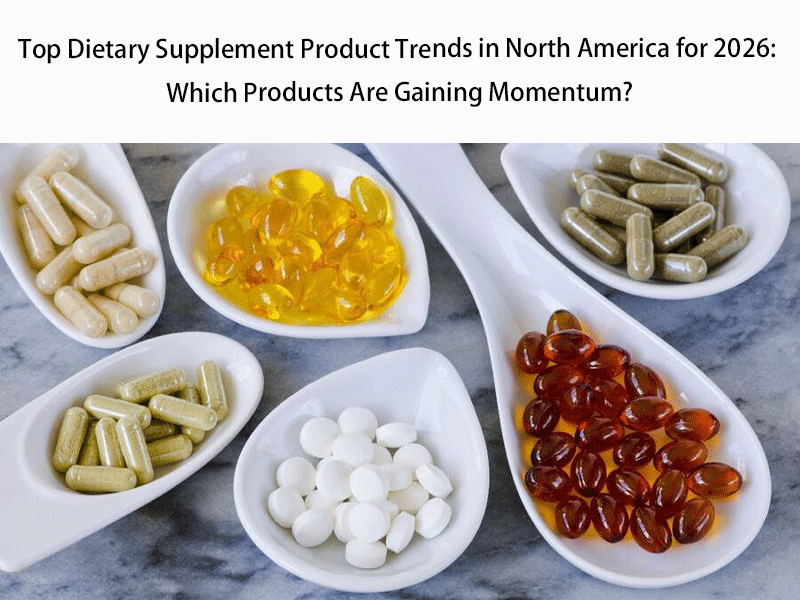
The North American supplement market in 2026 is not being reshaped by one miracle ingredient. The more important change is that consumers are becoming clearer about what they want a supplement to do, when they want to use it, and how easily it should fit into everyday life. Hydration at the desk or gym, creatine as part of an active-aging routine, magnesium before bed, fiber with breakfast, and probiotics for daily digestive support all reflect the same shift: products are moving closer to recognizable routines and specific use cases. Grand View Research estimates the North American dietary supplements market at about USD 81.64 billion in 2026 and projects an 8.4% CAGR through 2033, but growth at the market level does not automatically tell a brand which SKU deserves investment. The more useful question is which trends combine real demand, workable formulation, responsible claims, repeat purchase, and scalable production.
The leading North American dietary supplement opportunities in 2026 are concentrated around hydration and active nutrition, creatine, gut health, women’s wellness, sleep and stress support, healthy aging, personalized nutrition, and emerging nutritional needs around GLP-1 use. Powders, capsules, single-serve formats, gummies, and other convenient delivery systems are also evolving as consumers look for focused benefits, easier routines, stronger transparency, and better value. The strongest opportunities are those that remain useful even after the social-media headline fades.
A useful way to think about the year is to imagine two products arriving at a development meeting. One is built around a viral ingredient with impressive search growth but no clear audience, awkward dosing, and a difficult flavor profile. The other addresses a familiar need, fits a daily routine, can be formulated at a practical serving size, and has room for a defensible claim and healthy margin. The first product may generate more excitement in the room; the second is often the one that survives sampling, compliance review, production, launch, and the second purchase order. The rest of this article looks at 2026 through that more practical lens.
What Is Driving Supplement Demand in 2026?
Supplement demand in 2026 is being driven by habitual wellness use, more specific health goals, wider discovery through healthcare professionals and social media, and higher expectations for convenience, taste, value, and transparency. Consumers increasingly want products that fit a recognizable routine or life stage. Brands therefore need to evaluate not only ingredient popularity, but also repeat-use behavior, channel fit, user experience, and evidence.
Daily Wellness Becomes Routine
Supplement use is increasingly part of ordinary daily behavior rather than an occasional response to a specific concern. Glanbia’s 2026 trend analysis reports that 94% of Americans used supplements during the previous year and that almost two in three used them very often. Whatever methodology a brand uses to size its own audience, the commercial implication is clear: frequent users judge products through repeated experience. A powder that tastes acceptable once may become irritating after thirty servings, and a capsule regimen that looks simple on a label may feel burdensome when the consumer has to repeat it every morning. Routine use therefore makes sensory quality, serving convenience, packaging, and cost per day central development variables rather than finishing touches.
This habit-based market also changes how brands should think about retention. A product does not need to create a dramatic moment every time it is consumed, but it does need to remain easy enough that the consumer wants to keep it in the routine. Hydration powders, creatine, magnesium, fiber, probiotics, multivitamins, collagen, and protein all benefit from this logic because their value can be connected to a repeated behavior. In crowded categories, the difference between a first purchase and a subscription may come down to details such as aftertaste, scoop accuracy, powder clumping, capsule size, reseal quality, or how clearly the consumer understands when and how to take the product.
Specific Needs Shape Product Choice
Consumers increasingly begin with a need rather than an ingredient name. They search for better hydration, evening relaxation, digestive support, workout recovery, women’s wellness, healthy aging, energy, or cognitive support, and only then compare ingredients and formats. This is one reason the same ingredient can move between categories. Creatine remains a sports-nutrition staple, yet it now appears in conversations about women, active older adults, muscle maintenance, and cognition. Magnesium similarly appears across mineral, sleep, stress, active-nutrition, and general wellness products. The ingredient has not changed; the context around it has expanded.
That expansion creates opportunity, but it also creates a common formulation mistake: trying to make every product support everything. A focused hydration-plus-performance concept is easy to understand because the benefits sit naturally together. A sleep-plus-relaxation formula has the same advantage. By contrast, a single scoop that tries to cover hydration, immunity, digestion, beauty, focus, metabolism, and energy can become expensive, difficult to flavor, difficult to dose, and difficult to explain. Strong product architecture usually gives one benefit clear priority and allows one or two closely related secondary benefits to support the story without turning the Supplement Facts panel into a collection of disconnected trends.
Discovery Is Multi-Channel
Product discovery now moves across several information environments before a purchase happens. Glanbia reports that doctor recommendations are an information source for 47% of consumers in its cited U.S. research, while social media is used by 42%. In practice, the same consumer may first see a product in a short video, ask an AI assistant what the ingredient does, search Google, compare Amazon reviews, read the Supplement Facts panel, and then look for professional or scientific reassurance. Visibility and credibility are therefore no longer separate marketing jobs; they increasingly meet inside the same decision journey.
For product teams, this means a concept should survive more than a launch-day advertisement. Social media may reward a memorable hook, but search pages, marketplaces, retailers, distributors, and AI systems expose weak explanations quickly. Brands should be able to explain the product’s intended use, serving size, dosage form, ingredient logic, quality controls, and claim boundaries in plain language. The table below is a practical way to separate early excitement from stronger commercial signals. No single signal proves a market, but several aligned signals create a much better basis for development.
| Demand Signal | What It Usually Shows | Practical Question |
| Search growth | Consumers are actively researching | Is interest sustained beyond a short event? |
| Social discussion | Fast discovery and cultural momentum | Does attention convert outside the platform? |
| Retail expansion | Broader commercial acceptance | Can the product support retail margins and replenishment? |
| Repeat-use routine | Reorder potential | Is the product pleasant enough for frequent use? |
| Review volume | Real-world user experience | Which recurring complaints reveal product gaps? |
| Ingredient evidence | Better support for responsible claims | Can the intended positioning be substantiated? |
Which Supplement Categories Are Leading 2026?
The strongest supplement categories in 2026 combine clear consumer needs with repeat-use potential. Hydration, creatine and active nutrition, gut health, women’s wellness, sleep and stress support, healthy aging, and emerging GLP-1-related nutritional support are receiving significant industry attention. The most durable opportunities are not simply the categories generating headlines; they are categories that can become part of a practical routine and support repeat purchasing.
Hydration and Active Nutrition Expand
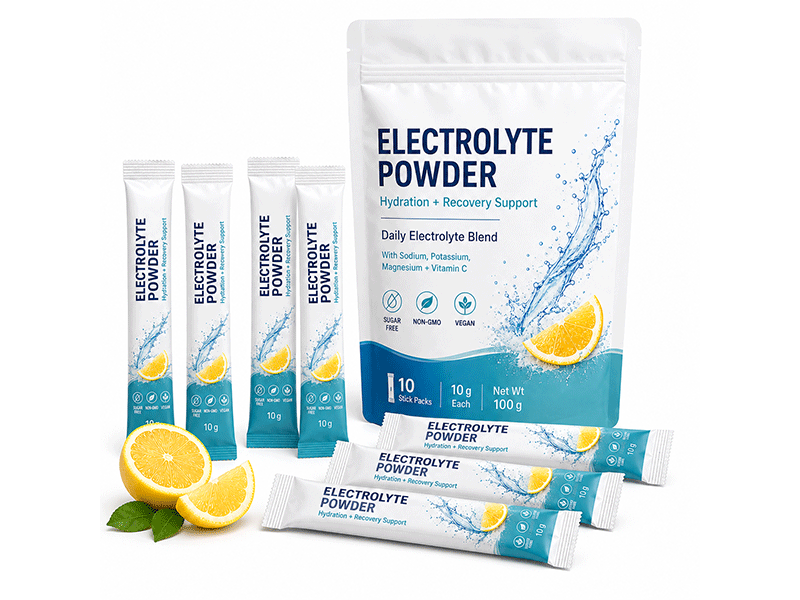
Hydration has moved well beyond the traditional image of a sports drink used only after hard exercise. The category now reaches gym users, runners, travelers, outdoor consumers, office workers, active older adults, and people who simply prefer flavored hydration to plain water. That broader use case helps explain the continued interest in electrolyte powders and stick packs. Grand View Research projects North American powder dietary supplements to grow at a 10.1% CAGR from 2026 to 2033, faster than the 8.4% CAGR projected for the regional supplement market overall. Powder does not guarantee success, but it is particularly suitable for products that need multi-gram servings and flexible flavor systems.
Creatine is following a similar expansion path. It remains deeply rooted in sports performance, but 2026 trend reporting increasingly connects it with women, active older adults, muscle maintenance, and broader performance-and-wellness routines. The commercial opportunity is therefore wider than a plain commodity tub, although brands should not add complexity without purpose. Flavored creatine, single-serve sticks, creatine-electrolyte combinations, or active-aging concepts can make sense when the target consumer and serving occasion are clear. The formulation still has to deliver practical dose, taste, solubility, packaging stability, and a price that fits the channel. In an established category, better use experience can be a more defensible advantage than adding a fashionable secondary ingredient.
Gut and Women’s Wellness Diversify
Gut health remains one of the most developed supplement categories, but it is becoming more segmented. Consumers now encounter probiotics, prebiotics, postbiotics, fiber, digestive enzymes, and combination concepts rather than one generic probiotic category. Vitaquest’s 2026 reporting highlights postbiotics as an area of growing interest, while probiotics remain the largest and most established part of the broader biotics market. This creates room for innovation, but it also raises technical questions around strain identity, viable count where applicable, moisture, temperature, water activity, storage, packaging barrier, digestive tolerance, and shelf life. A microbiome story can sound simple in marketing while being technically demanding in production.
Women’s wellness is changing in a similar way because the old one-product-for-all-women model is losing relevance. Brands increasingly segment by life stage, routine, and goal: reproductive wellness, menopause, urinary health, beauty, bone health, iron or folate needs, sleep, stress, and active nutrition. The opportunity is not to force every need into one formula, but to build a coherent product family around clearly defined audiences. A collagen powder, a cranberry-focused capsule, a mineral product, and an active-aging concept may all belong in the same women’s wellness portfolio while serving different routines. This makes product-line strategy as important as individual SKU design, especially for established brands that want repeat purchase across several stages of the customer relationship.
Healthy Aging and GLP-1 Nutrition Grow
Healthy aging has become a broad commercial territory because it links muscle maintenance, protein intake, cellular energy, cognition, joint support, sleep, cardiovascular wellness, and general vitality. The word “longevity” attracts attention, but it becomes more useful when translated into a specific nutritional use case. Instead of vague promises about reversing age, stronger products focus on support for normal energy metabolism, adequate protein intake, active lifestyles, bone or muscle maintenance, or other clearly defined wellness goals. Grand View Research reported that adults represented 63.3% of the North American dietary supplement market by end use in 2025, underlining how much of the market already sits within routine adult wellness rather than niche specialty consumption.
GLP-1 medications have also created a new area of nutritional product development. The opportunity is not to position a supplement as a substitute for prescription therapy. More sustainable concepts address ordinary nutritional needs that may become relevant when appetite or food intake changes, including protein, hydration, fiber, micronutrients, and digestive support. Vitaquest’s 2026 trend work includes GLP-1-related support formulations among emerging categories. Brands entering this space need particularly careful language because the line between supporting general nutrition and implying a drug-like effect can be crossed easily. A useful test is whether the product still makes nutritional sense without the GLP-1 headline. If it does, the concept is more likely to have durable value.
| 2026 Product Territory | Typical Development Direction | Commercial Logic |
| Hydration | Electrolytes, drink powders, stick packs | Frequent use and broad lifestyle fit |
| Active nutrition | Creatine, protein, recovery products | Expanding beyond competitive athletes |
| Gut health | Probiotics, prebiotics, postbiotics, fiber | Daily routine and portfolio depth |
| Women’s wellness | Life-stage and targeted formulas | Strong segmentation and repeat use |
| Sleep and stress | Minerals, amino acids, botanicals | Clear evening-use routine |
| Healthy aging | Muscle, cognition, cellular wellness | Broad adult audience and portfolio potential |
| GLP-1 nutrition companion | Protein, fiber, hydration, micronutrients | Emerging need with high compliance sensitivity |
Which Ingredients Are Shaping 2026 Formulas?
Ingredients shaping 2026 formulation include creatine, electrolytes, protein, fiber, probiotics, postbiotics, magnesium, selected amino acids, botanicals, functional mushrooms, and healthy-aging ingredients. The strongest formulas are not necessarily those with the longest ingredient lists. They are the ones that use appropriate forms and practical amounts, remain stable in the chosen dosage form, fit the consumer routine, and support responsible, understandable positioning.
Performance Ingredients Reach New Audiences
Creatine is one of the clearest examples of an ingredient moving beyond its original niche. Sports performance remains its core market, yet brands are also evaluating it for women, recreational athletes, active older adults, and healthy-aging routines. That expansion should not obscure the practical formulation work. A plain creatine monohydrate powder, a flavored creatine drink, and a stick pack containing creatine plus electrolytes have very different expectations for serving size, sweetness, acid balance, powder flow, moisture protection, packaging cost, and retail positioning. A concept becomes stronger when the format matches the dose rather than forcing a large dose into an inconvenient delivery system.
Electrolytes require similar judgment. Sodium, potassium, magnesium, and calcium salts differ in taste, mineral intensity, solubility, and cost. A formula that looks balanced on a spreadsheet can become too salty, bitter, metallic, or chalky once it reaches the cup. Protein brings another layer because protein source influences viscosity, dispersion, allergen considerations, flavor, amino-acid profile, and price. Experienced development teams therefore evaluate the entire serving system: active ingredients, carriers, flavors, acids, sweeteners, serving size, packaging, and user instructions. A product that delivers a technically impressive label but performs poorly in cold water or requires an unpleasantly large serving may struggle to earn repeat use.
Gut and Sleep Formulas Need Discipline
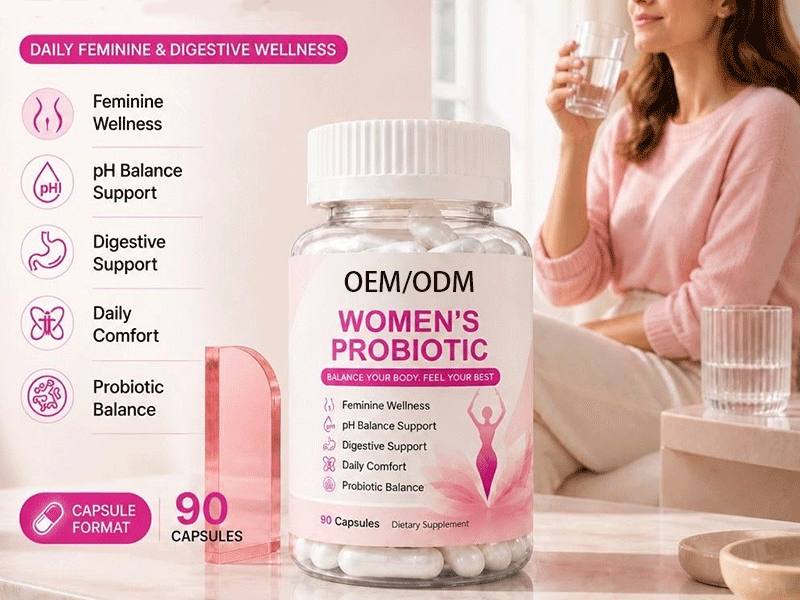
Gut-health formulas are particularly sensitive to ingredient identity and processing conditions. A probiotic product cannot be judged only by the large number printed on the front label. Strain selection, target viable count through shelf life, storage, processing temperature, moisture, oxygen exposure, and package barrier can all affect performance. Postbiotics offer a different formulation profile because they do not depend on maintaining live microorganisms, but brands still need to evaluate evidence, dose, compatibility, and the intended claim. Prebiotic fibers also vary widely in sweetness, viscosity, solubility, and digestive tolerance, so one fiber cannot automatically replace another without changing the consumer experience.
Sleep and relaxation products face a different set of constraints. Magnesium salts vary in elemental magnesium content and sensory profile. Botanicals can bring bitterness, strong color, odor, or large serving requirements. L-theanine, GABA, and other common ingredients may be straightforward in capsules but can create flavor or active-load challenges in powders and gummies. This is where the development team should evaluate the entire daily serving rather than collecting ingredients one by one. A formula may make sense scientifically yet become commercially awkward if it needs too many capsules, an oversized scoop, or heavy flavor masking. Zoxizo’s internal development model reflects this practical approach by evaluating target market, dosage form, ingredient strategy, flavor, stability, cost, packaging, and compliance before a formula is moved toward scale production.
Trending Ingredients Need a Compliance Filter
Popularity is only one reason to examine an ingredient; it is not enough reason to launch it. A commercially serious review should ask whether the ingredient is appropriate for the target market, whether the proposed amount is practical, how it affects taste or stability, what testing may be required, and what claims can be supported. This is especially important in sleep, weight management, cognitive wellness, metabolic health, and other categories where marketing language can drift toward disease treatment. In the United States, FDA distinguishes permissible structure/function claims from disease claims, and companies making qualifying structure/function claims must have substantiation, use the required disclaimer, and notify FDA no later than 30 days after first marketing the product with the claim.
Experienced product teams sometimes improve a formula by removing ingredients rather than adding them. Eliminating a weak or unnecessary component can reduce raw-material cost, improve flavor, simplify testing, lower capsule count, and make the product story easier to understand. A useful ingredient review therefore asks seven practical questions: Is it suitable for the market? Is the form appropriate? Is the amount meaningful and feasible? Does it create stability or sensory problems? Does it require special sourcing or testing? Can the intended language be substantiated? Does it materially improve the product? Those questions are far more useful than asking whether the ingredient is currently trending on social media.
Which Supplement Formats Are Gaining Preference?
Powders, capsules, gummies, stick packs, tablets, softgels, drops, and newer functional formats all remain relevant in 2026. Powders stand out in hydration, creatine, protein, collagen, and fiber because they support larger serving sizes, while gummies remain attractive for convenience and taste. Format selection should follow dose, stability, user experience, packaging requirements, production feasibility, and target price rather than novelty alone, especially when the product is intended for frequent use.
Powders and Stick Packs Fit Routine Use
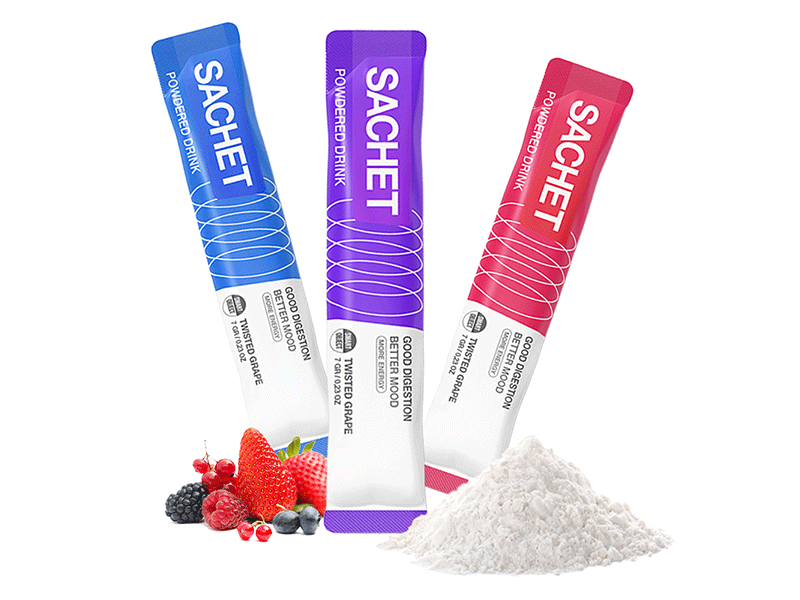
Powders have a structural advantage when the formula requires grams rather than milligrams. This makes them a natural fit for electrolytes, creatine, protein, collagen, fiber, and many active-nutrition products. Grand View Research projects a 10.1% CAGR for North American powder dietary supplements from 2026 to 2033. Powders also offer packaging flexibility: the same basic product architecture may be suitable for jars, stand-up pouches, or individual stick packs depending on channel, serving frequency, and price point. A high-frequency household product may fit a jar, while travel, gym, or office use can make single-serve packaging more attractive.
The technical work begins long before the powder reaches a pouch. Developers need to evaluate particle size, bulk density, flowability, hygroscopicity, segregation, solubility, sedimentation, sweetness, acid balance, color, and fill weight. Stick packs add packaging-film requirements and machinery considerations because a powder that bridges or flows inconsistently can slow production and create fill-weight variation. Moisture-sensitive formulas may also need stronger barrier materials. A laboratory sample that dissolves nicely in room-temperature water may behave differently when a consumer shakes it for five seconds in ice water, so realistic use testing should be part of sample evaluation rather than an afterthought.
Gummies Work When the Dose Fits
Gummies remain commercially valuable because they turn supplementation into a familiar, food-like experience. They can work especially well in beauty, sleep, immune support, children’s nutrition, and women’s wellness where taste and routine simplicity matter. At the same time, 2026 trend data offers a useful caution. Vitaquest, citing SPINS data for a measured period, reported dollar-sales changes of approximately +8% for powders, +5.3% for capsules, -0.9% for tablets, and -8% for gummies. These figures do not mean gummies are disappearing; they show that format momentum can shift and that a gummy should not be chosen simply because it looks more consumer-friendly.
The technical constraints are real. Gummies have limits on active load, and high levels of minerals, fiber, proteins, botanicals, or amino acids can affect taste, texture, or piece count. Heat-sensitive ingredients need process review, while moisture migration, pH, water activity, sweetener system, and packaging influence shelf-life behavior. A gummy is strongest when the intended dose fits comfortably into a small number of pieces without forcing the formula to compromise its primary purpose. If a credible serving requires four to six large gummies every day, a capsule or powder may deliver better economics and a more convenient experience.
Traditional Formats Still Matter
Tablets, capsules, and softgels remain major parts of the market even as newer delivery systems attract attention. Grand View Research reported tablets at 31.0% of North American dietary supplement revenue by form in 2025. Capsules remain practical for botanicals, vitamins, minerals, probiotics, and concentrated ingredients where taste masking matters. Tablets can offer efficient manufacturing for large vitamin and mineral programs, while softgels are well suited to oils and many fat-soluble ingredients. Drops and liquid formats can work where flexible serving and ease of consumption are priorities.
The right format is therefore a technical and commercial decision rather than a fashion statement. Zoxizo supports powders, capsules, tablets, gummies, drops, softgels, drink powders, energy gels, and other supplement formats, allowing product developers to compare options before committing to one production path. That comparison can prevent costly redesign later, especially when serving size, ingredient compatibility, packaging MOQ, shelf life, and retail price are still being balanced. The table below summarizes the main fit and limitation of common formats; actual feasibility still depends on the specific formula and target market.
| Format | Strong Fit | Main Development Constraint |
| Powder | Electrolytes, creatine, protein, collagen, fiber | Flavor, clumping, moisture, solubility |
| Capsule | Botanicals, probiotics, vitamins, minerals | Fill volume and capsule count |
| Tablet | Vitamins, minerals, high-volume lines | Compression, coating, swallowability |
| Gummy | Lifestyle wellness, beauty, sleep, kids | Active load, heat, moisture, texture |
| Softgel | Oils and fat-soluble ingredients | Shell-fill compatibility |
| Drops | Vitamins, minerals, botanicals | Flavor and dosing consistency |
| Stick pack | Hydration and portable drink powders | Film MOQ, fill accuracy, powder flow |
How Are Consumer Expectations Changing Products?
Consumers increasingly expect supplements to be transparent, easy to use, tailored to a recognizable need, and worth the price. Clean-label positioning, personalized nutrition, multi-benefit formulas, better flavor, convenient packaging, and stronger quality documentation are becoming part of product value. A formula can be scientifically interesting and still underperform if the daily experience feels confusing, inconvenient, unpleasant, or too expensive for repeat purchase.
Simpler Products Can Be Easier to Trust
Consumers have more tools for checking a product than ever before. They can search an ingredient, compare labels, read marketplace reviews, watch creator content, and ask AI systems to explain a formula in plain language. Complexity therefore no longer guarantees authority. A product containing twelve fashionable ingredients may appear sophisticated at first glance, but if several are present in token amounts or have no clear relationship to the main use case, the formula may become harder to defend. A shorter formula with clear amounts, a coherent purpose, and a sensible serving can be easier for consumers, retailers, and sales teams to understand.
“Clean label” should also be treated carefully because it is not one universal regulatory definition for dietary supplements. For one audience it may mean fewer artificial flavors or colors; for another it may mean vegan, non-GMO, lower sugar, recognizable ingredients, or a simpler excipient system. Brands should define exactly what they intend to communicate and confirm the supporting documentation before packaging is printed. Mature customers also increasingly look beyond front-label language to raw-material specifications, COAs, batch documents, and testing. Those materials may never appear in a social post, but they help reduce supplier risk and support platform, retail, distributor, and quality-assurance requirements.
Personalization Becomes Practical
Personalized nutrition is becoming more commercially useful when it is translated into clear audience segmentation rather than a futuristic one-formula-per-person promise. Glanbia’s cited U.S. research reports that 29% of supplement users are influenced by products tailored to specific needs, while 52% of consumers express interest in personalized vitamins using AI technology. For manufacturers and established brands, the practical opportunity is to build products around recognizable groups such as active women, adults over 40, endurance athletes, people focused on digestive wellness, consumers with evening routines, vegan users, or travelers who prefer portable formats.
This approach can also create a more efficient product portfolio. A brand may develop one hydration platform and adapt flavor, serving size, packaging, or selected ingredients for daily wellness, endurance activity, travel, or active aging. That is often more manageable than creating several unrelated formulas with separate sourcing and production requirements. The risk is over-segmentation. If an audience is too narrow, packaging MOQs, testing, inventory, and marketing costs can overwhelm the opportunity. Good personalization therefore balances relevance with commercial scale, allowing a product to feel specific without making the SKU too difficult to manufacture, stock, and replenish profitably.
Product Experience Becomes a Differentiator
Taste and convenience are not secondary details in repeat-use categories. A consumer who dislikes a powder’s aftertaste may stop using it before deciding whether the formula fits the intended wellness goal. A capsule regimen requiring six capsules twice a day may look acceptable on a technical sheet but feel unrealistic in daily life. A gummy that becomes sticky in warm conditions can produce complaints even when the active ingredients are within specification. A pouch that does not reseal properly can create moisture problems after opening. These everyday details often shape reviews more quickly than the ingredient story itself.
Brands can learn a great deal by studying recurring complaints in competing products before starting formulation. Comments about sweetness, clumping, oversized capsules, weak flavor, sediment, broken gummies, or messy packaging are not just customer-service issues; they are product-development data. Translating those complaints into measurable specifications can create a more defensible advantage than adding another trend ingredient. A development partner with sensory, sample, packaging, and scale-up capability can help convert those observations into choices about flavor system, particle behavior, serving size, packaging barrier, capsule count, or fill method. Better experience is often where a mature category still offers room for meaningful differentiation.
How Should Brands Evaluate a 2026 Product Opportunity?
A 2026 supplement trend should be evaluated through consumer demand, channel fit, formulation feasibility, evidence and compliance, economics, and production scalability. Strong search volume is useful, but it does not make a product commercially sound. A viable SKU also needs an appropriate dosage form, realistic ingredient cost, responsible claims, repeat-use logic, acceptable sensory performance, quality controls, and a supply chain capable of supporting replenishment.
Start With the Consumer and Channel
The same supplement concept can perform very differently on Amazon, a DTC subscription site, TikTok Shop, in pharmacies, through gyms, or in wholesale distribution. An Amazon launch needs clear search relevance, competitive economics, reliable documentation, and inventory planning. A DTC brand can invest more heavily in storytelling, differentiated flavor, premium packaging, bundles, and subscription logic. Pharmacy and health-retail programs usually demand more conservative positioning, stable specifications, documentation, and dependable supply, while fitness channels place greater weight on serving practicality, performance credibility, taste, and member repeat purchase. Product development becomes much more efficient when the channel is decided before the formula is finalized.
A serious development brief should therefore define the target country, consumer, primary channel, expected retail price, preferred dosage form, serving count, core benefit, secondary benefit, benchmark products, packaging direction, and expected volume. Those answers influence almost every technical decision. A premium DTC powder can support a different raw-material budget from a mass-market capsule. A stick pack may fit travel and gym use but introduce packaging commitments that do not suit a small forecast. A gummy may create strong visual appeal but fail if the intended active dose is too large. Starting with the market context prevents expensive sampling around a formula that was never commercially realistic.
Test Economics Before Finalizing the Formula
One of the most common product-development mistakes is designing an ideal formula first and calculating the commercial cost later. That can produce an excellent sample that cannot support the intended retail price. Cost should be evaluated at the daily-serving level as well as the finished-unit level because consumers experience a product in days of use. A USD 29.99 bottle lasting fifteen days competes differently from a USD 34.99 bottle lasting thirty days, even if the first bottle looks cheaper on the shelf. Ingredient dose, serving count, packaging, testing, freight, duties, warehousing, marketplace fees, and promotional discounts all influence the final margin structure.
The goal is not always to remove expensive ingredients. A high-value ingredient at a small practical dose may have less impact on the finished unit than a lower-cost ingredient required at several grams per serving. Likewise, packaging can become a major cost driver in stick packs, premium jars, custom gummies, or low-volume printed components. Product teams should establish a target cost range early and then adjust formula complexity, serving size, ingredient form, or packaging before multiple sample rounds are completed. Zoxizo’s documented development approach includes cost structure, dosage form, flavor, packaging, and ingredient strategy alongside formulation, which is particularly relevant for established brands that need technical differentiation without losing commercial discipline.
Validate From Sample to Scale
A trend becomes a real product only after it survives progressively more expensive stages of validation. Market screening should establish whether demand exists. Benchmarking should show what consumers already buy and what they complain about. Formula design should confirm dose, ingredient compatibility, and format feasibility. Sampling should test taste, appearance, texture, dissolution, capsule count, or other real-use variables. Packaging review should confirm whether the container or film protects the product. Testing and compliance review should happen before production commitments become difficult to change. Finally, scale-up should confirm that the process remains controlled when the batch is much larger than the laboratory sample.
Scale-up deserves particular attention because a small development sample and a commercial batch do not experience identical mixing, heat exposure, shear, hold time, filling speed, humidity, or handling. Powders may segregate during transfer, gummies can respond differently to process conditions, and flavor intensity can shift when raw-material lots change. For long-term customers, supplier qualification should therefore extend beyond the quality of one sample. Zoxizo documents an approximately 17,000 m2 facility, a 1,000 m2 R&D development space, 25+ R&D personnel, a 20,000+ formula library, and 30+ quality and testing personnel supporting raw-material review, in-process checks, finished-product inspection, and batch documentation. These capabilities matter most when they are connected to repeatable production rather than used as stand-alone marketing numbers.
A practical development sequence helps keep investment proportional to evidence. Instead of committing inventory as soon as a trend looks promising, brands can move through a set of checkpoints that gradually test market fit, formulation quality, packaging, compliance, and manufacturing readiness. This approach does not eliminate launch risk, but it makes problems cheaper to discover and gives the product team clearer reasons for each major decision before meaningful inventory is committed:
- Confirm that the trend has demand beyond a short social spike.
- Define the consumer, market, channel, and price range.
- Review competing products, labels, reviews, and packaging.
- Establish the product brief and target cost.
- Build a formula that fits the intended dosage form.
- Produce samples and test realistic use conditions.
- Revise flavor, serving size, texture, packaging, or ingredient balance.
- Review testing requirements, labels, claims, and market-specific compliance.
- Validate bulk manufacturing and packaging performance.
- Plan replenishment, batch documentation, and future line extensions before launch.
The North American market is large enough to support many different supplement strategies, but that does not reduce the need for selectivity. Grand View Research’s 2026 estimate of USD 81.64 billion shows the scale of the opportunity, while the 8.4% projected CAGR through 2033 shows that the market is still expanding. Yet the brands that benefit most will not be those that chase the highest number of trends. They will be the ones that identify a consumer routine, choose ingredients and formats that work together, use claims responsibly, build a product people can afford and enjoy using, and secure a production system that can deliver the same experience when demand grows.
Hydration, creatine, gut health, women’s wellness, sleep and stress support, healthy aging, personalization, and emerging GLP-1-related nutrition all deserve attention in 2026. None should be copied simply because another brand has launched one. The most durable product opportunities come from the intersection of market timing and disciplined execution: a real need, a practical formula, a format that fits the dose, a believable reason to buy again, and a supply chain capable of supporting the second order as confidently as the first. That is the point where a trend stops being a headline and becomes a product strategy.
Frequently Asked Questions
What dietary supplements are trending in North America in 2026?
The most visible 2026 directions include hydration and electrolyte products, creatine and active nutrition, gut-health products using probiotics, prebiotics, postbiotics or fiber, women’s wellness, sleep and stress support, healthy-aging concepts, personalized nutrition, and products designed around emerging nutritional needs associated with GLP-1 use. The strongest commercial trends usually combine a clear consumer routine with repeat-purchase potential, a practical dosage form, and claims that can be supported responsibly rather than relying on novelty alone.
Is creatine still a strong product opportunity in 2026?
Creatine remains a strong active-nutrition ingredient and is increasingly discussed beyond traditional bodybuilding. Brands are exploring products for women, recreational athletes, active older adults, and broader muscle-maintenance or performance routines. The opportunity does not mean every creatine product should become a complex blend. Plain monohydrate, flavored powders, single-serve sticks, or focused combinations with electrolytes can all work when the dose, taste, packaging, target consumer, and price are aligned with the intended sales channel.
Are powder supplements growing faster than other formats?
Current North American market research suggests strong momentum for powders. Grand View Research projects powder dietary supplements to grow at a 10.1% CAGR from 2026 to 2033, compared with an 8.4% CAGR for the overall regional supplement market. Powders are particularly practical for electrolytes, creatine, protein, collagen, and fiber because they can carry larger serving sizes. Growth forecasts should still be treated as market indicators rather than guarantees for any individual powder product.
Are gummies still worth developing in 2026?
Yes, gummies can still be attractive when taste, convenience, and lifestyle positioning are important, especially in beauty, sleep, immunity, children’s nutrition, and women’s wellness. However, brands should not assume a gummy will outperform other formats automatically. Active-load limits, heat exposure, moisture, texture, sugar or sweetener systems, and piece count can make some formulas poor candidates. The decision should begin with the required dose and stability profile, then consider whether the gummy experience actually improves daily use.
Which gut-health products have the strongest development potential?
Gut health is broadening beyond standard probiotic capsules. Probiotics remain important, while prebiotic fibers, postbiotics, digestive enzymes, and combination concepts are creating new development options. The most suitable direction depends on the audience, format, storage conditions, serving size, and evidence behind the ingredients. Live probiotics require particular attention to strain identity, viability, moisture, temperature, and shelf life, while fibers and postbiotics bring different questions around tolerance, solubility, taste, and dose practicality.
How should a supplement brand choose a 2026 trend to launch?
Start with the target consumer and sales channel rather than the ingredient. Confirm that demand is visible across more than one signal, such as search behavior, retail activity, reviews, social discussion, or repeat-use logic. Then test the formula against evidence, regulatory fit, dosage-form feasibility, sensory experience, unit economics, packaging, testing, and scale-up. A smaller trend with a strong consumer fit and reliable manufacturing pathway can be a better commercial opportunity than a viral category with weak margins or difficult compliance.
What should brands verify with a supplement manufacturer before scale-up?
Before approving a commercial batch, brands should verify raw-material specifications, formula and serving size, manufacturing process, relevant testing, packaging compatibility, label and claim review responsibilities, batch documentation, production lead time, and replenishment planning. They should also understand what changes between a laboratory sample and full-scale production. For long-term supply, quality staff, traceability, finished-product controls, documentation, and the manufacturer’s ability to repeat the same product consistently matter as much as the first sample’s taste or appearance.



