Skip to content

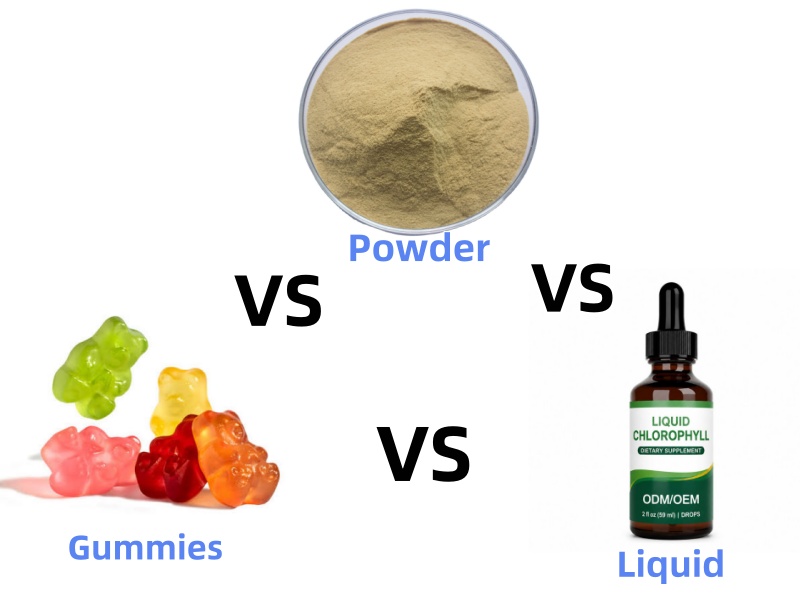
Fiber used to be one of the least glamorous corners of the supplement aisle, but that has changed. Consumers can now choose fruit-flavored gummies, scoopable powders, stick packs, concentrated liquids, and gut-health blends that combine fiber with prebiotics or other ingredients. The choice looks simple until you compare what each format can realistically deliver. A gummy has to remain pleasant to chew, a powder has to disperse without becoming an unpleasant sludge, and a liquid has to stay stable in water for months. Those practical differences affect dose, taste, cost, packaging, and whether people will actually keep using the product after the first week.
Fiber gummies are usually strongest when convenience, taste, and habit formation matter most; powders offer the broadest flexibility for fiber type, serving size, and multi-ingredient formulas; and liquid fiber can work well when a ready-to-take, no-mixing experience is the priority. No format is universally better. The right choice depends on the fiber source, target grams per serving, digestive tolerance, sensory experience, packaging, cost, and daily routine.
That becomes even more important when a brand is developing a product rather than simply choosing one from a shelf. Imagine approving a beautiful berry gummy concept and only later discovering that the desired fiber load makes each serving six large pieces. Or picture a premium liquid that tastes excellent on day one but thickens after storage. The most successful products are usually the ones that solve these questions early. The comparison below looks at the three formats from both the consumer’s point of view and the practical realities of formulation, manufacturing, and repeat use.
What Is the Difference Between Fiber Gummies, Powder, and Liquid Fiber?
Fiber gummies, powders, and liquids mainly differ in dose capacity, ingredient flexibility, preparation, sensory experience, and formulation complexity. Gummies favor chewability and convenience, powders provide the widest room for adjusting fiber amount and combining ingredients, and liquids remove the mixing step but demand stronger control of viscosity and stability. The best comparison therefore starts with the formula and serving target, not the package shape.
Format Basics
A gummy is a structured food matrix, not a small container waiting to be filled with fiber. Dietary fiber must share each piece with water, gelling materials, acids, flavors, sweeteners, colors, and other ingredients needed to create a stable chew. As the fiber load rises, the manufacturer may need to increase piece weight, increase the number of gummies per serving, adjust the gel system, or accept a firmer or grainier texture. That is why a fiber-gummy brief should always specify grams of fiber per serving and pieces per serving together. A product that sounds compact on a marketing concept sheet can become a 90- or 120-count bottle once the real serving is calculated, and that directly affects cost, package size, shipping weight, and how long the product lasts in normal use.
Powder is less constrained by piece size, so it usually offers the broadest freedom to work with higher fiber amounts, multiple fiber types, or additional ingredients. A scoop or stick pack can be made larger when the formula needs more solids, although taste, bulk density, flow, moisture sensitivity, and mixing behavior still create limits. Liquid fiber moves the opposite way: the consumer receives a pre-hydrated product, so the manufacturer must solve solubility, suspension, viscosity, flavor, preservation, and shelf stability before filling. Liquid can be highly convenient, but the brand is also shipping the water, which changes freight, warehouse space, leakage risk, and the economics of a 30-day supply compared with a dry formula.
Convenience Versus Capacity
Convenience is often the reason consumers notice gummies first, yet convenience needs to be measured across the entire serving routine rather than the first use. A three-gummy serving is simple, but two servings per day means six pieces. A 90-count bottle then lasts only 15 days, which may not match the consumer’s expectation of a monthly product. Powder adds a mixing step, but one scoop can carry several grams of fiber and may fit naturally into a morning water bottle, smoothie, or evening drink. Stick packs can make powders far more portable without sacrificing as much formulation capacity. Liquid shots or single-serve pouches remove the mixing step entirely, but a month of 30 mL servings equals about 900 mL of finished liquid before packaging is counted, so convenience for the consumer can create a heavier supply chain for the brand.
What Consumers Actually Experience
The same number of declared fiber grams can feel very different from one product to another because fiber chemistry changes the experience. A gel-forming fiber can noticeably thicken water, while a lower-viscosity soluble fiber can produce a much lighter drink. A rapidly fermentable fiber may also feel different in the digestive tract from a slowly fermented or nonfermenting fiber, especially when the serving size is increased quickly. Gummies add another layer because sweetness, chew, acids, and sugar alcohols can influence tolerance and palatability independently of the fiber itself. This is why the most useful comparison is not simply gummy versus powder versus liquid. It is fiber type plus grams per serving plus format plus daily-use pattern. When those four elements fit together, the product is much more likely to become a repeatable habit rather than a bottle that is abandoned halfway through.
| Factor | Fiber Gummies | Fiber Powder | Liquid Fiber |
| Consumer preparation | None | Usually mixed with water or food | None or minimal |
| Dose flexibility | Moderate | High | Moderate to high |
| Ingredient flexibility | Moderate | Highest | Depends strongly on solubility and viscosity |
| Main sensory issue | Chew, sweetness, stickiness | Grittiness, thickness, flavor | Viscosity, aftertaste, mouthfeel |
| Common physical risk | Texture drift and moisture migration | Caking, clumping, settling | Separation, sedimentation, viscosity drift |
| Typical packaging | Bottles, jars, pouches | Jars, sticks, sachets, pouches | Bottles, shots, liquid pouches |
| Strongest use case | Convenience-led daily routine | Dose-led or multi-ingredient formula | Ready-to-use differentiated product |
Which Fiber Types Work Best in Each Format?
No single fiber ingredient is ideal for every dosage form. Lower-viscosity soluble fibers are generally easier to formulate into gummies and ready-to-take liquids, while powders can accommodate a broader range, including psyllium, inulin, resistant dextrin, acacia, and partially hydrolyzed guar gum. Ingredient selection should also consider fermentability, sensory behavior, regulatory status, analytical specifications, and the claims intended for the finished product.
Gummy-Friendly Fibers

Gummy developers usually look for fibers that can contribute meaningful grams without making the chew excessively hard, dry, sticky, or bulky. Inulin, resistant dextrin, soluble corn fiber systems, polydextrose, and some other low-viscosity soluble fibers are often easier starting points than strongly gel-forming fibers. Even then, the usable amount is formula-specific. Increasing fiber can change water binding, sweetness perception, drying time, surface tack, and the amount of gelling material needed to hold the piece together. A fiber that behaves well at 2 g per serving may become difficult when the target rises to 5 or 6 g. The formulator therefore has to balance ingredient load with piece count and consumer expectations rather than treating the gummy as a miniature powder scoop.
Regulatory identity matters just as much as processing. In the United States, a nondigestible carbohydrate cannot automatically be treated as dietary fiber on the Supplement Facts panel simply because a supplier markets it as fiber. The finished label needs to reflect the applicable FDA definition, ingredient identity, and supporting specification. This is particularly important for isolated or synthetic fibers because different jurisdictions may recognize them differently. A technically workable gummy can still become a commercial problem if the planned dietary-fiber declaration or front-label wording is not supportable in the target market. For that reason, regulatory review should begin when the raw material is selected, not after the first production batch has been completed.
Powder-Friendly Fibers
Powder offers the most room for fiber diversity. Psyllium is a classic example because its strong water-binding and gel-forming behavior fits naturally into a product that is mixed immediately before use. Inulin, resistant dextrin, acacia, partially hydrolyzed guar gum, FOS, GOS, and other soluble or prebiotic fibers can also be formulated as powders, either alone or in blends. The main question is not whether they can be put into a sachet, but what kind of drink or food experience they create at the intended concentration. A formula designed for a clear, light beverage needs a very different ingredient system from one designed to thicken a smoothie or create a substantial gel-like texture. Particle size, bulk density, hygroscopicity, flavor, and dispersibility all become part of the final product experience.
Powders also make multi-ingredient gut-health concepts easier to build because there is more physical room for probiotics, postbiotics, digestive enzymes, greens, botanicals, or flavor systems. That flexibility comes with a new set of production controls. Ingredients with very different bulk densities can segregate during handling, hygroscopic fibers can encourage caking, and low-dose actives must be distributed uniformly throughout a much larger fiber base. Zoxizo’s product-development materials list inulin, FOS, GOS, psyllium husk, apple fiber, and resistant dextrin among the ingredient directions used for gut-health projects, which reflects the practical need to evaluate multiple fiber systems rather than treat fiber as a single interchangeable raw material.
Liquid-Friendly Fibers
Liquid fiber works best when the chosen ingredient can remain acceptably soluble or suspended at the target concentration without producing an unpleasantly thick or unstable product. Low-viscosity fibers such as resistant dextrin, partially hydrolyzed guar gum, polydextrose, and selected inulin or oligosaccharide systems can be attractive starting points, although the exact behavior depends on grade, molecular weight, pH, temperature, sweetener system, and other ingredients. A formula that looks clear and easy to drink at 2% solids may become cloudy, syrupy, or difficult to fill when the concentration is raised. That is why liquid development should establish a target viscosity and serving volume early instead of adding more fiber until the label number looks impressive.
Water also changes the risk profile. A dry powder can remain physically stable for long periods when moisture is controlled, whereas a liquid requires more attention to microbiological control, preservation strategy where applicable, pH, flavor drift, sedimentation, and package compatibility. Some products can use a ‘shake well’ instruction because slight settling is acceptable; others are marketed as clear liquids and need much tighter visual stability. The finished container matters too, because closures, liners, bottle materials, and filling conditions can influence oxygen exposure, leakage, and shelf performance. A successful liquid is therefore not simply a powder that has been mixed at the factory. It is a separate dosage-form development project with its own stability and manufacturing requirements.
| Fiber Type | Typical Viscosity Tendency | Fermentation Tendency | Gummy Fit | Powder Fit | Liquid Fit |
| Psyllium husk | High / gel-forming | Lower than rapidly fermentable fibers | Difficult at meaningful loads | Strong | Possible but texture-limited |
| Inulin | Low to moderate | High | Strong | Strong | Strong when stability permits |
| Resistant dextrin | Low | Fermentable | Strong | Strong | Strong |
| PHGG | Low | Fermentable | Possible | Strong | Strong |
| Acacia gum | Low to moderate | Fermentable | Possible | Strong | Often suitable |
| Polydextrose | Low | Fermentable | Strong | Strong | Strong |
| Plant fiber blends | Ingredient dependent | Ingredient dependent | Limited to moderate | Strong | Depends on insoluble fraction |
How Do Fiber Amount and Daily Use Compare?

Compare fiber supplements by grams of dietary fiber per serving, servings per day, and total fiber per container rather than by gummy count, scoop size, or bottle volume alone. In the United States, the current Daily Value for dietary fiber is 28 g. A 5 g serving therefore provides about 18% of the Daily Value, while 6 g provides about 21%, before considering the rest of the consumer’s diet.
Fiber per Serving
A product can look generous on the shelf while delivering relatively little fiber per day, so grams per serving deserve more attention than package size. Under current U.S. labeling rules, the Daily Value for dietary fiber is 28 g. That means 3 g is about 11% DV, 5 g is about 18% DV, 5.6 g reaches 20% DV, 6 g is about 21% DV, and 10 g is about 36% DV. FDA nutrient-content claim rules generally use 10% to 19% DV for a ‘good source’ claim and at least 20% DV for a ‘high’ claim, subject to the product meeting all applicable requirements. These thresholds can influence formulation because moving from 5 g to 5.6 g may be easy in a powder but can force a change in gummy piece count, piece weight, or liquid solids concentration.
The same calculation is useful at package level. A 30-serving product with 5 g of dietary fiber per serving contains 150 g of total declared fiber. At 6 g per serving, the same 30 servings contain 180 g. Those numbers affect raw-material consumption, jar or pouch size, freight efficiency, cost per gram, and how clearly consumers can compare value. This also explains why a 90-count gummy bottle can be misleading at a glance: if the serving is three pieces, the bottle contains 30 servings, not 90. A good product page and a good product-development brief should make serving count, fiber grams, and daily use obvious so the consumer and commercial team are working from the same numbers.
Serving Frequency and Adherence
A technically impressive dose only matters if people can maintain the routine. Gummies reduce friction because they require no mixing, but multiple pieces can become tedious when the daily serving is large. Powder concentrates more grams into one action, but the user needs water, a cup or bottle, and enough time to mix the product. Stick packs can close that convenience gap for travel or work, especially when the formula disperses quickly. Liquids offer immediate use and precise premeasured servings, yet monthly volume can become substantial. Thirty 30 mL servings equal 900 mL of finished liquid, which is convenient at the moment of use but heavier to ship and store. The best format is therefore the one that minimizes the specific friction experienced by the target consumer, not the format that seems easiest in isolation.
Adherence can also influence package design. A once-daily 30-serving powder naturally fits a monthly subscription model, while a gummy that requires three pieces twice daily needs 180 pieces for the same 30-day period. A liquid shot taken once daily needs 30 primary containers if it is packaged as single shots, or a multi-serve bottle with accurate dosing if not. These choices affect cost, perceived value, and how often the consumer has to reorder. From a product-development standpoint, serving frequency should be confirmed before packaging is finalized, because changing from one serving per day to two can double piece count or retail volume even when the formula itself has not changed.
Digestive Tolerance
Fiber tolerance is driven more by ingredient chemistry, dose, and rate of introduction than by the label word ‘gummy,’ ‘powder,’ or ‘liquid.’ Rapidly fermentable fibers can produce gas as intestinal bacteria metabolize them, while gel-forming fibers create different physical effects through water binding and viscosity. Some gummy formulas also use sugar alcohols or other sweetener systems that may influence gastrointestinal comfort independently of the fiber. For these reasons, a 10 g serving should not automatically be viewed as twice as desirable as a 5 g serving. A higher number can look stronger on the label, but it may be less compatible with consumers who are increasing fiber intake from a relatively low baseline.
Directions for use should match the raw material and the intended consumer. Gradual introduction is commonly recommended for fiber supplements because sudden increases can lead to bloating, gas, or changes in bowel habits. Adequate fluid intake can also be important, particularly for water-binding fibers. Brands should be careful with language such as ‘gentle’ or ‘bloat-free’ unless the claim is properly supported, because individual responses vary. The commercial point is straightforward: repeat purchase depends on a product feeling manageable in daily life. A formula with a slightly more moderate serving, clearer directions, and better sensory experience can outperform an overloaded product if consumers are more willing to take it consistently.
Which Format Is Best for Taste, Convenience, and Cost?
Gummies usually lead on chew-and-go convenience, powders often provide the best balance of dose flexibility and cost efficiency, and liquids remove mixing while adding packaging and freight weight. Taste and cost are closely linked to fiber chemistry because viscosity, sweetness, piece count, serving size, and packaging all change the real consumer experience and the real cost per usable gram of dietary fiber.
Taste and Texture
Taste complaints in fiber products are often texture complaints in disguise. A powder can have an acceptable flavor but still be rejected because it becomes gritty, foamy, or too thick. A gummy can use a pleasant fruit flavor and still feel unpleasant if it is tough, dry, or sticky. A liquid may be sweet enough but feel syrupy or leave an undesirable coating in the mouth. Formulators therefore need to evaluate flavor and mouthfeel together. With gummies, raising the fiber load changes the solids balance and can alter chew, drying behavior, and surface condition. With powders, water volume and mixing time can dramatically change the experience. With liquids, the consumer cannot dilute the product unless directions specifically allow it, so the final viscosity and flavor intensity must be right when the product leaves the factory.
Storage adds another dimension because the sample approved in the first week may not represent the product several months later. Gummies can harden, soften, crystallize, or become sticky as moisture moves through the matrix. Powders can absorb humidity and cake, especially after repeated opening of a jar. Liquids can change color, flavor, viscosity, or clarity as ingredients interact during shelf life. Sensory approval should therefore not be treated as a single tasting session. Mature development programs compare multiple versions and observe how the approved formula behaves under realistic packaging and storage conditions. For fiber products, that is especially important because the raw material itself can bind water, influence viscosity, or continue affecting texture long after the first sample is made.
Convenience in Real Life
The most convenient format changes with the use occasion. Gummies are easy to keep in an office drawer or travel bag and require no accessories. Stick-pack powders are also portable, but they depend on access to water. Liquid shots are immediate and premeasured, yet they are heavier and can be less convenient to carry in quantity. A useful way to compare formats is to count the actions required for one serving. Gummies usually involve opening and chewing. A liquid shot involves opening and drinking. Powder may involve opening, pouring, adding water, mixing, and cleaning the bottle or glass. That seems like an obvious disadvantage until the powder replaces several separate products by combining fiber with greens, electrolytes, or other complementary ingredients, at which point one mixed beverage can actually simplify the overall supplement routine.
Brands should define convenience in language that matches the target consumer. For one person, convenience means no mixing. For another, it means a single serving instead of six gummies. For a commuter, a slim stick pack may be more practical than a heavy bottle. For a subscription customer, a once-daily scoop may be easier to remember than an irregular serving schedule. These details can be explored in sampling and consumer testing rather than guessed. A format decision becomes much stronger when the team can explain exactly which daily inconvenience it is removing. Without that clarity, a trendy dosage form may create new friction even while the marketing claims that it is easier to use.
Cost per Usable Gram
Retail price per bottle is one of the weakest ways to compare fiber formats because package size and serving design vary so widely. A more useful commercial calculation is landed cost per gram of declared dietary fiber, followed by landed cost per daily serving and cost per 30-day routine. Consider two hypothetical products. Product A costs $4.50 landed and contains 90 g of total dietary fiber, giving a landed cost of $0.05 per gram. Product B costs $6.30 landed but contains 180 g of total fiber, giving a landed cost of $0.035 per gram. Product B costs more per bottle but delivers fiber at a lower cost per gram. This simple calculation often changes how product teams evaluate a premium-looking gummy against a less visually exciting powder.
Each format also carries a different cost structure. Powder usually ships concentrated dry solids, so the consumer adds water rather than the manufacturer. Gummies require the fiber to be delivered inside individually formed pieces with gelling materials, flavors, sweeteners, moisture management, and finishing processes. Liquids carry pre-added water, which increases shipping weight and often raises primary-packaging cost. Those disadvantages can still be worthwhile if the format supports a higher retail price, stronger consumer preference, or better repeat purchase. The correct business question is not ‘Which format is cheapest?’ but ‘Which format gives us the best combination of fiber delivery, sensory experience, landed cost, margin, package efficiency, and reorder behavior?’
How Do the Three Formats Differ in Product Development?
Fiber gummies, powders, and liquids fail in different ways during development. Gummies must balance fiber load with gel structure, moisture, and chew. Powders depend on flow, dispersibility, solubility, flavor, and moisture control. Liquids require tighter control of pH, viscosity, microbiological stability, sedimentation, preservation, and packaging compatibility. These risks should be evaluated during sampling and stability work, not after commercial production begins.
Gummy Formulation Limits
One of the most common mistakes in gummy development is assuming that a powder formula can be transferred into a gummy at the same ingredient amounts. A gummy has a limited solids budget and every gram of fiber competes with the materials needed to create the chew itself. If the target is 6 g of fiber per daily serving, the team may need two very large gummies, three medium pieces, four smaller pieces, or a different fiber system. Each option changes bottle count, serving perception, packaging volume, and cost. Increasing fiber can also change depositability during manufacturing, drying time, water activity, hardness, and surface stickiness. These are not cosmetic details; they determine whether a formula can be manufactured consistently and whether the consumer receives a pleasant product several months after production.
Sweetener strategy makes the problem more complex. Sugar, glucose syrup, polyols, fibers with intrinsic sweetness, and newer sweetener systems all influence solids, water binding, crystallization behavior, and texture as well as flavor. A ‘no added sugar’ or reduced-sugar brief therefore requires more than replacing one sweetener with another. The same is true for acids and fruit flavors, which can change gel behavior and moisture perception. A practical gummy brief should define fiber source, grams per serving, gummies per serving, piece weight, target chew, sweetness profile, flavor, shelf-life target, and packaging before the formula is finalized. Zoxizo’s product-development materials describe a 25+ member R&D team supporting ingredient selection, dosage-form matching, flavor adjustment, and sample iteration, reflecting the level of coordination needed when a gummy concept has multiple competing requirements.
Powder Mixability
Powder development begins with flow in the factory and ends with behavior in the consumer’s glass. A product can meet its ingredient specification and still disappoint if it floats on the surface, clumps into sticky masses, settles heavily, foams excessively, or becomes much thicker than expected. Particle size influences wetting and dispersibility, while hygroscopic raw materials can reduce flow and encourage caking. Bulk density affects scoop size, stick-pack dimensions, fill consistency, and the amount of headspace needed in a jar. Fiber choice also determines what a good result looks like. Psyllium is expected to thicken after hydration, so the goal is controlled hydration and clear directions. A low-viscosity resistant-dextrin drink may instead be judged by how quickly it disperses and how little it changes the water’s texture.
Multi-ingredient formulas add another layer because fibers often become the largest part of the blend. Low-dose actives need to remain uniformly distributed, mineral ingredients can affect flavor and density, and probiotics or botanicals may introduce their own moisture and stability constraints. The commercial raw material should be tested rather than relying on a convenient laboratory substitute, because different suppliers can provide the same generic fiber with different particle-size distributions, flavors, moisture levels, or bulk densities. The company project documentation describes an approximately 1,000 square meter R&D development area used for formula trials, sensory evaluation, solubility checks, texture adjustment, and early-stage stability observation. For fiber powders, those physical checks are often just as important to consumer acceptance as the ingredient list itself.
Liquid Stability
Liquid fiber places many formulation decisions into the bottle before the consumer ever opens it. A fresh laboratory sample can look smooth and clear while later developing sediment, haze, color change, flavor drift, or higher viscosity. Stability therefore needs to be judged over time and under the intended storage conditions. Temperature is especially important because some systems flow very differently when cold than when stored at room temperature. That matters for both the consumer and the filling line. A concentrated product that becomes too thick may be difficult to pump, meter, fill, or dispense through the chosen closure. Conversely, a suspended formula can lose body and allow ingredients to settle if the system is not robust enough.
Microbiological control is also fundamentally different from a dry powder because water is already present. The preservation and process strategy must match pH, water activity, processing conditions, packaging, and the target market. A simple ‘shake well’ direction can be acceptable for a deliberately suspended product, but it is not a substitute for stability if the brand is promising a clear liquid. Package compatibility also deserves early attention because bottle materials, liners, caps, seals, oxygen exposure, and repeated opening can affect shelf performance. For larger production runs, the scale-up question becomes critical: can the same viscosity, fill volume, taste, and appearance be reproduced when the formula moves from a bench sample to commercial mixing and filling equipment?
Testing Before Scale-Up

The most expensive quality problems are usually the ones discovered after packaging has been printed and bulk production has started. A structured pre-production program reduces that risk by testing the attributes that matter for the chosen format. Gummies may need checks for piece weight, appearance, moisture behavior, chew, sticking, and assay or fiber verification where appropriate. Powders may require bulk-density, flow, moisture, blend-uniformity, dispersibility, solubility, flavor, and fill-weight checks. Liquids can require pH, viscosity, fill-volume, microbiological assessment, separation monitoring, and packaging-compatibility work. The exact panel depends on the formula and market, but the principle is consistent: define critical quality attributes before commercial scale rather than trying to diagnose consumer complaints afterward.
Batch documentation should also reflect the actual product rather than a generic certificate package. The supplied company information describes 30+ quality and testing personnel supporting raw-material review, in-process checks, finished-product inspection, and batch documentation, along with project-dependent support for COA, MSDS or SDS, raw-material documents, and third-party testing discussions. For established brands, this is important because the goal is not to create one attractive prototype. The goal is to reproduce the approved specification across repeat batches, packaging changes, and growing order volumes. A fiber product becomes commercially reliable only when its sensory profile, declared content, physical behavior, and production controls continue to line up after the first successful sample.
Which Fiber Format Should a Supplement Brand Choose?
A supplement brand should choose fiber format by working backward from the intended consumer, fiber source, target grams, price point, sales channel, and repeat-use experience. Powder usually offers the broadest technical flexibility, gummies perform well when convenience and sensory appeal lead the concept, and liquids suit ready-to-take differentiation. The final decision is strongest after comparing prototypes, packaging requirements, and commercial economics side by side.
Match the Format to the Product Promise
Start by writing the product promise before writing the dosage form. If the concept is a meaningful daily fiber drink with flexible dosing, powder is usually the first format worth evaluating. If the concept is a convenient fiber product that feels easy to remember and pleasant to use, gummies may be more appropriate. If the promise is a concentrated ready-to-take shot with no mixing, liquid becomes relevant. This approach avoids a common development mistake: selecting a popular format first and then forcing the formula into it. An 8 to 10 g fiber target may look attractive on a concept sheet but can become impractical in a small gummy serving. A 3 to 5 g prebiotic concept, on the other hand, may not need a large powder tub if a smaller chewable format better matches the intended consumer routine.
Fiber chemistry should reinforce that promise rather than work against it. Psyllium naturally supports a different use experience from an inulin-based gummy or a low-viscosity resistant-dextrin drink. The product should not hide those differences. It should translate them into clear expectations around mixing, texture, serving size, and daily use. When the format and ingredient behavior tell the same story, the product is easier for consumers to understand and for marketing teams to explain without relying on exaggerated claims. This also makes future line extensions easier because the brand can build around a consistent logic rather than a collection of unrelated trendy formats.
Match the Format to the Channel
Channel can change the economics even when the formula stays the same. E-commerce products need to survive parcel delivery, control shipping weight, fit fulfillment constraints, and maintain enough margin after freight and platform fees. Powder can be efficient because water is added by the consumer. Gummies are easy to understand on a product page and can create strong visual appeal, but piece count and bottle size need to match a realistic 30-day serving plan. Liquid can differentiate a premium product, but the brand is shipping both active ingredients and water, which can increase cost and leakage risk. Retail adds shelf-footprint, case-pack, and visual-merchandising requirements, while pharmacy and distribution channels may place more emphasis on documentation, stability, and repeatable supply.
DTC subscription products create another set of priorities. A brand may value an exact 30-serving monthly pack, consistent taste, predictable reorder timing, and the ability to extend the same format into related gut-health products. Amazon-oriented products may need especially clear serving information because consumers compare grams per serving, count, price, and reviews quickly. Gym or wellness channels may favor portable sticks or gummies that fit an active routine. These are commercial considerations, but they should be included before sampling because they influence serving size, package type, and sometimes the formula itself. Choosing the channel after the product is finished can lead to avoidable repacking or reformulation work.
Build the Economics Before Sampling
A sample should answer a commercial question, not simply prove that a flavor can be made. Before prototypes are requested, the team should define the target fiber amount, daily servings, package duration, target retail price, gross-margin requirement, expected order scale, and preferred packaging. Suppose a brand wants 6 g of fiber per day in a 30-day pack. The finished retail unit must deliver 180 g of declared dietary fiber. In a powder, that may fit into a relatively compact dry package. In gummies, the same 180 g must be distributed across enough individual pieces to maintain acceptable chew and piece size. In liquid, those 180 g must remain stable in the chosen total monthly volume without creating an unpleasantly thick product. One simple calculation can therefore change the package, serving, and cost conversation before the lab begins work.
The same discipline should be used for landed cost. Instead of comparing only unit price, model cost per gram of fiber, cost per daily serving, cost per 30-day routine, primary packaging, secondary packaging, freight, fulfillment, and expected reorder interval. A higher-cost gummy can still be commercially attractive if it supports a premium price and strong adherence. A liquid may justify higher freight if the ready-to-take format is central to the brand. A powder may offer the best cost efficiency but need more work on flavor and convenience. The winning format is the one that leaves enough margin to support marketing and repeat supply while still delivering a product consumers are willing to use consistently.
Confirm the Brief Before Development
A serious fiber development brief should answer a small set of practical questions before formula work begins: the target country, sales channel, fiber source or acceptable alternatives, grams per serving, preferred dosage form, serving frequency, flavor, sweetness level, packaging concept, target price position, and intended label claims. The team should also identify whether the product is meant primarily for general fiber intake, prebiotic positioning, regularity support, or another compliant wellness use. Those decisions influence raw-material selection, serving size, and the type of evidence needed for labeling. If the target is still unclear, it is often more useful to compare two or three prototype directions than to ask a manufacturer for three generic quotations that cannot be evaluated on equal terms.
Zoxizo’s internal development workflow follows a similar sequence: customer requirements, target market and channel, product direction, formula development, raw-material and cost evaluation, dosage-form confirmation, flavor and packaging decisions, sampling, feedback, production, quality control, finished-product testing, documentation, and export delivery. For teams deciding between gummies, powder, and liquid fiber, that sequence keeps the discussion focused on feasibility rather than fashion. A manufacturer can then compare formats against ingredient behavior, sensory targets, packaging, scalability, and cost instead of forcing one formula into the wrong dosage form. The result is usually a more credible product brief, fewer late-stage changes, and a clearer path from sample approval to repeat production.
| Brand Priority | Strong Starting Format | Main Trade-Off to Check |
| Maximum dose flexibility | Powder | Mixing experience, viscosity, and serving size |
| Portable no-mix routine | Gummies | Piece count, fiber load, and bottle count |
| Ready-to-take convenience | Liquid | Freight, stability, and packaging |
| Psyllium-led formula | Powder | Rapid thickening after hydration |
| Prebiotic lifestyle concept | Gummies or powder | Fermentation tolerance and serving size |
| Clear or light beverage | Low-viscosity powder or liquid | Solubility, clarity, and long-term stability |
| E-commerce shipping efficiency | Powder or concentrated gummy | Container size and 30-day serving count |
| Premium sensory differentiation | Gummy or liquid | Higher processing and packaging complexity |
The best fiber format is not the one that wins a theoretical gummies-versus-powder-versus-liquid debate. It is the format that lets the chosen fiber deliver a useful serving, acceptable digestive experience, enjoyable daily routine, stable shelf life, workable cost structure, and repeatable manufacturing process at the same time. Gummies can make fiber feel easy and approachable, powders can carry the most formulation flexibility, and liquids can create a distinctive ready-to-use experience. When brands choose by consumer need, ingredient behavior, and commercial reality rather than trend alone, the final product has a much stronger chance of remaining useful long after the launch campaign is over.
Frequently Asked Questions
Are fiber gummies as effective as fiber powder?
They can be, but effectiveness cannot be judged from dosage form alone. Compare the type of fiber, grams of dietary fiber per serving, serving frequency, and how consistently the product is used. A gummy with 5 g of a suitable fiber can provide a meaningful contribution to daily intake, while a powder may offer a larger or more adjustable serving. The physiological behavior also differs between fibers, so an inulin gummy and a psyllium powder should not be treated as interchangeable products simply because both are labeled as fiber supplements.
Which fiber format usually provides the most fiber per serving?
Powder usually gives formulators the most freedom to increase serving size because there is no fixed gummy piece or prefilled liquid volume to work within. That does not mean every powder contains more fiber than every gummy or liquid. Some gummies provide several grams per serving, and concentrated liquids can also carry substantial soluble fiber. The reliable comparison is always the declared grams of dietary fiber per serving, the number of daily servings, and the total fiber delivered by the complete retail package.
Do fiber gummies cause more bloating than powder?
Not necessarily. Bloating depends heavily on the fiber source, amount, rate of increase, overall diet, and individual tolerance. Rapidly fermentable fibers can produce more gas for some people, while strongly water-binding fibers create different digestive effects. Some gummy sweetener systems can also influence gastrointestinal comfort independently of the fiber. A person who is new to fiber supplements may tolerate a gradual increase better than a sudden high dose. Product directions should therefore reflect the specific ingredient system rather than assuming one dosage form is automatically gentler.
Is liquid fiber better for people who do not like powders?
Liquid fiber can be a practical option for people who dislike mixing powder or do not enjoy chewable supplements, especially when the product is premeasured and ready to take. The trade-off is that liquid formulations require stronger control of viscosity, pH, microbial stability, separation, flavor, and packaging compatibility. They can also be heavier and more expensive to ship because the water is already included. For a brand, liquid works best when ready-to-use convenience is important enough to justify those additional formulation and supply-chain requirements.
Which fiber is best for gummies?
Gummies are usually easier to formulate with lower-viscosity soluble fibers that can contribute meaningful grams without making the piece excessively hard, dry, or bulky. Inulin, resistant dextrin, soluble corn-fiber systems, polydextrose, and other suitable soluble fibers may be considered depending on the target market and product specification. The best option still depends on the desired serving, sweetness, chew, digestive tolerance, labeling rules, and shelf-life target. A raw material should be chosen for the complete product brief rather than simply because it is commonly used in gummies.
What should a brand decide before requesting fiber supplement samples?
Before sampling, define the target country, sales channel, fiber source or acceptable alternatives, grams per serving, preferred format, daily serving frequency, flavor, sweetness level, packaging, price position, and intended claims. It also helps to set a 30-day pack target and calculate the total grams of fiber that the retail unit must contain. With those details, a development team can compare gummies, powder, and liquid on equal terms and identify conflicts early, such as excessive gummy piece count, poor powder texture, or a liquid concentration that becomes too viscous.