Skip to content
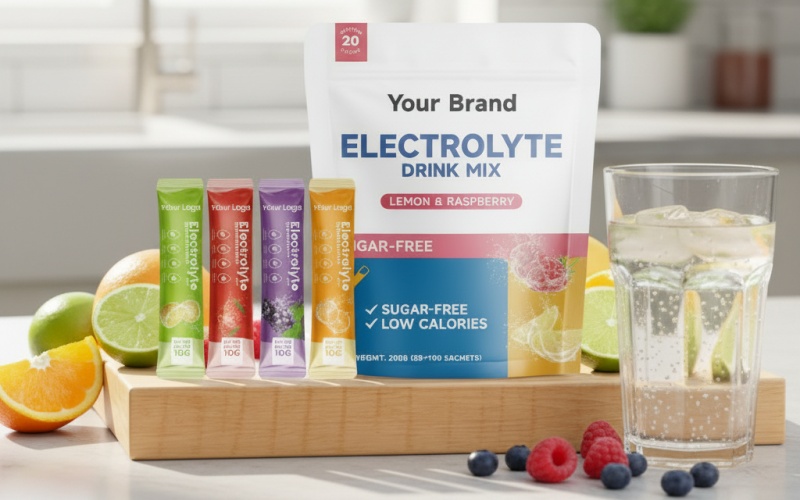
Functional beverages are moving into a more demanding stage of development. A few years ago, adding collagen, electrolytes, probiotics, caffeine, mushrooms, or another recognizable ingredient could be enough to create novelty. By 2027, novelty alone will be a weaker advantage. Consumers can already find dozens of products promising hydration, energy, gut support, relaxation, protein, beauty, or focus, so the more important question is whether a drink delivers a clear purpose in a form people actually want to consume repeatedly.
The functional beverage trends most likely to shape 2027 include everyday hydration, gut health and fiber, protein expansion, mood and focus support, lower-sugar formulas, functional stacking, portable drink powders, and purpose-led RTD beverages. Successful products will increasingly balance meaningful ingredient levels with flavor, solubility, stability, regulatory positioning, packaging, affordability, and a clearly defined consumption occasion rather than relying on fashionable ingredients alone.
Current market signals support that direction. Innova’s 2026 trend research places protein, gut health, hydration-oriented “beverages with purpose,” and mental well-being among major innovation themes, while Synergy Flavours’ dedicated 2027 soft-drink forecast highlights hydration-led innovation, functional sodas, and mood-mapped beverages.
For a product team, however, the interesting part starts after the trend presentation ends. An appealing combination such as electrolytes, magnesium, collagen, fiber, and botanical extracts may sound excellent during concept development, but the finished beverage still has to dissolve, taste good, remain stable, fit the target price, survive manufacturing, and support defensible label language. The difference between a fashionable idea and a durable product is increasingly found in those less glamorous decisions.
What Functional Beverage Trends Will Shape 2027?
Hydration, digestive wellness, protein, mental well-being, and multi-benefit nutrition are positioned to remain important functional beverage themes in 2027. The larger shift is toward purpose-driven products built around recognizable moments such as morning focus, daily hydration, exercise recovery, digestive routines, afternoon energy, social relaxation, or evening wind-down. Current innovation is already moving beyond basic refreshment toward beverages designed to perform a specific job.
Is Hydration Becoming Daily Wellness?
Hydration has historically been associated with competitive sports, endurance exercise, or recovery after heavy sweating. The category is now becoming much broader. Functional hydration products increasingly appear beside everyday wellness products, powders designed for water bottles, low-sugar beverages, coconut-water concepts, and formulas combining electrolytes with additional nutritional functions. Major beverage companies are also expanding hydration positioning beyond traditional athletic occasions, while competition has increased substantially.
The distinction matters because an office hydration drink does not necessarily need the same formula as a product designed for prolonged exercise. A consumer mixing a sachet beside a laptop may prioritize refreshing flavor, moderate sweetness, and convenient daily use, while an endurance product may emphasize electrolyte replacement and carbohydrate strategy around physical activity. Treating both occasions as one generic “electrolyte market” can lead to formulas that are poorly matched to their actual use.
A second development is the extension of hydration into adjacent benefit areas. Collagen, amino acids, vitamins, minerals, energy ingredients, and digestive components can now appear beside electrolytes, creating concepts such as hydration plus beauty, hydration plus recovery, or hydration plus daily wellness. Synergy’s 2027 forecast specifically identifies hydration-led innovation, while Innova reports solid growth in new beverage launches carrying hydration claims.
The opportunity is attractive, but product developers should avoid assuming that more electrolytes automatically create better hydration. Mineral loading influences taste, serving size, sodium exposure, bitterness, and consumer suitability. For most brands, defining who drinks the product, under what conditions, how often, and in how much water is more useful than starting with the highest mineral numbers seen on competing labels.
Are Gut Health Drinks Moving Mainstream?
Gut health has moved well beyond probiotic capsules and refrigerated yogurt. Prebiotic sodas, fiber drinks, wellness shots, powdered mixes, and functional waters are making digestive wellness part of everyday beverage behavior. BeverageDaily describes gut-health sodas as one of the forces bringing digestion into the mainstream, while fiber has become an increasingly visible category in its own right rather than merely an ingredient hidden inside digestive formulas.
Several forces are working together. Consumers are increasingly familiar with terms such as probiotics, prebiotics, fiber, and microbiome, while manufacturers are developing formats that look and taste more like familiar refreshments. A sparkling berry drink that also contains prebiotic fiber creates a very different consumption experience from swallowing several capsules after breakfast, even when both products sit within the broader digestive-wellness conversation.
The technical challenge is that fiber is not invisible. Different fibers affect viscosity, sweetness, mouthfeel, clarity, dissolution, and digestive tolerance differently. A formula that performs well at a modest level may become thick, cloudy, excessively sweet, or uncomfortable when the amount is increased. The U.S. FDA Daily Value for dietary fiber is 28 g for adults and children four years and older, but that figure is a daily labeling reference rather than a target amount that every beverage should attempt to deliver.
For 2027 development, transparent fiber amounts and understandable ingredient explanations are likely to become increasingly important. Innova’s 2026 trend work notes growing consumer interest in gut health and stronger product communication around probiotics and prebiotics. The strongest concepts should therefore combine a recognizable benefit with sensible serving levels and a drinking experience consumers can maintain over time, rather than simply competing on the largest number of digestive ingredients.
Are Mood and Focus Drinks Expanding?
Energy drinks established the idea that a beverage could alter how someone wants to feel, but the next generation is becoming more specific. Consumers are increasingly encountering drinks positioned around focus, relaxation, calmness, social occasions, stress management, mental energy, and sleep-related routines. Current U.S. market reporting shows strong growth in products built around desired physical and emotional states rather than flavor alone.
Ingredients appearing in these concepts include caffeine, L-theanine, magnesium, green tea, botanical extracts, adaptogens, and functional mushrooms. Their evidence, appropriate amounts, sensory characteristics, and regulatory considerations vary widely, which means simply placing several fashionable ingredients in one can does not automatically produce a credible mental-wellness beverage. Claims deserve particularly careful review because evidence for many functional beverage ingredients is uneven.
A useful product-development approach is to define the desired state before selecting ingredients. “Smooth afternoon focus,” “caffeine-free evening relaxation,” and “morning mental energy” describe substantially different products. Each may require a different active system, flavor profile, serving size, packaging format, and communication strategy. Clear positioning also makes it easier to avoid contradictory formulations, such as combining strongly stimulating ingredients with an equally prominent relaxation story.
The social-drinking occasion is another area worth watching. Current reporting indicates growing interest in functional drinks as alternatives within occasions traditionally occupied by alcohol, especially among consumers looking for relaxation, social connection, or novelty without conventional alcoholic effects. It is still essential to separate market enthusiasm from established evidence, but the broader shift toward choosing beverages based on the desired experience is already visible.
Is Functional Stacking the Next Step?
Functional stacking means combining several related benefits in one product. Hydration plus collagen, protein plus fiber, caffeine plus electrolytes, and digestive ingredients added to familiar soda formats are examples of the broader movement. Innova’s U.S. functional-beverage research specifically notes combinations involving mood, gut health, hydration, and protein, while industry reporting shows brands exploring increasingly multi-purpose formulas.
The appeal is easy to understand. People rarely experience health goals in isolated categories. Someone exercising may care about hydration and recovery at the same time. A consumer choosing a protein beverage might also appreciate fiber. Someone interested in beauty nutrition may naturally understand a collagen-plus-hydration concept. When two benefits support the same use occasion, combining them can make the product more useful.
Problems begin when every ingredient becomes a headline. More ingredients create additional raw-material costs, supplier qualification work, weighing steps, flavor challenges, solubility issues, and possible stability interactions. They can also make the package difficult to understand. A beverage positioned simultaneously around energy, beauty, digestion, immunity, hydration, stress, and longevity may contain an impressive ingredient panel but give consumers no obvious reason to choose it.
A more disciplined structure is to choose one primary function, one logical secondary function, and a limited number of supporting nutrients. The consumer should still be able to describe the product in one sentence. Functional stacking is likely to continue through 2027, but the best products will probably feel like one coherent beverage rather than several supplement formulas combined without a clear hierarchy.
| Trend Area | Current Market Signal | Important 2027 Development Question |
| Hydration | Growth beyond traditional sports use | What specific hydration occasion does the product serve? |
| Gut Health | Prebiotic sodas and fiber drinks expanding | Can meaningful fiber remain pleasant to consume? |
| Mood & Focus | Growth in state-based functional drinks | Are ingredients, amounts, and claims defensible? |
| Protein | Expanding beyond conventional shakes | Can protein become lighter and easier to drink? |
| Functional Stacking | More benefits combined in one format | Which benefit should remain the main reason to buy? |
| Low Sugar | Increasing expectation across wellness beverages | Can sweetness be reduced without exposing unpleasant active notes? |
Which Ingredients Will Lead Functional Beverages?
Electrolytes, fiber, prebiotics, protein, collagen, amino acids, selected vitamins and minerals, botanicals, and cognition-oriented ingredients are likely to remain important in functional beverage development. The strongest formulas will not simply collect popular ingredients. Ingredient choice increasingly needs to consider serving amount, evidence, flavor, solubility, stability, cost, consumer tolerance, and regulatory suitability as one connected development problem.
Which Electrolytes Will Matter Most?

Sodium, potassium, magnesium, and chloride remain central to many electrolyte systems, with calcium also appearing in selected formulas. What changes from one product to another is the intended use, ingredient form, level per serving, and relationship between the minerals. A lightly positioned everyday powder does not need to copy the mineral profile of a product developed around prolonged, intensive exercise.
Taste quickly becomes part of the decision. Sodium can contribute noticeable saltiness as the concentration increases, while some magnesium and potassium compounds bring bitterness, metallic sensations, or other mineral notes. Acids, flavors, and sweeteners must then be developed around these characteristics. For that reason, mineral selection and flavor development should happen together instead of treating the electrolyte blend as a completed formula before sensory work begins.
FDA Daily Values provide useful reference points for interpreting U.S. labels, but they are not recommended amounts for individual functional beverages. Current Daily Values for adults and children aged four and older include 2,300 mg sodium, 4,700 mg potassium, 420 mg magnesium, 2,300 mg chloride, and 1,300 mg calcium. A beverage developer should not automatically use these figures as formulation targets because actual use depends on serving frequency, intended population, dietary context, and product positioning.
The most useful development sequence is usually to define the consumption occasion, establish an appropriate mineral strategy, prepare realistic serving prototypes, evaluate flavor and tolerance, and then review the finished nutritional profile. Competing solely on larger electrolyte numbers may create an impressive front label while making the beverage unpleasant or unnecessarily difficult to formulate.
Are Fiber and Prebiotics Gaining Ground?
Fiber has one important advantage over many novel functional ingredients: most consumers already recognize the basic concept. Interest is also being reinforced by the growth of prebiotic sodas and broader gut-health awareness. BeverageDaily identifies fiber, digestion, hydration, protein, energy, and relaxation among key areas shaping functional beverage development, while Innova continues to identify gut health as a major global innovation theme.
The challenge is translating a nutritional idea into a beverage that remains pleasant at the intended serving level. Inulin, soluble corn fiber, resistant dextrin, and other fiber systems do not behave identically. Increasing the dose can influence body, sweetness, clarity, powder dispersion, carbonation experience, and gastrointestinal tolerance. The technically highest possible fiber amount is therefore not necessarily the best commercial level.
A developer also needs to consider the role of the fiber. Is it primarily contributing grams of dietary fiber, supporting prebiotic positioning, improving body, or participating in a multi-benefit gut-health story? The answer affects ingredient selection and communication. Products built around prebiotics should also avoid turning a complex microbiome discussion into claims that exceed what the formulation and available evidence can support.
The FDA Daily Value of 28 g provides useful label context for dietary fiber, but beverage serving amounts should still be determined through formulation, sensory testing, tolerance considerations, and the intended consumption pattern. By 2027, brands may benefit more from clearly identifying fiber sources and realistic serving quantities than from relying on vague “digestive wellness” language without explaining what is actually inside the product.
Do Adaptogens and Nootropics Still Matter?
Adaptogens and cognition-related ingredients remain commercially interesting because stress, sleep, focus, mental energy, and relaxation are widely understood needs. Innova’s 2026 trends place mental balance and well-being among major priorities and note increasing food and beverage interest around energy, stress relief, and brain-health-related positioning. Functional beverage reporting likewise continues to track adaptogens, nootropics, mushrooms, and botanicals as areas of innovation.
The category is also one of the easiest places to overpromise. Evidence differs considerably between caffeine, L-theanine, specific botanical extracts, magnesium forms, mushroom ingredients, and other compounds. Research on an isolated ingredient at a particular dose does not automatically substantiate every finished beverage containing a small amount of that material. Product developers should therefore connect the intended claim to the actual ingredient form and amount used.
Sensory effects can be substantial as well. Botanical extracts may contribute bitterness, astringency, earthy aromas, or color. Mushroom ingredients can create characteristic flavor notes. Mineral and amino-acid additions may make the beverage harder to balance. These challenges become more pronounced when a brand attempts to stack several mental-wellness ingredients in a small serving.
By 2027, the category is likely to reward clearer dose disclosure, better-defined occasions, and more responsible language. A product designed for relaxed evening use should feel different from one developed for concentrated work. Consumers are increasingly choosing beverages for the state they hope to achieve, but credibility will depend on matching the formula, dose, evidence, flavor, and communication instead of relying on fashionable terminology.
Is Protein Moving Beyond Shakes?
Protein remains one of the strongest nutrition themes, but its beverage formats are becoming less predictable. Traditional dairy and plant-based shakes remain important, while protein waters, clear protein drinks, protein coffee, carbonated products, collagen beverages, and hybrid formulas are expanding the category. BeverageDaily notes that protein innovation is moving into sodas, coffee hybrids, and other formats that require proteins capable of performing under more challenging conditions.
Recent launches illustrate how far the concept can move from the standard creamy shake. Functional products have appeared with 10 g or 20 g protein per can alongside fiber, antioxidants, or electrolytes, while other products combine around 20 g plant protein with reduced-sugar positioning. These examples are useful market references, not universal formulation targets, because different occasions require different nutritional loads.
Protein source and processing conditions become especially important when the beverage is acidic, carbonated, transparent, or expected to remain stable for an extended period. Protein can influence turbidity, sedimentation, mouthfeel, foam, flavor release, and heat stability. A product described as “clear protein” may therefore require more development work than the simple visual description suggests.
The FDA Daily Value for protein is 50 g for the general reference population used on food labels, but that figure should not be treated as the amount every functional drink needs to deliver. A post-workout product, a light afternoon drink, and a meal-style shake can reasonably contain very different protein levels. The development target should follow the use occasion and total product architecture rather than a competition for the largest number on the package.
| Nutrient | U.S. FDA Daily Value* | Beverage Development Relevance |
| Dietary Fiber | 28 g | Higher inclusion can alter body, clarity, and tolerance |
| Protein | 50 g | Appropriate serving contribution depends on product occasion |
| Sodium | 2,300 mg | Higher levels strongly influence flavor and positioning |
| Potassium | 4,700 mg | Mineral form and amount influence taste |
| Magnesium | 420 mg | Certain forms can introduce bitterness or mineral notes |
| Calcium | 1,300 mg | Solubility and precipitation require formulation attention |
| Added Sugars | 50 g | Reduction affects sweetness, body, and bitterness masking |
*Daily Values are labeling reference amounts and should not be interpreted as recommended amounts for a single beverage.
How Are Consumers Choosing Functional Drinks?
Consumers increasingly evaluate functional beverages through a combination of purpose, ingredient familiarity, taste, convenience, sugar level, price, and fit with everyday routines. A functional claim may attract the first purchase, but repeat consumption depends on whether the drink is pleasant, understandable, affordable, and easy to use. Current market research also shows that value and clear messaging are becoming important as functional drinks move further into mainstream consumption.
Do Consumers Want Clear Benefits?
The modern functional beverage shelf contains plenty of broad language such as vitality, balance, wellness, performance, and optimization. These words create a healthy image but may not explain what the product actually does during a consumer’s day. As more ingredients become familiar, straightforward benefit communication becomes more important, especially when several products contain similar combinations of vitamins, minerals, botanicals, or protein.
Innova’s U.S. research describes functional beverages as becoming part of routines around energy, focus, and wellness and emphasizes that brands are combining mood, gut health, hydration, and protein in familiar formats. The same research notes the importance of clear messaging in an increasingly value-conscious category.
A useful internal test is simple: show the front of the package to someone unfamiliar with the project for a few seconds, then ask what the product is primarily for. “Workout hydration,” “prebiotic fiber soda,” “afternoon focus,” and “collagen hydration” are easy to repeat. A concept requiring a lengthy explanation of twelve actives may still be scientifically interesting, but the consumer proposition is probably too complicated.
Clear benefit architecture also helps the formulation team. Once the primary use is defined, ingredients can be judged according to whether they materially support the product rather than whether they happen to be popular. Serving size, flavor, sweetening system, claims, and packaging all become easier to design around one recognizable purpose.
Are Multi-Benefit Formulas More Attractive?
Multi-benefit formulas reflect the way people actually think about wellness. Exercise can involve hydration and recovery. Protein products can also contain fiber. A beauty beverage may reasonably combine collagen with hydration-related ingredients. Gut health can overlap with daily nutrition. Combining benefits can therefore improve convenience and make a product feel more useful than a narrowly focused alternative.
There is, however, a point where additional functions stop adding meaningful value. Every ingredient occupies physical space in the serving, contributes cost, and may affect flavor, color, solubility, or stability. Multiple benefit claims can also crowd the front panel and increase the evidence and compliance work required before launch.
A useful formula architecture is:
- Primary function: the main reason someone chooses the product.
- Secondary function: a benefit that naturally supports the same occasion.
- Supporting nutrition: ingredients that strengthen the formula without dominating communication.
- Sensory system: flavor, acidity, sweetness, mouthfeel, and aroma needed for repeated use.
- Delivery format: packaging and preparation suited to the intended routine.
Hydration plus recovery is intuitive because the two needs often occur together. Protein plus fiber can fit a nutrition or satiety-oriented occasion. A product promising hydration, detoxification, immunity, cognition, beauty, relaxation, and weight management simultaneously may be much harder to defend and even harder to communicate.
The better multi-benefit beverages are not necessarily the ones with the longest ingredient panels. They are the formulas where each additional component helps the primary product make more sense.
Is Flavor as Important as Function?
Flavor is one of the strongest filters between trial and repeat purchase. Consumers may tolerate an unusual functional drink once because the concept is interesting, but daily-use products face a much higher standard. A beverage that is consistently bitter, chalky, metallic, overly sweet, medicinal, or difficult to finish will struggle to create routine consumption regardless of how impressive the active ingredient list appears.
The difficulty is predictable because many functional ingredients bring their own sensory signatures. Electrolyte salts may produce salty, bitter, or metallic notes. Amino acids can add bitterness. Botanical extracts may taste earthy, herbal, or astringent. Protein changes mouthfeel and aroma, while fiber can increase body or sweetness perception. Several of these effects can occur in the same formula.
Professional sensory work should therefore evaluate more than whether a sample tastes “good.” Useful observations include initial aroma, sweetness onset, acidity, bitterness, metallic notes, body, aftertaste after thirty seconds, aftertaste after several minutes, sediment perception, and how the flavor changes as the beverage warms during normal consumption.
Functional beverage reporting repeatedly emphasizes that science, branding, taste, and value all matter. Consumers can be excited by new health claims while still rejecting a product that is expensive or unpleasant. The technical work behind a successful drink should almost disappear in the finished experience: consumers should notice the flavor and the usefulness of the product, not how difficult it was to formulate.
Are Low-Sugar Formulas Becoming Expected?
Low-sugar and zero-sugar positioning has become increasingly common across the beverage market, and current 2026 trend reporting indicates that the broader move toward healthier beverages continues to emphasize sugar reduction. Consumers are also paying more attention to simpler ingredients and artificial colors or sweeteners, creating a difficult formulation brief: they want stronger functional benefits while simultaneously expecting simpler, cleaner, and less sugary products.
Removing sugar is not as simple as subtracting sweetness from a formula. Sugar affects body, acidity perception, flavor release, and bitterness masking. When sugar is reduced, metallic mineral notes, botanical bitterness, protein flavors, or amino-acid aftertaste may become more noticeable. Alternative sweeteners can solve part of the problem while introducing delayed sweetness or lingering aftertaste of their own.
The development team therefore has to balance sweetness, acidity, flavor intensity, and active-ingredient character simultaneously. A low-sugar electrolyte drink may require a different strategy from a botanical mood beverage or protein product because the unpleasant notes being managed are different. The intended consumer also matters; some audiences tolerate functional tastes more readily than others.
By 2027, “low sugar” alone is unlikely to be enough differentiation in many wellness categories. Consumers will increasingly expect reduced sugar and good flavor. Products that achieve only one side of that equation may generate initial interest without maintaining repeat purchase.
Which Beverage Formats Have 2027 Potential?

Ready-to-drink bottles and cans, functional sodas, stick packs, powder tubs, shots, and liquid pouches can all remain relevant through 2027. The right choice depends on ingredient load, stability, consumer routine, manufacturing process, target price, freight economics, and required shelf life. Format should follow the product rather than forcing a technically difficult formula into whichever package currently looks most fashionable.
Are RTD Drinks Still Attractive?
Ready-to-drink products provide the simplest consumer experience. A can or bottle requires no shaker, scoop, or measuring. That convenience makes RTD especially attractive for convenience stores, gyms, offices, travel, and other grab-and-go situations. Gut-health sodas, energy drinks, protein beverages, functional waters, and mood products are all using this familiar format to integrate function into ordinary beverage behavior.
The formulation challenge is continuous exposure to water. Ingredients remain in solution or suspension during storage, so developers need to consider pH, sedimentation, color change, oxidation, aroma loss, microbiological control, ingredient interaction, packaging compatibility, and active stability. A sample that looks excellent immediately after production does not automatically remain acceptable months later.
Shipping economics are another consideration because an RTD supply chain transports the water as part of the finished product. Powders can often deliver a similar nutritional serving at a fraction of the shipment weight, although consumers must prepare them themselves. RTD therefore makes the most sense when convenience and ready-to-consume experience are central to the value proposition.
Synergy’s 2027 forecast indicates continuing innovation in functional sodas, hydration-oriented soft drinks, and mood-based beverages, supporting the view that RTD functionality will remain important. The commercial decision should still be based on whether the formulation can remain stable, appealing, and economically sensible in liquid form rather than assuming every promising supplement concept belongs in a can.
Do Stick Packs Fit Daily Routines?
Stick packs match several behaviors already established in functional nutrition. Consumers carry water bottles, travel frequently, keep supplements in gym bags or desk drawers, and increasingly personalize what they mix into water. Innova’s 2026 U.S. nutrition-drink research specifically notes growing interest in powders delivering protein, fiber, electrolytes, gut-health ingredients, and mood-related ingredients, with mixability and portability serving as points of differentiation.
Dry format can also accommodate several grams of active material without forcing the formulation into a small liquid volume. This makes it useful for collagen, electrolytes, creatine, greens, fiber, protein, and other ingredients commonly measured in grams rather than milligrams. Removing water from storage can reduce certain stability pressures, although moisture absorption, caking, aroma protection, and packaging barrier performance still need attention.
Mixability deserves more development attention than it often receives. A laboratory sample stirred with professional equipment may behave differently when someone pours a sachet into cold water and shakes a bottle for ten seconds. Real-use testing should evaluate visible clumps, foam, floating material, sediment after standing, sweetness at the recommended dilution, and flavor changes when consumers use slightly more or less water.
For brands considering custom functional beverage development, stick packs can provide a practical bridge between supplement behavior and beverage behavior. The format works particularly well when portability, individual serving control, and higher ingredient loading are important, provided the powder disperses reliably under ordinary consumer conditions.
Are Shots and Liquid Pouches Growing?
Shots, concentrated liquids, energy gels, and liquid pouches serve consumers differently from a leisurely 330 mL can or 500 mL bottle. Their value is concentration and speed. Sports participants, travelers, and consumers seeking targeted energy or wellness support may prefer a smaller package that can be consumed quickly without drinking a large volume.
The smaller format creates an immediate technical constraint: the same amount of active material is placed into less liquid. Bitterness, acidity, saltiness, botanical notes, and sweetness become more concentrated, leaving less sensory space for correction. The formulator has to decide whether the active level genuinely fits the available volume before a small format is selected.
Viscosity also matters for gels and pouches. A product has to flow through the chosen closure, remain reasonably consistent throughout its intended shelf life, and feel acceptable in the mouth. Packaging compatibility becomes part of the formulation problem, especially when products contain acids, oils, flavor systems, or oxygen-sensitive ingredients.
These formats make the most sense when convenience and concentration genuinely support the use occasion. If masking the active ingredients requires so much flavor, acid, or sweetener that the shot becomes unpleasant, the package is no longer helping the product. Format should solve a consumer problem rather than create a technical one.
Is Powder Still a Strong Format?
Powder remains one of the most versatile functional beverage formats, even though sleek cans often receive more attention in advertising. Removing water from the finished product can simplify freight, allow larger ingredient loads, and support single-serving sticks or economical multi-serving tubs. Protein, collagen, creatine, electrolytes, greens, fiber, and many mixed nutritional formulas remain well suited to powder delivery.
Dry products still have their own failure modes. Hygroscopic ingredients can absorb moisture and cause caking. Differences in particle size or density can create segregation. Powder may float, form lumps, foam excessively, or leave sediment when mixed. A product can therefore have excellent nutritional specifications while providing a frustrating preparation experience.
Consumer behavior also influences the appropriate package. A product consumed at home every morning may work well in a tub with a scoop, whereas an electrolyte formula for travel or sports may benefit from individually measured sticks. Higher-value ingredients can also make dose consistency and packaging accuracy more commercially important.
The most useful format comparison is not about which option appears more modern. It is about whether the format allows the intended ingredient amounts, flavor, stability, cost, consumer routine, and distribution model to coexist without unnecessary compromise.
| Format | Main Strength | Primary Technical Pressure | Typical Functional Fit |
| RTD Bottle/Can | Immediate convenience | Long-term aqueous stability | Energy, hydration, soda, protein |
| Stick Pack | Portable, measured serving | Moisture protection and dispersion | Electrolytes, collagen, fiber, greens |
| Powder Tub | High ingredient-load flexibility | Caking, scoop consistency, mixing | Protein, sports nutrition, daily powders |
| Liquid Shot | Compact consumption | Concentrated taste and stability | Energy and targeted wellness |
| Liquid Pouch/Gel | Portable concentrated delivery | Viscosity and package compatibility | Endurance and sports nutrition |
How Do Formulation Challenges Affect Success?
Functional beverage performance depends on far more than selecting attractive ingredients. Solubility, dispersion, flavor, ingredient interactions, pH, sedimentation, color, moisture behavior, processing conditions, and storage stability can determine whether a concept survives commercialization. Development works best when the formula is treated as one connected system because changing one ingredient can alter several physical and sensory properties at the same time.
How Does Solubility Affect the Formula?
“Water soluble” is often treated as a simple ingredient specification, but real beverage systems are more complicated. Solubility changes with ingredient concentration, temperature, pH, particle size, and the presence of other materials. An ingredient that dissolves reasonably well on its own can behave differently once acids, minerals, protein, fiber, botanical extracts, flavors, and sweeteners are combined.
Dispersion matters as much as theoretical solubility. Consumers judge the product they can see in their bottle or glass. Floating powder, stubborn clumps, crystals, or thick sediment can look like quality problems even when the nutritional composition remains technically correct. Expectations also depend on the product: a naturally cloudy greens powder will be judged differently from an electrolyte drink expected to appear nearly clear.
A useful powder-development protocol defines the serving weight, water volume, water temperature, mixing method, mixing time, appearance immediately after preparation, and condition after standing for a defined period. Testing under realistic household conditions provides more useful information than relying only on laboratory mixers that consumers will never use.
The manufacturer’s development capabilities are particularly relevant here. Zoxizo’s documented R&D setup includes formula trials, sensory evaluation, solubility checks, physical-property testing, and early-stage stability observation, while its broader formula-development process considers ingredient combinations, flavor, cost, stability, dosage form, and compliance before bulk production.
How Do Ingredients Change Flavor?
Every functional ingredient carries some sensory consequence, even if the effect is subtle. Mineral salts can create salty, bitter, or metallic characteristics. Amino acids may introduce bitterness. Botanical extracts can be earthy, medicinal, or astringent. Protein changes texture and aroma, while fiber can affect body and sweetness. Combining several actives often creates a more complicated flavor challenge than the sum of the ingredients considered individually.
Flavor systems also interact with acidity and sweetness. Increasing acid can brighten citrus or berry character but may exaggerate certain mineral notes. More sweetness may cover bitterness initially while leaving an undesirable aftertaste. Stronger flavor can mask one difficult ingredient and simultaneously make the beverage tiring to consume over a full serving.
Structured tasting is therefore useful during development. Teams can score aroma, initial sweetness, acidity, bitterness, mineral notes, mouthfeel, aftertaste, sediment perception, and overall drinkability rather than relying on a simple “like” or “dislike.” Testing the full intended serving is particularly important because an attractive first sip can become unpleasant before the package is finished.
Taste is also a commercial constraint. BeverageDaily’s 2026 analysis notes that functional drinks must justify their premium through outcomes, taste, and value, while recent market reporting shows that sensory experience remains a major weakness in some heavily functionalized beverages. Function may earn attention, but flavor is still one of the strongest reasons a consumer decides whether the product belongs in a daily routine.
How Does Stability Affect Shelf Life?
Shelf life should be demonstrated for the actual formulation rather than copied from a similar product. Two beverages that look nearly identical on the shelf may behave differently because of changes in active ingredients, flavor system, pH, processing, packaging, or storage conditions. Powders have different risks from liquid RTDs, but neither format is automatically stable simply because it is familiar.
Dry products can absorb moisture, lose aroma, oxidize, cake, or experience ingredient degradation. Liquid products can separate, develop sediment, change color, lose flavor, or show declining levels of selected actives. Microbiological controls and package integrity also become important depending on the product and manufacturing process.
Stability work can evaluate physical appearance, color, odor, flavor, relevant chemical measurements, moisture behavior, sedimentation, separation, packaging integrity, selected active compounds, and microbiological characteristics where appropriate. Accelerated studies may provide useful development information, but they should not be casually treated as a universal substitute for appropriate product-specific shelf-life verification.
Early stability work can save substantial cost. Discovering that an active precipitates, a botanical changes color, or an aroma fades during sample development may require reformulation, but the problem is still manageable. Discovering the same issue after a large commercial production run can affect inventory, retail relationships, and brand reputation.
Do Higher Doses Always Make Better Drinks?
A higher number on the label can appear attractive, especially when brands compare competitor products side by side. Beverage formulations, however, have physical and sensory limits. Increasing a mineral level may intensify bitterness. Adding more fiber can change viscosity. Increasing protein can make a drink heavier or less stable. Higher botanical loading may create a taste that requires additional sweetener and flavor to mask.
Dose selection should therefore consider evidence, intended use, regulatory fit, sensory impact, consumer tolerance, serving size, and cost simultaneously. The technically maximum amount that can be dispersed into a beverage is not necessarily the amount that produces the best finished product.
Format can change the equation. A powder mixed into 500–700 mL water provides more room for gram-level actives than a concentrated 60 mL shot. An RTD must also keep the ingredients stable throughout its shelf life, while a dry powder remains separated from water until consumption. Comparing ingredient amounts between formats without considering these differences can be misleading.
The goal is not to create the largest possible Supplement Facts or Nutrition Facts panel. A stronger formulation uses amounts that fit the intended benefit while still allowing the beverage to remain stable, palatable, affordable, and easy to consume. For established brands, that balance is often more valuable than winning a label-number competition that consumers may not understand.
What Should Brands Check Before Launching?
Before a functional beverage reaches commercial production, the team should confirm product classification, target market, ingredient suitability, serving size, claim strategy, label format, testing requirements, manufacturing specifications, packaging, and distribution conditions. These decisions are connected. In the United States, a liquid dietary supplement and a conventional beverage are not automatically interchangeable categories simply because both can be sold in similar bottles.
Is It a Beverage or a Supplement?
Product classification should be discussed near the beginning of development rather than after the label design has been completed. The FDA has specific guidance for distinguishing liquid dietary supplements from conventional beverages and notes that manufacturers must consider the characteristics and positioning of the product rather than assuming that any liquid can simply be marketed under the preferred category.
Factors can include the product name, packaging, serving amount, recommended conditions of use, and representations about how the product is consumed. A small concentrated liquid used once per day may create a different regulatory picture from a large bottle presented as an ordinary thirst-quenching beverage, although classification depends on the overall circumstances rather than one isolated characteristic.
A sensible commercial sequence is to define the launch market, intended consumer use, regulatory category, ingredient list, serving size, and proposed claims before the packaging structure is finalized. Cross-border brands should also avoid assuming that the same formula, ingredient, or label treatment will automatically fit every country.
Getting this decision wrong can create expensive downstream work. Ingredient review, facts panels, claims, mandatory wording, serving instructions, and artwork may all need to change. Regulatory positioning is therefore not a small label detail; it is part of the original product architecture.
Which Claims Can the Product Support?
Functional beverages naturally invite strong language because consumers want to know what the product is supposed to do. The challenge is separating an attractive benefit statement from an unsupported or impermissible claim. In the United States, FDA distinguishes among health claims, nutrient-content claims, and structure/function claims, and the rules differ according to the type of statement being made.
For dietary supplements, structure/function claims can describe an effect on normal structure or function, but manufacturers must have substantiation showing that the statement is truthful and not misleading. Firms marketing dietary supplements with covered structure/function claims must also notify FDA within 30 days after first marketing the product with the claim, and other labeling requirements apply.
This makes ingredient-level evidence important. A clinical study using a specific extract at a particular amount does not automatically support every beverage containing a related botanical at a much lower level. Similarly, the popularity of a term such as adaptogen, detox, focus, or metabolism does not replace the need to assess what the finished product can responsibly communicate.
A mature claim-review process links the exact wording to the responsible ingredient, amount per serving, supporting evidence, target jurisdiction, and product classification before artwork approval. Manufacturers and brands should also avoid disease-treatment language or implying FDA approval where no such approval applies. Strong marketing can still be developed, but it should be built around a product the company can defend.
What Testing and Documents Matter?
A functional beverage becomes a repeatable commercial product only when the approved formula is supported by specifications, production controls, and batch documentation. A good sample is important, but a brand buying thousands of units needs to know that the next batch can be produced against the same defined standard rather than depending on subjective memory.
Documentation commonly considered during supplement and functional beverage projects includes raw-material specifications, supplier COAs, finished-product specifications, manufacturing records, batch records, relevant microbiological or chemical testing, packaging specifications, label revision records, finished-product COAs, and traceability information. The exact package should follow product risk, ingredients, dosage form, sales market, and distribution needs.
Testing is more useful when it is tied to specifications. Instead of saying a beverage “looks normal,” a finished specification can define relevant physical, chemical, nutritional, and microbiological expectations. Batch-specific documentation is also more valuable than generic certificates because it allows a result to be connected to the actual lot supplied.
Zoxizo’s documented project capabilities include COA and MSDS/SDS support where applicable, raw-material documentation, batch documents, discussions around third-party testing, and export-related files depending on the product and market. Its stated manufacturing resources also include approximately 17,000 m² of production space, 25+ R&D personnel, 30+ quality/testing personnel, and a 20,000+ formula library.
Those numbers become meaningful when they result in better product control. For brands evaluating a manufacturing partner, the important question is whether the supplier can connect formula development, sample approval, specifications, production, testing, packaging, documentation, and repeat orders into one controlled process.
How Should Cost and Function Be Balanced?
Cost control works best when it begins during concept development. Waiting until the final sample has been approved and then asking the manufacturer to reduce the price can create a difficult situation because replacing one expensive active may alter the claims, taste, color, or consumer positioning that made the product attractive in the first place.
The real product cost includes much more than active ingredients. Flavor systems, sweeteners, processing losses, laboratory work, packaging materials, filling or packing, cartons, quality control, freight, storage, and compliance activities all contribute to the finished economics. A premium patented ingredient can be justified when it provides meaningful differentiation or evidence, but it can also make a formula commercially unrealistic if the expected retail price cannot support it.
Packaging deserves the same discipline. A highly customized bottle or pouch may provide excellent shelf impact while consuming a disproportionate amount of the cost budget. In some projects, consumers will notice a superior active system more than an elaborate carton. In others, retail presentation is essential because packaging is part of the purchasing decision.
A useful product-development conversation therefore includes the target price before formulation is locked. The team can then decide where value matters most and where complexity can be removed without weakening the proposition. The goal is not the cheapest beverage; it is a product whose function, sensory quality, packaging, and economics can all survive repeat commercial production.
Conclusion
The functional beverage market heading into 2027 is not short of ideas. Hydration, fiber, gut health, protein, collagen, mood support, mental energy, and multi-benefit formulas all offer development opportunities, while RTDs, powders, stick packs, shots, and liquid pouches provide increasingly varied ways to deliver them. Market growth and current innovation show that consumers are comfortable expecting more from drinks than simple refreshment.
The difficult part is deciding which ideas deserve to become products. A useful functional beverage needs more than a list of trending ingredients. The ingredient amounts must fit the intended function, the flavor must support repeated use, the formula needs to remain physically and chemically suitable for its format, the claims must fit the regulatory framework, and the cost must leave enough room for a viable commercial model.
For brands developing products for 2027, the strongest starting question is therefore not “Which ingredient is hottest right now?” A better sequence is to ask who will drink the product, during what moment, what benefit they should understand immediately, what formulation can realistically deliver it, and whether the finished drink is enjoyable enough to become part of a routine. A manufacturer with formulation, sensory, stability, quality, packaging, and documentation capabilities can help turn that answer into a reproducible product rather than simply producing a fashionable formula.
Frequently Asked Questions
What are the biggest functional beverage trends for 2027?
The strongest 2027 directions are expected to include everyday hydration, gut health and fiber, protein in new formats, mood and focus beverages, functional sodas, lower-sugar formulas, and carefully designed multi-benefit drinks. Current 2026 innovation already shows strong activity around protein, digestive health, hydration, mental wellness, and convenient functional formats, while dedicated 2027 forecasting highlights hydration-led products, functional soda, and mood-oriented beverages.
Which functional beverage ingredients are likely to be popular in 2027?
Electrolytes, dietary fiber, prebiotic ingredients, protein, collagen, amino acids, vitamins, minerals, selected botanicals, L-theanine, and other mood- or cognition-oriented ingredients are likely to remain active development areas. Popularity should not be the sole selection criterion, however. Brands should also evaluate ingredient form, amount per serving, evidence, regulatory suitability, sensory impact, solubility, stability, consumer tolerance, and final product cost before committing to a formula.
Are functional beverages considered dietary supplements?
Some liquid functional products may be marketed as dietary supplements while others are conventional beverages, and the distinction depends on more than whether the product is liquid. In the United States, FDA guidance considers factors including product positioning, name, packaging, serving size, recommended conditions of use, and how the product is represented to consumers. Classification should therefore be confirmed before finalizing ingredients, facts panels, claims, and label artwork.
Are functional beverage powders better than ready-to-drink products?
Neither format is universally better. Powder can accommodate larger ingredient loads, reduce the amount of water transported, support portable stick packs, and avoid long-term aqueous exposure before consumption. RTD products provide immediate convenience and fit naturally into retail and grab-and-go occasions. The correct choice depends on ingredient level, solubility, stability, sensory performance, packaging, consumer routine, target cost, shelf-life requirements, and distribution model.
How much fiber should a functional beverage contain?
There is no universal fiber amount that is appropriate for every functional beverage. The U.S. FDA Daily Value for dietary fiber is 28 g per day for adults and children four years and older, but that is a daily labeling reference rather than a required amount for one drink. Formulators need to balance nutritional contribution with viscosity, sweetness, clarity, serving size, digestive tolerance, flavor, and the type of fiber being used.
What should brands test before launching a functional beverage?
Testing should follow the product and its risks rather than a generic checklist. Depending on the formulation, development may involve sensory testing, solubility or dispersion evaluation, stability observation, microbiological testing, selected nutrient or active assays, packaging compatibility, moisture behavior for powders, sedimentation or separation checks for liquids, and finished-product specifications. Brands should also maintain batch documentation and ensure that the approved production version can be traced back to defined raw materials and manufacturing records.
How can a brand develop a custom functional beverage for 2027?
A sound development process begins by defining the target market, consumer, drinking occasion, primary benefit, product classification, format, target price, and serving size. Formulators can then select ingredients and meaningful amounts, develop flavor and sweetness, evaluate solubility and stability, prepare samples, refine the formula, establish specifications, review claims and labeling, and move into controlled commercial production. Starting with the intended consumer experience generally produces a stronger product than beginning with a long list of trending ingredients.