Skip to content

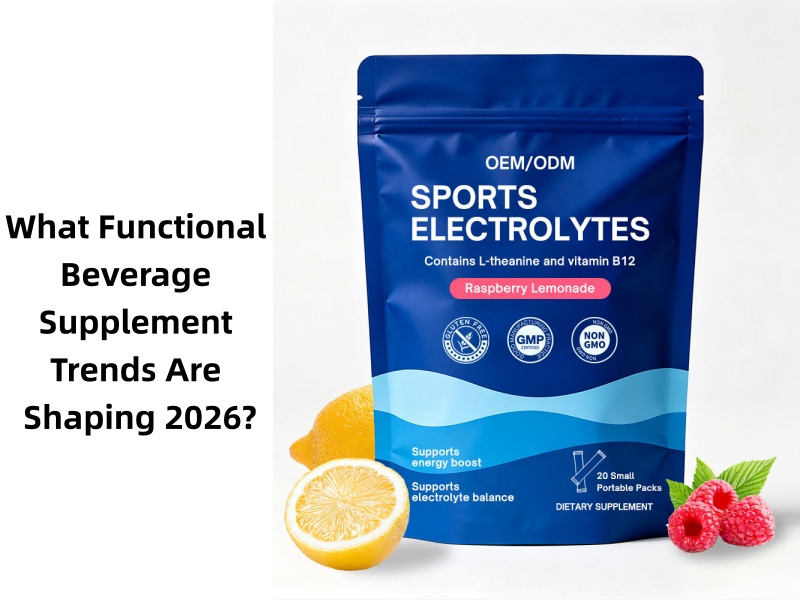
Functional beverages are entering a more demanding phase in 2026. Adding a vitamin blend to water or placing one fashionable botanical on the front of a can is no longer enough to create meaningful differentiation. Consumers are paying more attention to what a beverage actually does, when it should be used, how much sugar it contains, whether the ingredient story makes sense, and whether the product fits naturally into a routine they can repeat. The strongest concepts are becoming more specific, with clear occasions such as morning energy, daily hydration, workout recovery, afternoon focus, digestive support, or evening relaxation rather than broad promises of “wellness.”
The biggest functional beverage supplement trends in 2026 are targeted hydration, cleaner energy, gut-health and fiber drinks, protein expansion, focus and calm formulations, beauty and healthy-aging concepts, and more specialized formats such as drink powders, stick packs, functional waters, coffees, shots, and RTDs. The products with the best commercial potential combine a clear use occasion with credible ingredients, acceptable taste, convenient dosing, realistic claims, and a format that can be manufactured consistently.
That distinction matters because a growing category still produces many weak products. Mordor Intelligence figures reported by FoodNavigator place the global functional beverage market at about $164 billion in 2026 and project roughly $239 billion by 2031, representing a 7.9% CAGR. The size of the opportunity is real, but it does not make every idea commercially sound. Picture two concepts arriving on a development desk: one is a “premium wellness drink” containing fourteen fashionable ingredients, while the other is a low-sugar hydration powder designed for travel, gym sessions, and hot-weather use. The second idea may look less dramatic, but it gives the consumer a clearer reason to buy, use, and reorder it.
What Is Driving Functional Beverages in 2026?
Functional beverages are growing because consumers increasingly choose drinks according to the job they perform: hydration, energy, digestion, focus, relaxation, recovery, or everyday nutrition. Convenience still matters, but convenience alone is no longer enough. Successful products now need a recognizable purpose, credible ingredients, acceptable sensory performance, straightforward labeling, and a reason to become part of an everyday or weekly routine rather than a one-time novelty purchase.
Specific Needs Replace Generic Wellness
The biggest change in the category is that “functional” is no longer a specialist industry term. Spate data reported by FoodNavigator in August 2026 showed use of the term “functional beverage” across Google, TikTok, and Instagram rising 491.8% year over year. That percentage reflects search and social attention rather than retail sales, so it should not be treated as a revenue forecast. Even so, it signals a major shift in consumer language: people increasingly think about drinks by the benefit they want rather than only by the traditional beverage category printed on the shelf tag.
This change rewards products with a clear purpose. “Wellness beverage” can mean almost anything, while “daily hydration,” “post-workout recovery,” “afternoon focus,” or “evening relaxation” creates a clear consumption occasion. That clarity also improves product development. A hydration concept can prioritize electrolyte balance, flavor, serving size, and portability. A calm concept can focus on a smaller number of suitable ingredients rather than becoming a crowded blend of every botanical currently receiving social attention. The strongest concepts do not necessarily use the most ingredients; they make the main function easier to understand.
| 2026 Market Signal | Reported Figure | What It Means for Product Development |
| Functional beverage market size | About $164B in 2026 | The category is already mainstream in scale |
| Forecast market size | About $239B by 2031 | More growth also means more competition and specialization |
| Forecast CAGR | 7.9% from 2026-2031 | Category growth does not remove the need for differentiation |
| “Functional beverage” attention growth | +491.8% YoY | Consumers increasingly recognize function as a buying criterion |
| U.S. consumers paying more attention to beverage ingredients | 58% | Ingredient transparency and formulation logic matter more |
| U.S. consumers willing to pay more for wellness-supporting drinks | 52% | Premium pricing can work when the benefit is believable |
| U.S. consumers focusing more on hydration | 39% | Hydration has expanded beyond competitive sports |
The numbers above come from 2026 industry reporting that cites Mordor Intelligence, EY-related consumer research, Mintel, and Spate. They are useful directional signals, but they should be interpreted alongside channel data, repeat-purchase behavior, competitive density, and formulation feasibility. A category can grow quickly while individual products still fail because the price is too high, the taste is poor, the message is confusing, or the product is difficult to repurchase consistently.
Daily Routines Drive Repeat Use
Functional beverages become especially powerful when they attach themselves to something consumers already do. Coffee is consumed in the morning, water is consumed throughout the day, and flavored drinks naturally fit workouts, commuting, meals, desk work, travel, or evening downtime. This is one reason the category can span so many functions without feeling disconnected. A person can use an electrolyte stick pack after exercise, drink a protein water in the afternoon, choose mushroom coffee the next morning, and use a relaxation beverage at night without thinking of any of these products as part of a formal supplement routine.
For brands, that behavior makes frequency just as important as trial. A dramatic ingredient story can produce an initial click, but the stronger commercial product is often the one people know when to use again. A drink associated with a repeatable moment has a built-in reminder: before training, during work, after travel, with breakfast, or before bed. This is also why development briefs should begin with the use occasion rather than the package. “We want a trendy canned drink” is still vague. “We want a low-sugar afternoon energy drink for office workers who dislike traditional energy drinks” gives the formulation team something concrete to solve.
Taste Still Determines Loyalty
Health benefits may bring a consumer to the product page, but taste, texture, aroma, and ease of use often decide whether the second purchase happens. Functional ingredients can make this difficult because the compounds that provide the benefit can also introduce bitterness, saltiness, metallic notes, earthiness, viscosity, sediment, color changes, or lingering aftertaste. These challenges become more visible as consumers scrutinize ingredient lists and become less willing to accept the idea that a product should taste unpleasant simply because it is positioned as healthy.
EY-related research reported by FoodNavigator found that 58% of U.S. consumers were paying more attention to beverage ingredients, while 52% said they were willing to pay more for drinks that support health and wellness goals. That combination creates opportunity but also raises expectations. A product cannot rely indefinitely on the phrase “good for you” to excuse poor sensory performance. For mineral-heavy hydration powders, protein systems, mushroom blends, botanicals, or high-fiber drinks, formulation has to consider active load, acidity, sweetener choice, aroma, mouthfeel, temperature of consumption, serving volume, and flavor masking together rather than one variable at a time.
Which Functional Benefits Are Growing Fastest?
Hydration, energy, gut health, fiber, protein, recovery, focus, relaxation, sleep, beauty, and healthy aging are among the strongest functional beverage themes in 2026. Growth differs by country and channel, but the common pattern is clear: consumers respond well to benefits that are easy to understand and connected to recognizable daily situations. Multifunctional formulas are expanding too, provided the product still has one obvious primary job.
Hydration, Energy, and Recovery

Hydration is one of the clearest examples of a specialist category moving into everyday life. Electrolyte drinks were once marketed mainly around endurance sports and hard training. In 2026, use occasions now include travel, hot weather, outdoor activity, gym sessions, long workdays, festivals, and general daily hydration. Mintel data reported by FoodNavigator found that 39% of U.S. consumers were paying more attention to hydration than they had a year earlier. That figure helps explain why electrolyte powders, waters, tablets, and portable single-serve formats are appearing in broader lifestyle settings.
The wider audience changes formulation priorities. A competitive athlete may accept a stronger mineral profile or a more intense taste when performance is the main objective, but an everyday hydration consumer may expect a lighter flavor, lower sweetness, simple preparation, and packaging that fits into a bag or desk drawer. Energy is changing in a similar way. The word “energy” now covers rapid stimulation, steady productivity, workout performance, mental alertness, and fatigue management. This creates space for products combining hydration with energy or energy with focus rather than relying only on caffeine intensity and a conventional energy-drink flavor profile.
Recovery is also becoming more specific. Some consumers think about recovery in terms of protein or creatine, while others associate it with electrolytes, carbohydrates, sleep, or post-exercise hydration. That makes recovery a useful umbrella concept but not a complete formula brief. The product developer still needs to know what type of activity the consumer performs, what the serving size should be, whether the product is used immediately after training or later in the day, and which benefit will be most visible on the front of the pack.
Gut Health, Fiber, and Protein
Gut health has moved from specialist supplement shelves into mainstream beverage culture. Prebiotic sodas helped make fiber and digestive wellness easier to talk about, while powders, smoothies, juices, fermented beverages, and other formats are creating additional delivery routes. The important shift is that fiber increasingly appears as part of the product’s visible value proposition rather than an ingredient hidden on the nutrition panel. That can make the benefit easier to understand, but higher fiber inclusion can also change mouthfeel, viscosity, sweetness perception, and clarity, which means formulation and sensory work become closely connected.
Protein is undergoing another major expansion. It is no longer confined to bodybuilding shakes or meal replacements. Functional innovation now includes protein water, coffee, recovery drinks, and lighter beverage formats designed for consumers who want additional protein without the thick sensory profile of a conventional shake. FoodNavigator reported Spate data in August 2026 showing search and social interest in “protein packed” functional beverage positioning up 1,700% year over year, while “protein water” increased 155.8%. Those numbers measure attention, not guaranteed sales, but they show how quickly the protein conversation is moving into new beverage occasions.
For product developers, the opportunity is often less about discovering an unfamiliar nutrient and more about changing the format or context of something people already understand. A morning protein coffee, a clear afternoon protein water, and a thick post-workout shake can all deliver protein, but they solve different consumer problems and require different processing, flavor systems, packaging, and price points. The format should therefore follow the intended use experience rather than a desire to copy whichever package happens to be receiving attention on social media.
Calm, Focus, and Healthy Aging
Mental and emotional wellbeing is producing some of the most interesting functional beverage development in 2026. Stress-relief drinks, mood products, evening beverages, and focus-oriented formulas are moving into spaces that were previously dominated by coffee, alcohol, traditional energy drinks, or capsules. Innova Market Insights data reported by FoodNavigator found that 43% of consumers cited stress as a wellbeing concern, compared with 36% for anxiety and 32% for sleep difficulties. The same reporting estimated relaxation beverages growing at around 19% annually, although rates vary by dataset and market definition.
These patterns help explain the visibility of magnesium, L-theanine, selected botanicals, mushroom ingredients, and nootropic-style positioning. They do not mean every ingredient associated with “calm” or “focus” has the same evidence base or regulatory status, and that distinction is important. Strong concepts define the intended occasion first and then choose ingredients that fit the sensory and regulatory reality of the product. A lightly flavored evening powder, for example, has a different formulation space from a shelf-stable canned drink intended for daytime focus.
Healthy aging is broadening the category further. Protein, collagen, antioxidants, hydration, cognitive support, and active-lifestyle nutrition can all appear in aging-related positioning. The stronger concepts avoid vague promises about reversing aging and instead focus on understandable everyday goals such as maintaining protein intake, supporting hydration, staying active, or adding convenient nutrition to a routine. As consumers become more knowledgeable, specific and credible benefit language is likely to outperform dramatic claims that sound impressive but are difficult to substantiate.
Which Ingredients Are Trending in 2026?
Electrolytes, creatine, protein, fiber, prebiotics, probiotics, magnesium, L-theanine, collagen, functional mushrooms, and selected botanicals are prominent in 2026 beverage development. Popularity alone does not justify putting an ingredient into a formula. Each candidate still needs to be evaluated for serving size, taste, solubility, stability, processing compatibility, cost, regulatory status, interaction with other ingredients, and whether consumers understand the role it plays in the finished product.
Electrolytes and Creatine
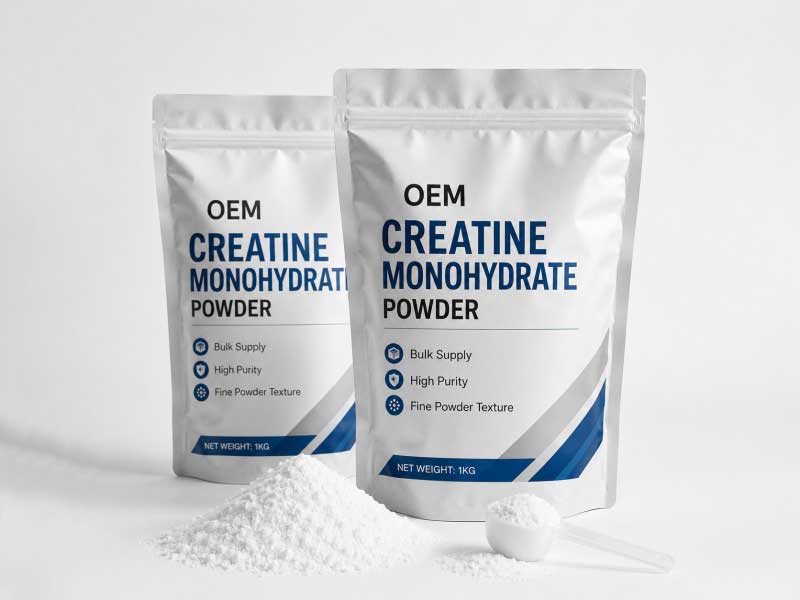
Electrolytes remain a strong ingredient family because hydration is relevant to a broad audience, but there is no single universal electrolyte formula. Sodium, potassium, magnesium, and calcium can appear in different combinations depending on whether the product is designed for strenuous exercise, casual daily hydration, travel, hot climates, or a general wellness routine. Higher mineral concentrations also create a practical sensory challenge. Sodium can increase saltiness, while some magnesium and potassium salts contribute bitterness or metallic notes, forcing changes to acidity, sweetness, flavor intensity, serving size, or recommended dilution.
Creatine is one of the clearest examples of a sports-nutrition ingredient moving into wider wellness conversations. Spate’s 2026 functional beverage research identifies creatine among the fast-rising ingredients attracting new audiences. That does not mean creatine belongs in every beverage concept or that an RTD is always the best format. Product developers need to consider serving amount, pH, liquid volume, solubility expectations, processing conditions, flavor, shelf-life strategy, and the point at which the consumer mixes or consumes the product. In some cases, a powder mixed shortly before use offers a more practical path than a ready-to-drink format.
The useful development question is therefore not simply, “Can we add creatine?” It is whether creatine fits the intended dose, consumer, format, sensory profile, shelf-life expectation, processing system, and target price. The same discipline applies to electrolytes. A long list of minerals may look strong on a concept sheet, but if the serving tastes harsh or the recommended dilution is unrealistic, the final product may struggle to become part of a repeatable routine.
Fiber, Probiotics, and Gut Ingredients
Gut-health formulations may involve fiber, prebiotic ingredients, probiotics, postbiotics, digestive-support ingredients, or combinations of these categories, but they should not be treated as interchangeable. Fiber is often relatively easy to explain to consumers, while its physical behavior in a beverage can vary substantially. Some fibers disperse cleanly, while others create haze, thickness, sediment, or changes in sweetness perception. As the inclusion level rises, the ingredient can affect the whole beverage architecture, including flavor delivery and the amount of liquid the consumer needs to prepare an acceptable serving.
Probiotics introduce another set of questions. Developers need to consider strain identity, viable count strategy where applicable, manufacturing stress, moisture, temperature, oxygen exposure, packaging, shelf-life expectations, and the conditions under which the product will be stored. A strong probiotic concept on a presentation slide is not commercially useful if the chosen organism cannot remain within the intended specification during distribution and storage. Postbiotics and other gut-health ingredients may create different technical options, but they still require product-specific evaluation rather than category-level assumptions.
Search-based trend data can help identify where attention is moving. Spate’s 2026 beverage-trend forecasting placed predicted interest growth for probiotic drinks at 34.6% and electrolyte drink powder at 30.8%. These are search and trend forecasts, not retail sales forecasts, and should be used accordingly. The commercial task begins after the trend has been identified: the formula still has to taste acceptable, remain stable, meet the desired specification, fit the target regulatory framework, and offer enough value to justify the selling price.
Magnesium, Mushrooms, and Collagen
Magnesium fits naturally into conversations around relaxation and everyday wellness, but “magnesium” is not a single raw material. Different salts vary in elemental magnesium content, solubility, sensory behavior, bulk density, and cost. That means a development team has to work with the actual magnesium form and target serving rather than discussing the ingredient only at the marketing level. A product that looks attractive on a label may become difficult to flavor if the chosen form and dose create strong bitterness or mineral notes.
Functional mushrooms are also highly visible. Spate’s 2026 trend forecasting placed mushroom drinks at about 30.1% predicted growth in consumer interest. Mushroom coffee remains one of the most understandable concepts because it adds a functional ingredient story to an established morning ritual. The technical challenge is that mushroom powders and extracts can add earthiness, dark color, sediment, or flavor masking demands depending on the raw material. Formulators therefore need to decide whether the product should taste clearly like coffee, like a flavored wellness drink, or like something in between.
Collagen remains relevant in beauty, active nutrition, and healthy-aging concepts, but sensory quality still matters. Collagen raw materials can differ in odor, taste, molecular profile, and behavior in solution. The opportunity has widened from traditional beauty powders into hydration combinations, flavored drinks, and recovery-oriented products, yet the same principle applies: a familiar ingredient does not create differentiation by itself. Flavor, serving size, positioning, packaging, ingredient quality, and price determine whether the product feels like another collagen SKU or a product that actually fits a specific consumer routine.
Which Beverage Formats Are Gaining Demand?
Drink powders, stick packs, specialized RTDs, functional waters, coffees, shots, and other portable formats are all competing for functional beverage growth in 2026. There is no universally superior format. The right choice depends on ingredient dose, stability, flavor, serving occasion, shelf-life requirements, packaging economics, freight, and how much preparation consumers are willing to accept. Format should solve the product’s technical and commercial needs, not simply follow fashion.
Powders and Stick Packs

Powders remain one of the most practical formats for supplement-style functional beverages because water is added by the consumer rather than transported through the supply chain. This can be especially useful for electrolytes, creatine, collagen, greens, fiber, sleep formulas, and other products where relatively substantial ingredient loads may be required. Powders also allow a brand to adjust recommended dilution more easily than an RTD, which can be valuable when the formula contains minerals, botanicals, or other ingredients that are difficult to balance in a fixed volume of liquid.
Stick packs add portability and portion control. A single-serving pack can fit a gym bag, office drawer, travel kit, subscription box, or sampling program, while jars and pouches often work better for habitual home use. That makes it possible to build several commercial formats around one core product idea without changing the underlying formula dramatically. However, packaging economics matter. Printed stick-pack film, cartons, and specialty formats may have their own minimum order quantities, so the smallest practical production run is often determined by packaging as much as by the powder itself.
Powders also introduce technical issues that should be tested rather than assumed away. Moisture can cause caking, different particle sizes can segregate during blending, higher mineral loads can taste unpleasant, and some botanicals or fibers disperse poorly in cold water. A naturally cloudy product is not necessarily defective, but unexplained sediment can look like poor quality. Development teams should decide whether the target is true dissolution, fine dispersion, or an intentionally opaque beverage and then set consumer instructions and quality specifications accordingly.
RTD and Functional Water
Ready-to-drink products win on convenience because the customer opens the package and consumes the beverage immediately. That removes the friction of measuring powder, finding water, shaking, or stirring, and it can make the product feel closer to a mainstream beverage than a traditional supplement. Functional water is particularly attractive because the consumption behavior already exists. A consumer does not need to learn when or how to drink water, so hydration, electrolytes, protein, or another understandable benefit can potentially add value to an established daily habit.
The convenience of an RTD creates additional manufacturing complexity. Once active ingredients spend months inside a water-based system, the product has to tolerate its intended processing, packaging, transportation, and storage conditions. pH, sedimentation, flavor stability, protein stability, preservation strategy, microbiological control, oxygen exposure, color, heat treatment, and packaging compatibility can all become important. The formulation space of a clear 500 mL water is therefore very different from that of a 10 g powder stick mixed immediately before consumption.
This is why RTD should be selected after technical feasibility has been considered, not before. An idea that looks premium in a slim can may perform better as powder if the active load is high or the ingredients are difficult to stabilize in water. Conversely, a validated powder concept may later justify RTD development if consumer demand is strong enough to support the added production and freight costs. Format changes the whole commercial model, from equipment and shelf life to shipping weight and inventory planning.
Coffee, Shots, and Hybrid Formats
Functional coffee continues to attract attention because it combines wellness positioning with one of the strongest daily beverage rituals in the world. Mushroom coffee is the most visible example, but the broader opportunity includes protein coffee and other formulations built around energy, cognition, beauty, or daily nutrition. The advantage is behavioral familiarity: the consumer already understands when to drink coffee. The challenge is that coffee has its own bitterness, acidity, aroma, and expectations, so added functional ingredients have to work with the coffee experience rather than simply being hidden inside it.
Shots take a different approach by concentrating the serving into a small, portable format. They can make the product feel purposeful and quick, but small liquid volume leaves less room for masking bitterness, minerals, acidity, botanicals, or other strong sensory characteristics. A formula that tastes acceptable when diluted in 400 mL of water may be extremely difficult to consume in a 60 mL shot. Ingredient load and flavor therefore have to be evaluated together from the earliest sampling stage.
The category is also becoming more flexible about what counts as a functional beverage format. Frozen functional cubes, mix-ins, concentrated drops, effervescent products, and hybrid powder-plus-liquid systems show that developers are no longer limited to the traditional bottle, can, or jar. Novelty can help a product get noticed, but novelty should not become the main reason for choosing a format. Preparation time, dose, stability, portability, packaging cost, freight, and repeat-use convenience still determine whether the format can support a durable product rather than a one-time social media moment.
How Should Brands Develop a Functional Beverage?
Functional beverage development should start with one primary consumer need and a defined use occasion, then move through ingredient selection, serving design, sensory work, solubility, stability, packaging, cost, compliance review, and sampling. Trendy ingredients should not be chosen first and forced into a product later. A commercially useful formula must work in manufacturing, taste acceptable, meet specifications, fit the target market, and remain reproducible in bulk production.
Start With the Use Occasion
A clear development brief can save weeks of unnecessary reformulation. “Make us a functional beverage” leaves too many variables unresolved. The formulation team still does not know who will consume it, how often they will use it, what benefit matters most, what price it needs to reach, or whether it is meant for a gym, supermarket, Amazon listing, pharmacy, or subscription model. A stronger brief might describe a low-sugar hydration powder for active adults who use one serving during workouts or travel and primarily purchase online. That single sentence begins to answer questions about ingredients, flavor, serving size, packaging, price, and claims.
Multifunctionality should be added carefully. A hydration product can reasonably include an energy component. A protein beverage may include fiber. An evening formula may combine relaxation and sleep-related positioning. The mistake is giving every benefit equal importance. When consumers see six competing promises, they have to work too hard to understand the product. The clearest concepts give the consumer a simple primary reason to buy and then use secondary benefits as support rather than trying to make the product sound like it does everything.
For companies developing functional beverage supplements, the most productive conversation with a formulation and manufacturing partner such as Zoxizo begins with target market, sales channel, target consumer, serving format, ingredient priorities, budget, packaging, and expected launch volume rather than a request for a generic product catalog. That approach keeps the discussion focused on whether the product can work commercially and technically instead of simply reproducing a trend that already exists in the market.
Balance Dose, Taste, and Solubility
One of the hardest parts of functional beverage development is that nutritional ambition and sensory quality often pull in opposite directions. Increasing the amount of minerals, fiber, botanical extracts, protein, amino acids, or other active ingredients can strengthen the formulation story while making the drink harder to consume. This is where laboratory and pilot samples become valuable. A formula needs to be assessed not only for flavor but also for dispersion, sediment, mouthfeel, color, aroma, sweetness, acidity, aftertaste, and the actual volume of water required to make one serving pleasant.
| Development Check | Useful Measurement | Typical Unit or Record | Why It Matters |
| Acidity | pH | pH units | Influences flavor, ingredient behavior, processing, and stability |
| Soluble solids | Brix | Degrees Brix | Helps track sweetness and dissolved solids |
| Viscosity | Viscosity test | cP or mPa.s | Important for protein, fiber, syrup-like, and high-solids drinks |
| Powder dispersion | Defined mixing test | Seconds or minutes | Shows how easy a serving is to prepare |
| Sedimentation | Timed observation | mm, %, or visual grade | Useful for minerals, botanicals, and suspension systems |
| Moisture control | Moisture or water activity | % moisture or aw | Important for powder caking and shelf stability |
| Microbiology | Product-specific test panel | CFU/g, CFU/mL, or pass/fail | Supports safety and release decisions |
| Sensory profile | Controlled sensory scoring | Internal scoring scale | Tracks bitterness, sweetness, aroma, aftertaste, and mouthfeel |
The table does not prescribe a single target pH, Brix, viscosity, water activity, or microbiological limit because those specifications must be established for the actual product, ingredients, processing method, regulatory category, and shelf-life plan. A protein water and a fiber powder should not be managed against the same technical targets simply because both are marketed as functional beverages. Specifications need to describe what “acceptable” means for the specific formula and then be used consistently during development and production.
Sugar presents another trade-off. Consumers continue to show strong interest in low- and zero-sugar beverages, but sweetness is one of the tools used to mask bitterness, acidity, mineral notes, and botanical flavors. Removing sugar without rebuilding the flavor system can leave a product thin, harsh, or artificially sweet. The better development process treats sweetener choice, acid profile, aroma, active load, and serving volume as one connected sensory system rather than trying to reduce sugar at the end of formulation.
Validate Stability Before Scale
A successful first sample proves that a formula can exist for one day. It does not prove that it will remain acceptable for twelve, eighteen, or twenty-four months. Stability work should reflect the risks of the chosen format. Powders may absorb moisture, cake, change color, or develop aroma changes. RTDs may show sedimentation, separation, flavor deterioration, vitamin losses, microbial issues, or packaging interactions. Probiotic products introduce viability questions, while botanical and mineral systems can create physical changes that were not visible when the first sample was mixed.
Early stability observation can identify obvious problems before commercial production, but it should not be confused with a completed shelf-life program. Formal testing plans need suitable time points, storage conditions, packaging, analytical methods, and product-specific acceptance criteria. The actual plan should be developed according to the formula and market rather than copied from a different product. This is particularly important when a brand is changing ingredient source, sweetener system, flavor, packaging material, or serving size after the first prototype, because those changes can affect shelf performance.
Scale-up adds another layer. A formulation that behaves well in a small laboratory mixer may behave differently when the batch size increases substantially. Ingredient addition order, mixing time, shear, temperature, hold time, transfer, and filling can influence uniformity and sensory quality. Treating V1 as a hypothesis rather than a finished product gives the development team room to test, learn, and refine before the formula is locked for commercial production. That discipline is usually cheaper than discovering the same problem after packaging has been printed and a large batch has already been made.
What Should Brands Check Before Manufacturing?
Before manufacturing, brands should confirm that the trend has genuine commercial potential, the formula is technically feasible, the regulatory category is clear, claims are supportable, product specifications are defined, packaging protects the formula, and production can scale consistently. A functional beverage has to survive much more than consumer interest: it must pass compliance review, manufacturing, testing, transport, storage, repeat ordering, and real-world use without losing the reason people bought it.
Regulatory Classification and Claims
For liquid products sold in the United States, one of the first questions is whether the finished product will be marketed as a conventional beverage or a dietary supplement. That decision cannot be made simply by calling the product a “supplement drink.” FDA guidance explains that classification depends on factors including composition, labeling, intended use, packaging, serving presentation, and how the product is represented to consumers. The distinction matters because conventional beverages and dietary supplements follow different labeling frameworks, including the use of Nutrition Facts versus Supplement Facts where applicable.
Claims require the same care. Structure/function claims for dietary supplements must be truthful, not misleading, and supported by appropriate substantiation. When a qualifying structure/function claim is used, U.S. requirements include FDA notification no later than 30 days after first marketing the dietary supplement with the claim, along with the required disclaimer. Disease-treatment claims are different and cannot be turned into acceptable supplement claims merely by softening the wording. Product concept, formula, and marketing language therefore need to be reviewed together before final artwork is approved.
| U.S. Manufacturing and Labeling Check | Practical Requirement |
| Liquid product classification | Confirm whether the finished product is appropriately marketed as a conventional beverage or dietary supplement |
| Facts panel | Use Nutrition Facts or Supplement Facts according to the product’s regulatory classification |
| Structure/function claims | Claims should be truthful, not misleading, and appropriately substantiated |
| FDA claim notification | For qualifying dietary supplement structure/function claims, notification is due no later than 30 days after first marketing |
| Required disclaimer | Include the applicable dietary supplement disclaimer when required |
| Disease claims | Do not position a supplement as diagnosing, treating, curing, or preventing disease |
| Dietary supplement CGMP | U.S. dietary supplement manufacturing is subject to 21 CFR Part 111 requirements |
| Market-specific review | Ingredient legality, claims, warnings, and labeling may differ by target country and channel |
The safest commercial approach is to perform regulatory review before bulk production and final printing. Fixing an ingredient, claim, warning, or facts panel while the design is still digital is far less expensive than correcting finished inventory. This becomes even more important when one product is intended for multiple markets because the formula, serving size, ingredient naming, claims, language, and documentation that work in one country may not transfer directly to another.
Quality and Batch Control
Quality control should be built around predefined specifications rather than vague phrases such as “premium quality.” For U.S. dietary supplements, 21 CFR Part 111 addresses current good manufacturing practice requirements, including specifications, production and process controls, quality responsibilities, records, testing, representative samples, and batch documentation. The exact quality plan for a functional beverage supplement depends on the formula, but it may include raw-material identity, active levels where relevant, microbiological parameters, heavy-metal testing where appropriate, physical characteristics, fill weight, packaging integrity, and finished-product release criteria.
A certificate does not replace a specification. A GMP-related system document does not prove that every finished batch meets every active claim, and a raw-material COA does not automatically prove that the finished product meets its release criteria. Third-party testing can add confidence when the method, analyte, sample, laboratory, and acceptance limit are appropriate. Mature brands should ask what is being tested, when it is tested, how the sample is selected, which method is used, and what happens if the result falls outside the agreed specification.
Batch consistency is particularly important for products containing strongly flavored minerals, botanicals, colors, or natural raw materials that can vary from lot to lot. A small change in raw-material color or flavor can become noticeable in a lightly flavored beverage. This is one reason supplier qualification, incoming material checks, batch records, in-process observations, and retained samples can matter as much as final testing. Quality is not created at the end of the production line; it is built into decisions made from raw-material approval through blending, filling, packaging, release, and traceability.
Packaging and Production Scale
Packaging should be chosen for the product rather than selected only because it looks attractive. A moisture-sensitive hydration powder needs a different protection strategy from a water-based RTD. A probiotic concept may have different stability concerns from a creatine powder, and a high-acid shot can raise packaging compatibility questions that do not exist for a dry collagen blend. Barrier properties, moisture protection, oxygen exposure, light, serving size, convenience, shelf presentation, packaging MOQ, freight, and consumer handling all need to be considered together.
Commercial scale introduces another layer of reality. A formula that works perfectly in a laboratory blender may behave differently when mixed in a large production batch. Ingredient addition order, blending uniformity, processing time, temperature, transfer, filling, and packaging can influence the finished product. Brands also need to think beyond the first purchase order. A successful launch can quickly create a replenishment problem if the formula depends on unusual imported ingredients, custom-printed film, uncommon bottles, or long-lead-time flavors. Raw-material and packaging availability can become more important than nominal factory capacity.
The most reliable development process connects formulation, sample approval, commercial-scale validation, and repeat-production planning. The objective is not simply to manufacture one attractive batch. It is to reproduce the expected consumer experience across future lots while keeping quality, taste, documentation, packaging, lead time, and cost under control. A product concept should therefore be evaluated not only on whether it can be made, but on whether it can be made repeatedly at the quality and price required by the sales channel.
Functional beverage innovation is moving quickly, but the most important shift in 2026 is not one ingredient or one package. It is the move toward clearer purpose. Hydration is becoming more specific, protein is entering new formats, gut health is becoming more mainstream, focus and calm are developing into recognizable beverage occasions, and familiar supplement ingredients such as creatine are finding broader audiences. At the same time, consumers are looking more closely at sugar, ingredient lists, taste, claims, and the real value delivered by each serving.
For brands, that raises the bar in a useful way. The central question is no longer only, “What is trending?” It is, “Which trend fits our consumer, channel, price point, regulatory market, and a product we can manufacture consistently?” The answer often changes during development. A fashionable ingredient may need to be removed, an RTD may work better as a stick pack, or a broad wellness concept may become stronger when narrowed to hydration, recovery, or calm. Brands that make those decisions carefully have a better chance of turning a 2026 trend into a durable product line rather than a short-lived launch.
Frequently Asked Questions
What functional beverages are trending in 2026?
Hydration and electrolyte products, gut-health and fiber beverages, protein waters and coffees, cleaner energy drinks, relaxation and focus products, functional coffee, collagen beverages, mushroom concepts, and drink powders are among the most visible directions in 2026. The strongest opportunities usually have a specific use occasion rather than a vague wellness message. Trend visibility should still be checked against target-market demand, competitive saturation, formulation feasibility, selling price, repeat-purchase logic, and local regulatory requirements before a brand commits to commercial production.
Which functional beverage ingredients are most popular in 2026?
Electrolytes, creatine, protein, fiber, prebiotic ingredients, probiotics, magnesium, L-theanine, collagen, and functional mushrooms are receiving significant attention. Their suitability varies widely by product. A high-dose mineral may create taste problems, a fiber can change viscosity, a probiotic may require careful stability planning, and some botanical extracts can create strong color or sediment. Ingredient popularity should therefore be treated as the beginning of product development rather than proof that an ingredient belongs in every functional beverage formula.
Are electrolyte drinks still growing in 2026?
Yes. Hydration continues to expand beyond competitive sports into travel, everyday wellness, hot-weather use, fitness, outdoor activity, and workday routines. This broader audience is also changing product expectations. Consumers who are not endurance athletes may prefer lighter flavors, low- or zero-sugar options, simple mixing, and portable formats such as stick packs. Brands should avoid treating every electrolyte product as the same because mineral level, serving volume, taste, target user, and use occasion can differ substantially between sports hydration and everyday hydration products.
Is creatine becoming a functional beverage trend?
Creatine is increasingly appearing in broader active-lifestyle and functional beverage conversations rather than remaining limited to traditional bodybuilding products. The commercial opportunity is real, but format selection matters. Creatine content, pH, storage time, liquid volume, processing, flavor, and the point at which the product is mixed can influence product design. In some cases, powder mixed shortly before use may offer a more practical route than a shelf-stable RTD. Brands should evaluate the complete formulation and stability system before selecting a beverage format.
How do you formulate a functional beverage supplement?
A practical process begins by defining the target consumer, primary benefit, use occasion, target market, serving format, price range, and sales channel. Ingredient selection follows only after that brief is clear. The development team then works through serving levels, compatibility, flavor, sweetness, acidity, solubility or dispersion, physical stability, packaging, compliance, sample feedback, and cost. The formula should be tested as a complete consumer experience rather than judged only by the ingredient list, because a technically impressive blend still fails if it tastes poor or is difficult to use repeatedly.
What should brands test before functional beverage production?
Testing depends on the product, but development commonly considers sensory performance, pH where relevant, soluble solids, viscosity for suitable products, dissolution or dispersion, sedimentation, moisture or water activity for powders, microbiological requirements, active levels where appropriate, packaging integrity, and stability. Finished-product release specifications should be established according to the actual formula and target market rather than copied from another product. Brands should also verify claims, labeling, ingredient status, packaging, and regulatory classification before commercial-scale production and final printing.
Which format is best for a functional beverage: powder or RTD?
Neither format is universally better. Powders can be practical for products with higher ingredient loads because the consumer adds water at the time of use, and they can reduce freight compared with shipping water. RTDs offer maximum convenience but may require more complex work on pH, preservation, processing, sedimentation, flavor stability, microbiological control, and packaging compatibility. The best choice depends on ingredient dose, shelf-life expectations, target consumer, use occasion, manufacturing capabilities, logistics, and the price the market can support.