Skip to content

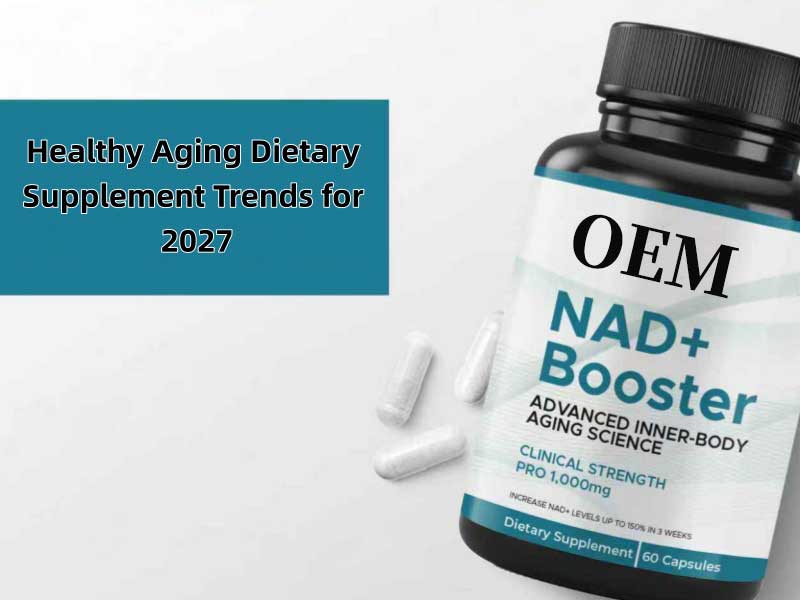
Healthy aging is undergoing a quiet but important change. Consumers are becoming less interested in products that simply promise to make them “look younger” and more interested in staying physically capable, mentally sharp, metabolically healthy, and independent for as long as possible. That shift changes almost every decision involved in supplement development, from the benefit a product targets to the ingredient dose, delivery format, packaging, scientific substantiation, and language used on the label.
Healthy aging dietary supplement trends for 2027 are expected to center on healthspan, cognitive resilience, muscle and mobility, metabolic wellness, gut health, women’s life-stage nutrition, evidence-based ingredients, multi-benefit formulations, and convenient daily formats. Strong products will connect a clearly defined consumer need with sensible ingredient amounts, suitable dosage forms, stable manufacturing, responsible claims, and an experience people can realistically maintain over time.
The most interesting part of the healthy-aging market is not a single ingredient. It is the way familiar categories are beginning to overlap. Creatine is no longer discussed only in bodybuilding. Protein is increasingly associated with active aging. Gut health is moving into longevity conversations. Menopause products are expanding beyond hot-flash positioning toward muscle, bone, sleep, and metabolic health. Powders and stick packs are being used for formulas that simply cannot fit comfortably into capsules.
For supplement brands, this creates opportunity, but it also raises the standard. A fashionable formula can still fail if the researched dose will not fit into the chosen format, a botanical makes the product unpleasant to consume, a probiotic loses viability before the end of shelf life, or the marketing promise goes beyond what the evidence can reasonably support. Healthy aging in 2027 will therefore reward disciplined product development more than ingredient collecting.
What Will Define Healthy Aging Supplements in 2027?
Healthy aging supplements in 2027 will increasingly be defined by healthspan and everyday function rather than broad anti-aging promises. Consumers are likely to care more about maintaining strength, mobility, cognition, sleep quality, metabolic wellness, and independence. The category is also moving beyond traditional senior nutrition as adults begin thinking about long-term wellness earlier in life.
The word “longevity” attracts attention, but the more useful concept for product development is healthspan. Lifespan describes how long someone lives. Healthspan is concerned with how much of that life can be spent functioning well. For a supplement company, the distinction is practical. A vague “anti-aging complex” can be difficult to explain, formulate, substantiate, and differentiate. A product focused on maintaining muscle function, supporting normal cognition, or fitting into a midlife wellness routine has a much clearer role.
Healthy aging is also becoming more personal. Two people who are both 55 years old may have very different priorities. One may strength train four times a week and care about protein intake, creatine, recovery, and sleep. Another may be navigating menopause and thinking more about bone, muscle, metabolic wellness, and nighttime comfort. A third may prioritize cognition, heart health, and digestive function. Age is useful, but it is no longer enough to define the product brief.
| Product Dimension | Traditional Aging Position | 2027-Oriented Position |
| Main idea | Fight aging | Maintain healthspan and function |
| Core audience | Primarily older adults | Adults across several life stages |
| Product promise | Stay young | Stay active, capable, and resilient |
| Formula style | Broad antioxidant or vitamin blend | Defined benefit architecture |
| Ingredient logic | Recognizable ingredients | Evidence, dose, form, and feasibility |
| Format | Mostly capsules and tablets | Capsules, powders, sticks, gummies, liquids |
| Long-term value | Novelty | Credibility, adherence, and repeat use |
Is Healthspan Replacing Anti-Aging?
Healthspan is becoming a more useful commercial and scientific framework because it reflects what people actually want from aging well. Most consumers do not wake up thinking about cellular pathways. They think about whether they can keep exercising, traveling, working, sleeping comfortably, remembering important details, and participating in family life. Products designed around these recognizable goals are easier to understand and easier to position responsibly.
This shift also encourages better formula discipline. Instead of trying to put every ingredient associated with longevity into one bottle, brands can create clearer platforms around muscle and mobility, cognition, metabolic wellness, sleep and recovery, digestive health, or women’s midlife nutrition. A product may support more than one related function, but one central purpose should remain obvious.
Healthspan positioning also creates more realistic expectations. Supplements can support normal physiological functions and help fill nutritional gaps, but they do not replace physical activity, adequate protein, sleep, dietary quality, healthcare, or other foundations of long-term health. A brand that recognizes those limits does not necessarily weaken its message. In many cases, it builds more trust because the product is presented as part of a credible wellness routine rather than a shortcut around aging.
Are Younger Adults Entering the Longevity Market?
Healthy aging is increasingly relevant before consumers think of themselves as old. Adults in their thirties and forties may not shop for “senior supplements,” yet they already spend money on sleep, cognition, hydration, gut health, skin health, stress management, exercise recovery, and metabolic wellness. These categories naturally overlap with proactive aging because consumers often see maintaining present function as an investment in future quality of life.
The language changes with life stage. A 35-year-old may respond to mental performance, energy, recovery, or stress resilience. Someone in their late forties may begin paying more attention to muscle retention, body composition, sleep, hormonal transitions, or cardiovascular wellness. Later in life, mobility, bone health, cognitive function, and independence may become more prominent.
For product developers, the important lesson is to segment by need rather than simply by age. Activity level, diet, medication use, sex, life stage, sleep quality, convenience preferences, and existing supplement routines can influence what a person actually needs. A 2027 healthy-aging portfolio can therefore serve several age groups without forcing every formula into the same longevity language.
How Are Consumer Expectations Changing?
Consumers have become much better at checking labels. Ingredient research, podcasts, social media, product reviews, health professionals, online databases, and AI tools allow people to compare formulas in minutes. A recognizable ingredient name may still generate curiosity, but increasingly it raises follow-up questions: How much is included? Which form is used? Is the amount relevant to published research? Does the ingredient make sense with the rest of the formula?
At the same time, people do not want supplementation to become a full-time job. A scientifically ambitious product that requires eight capsules twice a day may struggle with long-term adherence. A pleasant gummy can also disappoint if the format limits key ingredients to token quantities. Product development therefore has to balance evidence and convenience rather than treating one as more important than the other.
Four questions are likely to become especially useful when evaluating 2027 concepts:
- Is the primary benefit obvious without reading a long explanation?
- Are the ingredients relevant to the intended benefit?
- Can appropriate quantities realistically fit the selected format?
- Will the consumer be willing to use the product consistently?
The best formula is not necessarily the one containing the largest number of ingredients. It is the formula that makes sense scientifically, technically, commercially, and behaviorally.
Which Healthy Aging Benefits Will Matter Most?
Cognition, muscle and mobility, metabolic wellness, cardiovascular health, gut health, sleep, and women’s life-stage nutrition are likely to remain important healthy-aging territories in 2027. These benefits share a common idea: preserving capabilities that influence everyday quality of life. Successful products will usually address a clearly defined functional need rather than trying to claim every aspect of longevity at once.
Healthy aging is inherently multi-system. A person experiences aging through movement, sleep, energy, digestion, mental performance, recovery, and general resilience rather than through one biochemical pathway. That creates strong opportunities for product portfolios, but it also makes prioritization essential. Some benefits belong together naturally, while others are better separated into different products or different moments in a daily routine.
A useful development process starts by identifying the consumer’s primary concern and then deciding whether one or two supporting benefits genuinely reinforce it. This is more sustainable than building products around long lists of trending claims. Clear benefit architecture also helps formulation teams make better decisions about serving size, ingredient compatibility, packaging, and cost.
Which Products Target Cognitive Health?

Cognitive wellness is becoming a major healthy-aging category because mental clarity and normal cognitive function are important well before old age. However, cognition is a broad term. A daytime product designed for working adults who want normal focus is different from a formula intended for older consumers interested in maintaining memory and cognitive wellness. The intended use changes ingredients, timing, serving format, and allowable messaging.
Evidence needs especially careful interpretation in this area. A nutrient can participate in normal brain physiology without automatically being proven to prevent cognitive decline. Research results may vary according to age, nutritional status, ingredient form, dose, study duration, and outcome measured. Product teams should therefore resist turning biological plausibility into stronger clinical promises than the available data can support.
Narrower positioning is often more credible. A formula designed to support everyday mental performance, normal cognitive function, or a healthy brain-aging routine can be easier to develop responsibly than a product promoted with sweeping claims about preventing neurological decline.
Cognition can also connect naturally with adjacent needs. Daytime formulas may combine mental performance with normal energy metabolism, while separate evening products may focus on relaxation and sleep as part of a broader cognitive wellness routine. The connection needs to make sense in the consumer’s day, not simply on the Supplement Facts panel.
How Will Muscle and Mobility Shape Demand?
Muscle is becoming one of the strongest bridges between sports nutrition and healthy aging. The reason is practical rather than fashionable: maintaining strength and physical capability matters greatly as people get older. Consumers increasingly understand that aging well includes being able to walk, lift, climb stairs, travel, exercise, and perform normal daily tasks without unnecessary loss of function.
Protein intake therefore deserves more attention in healthy-aging development. Expert literature commonly discusses approximately 1.0–1.2 grams of protein per kilogram of body weight per day for healthy older adults, although individual needs vary with diet, activity, health status, and medical circumstances. For a 70 kg adult, that range corresponds to roughly 70–84 grams of total daily protein. A supplement does not need to provide all of it, but the numbers explain why protein-focused products often require meaningful serving sizes.
Creatine is another ingredient crossing category boundaries. Adult maintenance protocols are commonly discussed around 3–5 grams per day, which immediately creates a dosage-form question. Five grams does not fit comfortably into one conventional capsule. Powders, sachets, sticks, and drink mixes are usually more practical when the formula is intended to deliver gram-level quantities.
The opportunity in 2027 is therefore not simply to rebrand sports supplements for older adults. It is to build active-aging products around physical function, realistic doses, exercise-compatible routines, and appropriate consumer education.
Are Metabolic and Heart Health Converging?
Metabolic and cardiovascular wellness increasingly appear in the same healthy-aging conversation because consumers understand that long-term function is affected by more than visible signs of aging. Body composition, energy metabolism, physical activity, diet quality, and cardiovascular function all influence how people feel and perform over decades.
For supplement development, this category requires careful wording. A product designed to support normal glucose metabolism is not the same as a product claiming to treat diabetes. A formula supporting normal cardiovascular wellness should not casually become a blood-pressure treatment. The distinction matters scientifically and from a compliance perspective.
Formulation architecture can nevertheless be interesting. Vitamins, minerals, omega-3 fatty acids, fiber, plant ingredients, or other nutrients may fit different metabolic or cardiovascular concepts depending on the target consumer and evidence available. The product should still have one recognizable job.
A midlife metabolic formula, for example, may be built around normal energy metabolism and nutritional support rather than trying to simultaneously act as a weight-loss, heart-health, sleep, detox, and longevity product. Clear boundaries improve both credibility and development feasibility.
Where Do Gut, Sleep, and Women’s Health Fit?
Gut health, sleep, and women’s wellness fit naturally into healthy aging because they influence everyday quality of life and often become more noticeable during midlife. These categories also show how broad the healthy-aging market has become. A consumer may care about digestion, nighttime routine, muscle, bone, and metabolic wellness without ever describing those concerns as “anti-aging.”
Gut products require technical precision. Probiotic supplements frequently contain quantities ranging from roughly 1–10 billion CFU per dose, while some products go much higher. A larger number is not automatically better. Strain identity, intended use, storage requirements, and viable count through the end of shelf life can matter more than an eye-catching number printed on the front of the package.
Prebiotic fibers create different constraints because meaningful quantities may be measured in grams, not milligrams. This can push development toward powders or drink mixes. Postbiotics provide another route but still need ingredient-specific evidence rather than relying on category terminology alone.
Women’s healthy aging deserves equally careful segmentation. Perimenopause, menopause, and postmenopause can involve different nutritional priorities around muscle, bone, sleep, cognition, and metabolic wellness. A strong product usually addresses a defined life-stage need rather than loading every ingredient marketed to women over forty into one formula.
Which Ingredients Will Shape 2027 Formulations?
Healthy-aging formulations in 2027 will likely combine established nutrients with newer longevity-focused ingredients, but novelty alone will not determine commercial value. Protein, creatine, omega-3s, vitamins, minerals, probiotics, prebiotic fibers, CoQ10, polyphenols, and NAD+-related ingredients each present different opportunities. Their usefulness depends on evidence, dose, ingredient specification, safety, regulatory status, dosage-form feasibility, stability, and relevance to the intended consumer.
Ingredient discovery is exciting, but commercial formulation requires a more demanding filter. A raw material may look promising in mechanistic research yet have limited human outcome data. Another may have strong research but require a dose too large for the proposed capsule. Some compounds are sensitive to moisture or oxidation. Others introduce bitterness, color, sediment, or cost that changes the entire product concept.
A practical ingredient evaluation process should ask what human evidence exists, which ingredient form was studied, which population was involved, what serving level was used, whether that amount can fit into the selected format, whether the material can remain stable through shelf life, and whether the intended claims are suitable for the target market.
| Ingredient Area | Useful Quantitative Reference | Development Consideration |
| Protein | About 1.0–1.2 g/kg/day total dietary intake often discussed for healthy older adults | Multi-gram servings favor powders |
| Creatine monohydrate | Common maintenance intake around 3–5 g/day | Capsules can become impractical |
| Magnesium | U.S. adult UL from supplements/medications: 350 mg/day | Elemental magnesium matters |
| Probiotics | Many products provide 1–10 billion CFU/dose | Strain and shelf-life viability matter |
| Fiber | U.S. Daily Value: 28 g | Useful quantities often require larger formats |
| Omega-3 | EPA/DHA content varies widely by product | Oil quality and oxidation control matter |
| NAD+-related ingredients | No universal longevity serving | Evidence and regulatory status require review |
These figures are reference points rather than universal formula recommendations. Individual products should be evaluated according to population, total dietary intake, ingredient form, health status, intended use, target market, and current scientific and regulatory information.
Are NAD+ Pathway Ingredients Still Growing?
NAD+-related products are likely to remain prominent because cellular energy and biological aging continue to attract attention. The category, however, contains several different approaches and ingredient forms. They should not be treated as interchangeable simply because they are connected to the same biochemical pathway.
The main risk is jumping directly from mechanism to promise. NAD+ plays important biological roles, but that does not mean every supplement influencing the pathway has been shown to extend lifespan or reverse aging in humans. Human studies need to be evaluated according to ingredient identity, amount, population, duration, endpoints, and limitations.
Commercial development also needs to consider raw-material documentation, assay, identity, purity, stability, sourcing, and jurisdiction-specific regulatory status. These details are especially important when a category moves faster commercially than the underlying regulatory landscape.
Brands entering this space can differentiate themselves by being more measured rather than louder. Cellular wellness, normal energy metabolism, and other responsible territories may be more durable than dramatic age-reversal language. As longevity consumers become more informed, the ability to explain exactly what an ingredient is intended to do will matter more than attaching the word “longevity” to every new compound.
Which Nutrients Support Cellular Wellness?
Cellular wellness does not have to depend entirely on novel ingredients. Familiar nutrients such as omega-3 fatty acids, CoQ10, vitamins, minerals, and selected antioxidant compounds can play meaningful roles when they match the intended consumer and product objective.
Technical detail matters even with familiar ingredients. A front label stating “1,000 mg fish oil” does not fully explain an omega-3 formula because EPA and DHA concentrations differ substantially between products. The amounts of specific fatty acids, source, purification, oxidation control, and package protection are more useful development considerations than total oil weight alone.
Minerals create similar complexity. Magnesium may appear as several compounds, and the quantity of elemental magnesium is more important than the gross weight of the magnesium salt. The United States currently uses 350 mg per day as the adult tolerable upper intake level for magnesium specifically from supplements and medications, excluding magnesium naturally present in food. That makes total formula review important when multiple products or fortified foods are used.
The broader lesson is straightforward: ingredient names are only the beginning. Chemical form, standardization, active content, serving amount, stability, interactions, and evidence determine what the material actually contributes to a finished healthy-aging formula.
Are Creatine and Protein Moving Into Healthy Aging?
Creatine and protein are clear examples of established sports-nutrition ingredients moving into a broader active-aging context. Their relevance is based on function. Consumers who care about staying capable over time increasingly pay attention to maintaining muscle, supporting training, recovering well, and meeting adequate protein intake.
Protein products need to solve a practical nutritional problem. A powder providing 20–25 grams of protein can contribute meaningfully to daily intake, while a capsule cannot. The development team then needs to consider protein source, amino-acid profile, flavor, mouthfeel, sweetener system, digestive tolerance, allergen considerations, and serving size.
Creatine presents a different but related challenge. Gram-level servings work naturally in powders, drink mixes, and sticks. A formula targeting a 3–5 gram daily serving becomes much less convenient when forced into capsules. This is a good example of how evidence and dosage form must be considered together.
For 2027, the opportunity is not to claim that sports ingredients stop aging. It is to recognize that maintaining muscle and physical capability is relevant to many adults beyond competitive athletes. Products that communicate this connection clearly can reach a much broader audience.
How Are Probiotics and Fiber Expanding?

Microbiome products are likely to remain important within healthy-aging portfolios, but development is becoming more sophisticated than simply displaying the highest possible CFU count. A probiotic formula needs to consider strain identity, intended function, viable count, processing exposure, packaging, storage, and stability through the claimed shelf life.
Prebiotic fibers solve a different problem. They may support gut-focused formulations while also contributing meaningful dietary fiber, but physical serving size can become substantial. The U.S. Daily Value for dietary fiber is 28 grams, which illustrates the difference between gram-level fiber nutrition and milligram-level capsule ingredients. Powders, sachets, and drink mixes are therefore often more practical for products intending to provide meaningful fiber quantities.
Postbiotics offer another development route because they do not depend on delivering live microorganisms in the same way conventional probiotics do. Their value still depends on the specific material and evidence, not merely the word “postbiotic.”
For healthy-aging products, the better approach is to define the intended digestive or microbiome function first and then choose the technology that fits. Starting with “we need a probiotic” can lead to a formula built around a category name rather than a consumer need.
How Are Healthy Aging Formulas Becoming More Sophisticated?
Healthy-aging formulas are becoming more sophisticated by moving away from overcrowded ingredient panels toward structured benefit systems. Strong formulations identify one primary purpose, add only relevant supporting functions, use appropriate ingredient forms and amounts, account for stability and sensory issues, and select a dosage form capable of delivering the required serving. More ingredients do not automatically mean a more advanced formula.
One of the biggest mistakes in longevity development is the “kitchen sink” approach. A formula may contain a little creatine, magnesium, collagen, probiotics, botanical extracts, CoQ10, vitamins, polyphenols, and an NAD+-related ingredient simply because every one of them sounds relevant to aging. The Supplement Facts panel looks impressive, but several components may be present at quantities that do little more than decorate the label.
Sophistication is increasingly about better architecture. A morning product may focus on muscle, energy, or cognitive wellness. A separate evening formula may support relaxation and a healthy sleep routine. A women’s midlife system may include distinct products for daytime nutrition and nighttime use rather than forcing every objective into one serving.
Manufacturing realities also shape formula quality. The development facts provided for Zoxizo describe formulation work that considers target market, consumer group, ingredient strategy, dosage form, flavor, cost, stability, packaging, and compliance, supported by sample trials and sensory or physical evaluation before commercial production. These are the kinds of considerations that determine whether a concept can move from presentation slide to stable product.
Are Multi-Benefit Formulas Replacing Single Claims?
Multi-benefit formulas are becoming attractive because consumers rarely experience wellness concerns in isolation. Muscle and mobility overlap. Sleep and relaxation overlap. Gut health can connect with broader metabolic routines. Women’s midlife nutrition can involve bone, muscle, sleep, and general wellness at the same time.
A good multi-benefit product still needs a hierarchy. One benefit should lead, with one or two additional functions supporting the main promise. “Muscle + mobility” is coherent. “Sleep + relaxation” is easy to understand. “Cognition + daytime energy” may fit a morning routine. Problems begin when a single product tries to cover cognition, sleep, immunity, gut health, skin, joints, cardiovascular wellness, detoxification, and longevity simultaneously.
An effective internal test is to remove all ingredient names from the product concept. The team should still be able to explain in one sentence who the product is for, what it supports, and when it is used. If the concept only sounds impressive after listing twelve ingredients, the product may not have a clear identity yet.
This also improves conversion at retail. Consumers generally understand benefits faster than they understand biochemical pathways. A clear problem-and-routine story can therefore be commercially stronger than a complicated scientific narrative.
How Should Ingredients Be Combined?
Ingredient combination requires more than theoretical synergy. Raw materials must work together physically, chemically, sensorially, and commercially. A biologically interesting pair can still make a poor finished product if it tastes unpleasant, absorbs moisture rapidly, creates sediment, pushes the serving beyond acceptable size, or makes the product too expensive.
Minerals are a useful example because they can affect flavor and total nutrient exposure. Botanical extracts may contribute bitterness, odor, or color. Oil-based ingredients require different delivery systems from dry powders. Live microorganisms may have sensitivity to heat and moisture. Hygroscopic materials can create clumping. Some active ingredients also overlap across products, so total intake should be reviewed rather than considering each SKU in isolation.
A development team should ask whether every ingredient contributes materially to the primary benefit, whether relevant amounts fit into the proposed serving, whether the ingredients are technically compatible, and whether all materials are appropriate for the intended market.
Removing an ingredient is sometimes the best formulation decision. One unnecessary component can increase cost, create flavor problems, destabilize the formula, complicate sourcing, and add another claim that needs substantiation. A cleaner formula can be more premium than a longer one.
Do Clinically Studied Doses Matter More?
Consumers are increasingly able to compare the quantities on a Supplement Facts panel with the amounts used in published research. This makes “label decoration” harder to sustain. An ingredient can appear prominently on marketing materials while being included at an amount far below common research levels, creating a credibility problem when knowledgeable consumers examine the formula closely.
Creatine illustrates the issue clearly. If a product is marketed around creatine while providing only a small fraction of the gram-level quantities commonly used in research, the brand needs to explain the rationale rather than assuming the ingredient name is enough. The same principle applies to probiotic strains, standardized botanicals, mineral forms, omega-3 compositions, and branded ingredients.
The amount alone is not the whole story. Research relevance also depends on whether the commercial ingredient matches the studied material. A probiotic species is not necessarily equivalent to a particular researched strain. A generic plant powder may not be comparable with a standardized extract. A fish-oil number may say little about actual EPA and DHA content.
A useful internal formulation record therefore compares three items side by side: commercial specification, research specification, and intended serving. Misalignment should be resolved before marketing claims are finalized.
How Do Stability and Compatibility Affect Formulas?
Stability determines whether the product consumers use months later still resembles the product approved during development. A formula may perform perfectly in the first sample and then encounter problems after repeated exposure to humidity, temperature changes, oxygen, light, shipping vibration, or long-term storage.
Different formats have different vulnerabilities. Powders can absorb moisture, cake, separate, or develop flavor changes. Oils can oxidize. Gummies can harden, soften, sweat, or stick. Some botanical extracts affect color over time. Probiotic products may experience viability losses. Acidic drink systems can create additional challenges for certain ingredients.
Packaging is therefore part of formulation. Barrier properties, seal integrity, serving format, headspace, desiccant use where appropriate, storage instructions, and container choice can materially influence stability.
The company documentation used for this project also identifies quality support including raw-material documentation, finished-product batch files, COA and MSDS/SDS support, testing documentation, and traceability according to project requirements. Those controls matter because healthy-aging consumers may use a product continuously for many months. Consistency across the entire shelf life is more important than how impressive the first prototype appears.
Which Dosage Forms Will Gain Ground in 2027?
Capsules and softgels will remain important, while powders, stick packs, gummies, liquids, and functional drink formats are likely to keep expanding where they solve real formulation or lifestyle problems. The important 2027 trend is not the victory of one dosage form. It is more intelligent matching between ingredient amount, stability, taste, portability, consumer preference, and the way the product will actually be used.
Dosage form should be an engineering decision before it becomes a branding decision. A concentrated botanical measured in hundreds of milligrams can fit comfortably inside capsules. A 5 gram creatine serving creates a very different challenge. Twenty grams of protein belongs in another format entirely.
Consumer behavior matters just as much as capacity. People interested in healthy aging may already take medications, supplements, fortified foods, or functional beverages. Adding six additional capsules to breakfast and another six at dinner can create unnecessary routine fatigue. A stick mixed with water, one scoop in a breakfast shake, or a carefully designed once-daily capsule serving may be easier to maintain.
Zoxizo’s documented manufacturing scope includes powders, capsules, tablets, gummies, drops, softgels, drink powders, energy gels, and tea-based products, which allows dosage-form decisions to follow formulation needs rather than forcing every concept into a single production type.
Are Capsules and Softgels Still Core?
Capsules remain highly useful because they deliver relatively concentrated dry ingredients without requiring consumers to taste them. Botanical extracts, selected vitamins and minerals, and other milligram-level ingredients often fit naturally into capsules. The format is familiar, portable, comparatively straightforward to dose, and flexible across many product categories.
The limitation is capacity. Once a formula requires several grams of active material, the daily capsule count can rise quickly. A concept can be technically manufacturable and still create a poor user experience. Development teams should therefore calculate expected capsule count before deciding that a formula will be marketed as a once-daily or convenient supplement.
Softgels occupy a different technical role. Oils and lipid-based ingredients often fit well in this format, including omega-3 products and certain fat-soluble nutrients. Formulators then need to consider oxidation, shell compatibility, fill material, active concentration, and packaging protection.
Neither format is outdated. Innovation does not always mean replacing an established dosage form. Sometimes the most mature format is also the best technical solution.
How Are Gummies Evolving?
Gummies have transformed consumer expectations by making supplementation more enjoyable, but their next phase will depend on better technical discipline. They are most suitable when the required actives can fit within a reasonable serving without destroying taste, texture, stability, or manufacturing consistency.
Ingredient loading is a major constraint. Multi-gram amounts of protein, creatine, collagen, or fiber generally do not translate elegantly into two small gummies. Minerals can create strong flavor and texture challenges. Botanicals may contribute bitterness or dark colors. Some ingredients may also be unsuitable for specific processing or storage conditions.
Sugar reduction introduces another set of decisions. Changing the sweetener system can affect water activity, chew, flavor release, processing, gastrointestinal tolerance, and shelf behavior. “Sugar free” is therefore not simply a marketing phrase that can be added after development.
The best sequence is to define the active requirements first, calculate realistic piece weight and daily gummy count, produce prototypes, evaluate sensory performance, and then confirm stability. When the formula fits, gummies can be excellent. When the active load becomes too large, another format usually produces a better supplement.
Are Powders and Stick Packs Growing?
Powders are well suited to many healthy-aging products because several increasingly relevant ingredients are used at gram-level quantities. Protein, creatine, collagen, fiber, electrolytes, and certain amino-acid systems naturally fit formats capable of carrying more material than capsules or gummies.
Stick packs add portability and portion control. They can be used at breakfast, carried to work, mixed after exercise, packed for travel, or incorporated into an evening routine. This creates an opportunity to connect supplementation with a recognizable moment in the consumer’s day rather than treating it as another pill to remember.
The technical work behind a good powder is substantial. Particle size, bulk density, powder flow, dissolution, dispersion, sediment, foam, sweetness, acidity, bitterness, aroma, moisture sensitivity, and clumping can all influence the final experience. Packaging fill capacity must also match the intended serving.
For long-term healthy-aging products, sensory quality becomes especially important. A consumer might tolerate an unpleasant drink for a few days, but a product intended to become a daily routine has to be acceptable enough to use for months. Taste is therefore not decoration; it is part of adherence.
Which Formats Fit Daily Routines?
The most suitable format depends on the consumer’s routine as much as the formula. Someone already taking several capsules may prefer a powder at breakfast. A traveler may value individual sticks. A consumer who dislikes swallowing pills may prefer a gummy or liquid. Another may specifically want a simple two-capsule routine with no preparation.
Brands should evaluate the entire use occasion. How much water is needed? Does the powder require a shaker or only a glass? Does the gummy need two pieces or six? Is refrigeration required? Can the consumer open the package easily? Does the serving travel well? Can the product be taken alongside food?
These questions may look minor compared with ingredient science, but they influence repeat purchasing. Healthy-aging supplements are generally intended for ongoing use rather than occasional consumption. A technically sophisticated product that repeatedly inconveniences the consumer has a built-in adherence problem.
For 2027, dosage-form innovation should therefore be judged by how well it removes friction. Convenience should support an effective formula, not compensate for a weak one.
How Should Brands Develop a Credible Healthy Aging Supplement?

A credible healthy-aging supplement should begin with a defined consumer and primary benefit, followed by evidence review, ingredient selection, dose planning, dosage-form assessment, regulatory review, prototype development, sensory and stability evaluation, quality specifications, packaging, and commercial scale-up. Starting with a trending ingredient or finished package design and asking formulation questions later creates unnecessary technical and financial risk.
Healthy-aging projects often begin with enthusiasm. A team identifies several popular ingredients, selects a premium-looking bottle, creates a product name, and then asks a formulator to make everything fit. That sequence is backwards. By the time technical review begins, the team may discover that the dose is too large, the ingredients are incompatible, the flavor is unacceptable, or the intended claims cannot be supported.
A better development process begins with a product brief. The brief should describe the target market, target life stage, primary function, secondary function if necessary, dosage form, serving frequency, ingredient preferences, exclusions, flavor direction, dietary requirements, sales channel, expected price position, packaging, and intended claim territory.
From there, the concept can be challenged before expensive decisions become fixed.
What Consumer and Benefit Should Come First?
The phrase “healthy-aging supplement for adults over 40” is usually too broad to guide serious formulation work. A much stronger brief might describe a daily powder for physically active women aged approximately 45–60 who want convenient nutritional support for muscle and bone wellness during midlife.
That one sentence immediately improves the development discussion. The team can ask whether protein is appropriate, whether creatine is relevant, which vitamins or minerals fit the concept, what serving size is acceptable, whether a tub or stick pack makes more sense, and what flavor can reasonably support daily use.
The same discipline applies to cognition, gut health, sleep, and metabolic wellness. The narrower the intended problem, the easier it becomes to build a coherent product.
A useful brief normally includes:
- Target market and life stage
- Primary health-support objective
- One secondary benefit where appropriate
- Intended daily use occasion
- Preferred dosage form
- Ingredient inclusions and exclusions
- Dietary and allergen requirements
- Target cost and retail position
- Packaging configuration
- Intended claim territory
Consumers do not purchase ingredient spreadsheets. They purchase products that have a recognizable role in their daily routine.
How Should Evidence Guide Ingredient Selection?
Evidence review should begin broadly and then become specific. First ask whether there is relevant human research for the intended benefit. Then examine the study population, ingredient form, serving level, study duration, and outcomes. Finally, compare those conditions with the commercial ingredient and formula being developed.
That final comparison is critical. Research on one standardized botanical extract does not automatically apply to every powder made from the same plant. Evidence for one probiotic strain cannot simply be transferred to another strain. A fish-oil study cannot be interpreted properly without understanding the actual EPA and DHA content involved.
Evidence also has limits. A biomarker change does not automatically prove longer lifespan. Results in deficient adults may not translate directly to nutrient-replete adults. Findings in older adults may not apply to healthy people in their thirties.
A strong development team is comfortable with uncertainty. It does not need every ingredient to sound revolutionary. It needs enough evidence to explain the formula responsibly and enough technical information to manufacture it consistently.
For brands working with an external manufacturing partner, early technical discussion can be especially valuable. The objective information provided for Zoxizo describes formula development based on target market, consumer group, dosage form, ingredient strategy, flavor, cost, packaging, and compliance requirements rather than production alone. That type of review is most useful before a formula becomes commercially rigid.
How Do Claims and Compliance Affect Development?
Claims are part of product development because they define what the finished formula is expected to support. They should not be written only after the ingredient panel and packaging artwork are complete.
In the United States, dietary-supplement structure/function claims operate differently from disease-treatment claims. “Supports normal cognitive function” occupies a fundamentally different territory from “prevents dementia.” “Supports joint comfort” is different from “treats arthritis.” The same principle applies to metabolic, cardiovascular, sleep, digestive, and immune products.
The language should match both the formula and available substantiation. Adding an ingredient associated with a popular health topic does not automatically justify every claim used by other brands. The complete product, intended audience, ingredient amount, scientific basis, and jurisdiction all matter.
International development adds another layer because an ingredient, serving amount, or claim that works in one country may require a different approach in another. Regulatory review should therefore occur while the formulation is still flexible.
This saves money as well as reducing risk. Changing one sentence during concept review is simple. Reformulating finished inventory or replacing thousands of printed labels is not.
What Quality Controls Matter Before Scale-Up?
A successful laboratory sample is only the beginning. Before a healthy-aging formula moves into commercial production, it needs to become a measurable and repeatable manufacturing specification. Raw materials should have defined identities and quality criteria, the approved formula should be locked, processing instructions should be established, packaging should be confirmed, and the final product should have appropriate testing and traceability requirements.
A practical pre-production review can include:
- Approved formula revision
- Raw-material specifications
- Supplier documentation
- Ingredient identity
- Target active levels where applicable
- Mixing and processing parameters
- Fill-weight controls
- Dosage-unit uniformity
- Sensory standards
- Microbial specifications where relevant
- Moisture or water activity where relevant
- Packaging configuration
- Lot coding and batch records
- Finished-product testing
- COA requirements
- Retained samples and traceability
Scale-up often reveals problems that were barely visible in the prototype. Powders can behave differently in larger blending systems. Flavor perception can change. Gummies may respond differently to processing conditions. Probiotic viability becomes a shelf-life concern rather than just a manufacturing-day number.
The source documentation for this project describes a manufacturing environment of approximately 17,000 square meters, multiple dosage-form capabilities, R&D and quality personnel, batch documentation, and quality-control support intended for sustained manufacturing programs. For established supplement brands, those manufacturing details matter because a successful healthy-aging product must remain consistent after the first production run, not just during development.
Conclusion
Healthy aging in 2027 is unlikely to be defined by one miracle ingredient. The larger shift is from vague anti-aging promises toward functional healthspan: maintaining muscle, mobility, cognition, metabolic wellness, digestive health, sleep quality, and everyday capability across a longer life.
That shift raises expectations for supplement development. Consumers can compare formulas more easily, research ingredient quantities, question exaggerated claims, and use AI tools to evaluate competing products. Attractive packaging and fashionable ingredients will still help products gain attention, but they will not compensate indefinitely for poor dose logic, inconvenient formats, weak evidence, bad taste, or inconsistent quality.
The strongest healthy-aging products will usually begin with a specific person and a specific problem. Ingredient choice follows that definition, not the other way around. Serving amount determines dosage form. Dosage form influences flavor, stability, packaging, and adherence. Claims need to follow the evidence. Quality specifications need to survive scale-up and shelf life.
For supplement brands planning a 2027 launch, early formulation review can prevent some of the most expensive mistakes. It is much easier to change an ingredient, serving size, or format before the package is printed and the launch campaign is built around it. A qualified product-development and manufacturing partner can help evaluate formula feasibility, dosage form, ingredient compatibility, sample performance, quality documentation, packaging, and commercial production before the concept becomes difficult to change.
The healthy-aging market will continue to attract new ingredients and new scientific stories. The companies most likely to build durable products, however, will be those that know when a new idea deserves attention and when a simple, evidence-based formula does the job better. In that sense, the most important longevity trend for 2027 may be maturity itself: clearer benefits, better doses, better formulation decisions, and products people can comfortably keep using.
Frequently Asked Questions
What are the biggest healthy aging supplement trends for 2027?
The most important trends are expected to include healthspan-focused positioning, muscle and mobility support, cognitive wellness, metabolic health, gut health, women’s midlife nutrition, creatine moving beyond traditional sports nutrition, multi-benefit formulas, and convenient delivery systems such as powders and stick packs. The broader direction is toward products that support recognizable functions rather than making vague promises about reversing aging or dramatically extending lifespan.
Which ingredients are likely to be popular in healthy aging supplements in 2027?
Protein, creatine, omega-3 fatty acids, magnesium, CoQ10, probiotics, prebiotic fibers, vitamins, minerals, polyphenols, and selected NAD+-pathway ingredients are all relevant to different healthy-aging concepts. Popularity alone should not determine formula selection. Ingredient specification, serving amount, scientific evidence, stability, regulatory status, cost, and compatibility with the proposed dosage form should be reviewed before deciding whether an ingredient belongs in a commercial product.
Is creatine becoming a healthy aging supplement?
Creatine is increasingly discussed outside traditional bodybuilding because maintaining muscle, strength, and physical capability is central to active aging. Adult maintenance protocols commonly use gram-level amounts, frequently around 3–5 grams per day, which makes powders, drink mixes, or stick packs attractive formats. Creatine should still be positioned responsibly, usually around muscle function, exercise, and active-aging nutrition rather than claims that it can stop or reverse the aging process.
What dosage form is best for healthy aging supplements?
There is no single best dosage form. Capsules suit concentrated ingredients measured in relatively small amounts, softgels are useful for many oils, gummies can improve the consumption experience when the ingredient load is manageable, and powders are often more suitable for protein, creatine, collagen, fiber, and other multi-gram ingredients. The best format is the one that can deliver the intended serving reliably while remaining convenient enough for long-term daily use.
How should a brand formulate a healthy aging supplement?
Start with the intended consumer and primary benefit rather than with a list of trending ingredients. Review relevant human evidence, identify appropriate ingredient forms and serving amounts, check safety and regulatory considerations, select a dosage form that can physically deliver the formula, develop prototypes, assess sensory properties and stability, define quality specifications, and review claims before commercial scale-up. A clear product brief usually prevents costly reformulation later.
Are multi-ingredient longevity supplements better than single-ingredient products?
Not automatically. A multi-ingredient product can be valuable when the ingredients support a coherent benefit architecture, such as muscle and mobility or sleep and relaxation. Problems arise when products include many unrelated ingredients simply to create a longer label. A simpler formula with appropriate doses and a clear purpose can be more credible than a complex blend containing numerous ingredients at quantities too small to connect meaningfully with the research used to promote them.
What should supplement brands avoid when developing healthy aging products?
Brands should be cautious about dramatic age-reversal claims, unsupported disease language, ingredients added only for label appeal, serving levels disconnected from the research being cited, and dosage forms that cannot accommodate the intended formula. It is also risky to finalize packaging before technical and regulatory review. The most durable products are generally those that combine a defined consumer need, defensible evidence, workable doses, stable manufacturing, appropriate quality controls, and a routine consumers can realistically maintain.