 Skip to content

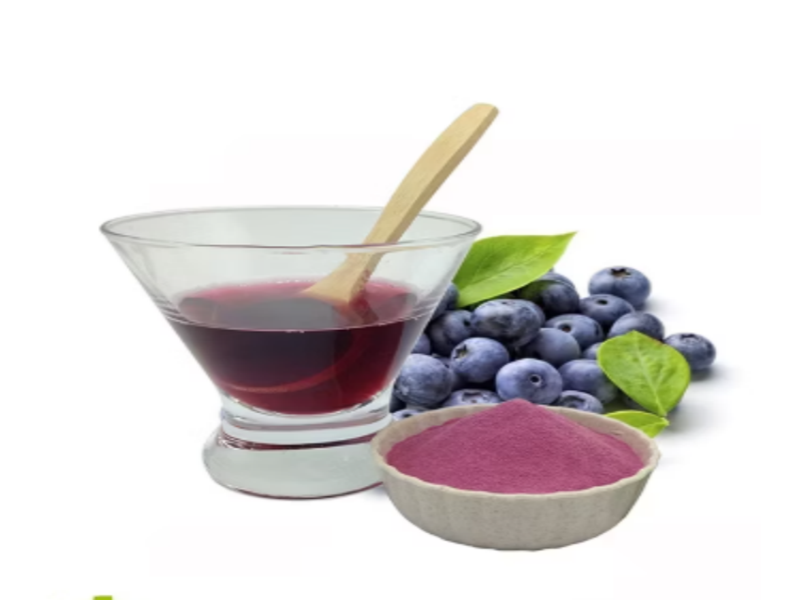
Blueberry extract can look like an easy ingredient to add to a supplement. It comes from a familiar fruit, has a recognizable color, and is often associated with anthocyanins and polyphenols. Yet the first sample can reveal complications that are invisible on an ingredient list. A purple gummy may lose its color during storage. A capsule blend may not flow properly. Two extracts carrying similar names may contain different amounts of the compounds a brand actually wants to measure.
Blueberry extract is used in dietary supplements as a source of botanical polyphenols, especially anthocyanins. It can be formulated into capsules, tablets, powders, gummies, and selected liquids when the ingredient is appropriate for the process. Successful development requires confirming the botanical species and extract composition, selecting a defensible serving amount, checking compatibility and stability, and verifying the quality of the finished product.
At Zoxizo, we approach an ingredient-led supplement as a complete product-development project, not simply a recipe assembled from popular materials. The choice of extract influences the serving size, manufacturing method, flavor, packaging, test plan, and eventual cost per unit. Imagine approving a beautiful first sample only to discover that the active-compound specification cannot be reproduced six months later. The decisions made before that first sample often determine whether the finished supplement can become a dependable product line.
What Does Blueberry Extract Add to Supplements?
Blueberry extract adds a source of plant-derived polyphenols, particularly anthocyanins, to dietary supplement formulations. It can support the development of botanical wellness products and selected multi-ingredient concepts, but its presence does not guarantee a particular health outcome. Its practical value depends on the verified botanical species, extraction method, constituent profile, serving quantity, and the scientific evidence relevant to the final formulation.
Which Active Compounds Matter?
Anthocyanins are the compounds most closely associated with blueberry extract. They contribute much of the red, purple, and blue coloring seen in berries and belong to the wider flavonoid family. Blueberry species can contain glycosides of delphinidin, cyanidin, petunidin, peonidin, and malvidin, but their proportions are not identical across species, growing conditions, and processing methods. For a formulator, that variation matters because two materials can have a similar color and still differ in their analytical fingerprints.
Blueberries also contain other phenolic compounds, including flavonols and phenolic acids. A finished extract may preserve some of these constituents while concentrating others, depending on the extraction solvent, processing conditions, and carrier materials. That is one reason we do not treat the words “blueberry extract” as a complete technical specification. A supplier’s measured anthocyanin content, its test method, and its botanical identification tell a much more useful story than the ingredient name alone.
How Does Extract Differ From Powder?
Blueberry fruit powder is generally made from dried fruit or fruit material, while blueberry extract is produced by separating and concentrating selected soluble constituents. Fruit powder may contribute sugars, acids, fiber, and recognizable fruit flavor; an extract may offer more of a particular measured compound per gram. The outcome depends on the product, so neither ingredient should be called universally stronger or better. A drink mix intended to taste like fruit may need a different raw-material strategy from a compact botanical capsule.
Extraction ratios are a frequent source of confusion. A stated 10:1 ratio describes a relationship between starting botanical material and finished extract under the supplier’s specified process; it does not mean that every nutrient or anthocyanin is ten times as concentrated. The same principle applies when comparing two differently processed extracts. The more useful questions are what was measured, which method was used, and whether the material behaves well enough for the proposed manufacturing process.
What Does the Scientific Evidence Support?
Blueberry interventions have been studied in relation to cognitive performance, vascular function, and other health outcomes, but the results depend on the participants, study design, intake, and blueberry preparation. A clinical study using fresh fruit or freeze-dried blueberry powder does not automatically establish the effects of a different concentrated extract. Laboratory antioxidant assays are useful chemical tools, yet a high antioxidant reading by itself does not demonstrate a specific benefit in people who consume the finished supplement.
For a responsible product concept, the evidence needs to match the material and proposed message as closely as possible. We consider whether a study reports the relevant botanical species, the amount consumed, the actual anthocyanin exposure, and the duration and outcome measured. In the United States, product claims also need appropriate substantiation and must comply with applicable dietary supplement rules. A polished “vision support” or “brain health” label is not a substitute for the evidence behind it, especially when a combination formula contains several ingredients.

Which Supplement Formats Use Blueberry Extract?
Blueberry extract can be used in capsules, tablets, gummies, powders, and appropriately designed liquid supplements. Each format creates different demands for ingredient concentration, taste, blending, temperature exposure, moisture control, and shelf life. Capsules are often practical for concentrated botanical ingredients, while gummies and ready-to-drink products need closer evaluation of color, acidity, processing conditions, and stability before a commercial formula is finalized.
Is It Suitable for Capsules and Tablets?
Capsules are a useful option when a brand wants a relatively straightforward way to deliver a measured quantity of botanical powder. Even so, a capsule formula must flow through production equipment and fill consistently. Bulk density, particle-size distribution, moisture sensitivity, and the need for supporting excipients all influence the result. An extract that seems easy to scoop during a laboratory trial may behave poorly during automated filling, especially when mixed with powders of very different densities.
Tablets add compression-related requirements. The blend must form an acceptable tablet without excessive sticking, capping, breakage, or delayed disintegration. A formula that fits by weight may still perform badly if the materials do not compact well. Zoxizo supports capsule and tablet product development, but the final format is confirmed through practical feasibility work rather than ingredient calculations alone. A stable, repeatable tablet is more valuable than an impressive-looking formula that cannot be manufactured consistently.
Can It Work in Gummies and Powders?
Gummies can be attractive for a fruit-associated ingredient, but they present a more complicated environment for anthocyanins. Water, acidity, heat, sweeteners, and gelling systems may alter both pigment stability and flavor. Simply adding blueberry extract to a standard gummy base may lead to unexpected shades, excessive astringency, or disappointing color retention. Process timing and ingredient addition conditions should be evaluated without compromising microbial safety or the validated manufacturing process.
Powdered supplements offer a different kind of flexibility. The formulation can be packed in jars, pouches, or measured stick packs and may combine blueberry extract with other compatible powdered ingredients. The real test, however, is often what happens after the consumer mixes it into water. Dispersibility, sediment, flavor, acidity, and color can change dramatically between the dry product and the prepared drink. We therefore evaluate the proposed use experience, not just the appearance of a freshly mixed laboratory sample.
| Dosage form | Main development advantage | Main formulation checks |
| Capsules | Concentrated botanical delivery | Fill capacity, bulk density, flow, moisture |
| Tablets | Compact, convenient serving | Compression, hardness, friability, disintegration |
| Gummies | Familiar fruit-style experience | Heat, pH, water activity, color, texture |
| Drink powders | Flexible blends and serving formats | Dispersibility, sediment, flavor, humidity |
| Liquids | Ready-to-consume convenience | pH, oxidation, microbial control, preservation |
Which Product Concepts Fit Best?
A single-ingredient blueberry botanical capsule can make sense when the selected extract is well characterized and the serving quantity is practical. Another possibility is a multi-ingredient product built around botanical polyphenols. Blueberry extract may also be considered alongside lutein or zeaxanthin in an eye-nutrition concept, but combining those materials does not, by itself, prove a better result. The scientific basis, ingredient identity, and claim wording still need separate evaluation.
The intended retail channel can influence the best format. A pharmacy-oriented product may prioritize a tightly defined specification and simple daily serving, while an online wellness brand may prefer an appealing gummy or portable powder. Neither route removes the need for stability and quality testing. When discussing a product with Zoxizo, the most productive starting information is the target market, planned format, ingredient requirements, expected serving experience, and cost range. Those details make it easier to identify a formula worth sampling.
How Do You Choose a Blueberry Extract?
Selecting a blueberry extract begins with establishing the exact botanical identity, plant part, extraction characteristics, and compounds being measured. The specification should explain how relevant constituents were tested and describe the ingredient’s physical and quality attributes. Extraction ratio, color, and an advertised anthocyanin percentage may be useful details, but they cannot replace botanical authentication, method clarity, supplier qualification, and testing suited to the finished product.
Is Blueberry the Same as Bilberry?
Blueberry and bilberry belong to the genus Vaccinium, but they are not interchangeable species. Highbush blueberry is commonly identified as Vaccinium corymbosum, whereas European bilberry is Vaccinium myrtillus. Both can contain anthocyanins, but their constituent profiles and the studies available for each are not automatically equivalent. A specification or published trial naming bilberry should not be silently relabeled as evidence for a blueberry extract, even when common names are translated inconsistently across markets.
This distinction deserves attention early in development because it affects raw-material purchasing, scientific interpretation, and label accuracy. Zoxizo’s company materials include blueberry-related product categories and some English references to bilberry; these names therefore require a project-specific species check rather than an assumption that the materials are identical. Appropriate botanical records and, when warranted, chromatographic fingerprints can support identity assessment. Research published in Food Control in 2026 used HPLC-DAD methods to evaluate anthocyanin content and authenticity in blueberry- and bilberry-related products, illustrating the practical need for verification.
Which Extract Specifications Matter?
A useful supplier specification identifies the scientific name, plant part, extraction or processing details where applicable, constituents being standardized, and the method used to measure them. It should also describe relevant physical properties such as moisture, particle size, and solubility, as well as limits for microbiological or chemical contaminants. For an ingredient intended for capsules, flow characteristics may deserve extra attention; for a beverage powder, dispersibility and taste may be just as important as the declared assay value.
Analytical terminology matters. A result described as “total polyphenols” is not necessarily an anthocyanin result, and a measurement reported as gallic acid equivalents should not be mistaken for a percentage of specific anthocyanins. Even two anthocyanin percentages may not be directly comparable if one uses a nonspecific colorimetric assay and another quantifies individual compounds by an HPLC method. We look for clarity about the measurement basis, not merely the largest number on a supplier’s brochure.
How Is the Serving Amount Determined?
A serving quantity should be based on the actual ingredient specification, relevant human evidence, safety considerations, and the finished product’s physical limits. There is no universally established intake amount that applies to every blueberry extract and every intended wellness use. An example calculation can show how standardization influences the weight needed, but that arithmetic does not prove a clinical benefit or establish a recommended dose. The botanical species, analytical method, and constituent profile remain central to interpretation.
Suppose a development exercise uses a hypothetical target of 80 mg anthocyanins per daily serving. At 20% measured anthocyanins, the mathematical input would be 400 mg extract; at 40%, it would be 200 mg. These examples assume that the percentages are accurate, expressed on a comparable basis, and supported by appropriate methods. They do not describe a confirmed Zoxizo formula, a recommended consumer intake, or an assurance that differently standardized extracts provide equivalent effects.
| Hypothetical anthocyanin assay | Extract for an illustrative 80 mg target | Calculation |
| 10% | 800 mg | 80 / 0.10 |
| 20% | 400 mg | 80 / 0.20 |
| 25% | 320 mg | 80 / 0.25 |
| 40% | 200 mg | 80 / 0.40 |
A formula using less extract by weight is not automatically cheaper or easier to manufacture. More concentrated materials can cost more, behave differently in processing, or require additional verification. Intended serving size also interacts with capsule volume, tablet performance, or beverage taste. Any overage proposed to account for manufacturing or shelf-life losses needs a justified, validated basis rather than a fixed percentage applied without supporting data. The objective is a coherent serving specification that survives both manufacturing and appropriate stability assessment.

How Is Blueberry Extract Combined With Other Ingredients?
Blueberry extract can be combined with selected vitamins, minerals, carotenoids, and other botanical ingredients when the combination has a clear purpose. A convincing formula considers evidence, serving amounts, ingredient interactions, physical properties, cost, and regulatory suitability together. More ingredients do not automatically mean a better supplement; combinations must remain manufacturable, properly documented, and consistent with the claims proposed for the finished product.
Which Ingredients Can Be Paired?
Lutein and zeaxanthin are sometimes considered alongside blueberry extract in eye-nutrition concepts because they are carotenoids associated with macular pigment. Blueberry anthocyanins are chemically different compounds, so a combined formula may offer a distinct ingredient profile. That distinction, however, is not evidence of synergy. The finished product needs its own defensible scientific rationale, and results from a bilberry study should not be presented as though they established an effect for blueberry extract.
Vitamin C, grape seed extract, and other botanical materials may also feature in a polyphenol-oriented concept, depending on the intended market and formula. Compatibility is not guaranteed simply because the ingredients are familiar. For instance, ascorbic acid can contribute to anthocyanin degradation in certain aqueous systems, making it important to evaluate the full formulation rather than assume that every antioxidant-associated ingredient protects the others. The benefit of a shorter, well-characterized ingredient list is often clearer documentation and fewer variables to troubleshoot during production.
How Do You Balance the Formula?
The formula has to work as a product, not just as a list of attractive ingredients. Every material occupies space, contributes cost, and may influence moisture behavior, blending, taste, or processing conditions. Imagine an illustrative daily capsule blend weighing 600 mg, with blueberry extract contributing 250 mg. The extract represents about 41.7% of that weight, leaving 350 mg for other ingredients and necessary excipients. This is a planning example, not a validated capsule specification or a recommended composition.
Those numbers are only the beginning because weight is not the same as fill volume. Powder bulk density determines how much physical space the blend occupies, and very different particle sizes can complicate mixing. A more concentrated extract may free up space for supporting ingredients, but higher concentration can also increase unit cost. At Zoxizo, custom formula development considers dosage-form feasibility, ingredient selection, target cost, and manufacturing performance together. A formula is not genuinely ready until sampling shows that these choices work in the intended format.
Do Flavor and Color Affect Compatibility?
They can affect both consumer acceptance and technical stability. Concentrated blueberry extracts may taste tart, bitter, or astringent, and some do not reproduce the fresh-fruit flavor people imagine from the ingredient name. In gummies or drink powders, the flavor system often needs to balance that botanical character without overwhelming the product’s intended taste. A successful first sip or chew matters because a supplement that consumers dislike may struggle to earn consistent repeat use, regardless of the ingredient story.
Color presents a separate challenge. Anthocyanins change molecular form with pH and can show different red, purple, or less intense shades in different product matrices. Proteins, metal ions, other ingredients, and processing conditions can influence the appearance further. A change in color does not always measure the exact loss of individual anthocyanins, so sensory inspection and suitable chemical testing serve different purposes. For a drink powder, we want to know what the consumer sees after mixing; for a gummy, we need to know how appearance and texture hold up over storage.
What Affects Blueberry Extract Stability?
Blueberry extract stability depends on the ingredient’s chemical composition and exposure to temperature, pH, oxygen, light, moisture, and other formula components. Anthocyanins can change structure or degrade during processing and storage, affecting measured content and visible color. Appropriate processing conditions, packaging barriers, and stability studies help identify whether a finished supplement can maintain its defined specifications through its intended shelf life.
How Do Heat and pH Affect Anthocyanins?
Anthocyanins often show greater color stability in acidic aqueous environments than under neutral or alkaline conditions, but the exact behavior varies with the particular compounds and formulation. Published reviews discuss relatively favorable conditions around pH 2-3 in some systems, with greater instability often observed around pH 6-8. These are research observations, not universal pH targets for commercial blueberry supplements. A formulation must be appropriate for its intended dosage form, taste, safety, and regulatory requirements.
Heat creates another variable because both temperature and exposure time can influence chemical degradation. Two manufacturing processes with the same peak temperature may produce different results if one holds the material at that temperature much longer. This matters for gummies and liquids, where heating may be needed to prepare the product base. In some circumstances, adding a sensitive ingredient at a later validated process stage may reduce exposure. The only dependable conclusion, however, comes from testing the actual ingredient in the actual formula under realistic production conditions.
Do Light and Moisture Matter?
Light and oxygen can accelerate changes in certain anthocyanins, while moisture creates both physical and chemical concerns for powdered products. A hygroscopic extract may cake or flow poorly after exposure to humid conditions, complicating handling and filling. Moisture sensitivity also matters during shipping, especially when the material or finished supplement will travel through hot and humid distribution environments. The correct response depends on the product’s risk profile rather than a blanket claim that all blueberry supplements require the same storage solution.
Moisture content and water activity should not be confused. Moisture content measures how much water is present, whereas water activity describes the availability of water for relevant chemical, physical, and microbial processes. A gummy and a dry capsule may need different measurements and acceptance criteria even when both contain the same blueberry ingredient. Research reviews identify pH, temperature, light, oxygen, and metal ions among important contributors to anthocyanin instability. For product development, the question is which of these conditions the chosen formula will actually experience.
Which Processing and Packaging Methods Help?
Dry products may benefit from controlled humidity during blending and filling, as well as packaging with suitable moisture-barrier properties. Products exposed to light may warrant opaque or otherwise protective packaging, while oxygen-sensitive systems can require attention to headspace, closure integrity, and barrier performance. These choices should be supported by the actual formulation’s stability profile. Attractive packaging is useful for retail presentation, but it cannot compensate for an ingredient that degrades rapidly in the chosen product matrix.
Microencapsulation and selected protective carriers have also been studied as ways to improve anthocyanin stability, although their usefulness depends on the material, processing, and finished-product design. Accelerated studies can reveal possible weaknesses more quickly, but they do not automatically establish a justified commercial shelf life. Appropriate real-time and product-specific evidence remains important. Zoxizo supports bottles, jars, pouches, sachets, and stick-pack formats, so packaging can be considered alongside dosage form and the distribution route rather than being selected only at the end of development.
How Are Blueberry Supplements Developed and Tested?
Blueberry supplements move from concept to commercial production through ingredient verification, formulation trials, sample evaluation, stability assessment, defined manufacturing controls, and finished-product testing. The quality plan should account for botanical identity, composition, relevant contaminants, and dosage-form performance. Before release, the approved formula, packaging, label, manufacturing records, and appropriate test evidence need to support a consistent and traceable finished product across repeat manufacturing batches.
How Are Trial Formulas Evaluated?
Development starts with the product brief. The target market, serving format, expected flavor, proposed ingredient composition, pricing constraints, and planned retail channel all shape the first laboratory trial. The ingredient documentation also needs review before the recipe is fixed. If a brand has not decided whether it wants blueberry or bilberry, for example, that identity question should be resolved before a supplier’s assay is used to calculate the serving amount or design the label.
The trial then becomes a practical check of the planned product. For capsules, the team may examine powder flow, volume, and blend uniformity; for tablets, compression and disintegration; for gummies, taste, pH, texture, and process tolerance; and for drink powders, dispersibility, sediment, and prepared-product appearance. Zoxizo’s documented sampling process supports formula versions and feedback-based adjustment before bulk production. Keeping a controlled record of revisions matters because changing five variables simultaneously makes it much harder to identify what actually improved or damaged the sample.
Which Quality Tests Are Needed?
Testing requirements should be selected according to ingredient risk, the finished dosage form, the target market, and applicable standards. Botanical identity comes first because a numerical anthocyanin result is not a complete substitute for confirming the source material. Appropriate chromatographic methods can help characterize constituents, while microbial and chemical contaminant tests address different risks. Finished-product checks may also cover fill weight, disintegration, texture, water activity, or other specifications depending on whether the supplement is a capsule, tablet, gummy, or powder.
The United States dietary supplement current good manufacturing practice framework, includingzoxizo , sets requirements for appropriate specifications, quality operations, and records. The specific verification program cannot be reduced to a universal checklist because the product and ingredient risks matter. A certificate of analysis should therefore be understood as part of a wider quality system, not as evidence that every possible safety, identity, or stability question has already been resolved.
| Quality attribute | Example evaluation | What it helps establish |
| Botanical identity | Suitable authentication and fingerprinting | Correct Vaccinium material |
| Anthocyanin content | Fit-for-purpose HPLC assay | Defined chemical marker content |
| Moisture or water activity | Validated product-appropriate method | Moisture-related quality risk |
| Heavy metals | Validated elemental analysis when applicable | Compliance with relevant limits |
| Microbiological quality | Appropriate enumeration and pathogen tests | Relevant microbial safety |
| Finished dosage form | Fill weight, disintegration, texture, or dispersibility | Product performance and consistency |
Are Label Claims and Batch Records Ready?
Even a good laboratory sample is not necessarily ready for market. The label must accurately describe the ingredients and servings, follow the rules of the destination market, and avoid claims that go beyond the evidence. In the United States, qualifying structure/function claims require truthful and non-misleading substantiation, the prescribed disclaimer, and FDA notification within 30 days after first marketing with the claim. Disease-treatment or disease-prevention claims raise a different regulatory issue and cannot simply be supported by putting anthocyanins into a supplement.
Batch records provide the link between the approved formula and the product that actually leaves the factory. Ingredient lot numbers, verified quantities, production instructions, relevant in-process observations, packaging details, and release decisions should be appropriately documented. Zoxizo’s company information describes support for formula development, samples, manufacturing, labeling, batch quality documentation, and international delivery. For a blueberry project, the useful discussion is about the specific formula and its agreed evidence requirements, not a vague promise that any botanical concept will automatically be compliant in every country.
A dependable blueberry supplement comes from a chain of decisions that can be explained and checked: the correct botanical ingredient, a meaningful specification, a workable serving, suitable manufacturing conditions, packaging matched to stability risks, and records that connect each batch to the approved product. The familiar fruit may attract attention, but those less visible decisions determine whether a brand can deliver the same experience over time. Zoxizo‘s role in a project is to help connect the development and production stages so that ingredient ideas become products supported by practical testing and documentation.

Frequently Asked Questions
Is blueberry extract the same as bilberry extract?
No. Highbush blueberry and European bilberry are commonly identified as Vaccinium corymbosum and Vaccinium myrtillus, respectively. They belong to the same genus but can have different anthocyanin profiles and supporting studies. Brands should confirm the botanical species on supplier documents and labels rather than treating translated common names as interchangeable. A bilberry research result cannot automatically be used to substantiate a blueberry extract formula.
What is the difference between blueberry extract and blueberry powder?
Blueberry powder generally contains dried fruit material, while an extract concentrates selected soluble constituents through a defined process. Depending on how each material is made, they can differ in anthocyanin composition, sugar and fiber content, taste, bulk density, and processing characteristics. An extract may be useful when capsule space is limited, whereas a fruit powder may contribute more familiar fruit properties to a drink mix. The specification matters more than the ingredient name.
How much blueberry extract should a supplement contain?
There is no single appropriate amount for every blueberry extract or every product concept. The quantity should reflect the authenticated ingredient, measured composition, relevant human evidence, safety assessment, intended serving, and applicable regulations. A higher concentration can reduce the mass needed to reach a hypothetical analytical target, but it does not establish better clinical performance. The final amount also needs to fit the dosage form and remain suitable after appropriate manufacturing and stability evaluations.
Can blueberry extract be used in gummies?
Yes, but the specific extract must be tested in the actual gummy system. Heating, acidity, water activity, sweeteners, gelling agents, and storage can change anthocyanin content, color, taste, and texture. A stable purple appearance is not by itself proof that all of the intended compounds remain at their specified levels. A useful gummy development program examines both sensory acceptance and relevant chemical or quality measurements before determining whether the format is suitable for commercial production.
Which ingredients are commonly combined with blueberry extract?
Depending on the intended concept, blueberry extract may be combined with lutein, zeaxanthin, vitamin C, or other botanical ingredients. Each addition should have a clear role and suitable supporting evidence. These combinations are not automatically synergistic, and some components may change the stability or behavior of anthocyanins. For example, certain aqueous systems containing ascorbic acid can experience anthocyanin degradation, making formulation testing important rather than assuming that ingredients associated with antioxidants will always protect one another.
What tests help verify blueberry supplement quality?
A risk-based quality program may include appropriate botanical identity checks, anthocyanin testing, microbiological assessments, contaminant analysis, and dosage-form performance tests. The exact package depends on the product, raw-material characteristics, destination market, and applicable manufacturing requirements. An HPLC result for anthocyanins does not replace identity testing, and a total-polyphenol result is not necessarily an anthocyanin measurement. Clear specifications, qualified methods, suitable records, and relevant finished-product verification give the test results useful meaning.



