 Skip to content

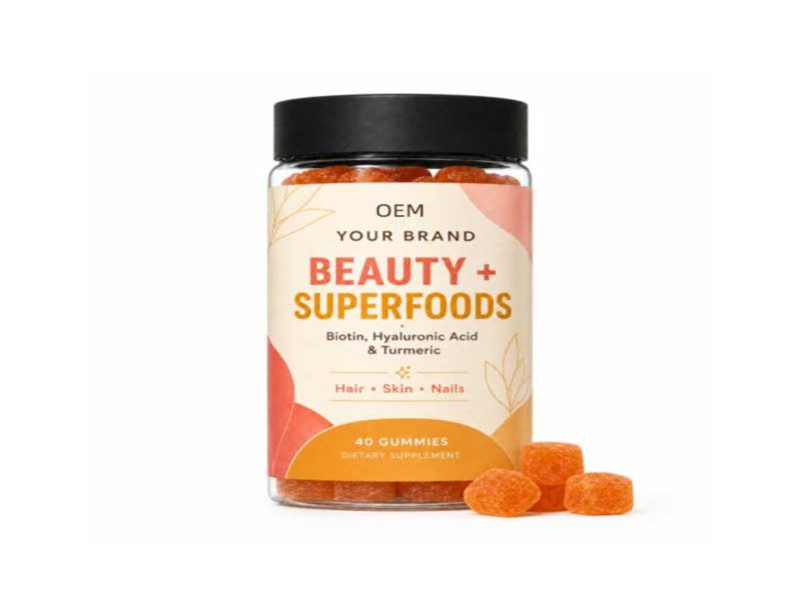
Beauty supplements often look simple from the outside. Pick collagen, biotin, hyaluronic acid, glutathione, or a few fashionable antioxidants, put them into a powder, capsule, or gummy, design attractive packaging, and launch. In practice, this is exactly where expensive mistakes begin. A commercially successful beauty supplement has to satisfy several things at once: consumers must understand the benefit, the formula must be technically workable, the serving size has to be practical, the taste or swallowing experience must be acceptable, the product must remain stable, the package must protect it, and the claims need to make sense in the intended market.
Developing a beauty dietary supplement starts with defining the consumer and primary beauty benefit, then selecting suitable ingredients and dosages, choosing a workable dosage form, producing and evaluating samples, confirming quality and testing requirements, reviewing claims and labeling, freezing the approved specification, and transferring that specification into controlled commercial production with batch documentation and traceability.
The most important lesson is that formulation is only one part of development. A beautiful ingredient panel can still create a weak product if the powder clumps, the gummy cannot carry enough active material, the capsule count becomes inconvenient, or the finished label promises more than the formula and regulatory framework can responsibly support. Strong product development connects all of those decisions before bulk production begins.
What Is a Beauty Dietary Supplement?
A beauty dietary supplement is an ingestible nutritional product formulated to support appearance-related wellness goals such as skin health, hydration, collagen intake, antioxidant support, or hair and nail nutrition. Unlike a basic multivitamin, a beauty supplement is usually developed around a clearly defined beauty benefit, consumer routine, dosage form, sensory experience, packaging system, and responsible benefit communication.
What Does Beauty From Within Mean?
“Beauty from within” describes an approach in which nutrition becomes part of a person’s beauty routine rather than being treated as a completely separate health category. From a development perspective, the phrase only becomes useful when it is translated into a specific product purpose. A formula built for skin hydration is not the same project as one built around collagen intake, hair and nail nutrition, antioxidant support, or healthy-aging positioning.
That distinction affects almost every technical decision that follows. A collagen-led product may require gram-level quantities of active material and therefore naturally point toward powders or drink mixes. A skin-health formula using lower-inclusion ingredients such as hyaluronic acid, ceramides, selected vitamins, or antioxidants may fit more comfortably into capsules, tablets, or gummies. The beauty idea comes first, but the physical reality of the ingredients determines whether the idea can become a usable product.
Beauty-from-within products also have a stronger lifestyle component than many traditional supplements. Consumers may place the product beside skincare, take it as part of a morning routine, mix it with water at work, or carry single-serving packs while traveling. That means flavor, appearance, serving ritual, packaging feel, and convenience can influence repeat use almost as much as the ingredient list itself.
Which Benefits Fit This Category?
Beauty supplements can be developed around several related but distinct benefit territories. Common directions include skin-health support, collagen support, hydration-focused beauty, antioxidant support, healthy-aging positioning, and hair-skin-nail nutrition. These concepts can overlap, but they should not automatically be packed into one formula. Too many benefits can make the product harder to explain, more expensive to manufacture, and less convincing to consumers.
A useful rule is to define one primary benefit and only a small number of supporting roles. For example, a collagen beauty powder may lead with collagen intake while vitamin C or selected antioxidants play supporting roles. A hair-skin-nail capsule may use a micronutrient-led system and stay intentionally separate from a high-dose collagen concept. A skin-hydration product may be built around a different ingredient architecture altogether.
The language used around those benefits also matters. Zoxizo’s internal compliance framework specifically supports cautious expressions such as “support skin health,” “support healthy aging,” “support antioxidant protection,” “support hair, skin and nail health,” and “support collagen intake,” while warning against promises such as reversing aging, guaranteed whitening, removing wrinkles, or curing skin problems. Clear, defensible benefit language usually leads to a more disciplined formula.
How Is It Different From General Wellness?
General wellness supplements are commonly judged by nutritional purpose, active ingredients, serving size, convenience, price, and basic quality. Beauty supplements are judged through those same filters, but consumers often add expectations borrowed from skincare and personal care. Taste, packaging aesthetics, color, routine, portability, and overall experience can strongly influence whether the product feels credible and enjoyable enough for daily use.
A technically acceptable product can therefore fail in ways that have little to do with the ingredient label. A collagen powder may contain the intended amount of collagen but leave an unpleasant aftertaste. A gummy may look attractive but become sticky during storage. A capsule formula may be nutritionally logical but require six large capsules per serving. Each problem affects repeat use even if the product meets its basic manufacturing specification.
This makes beauty-supplement development a combination of nutrition, formulation engineering, and consumer experience. The development team has to think about how the consumer opens the package, measures the serving, tastes or swallows the product, stores it, understands the benefit, and decides whether to buy it again. That broader view is one of the main differences between simply producing a supplement and developing a commercially coherent beauty product.
What Makes a Beauty Formula Commercially Viable?
A commercially viable beauty formula needs more than popular ingredients. It needs a logical relationship between benefit, active dosage, serving size, production process, raw-material cost, sensory characteristics, packaging, quality controls, and the intended selling price. If one of those elements is ignored, the product often has to be redesigned later, when changes become more expensive.
The most common early-stage problem is starting with an ingredient wish list instead of a development brief. A brand may ask for collagen, glutathione, hyaluronic acid, ceramides, biotin, astaxanthin, multiple vitamins, several minerals, and botanical extracts in one product without first checking how much physical material the formula contains. The result may not fit into the intended gummy or capsule format, or it may create an unreasonably large powder serving.
A better process starts with a measurable product promise and works backward. Once the team knows what the product is supposed to do, who will use it, how often it will be consumed, and what format makes sense, ingredient selection becomes much more controlled.
Which Beauty Benefit Should You Target?
Choose the lead beauty benefit by matching a specific consumer need with an ingredient system, dosage form, commercial channel, and claims strategy that can realistically support it. A strong product usually has one instantly recognizable primary benefit, such as skin hydration, collagen support, hair-skin-nail nutrition, antioxidant beauty, or healthy-aging support, rather than a long list of loosely connected promises.
Which Consumer Are You Formulating For?
“Women who care about beauty” is too broad to guide formulation. A useful consumer profile needs to explain how the person already behaves, what kind of supplement they are willing to take, what problem they are trying to address, what price and format they expect, and where they are likely to purchase the product. Those details directly affect ingredient, flavor, packaging, and serving decisions.
Imagine a 28-year-old skincare enthusiast who already drinks functional beverages every morning and prefers individual stick packs. A flavored beauty powder may fit naturally into that routine. Compare that with a 45-year-old supplement user who already takes two or three capsules with breakfast and dislikes sweet products. For that person, a capsule-based skin-health formula may provide a far better experience than a gummy or drink mix.
Channel also changes the brief. A product intended for social commerce may need a visible routine, attractive serving format, and easy-to-explain benefit. A pharmacy or distributor may place more emphasis on conventional dosage forms, stable specifications, quality documentation, and restrained claims. A subscription-oriented brand needs to think about a 30-day routine, predictable consumption, replenishment timing, and pack size from the beginning.
Which Benefit Should Lead the Product?
The primary benefit should be specific enough to act as a filter for every major development decision. “Beauty support” is vague because it does not tell the formulator which ingredient family deserves priority. “Daily collagen beauty powder,” “skin hydration support,” or “hair, skin and nail nutrition” creates a much clearer product architecture.
A practical concept-screening model can help brands compare ideas before spending heavily on formulation and samples.
| Development Factor | Practical Target | Main Decision Impact |
| Primary benefit | 1 clear lead benefit | Ingredient strategy and claims |
| Supporting roles | Usually 1–3 closely related functions | Formula complexity |
| Daily routine | Simple, repeatable use | Compliance and retention |
| Dosage form | Powder, capsule, gummy, tablet, liquid | Active loading |
| Serving size | Consumer-friendly daily amount | Convenience and cost |
| Cost target | Defined before final formulation | Ingredient and packaging choices |
| Sales channel | DTC, marketplace, retail, pharmacy, distribution | Packaging and documents |
| Future SKU role | Hero product or extension | Portfolio strategy |
The table is not a rigid industry formula, but it creates discipline. A concept that scores well across all these dimensions usually has a stronger foundation than one that depends entirely on a single trending ingredient.
The primary benefit should also pass a simple communication test. A consumer should understand the product’s purpose after reading the front of the package for a few seconds. If the concept requires a long explanation before it makes sense, the positioning may still be too broad.
How Do Market and Channel Shape the Concept?
The same beauty concept can require very different execution depending on where it will be sold. DTC brands often care strongly about visual identity, consumer education, subscription behavior, convenience, and a memorable daily routine. Retailers and distributors may pay more attention to unit economics, shelf stability, case packing, replenishment reliability, documentation, and the ability to maintain consistent specifications over repeat orders.
Packaging is one of the clearest examples. A 30-serving collagen powder in a jar may offer straightforward manufacturing and relatively efficient packaging. The same formula divided into 30 stick packs adds film, printing, filling, sealing, counting, and outer-box requirements, but it creates portability and automatic portion control. Neither configuration is universally better; each serves a different commercial strategy.
The dosage form creates similar tradeoffs. Gummies can work well in lifestyle-led beauty categories, but active ingredients have to share physical space with the gummy matrix. Capsules reduce taste problems but have limited internal volume. Powders provide more room for gram-level ingredients but expose flavor, aroma, solubility, and mouthfeel directly to the consumer.
The channel should therefore be part of the formulation brief, not a sales decision made after the product is finished.
How Do You Build a Differentiated Product Position?
Differentiation does not require the longest Supplement Facts panel. In many categories, a focused formula with a clear consumer, benefit, format, flavor system, and daily routine can be easier to understand and easier to manufacture than a crowded formula containing twenty or thirty actives with no obvious hierarchy.
A collagen powder, for example, can differentiate through serving size, solubility, flavor quality, packaging format, supporting ingredients, sourcing story, or convenience. A capsule formula can focus on a narrow skin-health or antioxidant concept instead of competing through the number of ingredients. A gummy can differentiate through consumer experience, but only if the active system remains compatible with the physical limits of the gummy matrix.
One useful exercise is to write the product proposition in one sentence before requesting a formula. That sentence should identify who the product is for, the primary benefit, the dosage form, and the main point of difference. If the statement needs several unrelated benefits to sound attractive, the product may still lack focus.
Differentiation also has to be scalable. Patented ingredients, unusual certifications, custom molds, uncommon packaging, or imported specialty materials can strengthen positioning, but they may increase minimum order requirements, raw-material lead times, testing costs, and replenishment risk. The best difference is one the supply chain can repeatedly deliver.

Which Ingredients Should You Choose?
Beauty-supplement ingredients should be selected according to the intended benefit, target market, daily amount, evidence, ingredient specification, dosage form, physical behavior, taste, stability, cost, and compliance requirements. A fashionable ingredient can attract attention, but it should only remain in the formula if it has a defined purpose and can be delivered practically in the finished product.
Which Ingredients Support Skin Health?
Skin-health formulas can use several ingredient families depending on the product concept. Collagen peptides are frequently used in products centered on collagen intake and often fit powder formats because their inclusion level can be much larger than many vitamins, botanical extracts, or specialty beauty ingredients. Hyaluronic acid and ceramides can support other skin-oriented positioning while requiring far less physical volume.
Antioxidant-oriented beauty products may consider vitamin C, glutathione, astaxanthin, grape seed extract, or other suitable materials depending on the destination market and intended claims. Zoxizo’s internal beauty-product reference library identifies collagen peptides, glutathione, hyaluronic acid, biotin, vitamin C, ceramides, astaxanthin, and grape seed extract among common beauty and healthy-aging formulation directions.
The name on the ingredient label is only the beginning. Development teams also need the raw-material specification. Collagen source, extract standardization, concentration, carrier system, particle size, solubility, odor, color, and supporting documents can materially affect finished-product behavior. Two raw materials sold under the same generic ingredient name may perform very differently in taste, manufacturing, and cost.
For this reason, ingredient discussions should focus on exact specifications, not only marketing names.
Which Ingredients Support Hair and Nails?
Hair-skin-nail supplements often use a greater proportion of vitamins, minerals, and lower-inclusion actives than gram-level collagen formulas. This can make capsules, tablets, and gummies technically attractive, but the final format still depends on the total daily formula rather than the presence of one recognizable ingredient such as biotin.
A strong formula gives every active a role. Primary ingredients define the product. Supporting nutrients reinforce the central benefit. Excipients help the product flow, compress, dissolve, remain stable, taste acceptable, or fit the selected dosage form. Keeping those roles separate makes it easier to understand which ingredients are essential and which ones have been added mainly because competitors use them.
Minerals deserve particular attention because the quantity of elemental mineral shown on a label is not always the same as the physical weight of the mineral compound required in manufacturing. That difference can have a major effect on capsule count or tablet size. The same issue appears whenever a standardized extract, carrier-containing powder, or diluted ingredient is used.
Before finalizing a hair or nail formula, calculate the full daily serving, not just the headline actives. Convenience depends on the finished product the consumer actually has to take.
How Do You Assess Dose and Synergy?
Dosage should be assessed at the complete daily-serving level. A formula can appear elegant on a spreadsheet but become impractical after the weights of active ingredients, excipients, flavors, sweeteners, flow agents, capsule shells, or gummy base components are converted into a real finished product.
The following figures are useful manufacturing references rather than fixed universal limits. Actual capacity varies according to equipment, ingredient density, product specification, formulation system, and supplier capability.
| Dosage Form | Illustrative Physical Range | Main Constraint |
| Capsule | About 0.4–1.0 g fill per capsule depending on size and density | High-load formulas increase capsule count |
| Gummy | Common finished piece around 2–4 g | Base matrix occupies much of the piece |
| Powder stick | Several grams to 10+ g per serving is common in functional powders | Flavor, flow and package dimensions |
| Powder jar | Suitable for larger daily serving weights | Caking, scoop accuracy and consumer mixing |
| Tablet | Hundreds of milligrams to over 1 g depending on design | Compression and tablet size |
| Liquid | Flexible serving volume | Solubility, sediment and microbial control |
“Synergy” should also be used carefully. A formula does not automatically become more effective because more ingredients are combined. A useful combination should support one central product concept, fit within a practical serving size, remain physically compatible, and make sense at the proposed daily amounts.
When the formula exceeds the capacity of the dosage form, it is often better to remove a weak supporting ingredient than to reduce every active until the label becomes impressive but the formulation logic becomes weak.
How Do You Balance Evidence, Cost, and Compliance?
A commercially workable formula has to survive a cost model. Ingredient cost is not simply the purchase price per kilogram; what matters is the cost contribution per daily serving, the total number of servings per package, the packaging system, testing requirements, and the margin structure needed by the brand and its sales channels.
A useful approach divides ingredients into three groups. Core actives define the product and should be protected unless the concept itself changes. Supporting actives reinforce the lead benefit and can be adjusted if needed. Optional ingredients should be the first candidates for removal when the formula exceeds the target cost or serving size.
Compliance belongs in the same conversation. Claims such as organic, vegan, non-GMO, gluten-free, allergen-free, halal, or kosher cannot be treated as decorative marketing terms. Zoxizo’s internal documentation notes that such statements require case-by-case confirmation based on raw materials, capsule shells, flavors, processing aids, manufacturing conditions, and applicable certification requirements.
The strongest formula is therefore not the cheapest and not the most expensive. It is the formula that balances benefit, evidence, manufacturability, consumer experience, cost, and market requirements without asking one area to compensate for a weakness in another.
Which Ingredients Need Extra Formulation Attention?
Some beauty ingredients deserve more development work because they influence taste, odor, color, solubility, stability, or cost more strongly than ordinary micronutrients. Collagen powders can create aroma, mouthfeel, and dissolution challenges. Botanical extracts may add bitterness, astringency, natural color, or insoluble particles. Some high-value beauty and healthy-aging materials require careful specification and purchasing confirmation before a meaningful quotation can be prepared.
Zoxizo’s internal development material specifically flags collagen powder for odor, solubility, and taste management and notes that ingredients such as glutathione, NAD+, and NMN can have a significant cost impact depending on specification and inclusion level. These factors are particularly important when a product is expected to have premium positioning.
Physical characteristics also matter during production. Hygroscopic powders may absorb moisture and cake. Ingredients with very different particle sizes or densities can create blending challenges. Fine powders can affect flow. Naturally colored extracts can change the final appearance of a gummy, powder, or liquid.
None of these issues automatically disqualifies an ingredient. They simply mean the dosage form, process, flavor system, package, and quality controls must be designed around the real properties of the material.
Which Dosage Form Is Best?
The best dosage form is the one that can deliver the required daily ingredients while remaining stable, manufacturable, convenient, acceptable in taste or swallowability, and commercially appropriate. Powders suit larger ingredient loads, capsules avoid many flavor problems, gummies provide an approachable lifestyle format but have limited active capacity, while tablets, liquids, softgels, and other formats solve different formulation needs.
Are Powders Better for High-Dose Formulas?
Powders are often the most practical format when the active system contains several grams of material. This is one reason collagen beauty products are frequently developed as drink powders. Delivering a gram-level serving through capsules can produce an impractical capsule count, while a scoop or stick pack can accommodate much more material in a single daily serving.
The advantage of capacity comes with greater sensory exposure. Once a powder is mixed with water, the consumer experiences its aroma, sweetness, acidity, bitterness, mouthfeel, color, foam, sediment, and aftertaste. These characteristics cannot be hidden inside a capsule shell, so flavor and physical performance have to be developed early.
Serving weight also influences the package. An 8-gram serving consumed once a day for 30 days requires 240 grams of finished powder. A 12-gram serving requires 360 grams before headspace, scoop dimensions, and container geometry are considered. Those numbers affect jar volume, carton dimensions, shipping weight, and storage efficiency.
Zoxizo supports powders alongside capsules, tablets, gummies, drops, softgels, drink powders, energy gels, and other dosage forms, allowing product architecture to be selected according to the formula rather than forcing every concept into one production format.
Are Gummies or Capsules Better for Convenience?
Capsules and gummies both offer convenient daily use, but they solve different problems. Capsules are useful when the active ingredients have unpleasant flavors or when the brand wants a simple, familiar supplement routine. They also allow many formulas to be adjusted relatively easily as long as the total powder volume remains compatible with an acceptable capsule count.
The limitation is physical capacity. A high-volume formula can quickly require several capsules per day. If a product intended to feel simple requires six or eight large capsules, the dosage form may be technically possible but commercially awkward.
Gummies create a more consumer-friendly ritual and fit naturally into many beauty categories, but the active ingredients occupy only part of the finished piece. Sweeteners, gelling systems, water, flavors, acids, colors, oils, and other processing components also take up space. High mineral or botanical loading may affect chew, taste, texture, stability, or appearance.
The right question is therefore not whether consumers prefer gummies or capsules in general. It is whether the complete daily formula can fit comfortably into that format without sacrificing active strategy, manufacturing reliability, taste, or serving convenience.
How Do Taste and Solubility Affect Format?
Taste should be evaluated as a group of separate sensory characteristics rather than one overall impression. A beauty drink may have an acceptable first taste but an unpleasant aftertaste. It may have a good flavor but poor mouthfeel. It may taste fine when freshly mixed but leave visible sediment after several minutes.
A practical internal evaluation can score aroma, sweetness, acidity, bitterness, aftertaste, mouthfeel, dissolution, color, sediment, and overall acceptance on a 1-to-5 scale. The exact scoring system is less important than consistency. Structured feedback allows a formulator to understand whether the next revision should change sweetness, acid balance, flavor type, active loading, masking system, or physical processing.
Solubility should also be described accurately. Not every ingredient is genuinely soluble in water, so the real target may be good dispersibility rather than a crystal-clear solution. A product can still deliver an acceptable drinking experience if particles remain evenly dispersed and the mouthfeel stays pleasant.
When the sensory burden becomes too high, changing dosage form can be more effective than repeatedly increasing flavor or sweetener. A difficult powder may make a much better capsule, while a high-dose formula may be fundamentally unsuitable for a small gummy.
How Does Stability Affect Dosage Form?
Stability requirements differ significantly across dosage forms. Powders may absorb moisture, cake, lose flow, or develop flavor changes. Gummies can harden, soften, sweat, stick together, or change color. Liquids may separate, form sediment, change flavor, or create additional microbiological concerns. Capsules can also be affected by moisture-sensitive fill materials or interactions with the shell.
Packaging is part of the stability system. Moisture barrier, oxygen exposure, light protection, closure quality, container headspace, desiccants where appropriate, individual wrapping, and storage instructions can all affect finished-product performance. Choosing packaging only after the formula is complete can therefore create avoidable redesign work.
Early sample observation is useful for identifying obvious problems. Zoxizo’s approximately 1,000 m² R&D area is documented as supporting formulation trials, sensory evaluation, solubility checks, texture adjustment, and early-stage stability observation before bulk production. Those checks help identify problems before the project moves into a larger and more expensive production stage.
Formal stability requirements should still be determined according to the product, package, target shelf life, market, and commercial objective.

How Do You Develop and Test the Formula?
Beauty-supplement development should progress through controlled versions: define the product brief, create a measurable first formula, manufacture an identifiable sample, review sensory and technical performance, record feedback, revise the formula, agree on testing requirements, and freeze the approved specification before bulk manufacturing. Sampling is most useful when it is treated as product refinement rather than a simple demonstration.
How Do You Build the First Formula?
The first formulation should start from a written product brief. At minimum, that brief should define the target consumer, destination market, sales channel, primary benefit, preferred dosage form, desired ingredients, ingredients to avoid, flavor direction, target serving size, cost expectations, packaging concept, certification needs, competitor references, and expected launch timeline.
Once those decisions are written down, the formulator can assign actual ingredients, specifications, and quantities. That step turns a marketing concept into something that can be measured. Total serving weight can be calculated. Capsule count can be estimated. Gummy capacity can be checked. Powder flavor risks can be identified. Raw-material cost can be modeled.
Zoxizo’s documented custom-development process considers target market, consumer group, dosage form, ingredient strategy, cost, flavor, packaging, and compliance requirements when moving from concept toward sample. The company’s factual material also records 25+ R&D personnel and a reference library of more than 20,000 formulas. These resources can accelerate development, but each new project still needs its own feasibility review.
The first formula is therefore not necessarily the final answer. Its job is to make the product concept real enough to test and improve.
How Do You Make and Review Samples?
Every sample should have a clear identity. Formula code, version number, sample date, dosage form, flavor, serving size, primary ingredients, and important changes from the previous version should be recorded. Without version control, feedback becomes unreliable, especially when several stakeholders are tasting or reviewing different samples at different times.
A practical development sequence may look like this:
| Sample Stage | Main Purpose | Typical Review |
| V1 | Confirm basic feasibility | Active load, format and first sensory result |
| V2 | Correct major issues | Flavor, sweetness, texture, solubility, serving size |
| V3 / Final | Confirm target product | Formula, appearance, sensory target, packaging direction |
| Bulk Reference | Transfer approved version | Production specification, QC and packaging consistency |
Not every project needs exactly three development rounds. A straightforward ready-formula modification may require less work, while an unusual gummy, a new high-value ingredient, a difficult flavor system, or a highly customized powder may need additional iterations.
Zoxizo’s sampling framework treats the sample stage as a refinement process in which formula direction, taste, solubility, texture, packaging, serving size, and cost can be adjusted before the final version is released for production.
How Do You Refine Taste, Texture, and Color?
Sensory feedback should be specific enough for the formulation team to act on it. “Make it taste better” provides very little useful information. “Reduce sweetness slightly, keep the acidity, lower the bitter aftertaste, and improve dissolution” describes a clear technical objective.
For powders and drinks, a structured review can score aroma, first taste, sweetness, acidity, bitterness, aftertaste, mouthfeel, dispersion, visible sediment, and overall acceptance. When several people evaluate the same sample, the team can compare the results instead of allowing one person’s preference to define the whole project.
Gummies require a different sensory vocabulary. Chew, elasticity, surface condition, stickiness, sweetness, flavor release, and visual consistency should be reviewed. Capsules may need attention to size, number of units per serving, shell appearance, and ease of swallowing. Tablets may need to balance hardness with acceptable size and use characteristics.
Color should also be assessed after the complete formula is mixed because botanical extracts, vitamins, minerals, natural flavors, and other raw materials can change the finished appearance. Visual targets should be communicated during development rather than after sample approval.
Which Tests Are Needed Before Scale-Up?
Testing should be matched to the formula rather than purchased as one generic package. Raw-material controls, in-process checks, finished-product testing, and batch-release documentation each answer different questions, and the required scope varies by dosage form, ingredient system, target market, and customer specification.
Raw materials may require specification review, supplier documentation, identification or potency information, and other project-specific records. Production controls can include weighing verification, mixing checks, unit-weight or fill-weight controls, and packaging inspection. Finished products may require microbiological, heavy-metal, active-content, physical, or other testing according to risk and commercial need.
The Zoxizo quality team includes more than 30 quality and testing personnel supporting raw-material review, in-process checks, finished-product inspection, and batch documentation. The company’s internal documentation also notes that specialized testing such as active-content analysis, heavy metals, microbiology, allergens, stability, purity, residual solvents, or third-party laboratory work may require separate confirmation of cost and lead time.
Testing decisions should therefore be made before production scheduling, not immediately before shipment.
How Do You Prepare for Commercial Production?
Commercial production should begin only after the formula, daily serving, dosage form, sensory target, packaging configuration, label information, testing scope, quality specifications, and approved sample version are aligned. Scale-up is a controlled transfer from development into repeatable manufacturing, supported by batch records, inspections, traceability, documentation, and a realistic replenishment plan.
How Do You Review Claims and Labels?
Label review should begin before final artwork is printed. The product name, serving size, servings per container, active ingredients, other ingredients, suggested use, warnings, storage instructions, net quantity, responsible company information, lot number, expiration information, country-of-origin information where applicable, and certification statements must match the actual finished product and intended market.
Beauty products deserve extra caution because stronger claims often sound more attractive in advertising. “Supports skin health” and “supports healthy aging” are fundamentally different from promising to eliminate wrinkles, reverse aging, permanently lighten skin, or cure a skin condition. The latter statements can create regulatory and credibility problems that are difficult to repair after packaging has already been printed.
Certification statements also need evidence. Organic, halal, kosher, vegan, non-GMO, gluten-free, and similar positioning may depend on raw-material origin, capsule shell, flavors, processing aids, manufacturing environment, testing, and certification procedures. They should be confirmed before being placed on printed packaging.
For market-specific legal requirements, final review by an appropriate local regulatory professional is often the safest step before a large production run.
How Do You Control Raw Materials and Batches?
Batch consistency begins with raw materials. Supplier qualification, material specification, lot identification, storage conditions, and supporting documents should be reviewed before ingredients enter production. For specification-sensitive or high-value ingredients, the brand should also understand whether a future supplier change could affect color, flavor, concentration, bulk density, solubility, or cost.
Manufacturing records should connect raw-material lots to each finished batch. Weighing, blending, filling, unit-weight checks, packaging, coding, and release inspection should follow a documented process so that any future quality question can be traced to real production information rather than reconstructed from memory.
Zoxizo’s quality framework describes control as a continuous system that starts with risk evaluation during development, continues through sample validation and version freezing, then extends into in-process control, finished-product inspection, shipment approval, and post-delivery traceability. That is more meaningful than a general promise that the product is “high quality.”
As sales volume grows, traceability becomes even more valuable because the commercial impact of a quality issue increases with every market, distributor, and batch involved.
How Do You Scale From Sample to Bulk?
A laboratory or pilot sample is not manufactured under exactly the same physical conditions as a commercial batch. Small quantities may be mixed manually or on development equipment, while large production involves commercial mixers, filling machinery, longer processing times, production schedules, warehouse handling, and packaging lines. Scale-up therefore requires a controlled transfer of the approved product specification.
The final sample should establish reference expectations for formula, active materials, flavor, sweetness, color, texture, serving weight, and packaging configuration. Production instructions then translate those expectations into raw-material quantities, processing sequence, filling targets, operating conditions, packaging settings, and quality checks.
Zoxizo’s factual documentation records an approximately 17,000 m² manufacturing facility supporting R&D, production, packaging, quality control, warehousing, and scalable commercial delivery, together with controlled clean-production areas. Capacity alone, however, is not enough. Brands should also discuss raw-material forecasting, custom packaging lead times, reorder planning, and expected promotional peaks.
A factory that produces a successful first order but cannot support reliable replenishment can become a problem as the product grows.
Which Documents Support Product Quality?
Useful documentation connects directly to the ingredients, finished product, production batch, or manufacturing system. Factory certificates provide background, but established brands often need product-specific or batch-specific records for marketplaces, retailers, distributors, importers, customs brokers, and internal quality teams.
Depending on the project, the documentation package may include raw-material COAs, ingredient specifications, finished-product COAs, SDS or MSDS documents where relevant, testing reports, batch information, packaging specifications, production-related certificates, and export documents. Specialized requirements should be discussed before the purchase order because they may change the development schedule or cost.
Zoxizo’s factual document states that COA, MSDS/SDS, raw-material documents, batch documentation, third-party testing discussions, and export-related files can be supported according to product and customer requirements. It also lists GMP, HACCP, FSSC22000, and FDA registration-related documentation within the company’s compliance framework where applicable.
Documentation becomes particularly important when one formula is supplied repeatedly over several years. The physical product and the paperwork need to tell the same story.
What Should You Ask a Beauty Supplement Manufacturer?
A useful manufacturing discussion goes far beyond asking for a price per bottle. The most valuable questions reveal how the supplier makes technical decisions, manages changes, controls quality, and transfers an approved product into repeatable production.
- Can the preferred ingredients fit the intended dosage form at the proposed daily serving?
- Which raw-material specifications will be used?
- How are ingredient suppliers and documents reviewed?
- Can the formula be adjusted for taste, texture, solubility, serving size, or cost?
- How are sample versions recorded?
- Which tests are included and which require separate laboratory work?
- How is the approved sample transferred into bulk production?
- Which documents are available for each finished batch?
- How are label and packaging details checked before production?
- How does MOQ change with formula complexity, packaging, testing, or certification?
- How are raw-material substitutions handled during repeat orders?
- Can production planning support forecasted growth and multiple SKUs?
A strong manufacturing partner should be comfortable explaining limitations as well as capabilities. “Yes, we can make everything” is not as useful as an explanation of which ingredients are feasible, what needs testing, what increases cost, where dosage-form limits appear, and which changes could improve the product.
This is especially important for beauty supplements because marketing expectations can move faster than formulation reality. A technical partner should help convert ambition into a product that can actually be manufactured repeatedly.
Conclusion
Developing a beauty dietary supplement is not an exercise in collecting fashionable ingredients. It is a sequence of connected decisions that begins with the consumer and primary beauty benefit, continues through formulation, serving size, dosage form, sensory performance, testing, packaging, and compliance, and ends only when the approved product can be reproduced consistently at commercial scale.
The most reliable projects are usually the ones that become more specific as development progresses. The benefit becomes clearer, unnecessary ingredients are removed, the serving becomes easier to use, testing requirements are agreed earlier, packaging is matched to the physical product, and the final claims reflect what the product can responsibly support. That discipline reduces the number of expensive surprises between the first concept and the first commercial shipment.
For a brand preparing a new beauty supplement, the most productive first conversation is therefore not simply “What ingredients can you put in it?” A stronger starting point is a clear brief covering the consumer, target benefit, market, dosage form, preferred ingredients, serving size, sensory expectations, packaging, target cost, testing requirements, and future volume plan. Once those pieces are defined, an experienced formulation and manufacturing team can evaluate feasibility, develop samples, refine the product, and build a much stronger path toward repeatable production.

Frequently Asked Questions
What are the best ingredients for a beauty supplement?
There is no single best ingredient combination because the formula should follow the intended beauty benefit. Collagen peptides are commonly considered for collagen-focused products, while hyaluronic acid and ceramides can fit skin-health concepts. Biotin is widely used in hair-skin-nail products, and vitamin C, glutathione, astaxanthin, and selected botanical antioxidants may fit other formulations. The dosage form, serving size, ingredient specification, evidence, target market, and cost should be evaluated before the final ingredient system is chosen.
How long does it take to develop a custom beauty supplement?
Development time varies substantially according to formula complexity, raw-material availability, dosage form, number of sample revisions, packaging customization, testing requirements, and certification needs. A product based on an existing mature formula and stock packaging can usually move faster than a completely new formula using specialty ingredients and custom printed packaging. Sample lead time and bulk-production lead time should be discussed separately, and final scheduling should be confirmed only after formula, sample, label, packaging, testing, and commercial terms are approved.
Are beauty gummies better than capsules?
Neither format is universally better. Gummies provide an approachable daily routine and strong lifestyle appeal, but the gummy base occupies much of the finished piece, so active-loading capacity is limited and some ingredients can create bitterness, texture, or stability problems. Capsules provide more protection from unpleasant taste and are often easier for lower-volume active systems, but high-dose formulas may require several capsules per day. The complete daily ingredient weight should be calculated before choosing either format.
Can collagen be made into gummies instead of powder?
Collagen can be incorporated into certain gummy formulations, but the amount that can be delivered per serving is generally constrained by the physical size and composition of the gummy. A powder format can accommodate much larger gram-level servings, which is one reason collagen powders and drink mixes are common. If a brand wants collagen gummies, the development team should evaluate the intended daily collagen amount, number of gummies, texture, flavor, manufacturing conditions, package stability, and final consumer positioning before committing to the format.
What testing does a beauty dietary supplement need?
Testing requirements depend on the formula, raw materials, dosage form, target market, customer specification, and commercial channel. Typical quality considerations can include raw-material documentation, microbiological testing, heavy metals, active-ingredient verification, physical specifications, and packaging checks. Some projects may also require purity, allergens, pesticide residues, stability, residual-solvent, or third-party laboratory testing. The testing plan should be agreed before commercial production because additional laboratory work can affect both project cost and delivery schedule.
How much does it cost to develop a beauty supplement?
Development cost depends on ingredient selection, active dosage, dosage form, raw-material minimum purchases, sample complexity, packaging, testing, certification requirements, and commercial order size. A formula using common ingredients and standard packaging will usually have a very different cost structure from one containing patented or high-value beauty actives, custom stick packs, specialized gummies, or extensive third-party testing. The most useful budget is therefore a target finished-product cost and retail structure rather than an isolated raw-material number.
Can a beauty supplement claim to reduce wrinkles or reverse aging?
Beauty supplements should be especially cautious with strong appearance and anti-aging claims. Statements suggesting that a dietary supplement cures skin problems, permanently removes wrinkles, reverses aging, or guarantees a specific visible result can create regulatory and credibility problems. More appropriate positioning often focuses on supporting skin health, collagen intake, antioxidant protection, healthy aging, or hair-skin-nail nutrition, depending on the formula and target market. Final claims and label language should be reviewed against the requirements of the country where the product will be sold.



