Skip to content

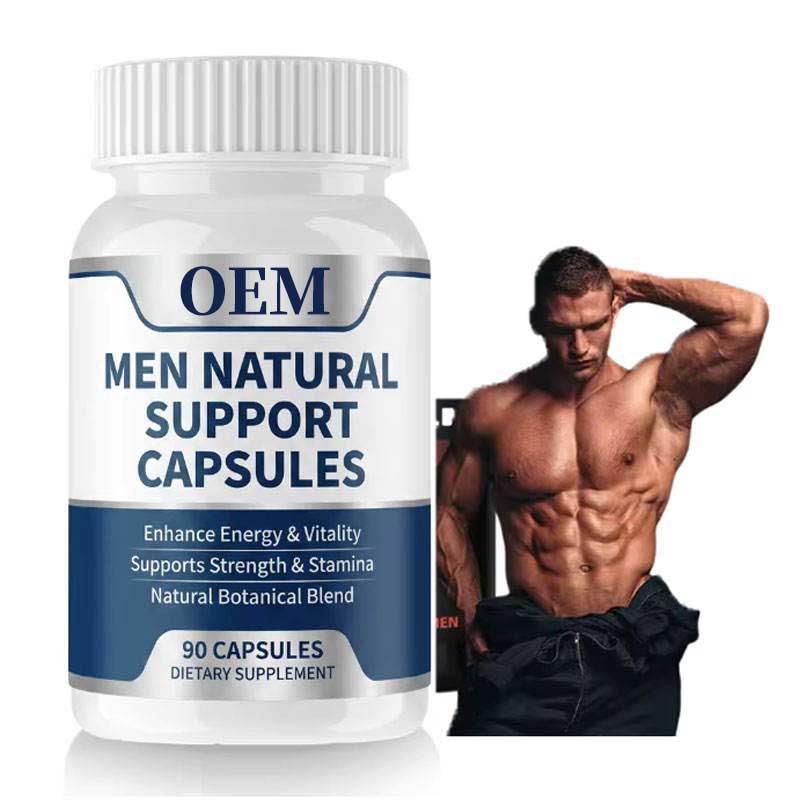
Men’s wellness is one of those supplement categories that looks straightforward until product development actually begins. It is easy to put zinc, magnesium, botanical extracts, vitamins, amino acids, and a few fashionable ingredients into a concept presentation and call the result a men’s health formula. The harder work begins when someone asks whether those ingredients fit the same consumer need, whether the proposed amounts can fit into the intended serving, whether the formula will taste acceptable, whether the raw materials can be sourced consistently, and whether the finished product can be manufactured repeatedly at commercial scale.
A well-developed men’s wellness dietary supplement starts with a specific consumer and a clearly defined primary wellness goal. From there, developers select evidence-supported ingredients at practical amounts, match the ingredient load to an appropriate dosage form, prototype the formula, evaluate taste and stability, establish quality specifications, review packaging and label requirements, and finally scale the approved product through controlled commercial manufacturing.
The difference between a promising concept and a durable supplement business often appears in these early decisions. Consider two brands developing similar products. One begins by asking which ingredients are currently popular. The other begins by asking who the product is for, what that person should understand within five seconds of seeing the package, how much material the consumer will realistically take every day, and whether the same specification can be reproduced when the first production run becomes the tenth. Those questions lead to very different products, even when some of the ingredients eventually overlap.
What Should a Men’s Wellness Supplement Support?
A men’s wellness supplement should support one clearly defined primary need for a recognizable consumer group, with only a few compatible secondary benefits. Daily nutrition, active performance, stress support, healthy aging, prostate wellness, energy, and vitality are different product territories. Choosing the primary territory first makes ingredient selection, dosage form, serving size, claims, packaging, pricing, and future product-line decisions much more coherent.
Define the Primary Need
One of the most common formulation problems starts before the first ingredient is ordered. A product team tries to build a single formula that supports energy, physical performance, hormonal wellness, stress, cognition, immunity, circulation, prostate health, recovery, and healthy aging simultaneously. On a presentation slide, this can look comprehensive. In a finished serving, however, every additional benefit competes for ingredient space, cost, consumer attention, and a defensible role within the formula.
The better approach is to establish a hierarchy. Decide which benefit gives the consumer the main reason to purchase the product. Then determine which one or two secondary benefits naturally support that primary positioning. Everything else should be questioned. A men’s daily wellness formula may have foundational nutrition at its center. A gym-focused product may be built around performance, hydration, or recovery. A formula designed for men over 40 may put healthy aging, energy metabolism, cardiovascular wellness, or prostate-related nutritional support closer to the center.
This matters because consumers rarely buy an ingredient list. They buy a product that appears relevant to something they want to improve or maintain in everyday life. If the front of the package needs several paragraphs to explain what the formula is supposed to do, the product concept is probably trying to carry too many jobs.
A practical starting sentence is: “This product is primarily designed for men who want ______.” Development becomes much easier when everyone involved in the project can complete that sentence in essentially the same way. Ingredient decisions, claims, dosage form, flavor, serving size, price expectations, and visual identity can then be evaluated against one consistent product objective.
Identify the Real Consumer
Defining the audience as “men aged 18 to 65” provides very little useful development information. A 25-year-old who trains five days per week, a 38-year-old professional who travels frequently, and a 58-year-old consumer interested in maintaining health as he ages may all buy men’s supplements, but their motivations and preferred product experiences can be dramatically different.
A useful consumer profile combines age with lifestyle, existing supplement habits, wellness priorities, preferred dosage form, shopping behavior, and expected price level. A customer already taking several sports-nutrition products may accept a multi-capsule daily serving or a 10-gram powder. Someone who rarely takes supplements may see three large capsules every morning as inconvenient, even if the ingredient profile is technically stronger.
Product familiarity also changes how much education a formula needs. Experienced fitness consumers may already understand ingredients such as creatine, electrolytes, amino acids, zinc, or magnesium. A broader wellness audience may respond better to a simpler benefit-led formula where the product purpose is immediately clear without researching every ingredient.
Shopping behavior deserves the same attention. Online customers can compare Supplement Facts panels, servings per container, ingredient amounts, capsule counts, reviews, and price per serving within minutes. In physical retail, the product may have only a few seconds to communicate its role from a shelf. These different environments influence formula complexity, package architecture, visible claims, serving count, and even which ingredients deserve front-panel attention.
The objective is not to find a product that every man could theoretically consume. It is to build a product that a meaningful group of men can immediately recognize as relevant to their routine and needs.
Match Benefits to Life Stage
Men’s nutritional priorities often change with lifestyle and life stage, although age should never be treated as a rigid biological rule. Younger active consumers may show greater interest in exercise performance, hydration, recovery, energy, and foundational nutrition. Men managing demanding work and family schedules may pay more attention to sustained energy, stress resilience, sleep, cognitive performance, and metabolic wellness. Older groups may increasingly consider muscle maintenance, mobility, cardiovascular wellness, cognition, prostate health, and healthy aging.
These categories can overlap. A 50-year-old endurance athlete does not suddenly stop caring about performance because he has entered a different demographic bracket, and a 28-year-old professional may be more interested in sleep and stress support than sports nutrition. Lifestyle provides the context that makes age useful.
For product developers, this creates an opportunity to build a men’s wellness portfolio instead of forcing every need into one “ultimate” formula. A brand might develop separate daily wellness, active performance, healthy aging, and targeted vitality products, each with a distinct role. That structure is generally easier for consumers to understand and easier for the brand to expand over time.
| Product Direction | Typical Consumer Context | Primary Focus | Practical Format | Main Development Challenge |
| Daily Men’s Wellness | General daily use | Nutritional foundation | Capsules or tablets | Keeping serving size manageable |
| Active Performance | Training and sports | Performance and recovery | Powder or stick pack | Ingredient load and taste |
| Men’s Healthy Aging | Mature wellness consumer | Long-term wellness support | Capsules or softgels | Ingredient differentiation and cost |
| Stress & Focus | Busy professionals | Daytime performance and resilience | Capsules or powder | Keeping benefits coherent |
| Men’s Vitality | Adult wellness consumer | Vitality and nutritional support | Capsules or tablets | Evidence and claim boundaries |
| Prostate Wellness | Mature male consumer | Targeted nutritional support | Capsules or softgels | Ingredient selection and positioning |
Let the Sales Channel Influence the Product
Sales channel should influence development earlier than many brands expect. A product designed primarily for Amazon operates in an environment where customers can compare ingredient amounts, bottle counts, reviews, price per serving, and competing formulas almost instantly. A pharmacy product may need simpler shelf communication and more conservative presentation. A gym-oriented formula may benefit from powder or stick-pack formats that naturally fit an exercise routine.
Direct-to-consumer brands have different advantages. They control product pages, long-form education, email, video, social content, and the complete purchase journey. This can support formulas with a more sophisticated ingredient story because the brand has room to explain the reasoning behind the product.
Channel economics also change what can be put into the formula. Manufacturing cost is only one part of the final commercial equation. Marketplace commissions, retailer or distributor margins, shipping, warehousing, advertising, promotional discounts, payment fees, and customer acquisition costs can all sit between factory cost and retail price.
For that reason, a sensible development project works backward from commercial reality. Before formulation becomes detailed, the team should understand where the product will be sold, the expected retail range, the approximate number of servings, and the customer’s likely willingness to pay. That information creates realistic boundaries for ingredient cost, packaging, serving size, and differentiation.
A technically excellent product that cannot survive the economics of its intended channel is not truly commercially developed.
Which Ingredients Should You Choose?
Ingredients should be chosen according to the product’s primary benefit, evidence, useful serving amount, ingredient form, safety considerations, supply reliability, cost, sensory characteristics, and compatibility with the intended dosage form. Every ingredient should have a clear reason for being present. Popularity may help consumers recognize an ingredient, but popularity alone is not enough to justify valuable space inside a commercial formula.
Build an Ingredient Hierarchy
Strong formulations usually have structure. Weak formulations often look like shopping lists.
A practical men’s wellness formula can be divided into several layers. Core ingredients support the product’s primary positioning and deserve the greatest attention during dose, sourcing, evidence, and cost review. Supporting ingredients complement that primary function without changing the product into something else. Foundational nutrients may provide broader nutritional support. Excipients, carriers, flavors, acids, sweeteners, flow agents, binders, or other processing ingredients help turn the active formula into something that can actually be manufactured and consumed.
Consider a product positioned around stress and daily performance. The formula may use selected minerals or vitamins as nutritional foundations while adding a smaller number of targeted functional ingredients. If the product is delivered as a flavored powder, the final formula will also require a sensory system that manages sweetness, acidity, aroma, aftertaste, and mouthfeel.
The useful development question is not, “What else can we add?”
A more productive question is, “If every ingredient had to justify its cost, space, technical complexity, and role in the product story, would we still keep it?”
That question often removes ingredients that were included mainly because competitors have them or because the ingredient name looks attractive on a label. The resulting formula may contain fewer components but have a clearer purpose and more realistic amounts.
Evaluate Dose, Not Just Ingredient Names
An ingredient appearing on a label does not automatically mean that the amount used is useful for the intended product concept. This distinction matters because supplement formulas can become crowded with small quantities of recognizable ingredients that create visual complexity without adding equivalent product value.
For each active ingredient, developers should review the amount per serving, total daily intake, ingredient form, relevant research, safety considerations, and the physical quantity that must fit inside the dosage form. Human research may evaluate a specific preparation at a specific daily quantity. A different extract, concentration, or substantially lower amount should not automatically be treated as equivalent.
Physical volume is one of the most practical limitations. Five ingredients at a few hundred milligrams each can already create more than a gram of raw material before supporting nutrients and processing ingredients are considered. That may be manageable in a powder but could require several capsules.
This is where formulation and dosage-form design need to happen together. Marketing may envision a two-capsule daily product while the ingredient proposal actually requires four or five capsules to accommodate the desired amounts. The solution is usually not to quietly reduce every ingredient. Instead, the team should decide whether to simplify the formula, change ingredient forms, alter the serving, or select a different dosage format.
Useful dose review questions include:
- What role does the ingredient have in this formula?
- What quantity is proposed per serving and per day?
- Which ingredient form or extract is being used?
- Is that form reasonably comparable with the evidence being considered?
- Does the amount fit within the intended dosage form?
- Are relevant intake or safety limits being considered?
- Does the amount materially contribute to the product concept?
This level of review produces a formula that can be explained with more confidence than a long ingredient panel assembled mainly for visual appeal.
Compare Ingredient Forms Carefully
Two raw materials with the same consumer-facing ingredient name can differ significantly in composition and manufacturing behavior. Mineral ingredients are a simple example. Different mineral compounds can contain different percentages of elemental mineral, which means that the weight required to provide a target amount can vary substantially. They may also differ in bulk density, taste, solubility, and cost.
Botanicals create even more variables. Developers may need to consider the botanical species, plant part, extraction process, extract ratio, standardized marker compounds, carrier materials, color, odor, moisture, and supplier specification. A concentrated standardized extract and a basic botanical powder are not automatically interchangeable simply because they use the same common plant name.
Branded and patented ingredients introduce another trade-off. They may offer stronger documentation, trademark recognition, proprietary processing, or a more distinctive marketing story. At the same time, they can increase raw-material cost, create supplier minimums, or make the formula dependent on a single supply source.
A serious ingredient review therefore goes beyond the name printed on the front of a specification sheet. It should consider:
ingredient identity → ingredient form → technical specification → supplier documentation → commercial availability.
This approach becomes especially important when a brand expects to reorder the product regularly. Once the formula becomes established in the market, changing a significant ingredient form because the original material cannot be sourced may affect sensory characteristics, cost, documentation, label language, or product consistency.
Balance Differentiation With Supply Security
The most innovative formula is not necessarily the strongest commercial formula if one difficult raw material repeatedly prevents production.
A specialized extract may have a long procurement lead time, high minimum purchase requirement, limited approved suppliers, short shelf life, or storage requirements that complicate planning. These factors are manageable when they are understood early. They become disruptive when the first large reorder reveals them.
Strategic ingredients deserve a simple supply-risk review:
- Normal supplier lead time
- Minimum purchase quantity
- Shelf life
- Storage requirements
- Available alternative suppliers
- Lot-to-lot specification consistency
- Required documentation
- Sensory or processing variability
Brands should also distinguish between ingredients that genuinely create differentiation and ingredients that create complexity without enough consumer value. An expensive standardized botanical might be worth the cost if it is central to the product story and supported by strong documentation. Another premium material may add very little except a recognizable name at a small inclusion level.
The lowest raw-material quote is not always the lowest-cost decision over the life of the product. A cheaper ingredient that causes repeated sensory variation, additional testing, production delays, or reformulation work may ultimately cost far more than a more consistent alternative.
Experienced development teams therefore evaluate ingredient price together with cost per serving, supply continuity, quality documentation, technical performance, and expected reorder volume.

Which Dosage Form Is Best?
The best dosage form is the format that carries the required ingredient amount while remaining stable, manufacturable, convenient, and commercially appropriate. Capsules are useful for many concentrated blends, powders handle gram-level ingredients efficiently, gummies offer a familiar consumer experience but have active-loading limits, and tablets, liquids, softgels, and stick packs each introduce different processing and packaging requirements.
Match Format to Ingredient Load
Ingredient mass is often the fastest way to determine which dosage formats are realistic.
Capsules are suitable for many vitamins, minerals, botanical extracts, and concentrated combinations because the consumer does not directly taste the ingredients. However, capsule capacity is limited by capsule size and powder density. A size 00 capsule may hold several hundred milligrams of many common blends, but actual fill weight can vary significantly. Dense mineral powders and fluffy botanical extracts do not occupy the same volume.
A formula containing 2,000 or 3,000 milligrams of material per daily serving may therefore require several capsules. If the active load climbs to 5,000, 10,000, or more milligrams, powders often become much more practical.
This explains why creatine, collagen, amino-acid blends, electrolyte systems, and similar gram-level concepts frequently use powders. The format accommodates ingredient quantities that would otherwise require an inconvenient number of capsules or tablets.
Gummies operate under different constraints. A finished gummy may weigh several grams, but most of that weight belongs to the gummy matrix: sweetening components, water, gelling system, acids, flavors, and other structural ingredients. The space available for functional actives is therefore much smaller than the total gummy weight suggests.
Format should follow ingredient mathematics. When a formula does not comfortably fit, it is usually better to change the delivery form or simplify the formula than to create a daily serving customers are unlikely to follow.
Compare the Main Formats
No dosage format is universally superior. Each solves a different commercial and technical problem.
Capsules are flexible and hide unpleasant taste, but large formulas can create high capsule counts. Tablets can provide dense delivery and efficient packaging, but the blend needs suitable compression properties and the finished tablet must remain practical to swallow. Powders handle high ingredient quantities but expose bitterness, aroma, texture, dissolution, and sediment directly to the consumer.
Gummies offer convenience and strong lifestyle appeal, but they bring heat, moisture, texture, sweetness, and active-loading constraints. Liquids can create a differentiated experience but require careful work around solubility, suspension, preservation, flavor, and packaging. Softgels are appropriate for many oil-based ingredients but require specialized manufacturing processes. Stick packs provide portable single servings but depend heavily on powder flow, fill weight, packaging film, and seal integrity.
| Dosage Form | Typical Commercial Serving Range* | Main Advantage | Main Limitation |
| Capsules | 1–4 capsules daily | Flexible and low flavor exposure | Limited fill capacity |
| Tablets | 1–3 tablets daily | Compact and familiar | Compression and swallowing |
| Gummies | 1–4 pieces daily | Convenient consumer experience | Restricted active loading |
| Powder | 3–20+ g per serving | Suitable for gram-level formulas | Flavor and solubility |
| Stick Pack | About 2–15 g per pack | Portable single serving | Fill and film requirements |
| Liquid | About 1–30 mL per serving | Flexible delivery experience | Stability and preservation |
| Softgel | Usually 1–3 units daily | Well suited to oils | Specialized production |
*These ranges are practical examples commonly seen in commercial product design rather than universal manufacturing limits. Final serving size depends on formula composition, ingredient density, equipment, packaging, and target-market requirements.
Treat Taste as a Technical Requirement
Taste development begins with the active ingredients, not with choosing strawberry, lemon, or berry from a flavor catalogue.
Many minerals can produce metallic, salty, chalky, or bitter notes. Botanical extracts may introduce earthy aromas or persistent bitterness. Amino acids and other functional compounds can dramatically change sweetness perception, acidity, mouthfeel, or aftertaste.
A successful flavor system usually balances several variables at the same time:
sweetness + acidity + aroma + bitterness control + mouthfeel + serving concentration.
Changing one active ingredient may change that entire balance. Increasing a mineral blend can make the existing flavor taste weaker or harsher. Adding a dark botanical extract may alter both taste and color. Increasing serving weight may affect how much water the consumer needs and consequently change flavor intensity.
Consumer adherence is the practical reason this matters. A formula can contain impressive ingredients but still struggle commercially if people dislike taking it every day. Conversely, making a product excessively sweet may create an attractive first taste while becoming tiring after several weeks of use.
Prototype evaluation should therefore consider sweetness, acidity, bitterness, aroma, aftertaste, mouthfeel, appearance, dissolution, sediment, and recommended dilution. For repeat-use products, the goal is usually not the strongest possible flavor. It is a flavor profile that remains acceptable after the twentieth or fiftieth serving.
Consider Stability and Packaging Together
Dosage form, stability, and packaging should be developed as one system.
Moisture-sensitive powders can absorb humidity, lose flow, and form lumps. Oil-containing products may face oxidation. Gummies can harden, soften, sweat, or experience moisture migration. Liquids may show sedimentation, color change, aroma degradation, or microbiological concerns if the formula and preservation strategy are not properly matched.
Packaging is one of the controls available to manage these risks.
A hygroscopic powder packed in a large jar may require a different moisture-management strategy from the same formula individually packed in stick packs. A product containing light-sensitive components may benefit from less transparent packaging. Some products may require high-barrier films, desiccants, induction seals, or other protective elements depending on formulation and intended shelf conditions.
This is why packaging should not begin as a visual-design exercise. The first question is what the formula needs for protection. Bottle color, surface finish, label material, carton texture, and visual branding come after the technical requirements are understood.
A beautiful package that fails to protect the product is poor packaging. A strong development process first protects stability and usability, then builds the branding around that protective system.

How Do You Build a Manufacturable Formula?
A manufacturable formula must work on production equipment rather than only in a development spreadsheet. Ingredients need to blend, flow, fill, compress, dissolve, cook, or encapsulate consistently while staying within agreed specifications. The strongest formulas balance ingredient amounts, physical properties, taste, stability, process requirements, packaging, cost, and future batch repeatability before the first commercial production run begins.
Design for Production Early
R&D and manufacturing should not operate as completely separate stages where a laboratory creates a theoretical formula and production is expected to “figure it out” later.
Commercial-scale equipment changes product behavior.
A powder that mixes easily in a small laboratory container may behave differently in a production blender. Ingredients with very different particle sizes or densities may separate after mixing. Fine powders can create dust. Hygroscopic ingredients can become sticky. Oil-containing materials may reduce powder flow and complicate filling.
Tablets introduce compression variables such as flowability, hardness, friability, tooling, disintegration, and compression speed. Gummies add cooking temperature, solids concentration, gel structure, depositing behavior, drying, coating, and finishing. Liquids require attention to mixing time, suspension behavior, pH, holding time, and filling accuracy.
A formula is commercially ready only when the development team can answer practical production questions. Can every ingredient be weighed accurately at the intended batch size? Will the blend remain uniform? Can it move through the production line efficiently? Does the process require unusual handling or environmental controls? Can the finished product be filled consistently? Can the same process be repeated without improvising every batch?
The goal is not simply to prove that the ingredients can exist together. It is to create a process that trained operators can follow repeatedly with predictable results.
Control Serving Size and Physical Volume
Serving-size design connects nutritional intent with physical reality.
Imagine a capsule formula containing 500 mg of one botanical, 400 mg of another, 300 mg of an amino acid, 250 mg of a mineral compound, and 150 mg of another supporting ingredient. Those actives already total 1,600 mg before processing aids or manufacturing allowances are considered.
Depending on the density of the blend, that amount can require multiple capsules. Marketing may have envisioned one or two capsules per day, but the physical formula may require three or four.
The same issue appears in powder products. Increasing the serving from 6 grams to 12 grams affects much more than ingredient cost. Scoop size changes. Pouch or jar size may increase. Flavor intensity must be reconsidered. Freight weight rises. Stick-pack dimensions may change. The consumer may need more water for acceptable dilution.
A useful development calculation is:
total active weight → estimated finished serving weight → units per serving → servings per package → package size → cost per serving.
Those numbers should be visible before the formula is approved.
A simpler formula that delivers its core proposition in two practical capsules may be commercially stronger than a crowded formula requiring five capsules. Likewise, a 7-gram powder that tastes good and delivers a clear benefit may outperform a 15-gram formula overloaded with secondary ingredients.
Serving size is not merely a label field. It is one of the central product-design decisions.
Prototype Before Committing
A prototype turns assumptions into something that can be tasted, inspected, measured, and discussed.
Powder samples can reveal unexpected bitterness, poor solubility, sediment, excessive sweetness, unusual color, or an impractically large serving. Capsule development can expose unrealistic capsule counts or powder-flow problems. Gummy prototypes can show texture, flavor, active-loading, and appearance limitations that were not obvious from the initial formula.
Prototype review works best when revisions are documented.
Instead of scattered feedback such as “a little sweeter” or “make it stronger,” use a controlled version system. For example:
- Version 1.0 — initial prototype
- Version 1.1 — flavor adjustment
- Version 1.2 — bitterness reduced
- Version 1.3 — active level revised
- Version 2.0 — approved production reference
The numbering system itself is less important than maintaining traceability. Every meaningful revision should record what changed, the reason for the change, how it affected serving size or cost, and whether the version was approved.
Sampling also has realistic limits. An approved sample does not guarantee commercial success, and natural raw materials can show reasonable variation between lots. The purpose of sampling is to reduce uncertainty, establish sensory and technical expectations, and give the development team a controlled reference before committing to larger quantities of ingredients, packaging, and production.
Balance Performance and Cost
Formula cost should be reviewed while the product is being developed, not after every ingredient has already become emotionally attached to the concept.
Active ingredients may represent a large part of cost, but they are not the entire finished-product economics. Depending on the project, manufacturing cost can also include excipients, flavor systems, testing, labor, bottles, caps, pouches, labels, cartons, scoops, desiccants, printing, filling, packing, specialized documentation, and production losses.
Premium formulas often contain one or two ingredients that account for a disproportionate percentage of raw-material cost. That is not automatically a problem. If the ingredient is central to differentiation and supports a stronger product, it may deserve the investment. The important question is whether the added cost creates visible value for the customer.
Cost should also be evaluated per serving.
A 90-capsule bottle sounds substantial, but if the daily serving is three capsules, the bottle contains 30 servings. Another product with 60 capsules and a one-capsule serving provides twice as many days of use. Comparing bottle cost without serving information can therefore be misleading.
Experienced formulation teams usually watch three commercial numbers at the same time:
manufacturing cost → cost per daily serving → realistic retail price.
If the product cannot reach acceptable economics without reducing important ingredients to token levels, the concept may need to be simplified or repositioned rather than quietly weakened.
How Do You Verify Quality and Compliance?
Quality and compliance should be designed into the product before commercial production begins. Raw-material specifications, supplier documentation, in-process controls, finished-product criteria, testing requirements, label information, claim boundaries, and batch traceability all need to be defined. The objective is not merely to obtain a passing laboratory report, but to create repeatable evidence that each production lot matches the agreed product specification.
Set Specifications Before Testing
Testing is meaningful only when there is a clear standard describing what the ingredient or finished product is expected to meet.
A specification may include identity, strength or assay, microbiological limits, heavy metals, moisture, physical appearance, particle characteristics, or other parameters relevant to the material and product. The appropriate requirements vary considerably between ingredient categories.
A standardized botanical extract may require identity verification and marker-compound information. A mineral ingredient may require assay and contaminant controls. A probiotic has different potency and storage considerations. An oil-based ingredient presents different stability questions from a dry powder.
Finished-product specifications should also reflect the dosage form. Capsules may be reviewed for appearance, fill weight, relevant active specifications, microbial criteria, and other agreed attributes. Powders may require additional attention to moisture, sensory characteristics, bulk density, dispersion, or flow. Gummies bring unit weight, texture, moisture, microbiological, and active-content considerations into the quality plan.
The useful question is not, “How many tests can we put on the report?”
It is, “Which specifications determine whether this particular product meets its intended quality standard?”
That distinction prevents brands from spending heavily on generic test packages while overlooking a parameter that actually matters to their formula.
Understand COA and Batch Documentation
A Certificate of Analysis is an important quality document, but it should not be treated as a document that automatically proves everything about a product.
A COA generally reports selected analytical results associated with a specific raw-material or finished-product lot. An experienced reviewer looks beyond the presence of the document and checks the batch number, test item, result, acceptance criteria, test method, laboratory information, and the product or material to which the report applies.
Useful questions include whether the reported values came from finished-product testing or raw-material information, which active ingredients were actually assayed, whether microbiological testing was performed, whether heavy metals were included when relevant, and whether the laboratory work was completed internally or through an independent facility.
Additional project documentation may include raw-material COAs, raw-material specifications, SDS or MSDS documents where applicable, production records, laboratory reports, allergen information, certification records, packaging records, and export documents.
The document package should match the product and destination rather than being presented as one identical collection for every supplement.
This becomes more valuable as a brand grows. Months after production, a retailer, distributor, platform, importer, or quality team may ask about a particular lot. Good documentation allows the finished goods to be connected with the relevant production and quality records instead of relying on memory or scattered files.
Review Claims Before Artwork Is Printed
Claims should be reviewed before final artwork is approved because printed packaging becomes expensive to correct.
Marketing and formulation teams sometimes work too independently. The formulation team focuses on ingredients while the marketing team develops powerful front-panel language. Problems appear when those two streams are finally brought together and the intended claims go further than the formula, evidence, or target-market requirements can comfortably support.
Statements about supporting normal physiological functions, maintaining wellness, or assisting nutritional needs operate differently from claims that imply diagnosis, treatment, cure, mitigation, or prevention of disease. Exact requirements vary by market, so labels and promotional language should be reviewed with the destination country in mind.
Certification language needs similar discipline. Halal, Organic, Kosher, Vegan, Non-GMO, Gluten-Free, and related statements should only be used when the formula, raw materials, production process, documentation, and applicable certification requirements support them.
“Clinically proven” also requires care. Research on one ingredient does not automatically establish that the complete finished formula has been clinically proven. The preparation, amount, study population, finished product, and claim all matter.
Before printing thousands of bottles, cartons, sachets, or stick-pack films, review three questions carefully: What will an ordinary customer understand this claim to mean? What evidence supports that message? Is the wording appropriate for the intended market?
The cost of a careful pre-print review is usually far lower than the cost of correcting finished packaging.
Build Traceability Into Every Batch
Quality systems become most valuable when something unexpected happens.
A finished product should be linked through its lot or batch information to the relevant materials, production records, inspections, packaging run, test results, and release decision. This makes it possible to investigate a complaint or quality question without treating every unit ever manufactured as an unknown.
A practical traceability structure can look like this:
| Stage | Typical Control | Typical Record |
| Raw material receipt | Identity and document review | Supplier and material-lot record |
| Material approval | COA/specification review | Released-material status |
| Weighing | Formula and quantity verification | Weighing record |
| Manufacturing | Process and in-process checks | Batch production record |
| Filling | Unit or fill-weight inspection | Line inspection record |
| Packaging | Label, lot and date verification | Packaging record |
| Finished product | Agreed product testing | Test report or finished-product COA |
| Release | Quality review | Batch-release record |
| Retention | Sample retention where applicable | Retention record |
This structure also supports repeat orders. The original approved batch becomes more than a memory of what the product “used to be like.” It provides a technical reference that helps purchasing, production, quality, and packaging teams reproduce the product within agreed specifications.
A manufacturer that can connect formula development, production controls, batch testing, documentation, packaging, and delivery within the same project workflow can reduce many of the handoff risks that appear when these functions are fragmented. Zoxizo’s documented service model covers formulation, sampling, packaging and labeling, manufacturing, quality testing, documentation support, and delivery within one coordinated supplement-development process.

How Do You Move From Formula to Production?
Moving from a formula concept to commercial production requires controlled sampling, documented approvals, raw-material planning, production instructions, scale-up, packaging verification, in-process inspection, finished-product testing, and batch release. The real objective is not simply to manufacture the first order. It is to establish a product and production system that can reproduce the approved specification as demand and reorder volume grow.
Use a Structured Development Process
Supplement projects generally move faster when everyone understands which decisions have been approved and which are still open.
A practical development sequence often follows this path:
consumer and market brief → product concept → preliminary formula → preliminary costing → dosage-form review → sample development → revision → approved formula → packaging development → raw-material procurement → commercial manufacturing → finished-product verification → shipment.
Several stages may overlap. What matters is maintaining approval gates.
Printing packaging before serving size is finalized can result in outdated nutrition information. Ordering all specialized raw materials before flavor approval can leave the brand committed to a formula that still needs significant modification. Confirming the bottle only after production begins may create avoidable filling and packing delays.
A project manager should therefore maintain a clear status for the major decisions:
- Formula
- Ingredient specifications
- Serving size
- Flavor
- Unit count
- Testing requirements
- Bottle, pouch, sachet, or other primary packaging
- Label and artwork
- Carton configuration
- Production quantity
- Shipping configuration
Written approval is not unnecessary paperwork. It prevents Version 1.2 from being printed while production is using Version 1.3, or prevents an old bottle size from being purchased after the serving count has changed.
The larger the project becomes, the more valuable this control becomes.
Prepare for Commercial Scale-Up
An approved laboratory prototype is a development reference, not a complete commercial production process.
Commercial manufacturing changes mixing dynamics, equipment contact, processing time, temperature exposure, powder flow, compression speed, filling conditions, and packaging operations. Some problems only become visible when the batch becomes larger.
Powder formulas containing ingredients with very different particle size or density can segregate during handling. Gummies may behave differently when a laboratory process is transferred to commercial cooking and deposition equipment. Tablets may change in hardness or friability when compression speed increases. Liquids may react differently to longer mixing or holding times.
Scale-up therefore needs documented production instructions that connect the approved formula with actual manufacturing conditions.
These instructions typically define:
- Approved formula and ingredient specifications
- Batch quantities
- Weighing requirements
- Processing sequence
- Equipment requirements
- Mixing or processing parameters
- In-process checks
- Filling targets
- Packaging configuration
- Finished-product release criteria
The objective is repeatability. Operators should be able to manufacture the product through a documented process rather than relying on improvised corrections every time a new batch is scheduled.
Commercial feasibility is achieved when production can repeatedly meet the approved specification at an acceptable level of efficiency.
Finalize Packaging Before Production
Packaging should be considered part of manufacturing readiness rather than a separate graphic-design project.
Before mass printing, confirm the product name, serving size, net quantity, nutrition or Supplement Facts information where applicable, ingredient list, directions, warnings, responsible-party information, barcode, lot-code area, date-code format, packaging dimensions, and carton configuration.
Physical dimensions should also be verified.
A beautiful label can fail when it wraps around an actual bottle and leaves too little room for mandatory information. A carton design may appear spacious on a monitor but become crowded once real font sizes and production tolerances are applied. Stick-pack artwork can accidentally place important information inside a seal area. A bottle may be much larger than the physical product requires, increasing freight cost and creating a poor consumer impression when opened.
Where possible, review physical packaging components, printed proofs, dielines with confirmed production dimensions, or an assembled mock-up before authorizing a large packaging run.
E-commerce projects may have an additional layer of requirements around barcodes, carton identification, fulfillment labels, expiry information, and case packing. These requirements should be confirmed before goods reach the packing line, not after finished cartons are already sealed.
Packaging mistakes become more expensive in proportion to order size. The most effective control is therefore early confirmation rather than late inspection.
Evaluate the Manufacturer Beyond Price
Manufacturing quotes are easy to compare because every supplier can provide a visible unit price. Manufacturing risk is harder to compare because it often becomes visible only after development begins.
A serious manufacturer evaluation should cover formulation, raw materials, production, quality, documentation, packaging, communication, and repeat supply.
Ask how custom formulas move from concept to sample. Ask how raw-material specifications are approved. Understand what happens if a key ingredient becomes unavailable. Clarify which testing applies to your specific product. Review how formulation versions and sample changes are documented. Ask how packaging dimensions and artwork are confirmed before production.
Capacity should also be evaluated realistically. A manufacturer may have substantial total output, but what matters to your project is capacity for the specific dosage form and production line you need. Replenishment planning becomes especially important for established products where an inventory shortage can interrupt marketplace rankings, retail supply, subscriptions, or distributor relationships.
For a long-term relationship, repeatability usually becomes more valuable than the lowest first quotation.
A capable manufacturing partner should be able to support consistent ingredient specifications, controlled formula versions, batch documentation, quality review, packaging continuity, traceability, repeat-order planning, and future product-line development.
For brands developing a men’s wellness product, a useful technical discussion with Zoxizo can begin before the ingredient panel is treated as final. Bringing the target consumer, wellness objective, dosage-form preference, benchmark products, intended sales market, price range, packaging direction, and expected order volume into the same discussion allows feasibility issues to be identified before they become expensive production changes.
Developing a men’s wellness dietary supplement is ultimately a process of managing trade-offs rather than collecting as many desirable ingredients as possible. A higher ingredient dose may require a larger serving. A more convenient dosage form may limit active loading. A premium standardized botanical may improve differentiation while increasing supply complexity. More sophisticated packaging may strengthen presentation while raising minimum order requirements and unit cost. Stronger marketing language may create additional substantiation or regulatory concerns.
The most durable products are usually those in which consumer need, ingredient strategy, dosage form, sensory experience, serving size, quality requirements, cost structure, claims, packaging, and manufacturing all support the same idea. When those pieces fit together, the product becomes easier to understand, easier to manufacture, easier to reorder, and easier to build into a broader men’s wellness product line. That is the point where supplement development moves beyond an attractive formula concept and becomes a repeatable commercial product.
What ingredients are commonly considered for a men’s wellness supplement?
Ingredient selection depends on the intended benefit rather than gender alone. Developers may evaluate vitamins, minerals, amino acids, botanical extracts, fatty acids, antioxidants, and other functional ingredients according to the specific concept. A daily wellness formula may look very different from a performance, healthy-aging, prostate, stress, or vitality formula. The ingredient form, proposed amount, evidence, safety considerations, supply reliability, dosage-form compatibility, and target-market requirements should all be reviewed before a material becomes part of the final formulation.
How long does it take to develop a custom men’s wellness supplement?
Development time varies substantially with formula complexity, raw-material availability, dosage form, flavor requirements, sample revisions, testing, packaging, and documentation. A formula based on established ingredients and a straightforward capsule format can normally move through development more easily than a new flavored powder, gummy, liquid, or product containing specialty ingredients that need additional sourcing. Brands should plan development around approval stages rather than relying on one universal timeline, especially when custom printed packaging or additional testing is required.
Are capsules or gummies better for men’s supplements?
Neither format is automatically better. Capsules are often more practical for botanical extracts, vitamins, minerals, and formulas where taste masking is important. Gummies can provide a convenient and approachable daily experience, but their active-loading capacity is more limited because a large part of each gummy is the structural matrix. The best choice depends on ingredient weight, target serving size, taste, stability, desired consumer experience, package count, manufacturing feasibility, and the price point the product needs to achieve.
How many ingredients should a men’s wellness formula contain?
There is no ideal number. A well-designed product may contain a relatively small group of carefully selected ingredients at appropriate amounts, while another concept may legitimately require a broader nutritional blend. The important issue is whether each ingredient has a clear role. Adding more ingredients can increase formula cost, serving size, sourcing complexity, testing requirements, and the potential for technical problems. A shorter formula with coherent positioning can be commercially stronger than a long ingredient panel filled with very small quantities.
What tests should be performed on a men’s wellness supplement?
Testing requirements depend on the ingredients, dosage form, manufacturing process, target market, customer specification, and risk profile. Relevant checks may include identity, assay or potency, microbiological parameters, heavy metals, moisture, physical properties, or other product-specific items. Not every supplement needs exactly the same testing panel. A sensible quality program establishes raw-material and finished-product specifications first and then selects testing that demonstrates whether those specifications have been met for the relevant production batch.
Can a men’s wellness formula be customized from an existing product concept?
Yes. Many supplement projects begin with an existing formula direction and then adjust selected ingredients, serving size, flavor, sweetness, dosage form, packaging, or positioning to create a more differentiated product. Other brands require deeper formulation work starting from a target consumer and desired benefit. The appropriate level of customization depends on development goals, timeline, budget, ingredient availability, production quantity, packaging requirements, and how much differentiation the brand needs in its intended sales channel.
What should a brand prepare before contacting a supplement manufacturer?
A useful development brief should include the target consumer, primary wellness goal, intended market, preferred dosage form, ingredients the brand wants to include or avoid, benchmark products, expected retail price, packaging direction, target serving count, and approximate order volume. The concept does not need to be fully finalized. In many cases, involving the manufacturer before locking the formula makes it easier to identify serving-size, sourcing, stability, cost, packaging, and production issues while changes are still relatively inexpensive.