Skip to content

A successful supplement does not always need a completely new formula to create its next growth opportunity. Sometimes the better move is to take an established product concept and adapt it to a different daily routine. A magnesium capsule may become a flavored drink powder. A vitamin tablet may become a gummy. An oil-based nutrient may be better suited to a softgel, while an existing powder can be repackaged into portable stick packs for a different use occasion. The commercial idea sounds simple, but the development work rarely is.
Changing dosage form changes far more than the outside appearance of the product. It can affect how much active material fits into one serving, which excipients are required, how the ingredients behave during processing, what the consumer tastes or feels, how the product should be packaged, and whether the new format remains commercially sensible at production scale. A formula that works perfectly in a capsule can become bitter, unstable, oversized, expensive, or difficult to manufacture when moved into a gummy or liquid.
Extending a dietary supplement into a new dosage form usually requires a new feasibility review rather than a direct formula transfer. The development team must determine whether the intended dose, ingredient properties, stability, taste, texture, manufacturing process, packaging, cost, and serving size are compatible with the new format. In many projects, the original formula becomes the technical reference while the delivery system is reformulated.
This distinction often determines whether a project moves efficiently or gets stuck after several sample rounds. Consider a brand that has sold a successful mineral capsule for years and decides to release a two-gummy version. The ingredient panel is sent to a gummy manufacturer with the expectation that the conversion will be straightforward. The first sample arrives large, bitter, and difficult to chew because the required mineral load occupies far more physical space than expected. Nothing was fundamentally wrong with the product idea. The problem was that dosage-form feasibility was evaluated after development had already started instead of before it.
Can an Existing Supplement Formula Be Converted?
Many established supplement concepts can be developed into another dosage form, but the original formula rarely transfers without modification. The practical question is whether the important active ingredients and intended consumer benefit can be maintained while adjusting serving size, excipients, flavor, processing conditions, stability controls, packaging, and production economics to suit the new physical format.
What Changes With the Dosage Form?
A dosage form is not simply the shape in which a supplement reaches the consumer. It is a complete delivery system that determines available volume, ingredient exposure, production conditions, sensory experience, serving behavior, and packaging requirements. When a formula moves from capsules to gummies, powders, liquids, tablets, or softgels, the product development team is effectively placing the same nutritional idea into a different physical environment.
Capsules illustrate the difference clearly. A capsule shell can hide strong bitterness, unpleasant odor, and some visual characteristics of botanical extracts, amino acids, minerals, and other ingredients. Once those same ingredients are placed into a gummy, chewable, drink powder, or liquid, the consumer directly experiences their flavor, smell, color, and mouthfeel. An ingredient that was easy to formulate at 300 mg inside a capsule can suddenly become the main taste problem in an exposed oral format.
Physical capacity changes as well. A standard size 00 capsule has approximately 0.9–1.0 mL of internal volume, but the actual mass that fits inside depends heavily on the bulk density and flow properties of the blend. A dense mineral blend can occupy much less volume than a fluffy plant powder or fiber. Looking only at the milligram numbers on an existing Supplement Facts panel therefore does not tell the development team whether the same formula will fit into another format.
Processing conditions add another layer. Capsules rely heavily on powder preparation, blending, flow, and fill consistency. Tablets introduce compression forces and disintegration requirements. Gummies may involve heat, moisture, acids, sweeteners, gelling systems, depositing, and conditioning. Liquids introduce pH, solubility, suspension, oxidation, microbial control, and closure compatibility. For this reason, an effective extension project starts with a feasibility brief rather than the assumption that the original recipe should remain unchanged.
Which Ingredients Limit Conversion?
High-dose ingredients are usually the first practical limitation because physical capacity differs dramatically between dosage forms. Creatine, collagen, amino acids, protein, fiber, electrolytes, and some mineral systems are commonly measured in grams rather than small milligram amounts. Those serving weights can fit comfortably into a powder, but transferring them into a small number of capsules or gummies can become inconvenient or technically unrealistic.
Strong sensory characteristics create a second group of constraints. Magnesium and zinc salts, botanical concentrates, mushroom extracts, amino acids, certain vitamins, and other active materials can introduce bitter, metallic, earthy, sour, or lingering notes. A capsule may hide these characteristics almost completely. A gummy, chewable tablet, liquid, or drink powder must actively manage them through ingredient selection, flavor design, sweetness, acidity, serving dilution, or other formulation tools.
Stability-sensitive ingredients require a different type of screening. Development teams often assess heat sensitivity, moisture sensitivity, oxidation, light exposure, hygroscopicity, pH response, water or oil solubility, particle size, and interactions with other ingredients. Probiotics are an obvious example because viable count, moisture control, packaging seal, shelf life, storage conditions, and shipping temperature can all matter. Similar concerns can apply to enzymes and other materials that are sensitive to the surrounding formulation environment.
A useful feasibility review classifies every meaningful ingredient according to four questions: how much is required, how strongly it affects flavor or texture, how sensitive it is to the proposed process, and whether it remains stable in the intended finished-product matrix. That review often identifies unsuitable dosage forms before money is spent on repeated samples.
Can the Same Active Dose Be Maintained?
Maintaining the same active dose is possible in some extensions, but it should never be assumed. The available physical space in the new dosage form creates a hard constraint that cannot be solved simply by increasing the headline ingredient claim. A powder can comfortably accommodate several grams of material. Capsules and gummies have far more limited unit capacity, while liquids depend heavily on solubility, suspension behavior, concentration, and acceptable serving volume.
Consider a product containing 3,000 mg of combined active material per daily serving. A powder can deliver that amount in a relatively small scoop. If a capsule formulation can realistically carry around 500–800 mg of the finished blend per capsule, depending on density and excipient needs, several capsules may be required to approach the original serving. A gummy system has different limits because increasing active load can interfere with piece size, flavor, texture, moisture behavior, and processing.
| Example Active Load | Powder | Capsules | Gummies | Liquid |
| 250 mg per serving | Usually easy | Usually practical | Often practical | Often practical |
| 1,000 mg per serving | Easy | May require multiple capsules | Case-by-case review | Depends on solubility |
| 3,000 mg per serving | Easy | Several capsules likely | Often difficult | Larger serving may be needed |
| 5,000+ mg per serving | Common for some powders | Usually inconvenient | Generally poor fit | Volume may become impractical |
These ranges are practical examples rather than universal limits. Ingredient density, concentration, required excipients, flavor intensity, manufacturing process, and consumer serving expectations can change the outcome significantly. When the original dose does not fit comfortably, the development team can increase serving count, use a more concentrated ingredient form when appropriate, simplify supporting ingredients, redesign the formula, or select another dosage form that handles the target load more naturally.
How Much of the Original Formula Can Stay?
The most productive way to manage reformulation is to divide the original product into what must remain, what is preferred, and what can change. Identity-defining ingredients and key amounts generally belong in the first group because they are closely connected to the reason consumers recognize or choose the product. Secondary ingredients can sometimes move within an acceptable range, while delivery-system ingredients are usually the most flexible.
This distinction prevents a common development mistake: treating every line on the original ingredient list as equally important. A capsule formula may contain flow agents or excipients selected specifically for encapsulation. Carrying those ingredients into a gummy provides little value if the new format requires an entirely different structural system. Likewise, a flavor or sweetener used successfully in a drink powder may not perform the same way in a liquid or chewable product.
Before the first prototype is made, brands should identify non-negotiable active ingredients, target active amounts, acceptable serving count, ingredients that can be modified, dietary requirements, target cost, and expected product positioning. A formulation team can work far more efficiently when it knows, for example, that a branded botanical at 200 mg must remain while several supporting ingredients can be reconsidered.
The goal is not to make two products chemically identical when the dosage forms have fundamentally different needs. The goal is to maintain a clear connection between the original product and the extension while giving the new format enough formulation freedom to work properly.
Which Dosage Form Should You Choose?
The right dosage form is the one that can deliver the intended active ingredients in a practical serving while matching the consumer’s routine, sensory expectations, packaging needs, market positioning, and target economics. Capsules, tablets, gummies, powders, liquids, drops, and softgels solve different problems, so selection should follow the formula and use occasion rather than whichever format is currently fashionable.
Are Capsules or Tablets the Better Fit?
Capsules remain one of the most flexible options for many dry supplement formulas because they hide taste and odor while supporting a wide variety of vitamins, minerals, botanical extracts, amino acids, probiotics, and specialty ingredients. They can also make formula changes easier because the development team does not need to solve the flavor and texture challenges that appear in gummies, chewables, liquids, and drink powders.
The main practical constraint is the amount of material that must be swallowed each day. A relatively concentrated formula may fit in one or two capsules, while a high-dose mineral, fiber, or amino-acid formulation may require several. A 120-capsule bottle may look substantial on a shelf, but if the labeled serving is four capsules, the consumer receives only 30 daily servings. This makes serving count more useful than bottle count when comparing extensions.
Tablets offer compact unit dosing and can be highly efficient for appropriate formulations, but the blend must perform under compression. Flow, compressibility, hardness, friability, disintegration, tablet size, and coating can all influence development. A formulation designed for capsules should not automatically be expected to table successfully without adjustment because the manufacturing forces are different.
When deciding between the two, brands should compare required daily active load, desired unit count, capsule or tablet size, swallowability, processing needs, packaging count, stability, production economics, and consumer expectations. The cheapest unit price is not always the best commercial choice if it creates an inconvenient daily serving.
Are Gummies Suitable for the Formula?
Gummies can create a more enjoyable supplement routine, but they have limited room for active ingredients because the structure of the gummy itself occupies a meaningful portion of each piece. Sweeteners, acids, flavors, gelling materials, water, colors, and other components all contribute to the final texture and stability. Increasing active loading can therefore make a gummy larger, more bitter, harder to chew, less stable, or more difficult to manufacture.
The intended number of gummies per serving should be defined early. If a formula requires four gummies instead of two, that decision changes the entire commercial package. A 60-count bottle provides 30 servings at two gummies per day but only 15 servings at four gummies per day. The bottle size, freight volume, daily cost, perceived value, and reorder frequency can all change before a single active ingredient has been modified.
Flavor is often the deciding factor. A relatively low-dose vitamin formula may provide substantial flexibility, while a mineral-heavy or botanical formula can require extensive masking work. Increasing sweetness alone rarely solves strong bitterness or metallic aftertaste, and an over-sweet product can become tiring when consumed every day. The formula, acid system, flavor family, serving size, and active ingredient source may all need adjustment.
Gummies work best when active loading, sensory quality, piece size, serving count, stability, and target retail price reach a workable balance. Selecting gummies simply because the category is popular can lead to a product that looks appealing on a development brief but performs poorly once the full formula is introduced.
When Do Powders Make More Sense?
Powders are often the most practical choice when the formula requires gram-level serving weights. Creatine, collagen, protein, fiber, electrolytes, greens, amino-acid blends, and functional beverage formulas all benefit from the additional capacity available in a scoop or stick pack. A powder can carry substantially more material than a capsule or gummy without forcing the consumer to take many individual units.
The larger physical capacity does not eliminate formulation work; it simply shifts the technical problems toward taste, dispersibility, moisture management, powder flow, sediment, foam, and serving consistency. A formula may appear to dissolve acceptably in 500 mL of water while tasting too strong in the 250 mL volume consumers actually prefer. Another formula may technically disperse but leave visible plant particles or mineral sediment that does not match the product’s expected appearance.
Common development checkpoints include serving weight, recommended water volume, dissolution or dispersion time, sediment after standing, sweetness, acidity, aftertaste, powder flow, moisture uptake, caking behavior, and filling accuracy. These characteristics need to be tested together because improving one can change another. Finer particles may disperse better, for example, but can also alter powder flow during packaging.
Packaging can extend the same powder into different consumer situations. A jar suits regular home use and may provide favorable packaging economics, while individual stick packs offer measured servings and portability for work, travel, gyms, and outdoor activities. In this case, a brand can create a meaningful product-line extension without substantially changing the underlying formulation.
Are Liquids or Softgels Practical?
Liquids are useful when the product concept benefits from easy administration, a flexible serving volume, or a distinct consumption experience. Concentrated drops can suit some vitamins, minerals, and botanical systems, while larger liquid shots or pouches can support energy, sports nutrition, and other functional applications. The key question is whether the ingredients behave acceptably in the intended liquid base at the required concentration.
A liquid can become problematic when ingredients are poorly soluble, settle rapidly, create excessive haze, interact with the container, oxidize easily, or develop unpleasant flavor at the target serving. Development may involve pH control, suspension strategy, flavor design, ingredient source selection, light protection, oxygen exposure, and closure compatibility. A clear-looking sample on the first day does not guarantee that the product will remain visually or chemically acceptable through its intended shelf life.
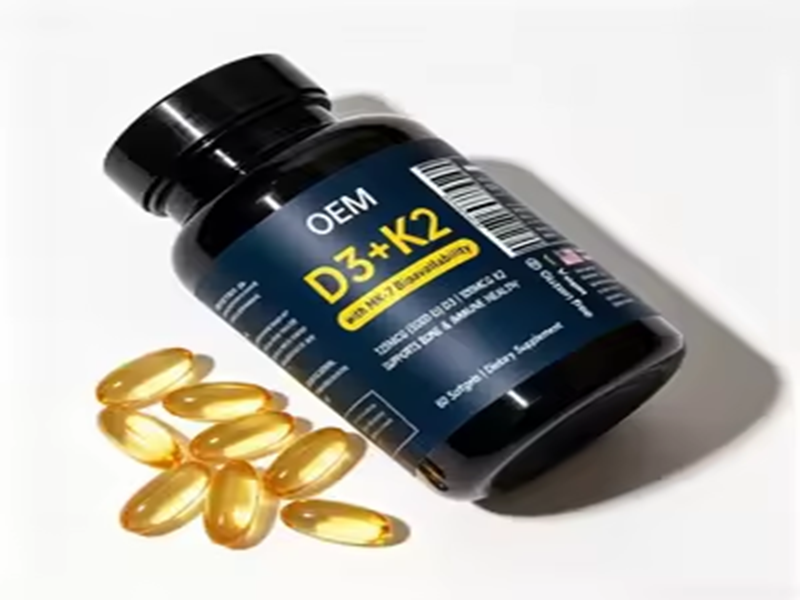
Softgels are particularly useful for oil-based active systems and many fat-soluble ingredients. Fish oils, CoQ10, vitamin D, and other oil-compatible nutrients often fit naturally into this format because the fill material and shell can be designed around an oil system. Trying to force these ingredients into a conventional water-based beverage can introduce complexity that provides little benefit.
The right format therefore follows ingredient chemistry and consumer use rather than marketing preference. A good feasibility study should be willing to conclude that another dosage form is technically cleaner and commercially stronger than the format originally requested.
How Does the Formula Change by Dosage Form?
The headline active ingredients may remain similar, but the supporting formula often changes significantly when the dosage form changes. Excipients, carriers, flavors, sweeteners, acids, texture systems, processing aids, serving size, and ingredient sources may all need adjustment so the new product can be manufactured reliably, remain stable, taste acceptable, and meet its intended commercial specifications.
How Do Excipients Change?
Excipients perform practical manufacturing and product-performance functions, even though they receive much less attention than the active ingredients shown on the front of a package. Capsule blends may require materials that improve powder flow and fill consistency. Tablets often need systems that support compression, binding, lubrication, disintegration, or coating. Gummies need a structural matrix that produces the desired chew and maintains it through storage.
Powders have their own needs. Depending on the formula, the development team may use ingredients that help manage flavor, acidity, sweetness, dispersion, moisture, flow, or caking. Liquids can require a carefully selected carrier system and additional strategies for pH, suspension, sensory quality, or stability. These materials are not simply interchangeable from one dosage form to another because each format relies on a different physical structure.
When an existing product is extended, it is useful to separate the nutritional concept from the delivery architecture. The nutritional concept defines the ingredients and amounts that create the product’s identity. The delivery architecture determines how those actives can be converted into a stable and manufacturable finished product.
This approach also makes label comparison more realistic. Two products can belong to the same line while having different inactive or supporting ingredients because they solve different manufacturing problems. The important question is whether the product still delivers the intended formulation concept within the agreed specifications.
How Is Active Loading Managed?
Active loading starts with the total amount of material required per daily serving rather than the number of ingredients on the label. A formula with four ingredients can be physically harder to convert than one with fifteen if those four ingredients are present at gram-level amounts. Development teams therefore calculate the total active load, approximate bulk volume, required excipients, acceptable serving count, and likely finished-unit size before selecting the final format.
Suppose an existing formula contains 500 mg of Ingredient A, 300 mg of Ingredient B, 200 mg of Ingredient C, and a 400 mg supporting blend. That already creates 1,400 mg of active material before the delivery system is considered. A powder can accommodate the total easily. Capsules may require multiple units depending on blend density. Gummies may require meaningful reformulation to maintain acceptable size, flavor, and texture.
| Formula Category | Approximate Active Load | Capsule Flexibility | Gummy Flexibility | Powder Flexibility |
| Low dose | Under ~500 mg | High | Often high | Very high |
| Medium dose | ~500–2,000 mg | Moderate | Case dependent | Very high |
| High dose | 2,000+ mg | Often limited | Frequently difficult | Usually strongest |
These categories are development references rather than regulatory limits. A dense ingredient can behave differently from a fluffy powder at the same mass, and a high-potency extract can reduce physical volume compared with a less concentrated source. Cost, flavor, regulatory status, ingredient identity, and label positioning must also be considered before changing raw-material forms.
The commercial team should decide which variable is allowed to move. If the serving count cannot increase, the formula may have to change. If the defining dose cannot change, another dosage form may be the more practical route.
How Are Taste and Texture Controlled?
Taste control requires more than adding a strong flavor on top of an unpleasant ingredient. Bitterness, metallic notes, sourness, saltiness, sweetness, aroma, and aftertaste interact throughout consumption. A flavor can create a pleasant first impression while doing little to reduce a lingering mineral finish. Successful sensory development therefore considers the whole experience instead of treating flavor as a final decoration.
Mineral-based products show this clearly. Increasing fruit flavor may improve aroma while leaving a metallic aftertaste unchanged. Adjusting acidity, sweetness profile, ingredient source, serving dilution, or the combination of flavor notes may provide a better result. Botanical products can have a similar problem because earthy or bitter characteristics remain noticeable after the main flavor has disappeared.
Texture creates another layer in gummies, chewables, powders, and gels. Gummies can soften, harden, sweat, stick, or crystallize as their moisture balance changes. Chewable tablets may become gritty or unpleasantly hard. Powders can disperse visually but still leave a chalky or sandy mouthfeel. These issues are directly connected to repeat use because consumers experience them every day.
Sensory evaluation should therefore use realistic conditions. A drink powder should be tested at the labeled water volume and temperature. A gummy should be evaluated not only immediately after manufacture but after storage observations. Zoxizo’s documented R&D setup includes formula trials, sensory evaluation, solubility checks, texture adjustment, and early-stage stability observation, providing a practical environment for this type of prototype work.
How Is Solubility Managed?
Solubility is often discussed too simply. Not every successful supplement beverage needs to become crystal clear, and not every visible particle indicates a formulation failure. The useful standard is whether the physical behavior matches what the consumer reasonably expects from that product category. A light hydration drink may be expected to disperse quickly with little sediment, while a greens formula containing plant particles can naturally remain cloudy.
Development teams commonly evaluate solubility or dispersion at the actual labeled concentration, because behavior can change significantly with serving size and water volume. Important observations include water temperature, pH, particle size, stirring method, dissolution time, sediment after several minutes, foam, visual appearance, and mouthfeel. Testing an ingredient in a large laboratory beaker can create an unrealistic impression if consumers will prepare the product in a small bottle.
Improving one characteristic can also create another issue. Increasing water volume may improve dispersion but make the product less convenient. Reducing particle size may improve suspension but change powder flow. Switching mineral forms may improve solubility while increasing ingredient cost or changing the formulation profile.
For that reason, solubility should be optimized as part of a wider system involving taste, appearance, active dose, manufacturing, cost, and consumer routine. A formula that behaves appropriately for its category is often more valuable than chasing perfect clarity at the expense of other product characteristics.

How Do You Validate Stability and Quality?
Validation should confirm that the new dosage form can consistently maintain the physical, sensory, microbiological, and compositional characteristics defined for the finished product. A successful first sample is only an early development milestone. The commercial formula, process, packaging, testing plan, and acceptance criteria must work together before the product is ready for reliable scale-up and repeat production.
What Should Be Tested During Development?
Testing should follow the actual risks of the product rather than applying the same checklist to every supplement. A powder may require close attention to flow, moisture, serving-weight consistency, caking, flavor, color, dispersion, and relevant microbiological or chemical specifications. A gummy has different concerns, including piece weight, texture, moisture behavior, appearance, taste, active levels, and microbial control.
Capsules typically require attention to blend behavior, fill weight, appearance, shell compatibility, and finished-product specifications. Liquid products can introduce pH, separation, sediment, viscosity, color, flavor stability, closure performance, and package compatibility. The test plan should reflect the ingredients, process, intended claims, target market, packaging, and expected storage conditions rather than relying on a generic product-development template.
A practical specification may cover appearance, odor, taste, unit weight, serving weight, texture or hardness where relevant, pH where appropriate, dispersion, moisture-related characteristics, active ingredient targets, microbial requirements, and package integrity. These measurable criteria become increasingly important when development moves from a sample bench to a commercial production line.
Zoxizo’s quality framework includes more than 30 quality and testing personnel supporting raw-material review, in-process checks, finished-product inspection, and batch documentation. The documented workflow includes supplier and raw-material review, weighing and mixing checks, filling and packaging control, and finished-product testing according to project requirements. For dosage-form extension, this matters because a successful prototype must eventually become a repeatable manufacturing standard.
How Is Physical Stability Checked?
Physical stability examines how the product changes during storage and distribution even when there is no obvious chemical failure. Powders may absorb moisture, lose flow, cake into hard masses, change color, or develop a different flavor profile. Gummies can become sticky, dry, hard, soft, sweaty, crystallized, or visually uneven. Liquids may separate, develop sediment, become cloudy, change viscosity, or show color changes.
Capsules and tablets are not exempt from physical changes. Capsule shells may become brittle or visually different under unsuitable conditions, while tablets can experience changes in hardness, odor, coating appearance, or disintegration behavior. The exact risk profile depends on the formula and package, which is why stability observations should be performed using a packaging configuration that is representative of the intended commercial product.
Early-stage observations are useful for eliminating weak prototypes before significant money is committed to packaging and production. These observations should not be confused with a complete commercial shelf-life program. The early stage answers questions such as whether one formulation direction is clearly more stable than another. A formal shelf-life strategy should then be designed around the selected commercial formula, actual packaging, intended storage conditions, market requirements, and appropriate analytical testing.
For brands, the important lesson is that a prototype should not be approved only because it looks and tastes good immediately after production. The useful question is whether the product is likely to remain within acceptable specifications through its intended commercial life.
Do Active Levels Need Reconfirmation?
A dosage-form extension should normally be treated as a new finished-product system because the manufacturing process, excipient structure, serving size, ingredient environment, and package may all have changed. Even when the target active amount remains identical to the original product, the pathway from raw material to finished serving can introduce different sources of variation that need to be understood.
Potential sources include raw-material potency, moisture content, weighing tolerance, blend uniformity, transfer loss, processing conditions, unit-weight variation, fill-weight variation, storage conditions, and the analytical method itself. Moving an ingredient from a dry capsule into a heated or moisture-containing system is a particularly obvious reason to reconsider how its active level and stability are verified.
The appropriate testing scope should follow the ingredient profile, target market, product claims, process, and final specifications. This is more reliable than copying the test plan used for the original dosage form simply because the active ingredients look similar. The extended product may need different analytical attention if its physical environment has changed.
Batch documentation also becomes more important as volume increases. Raw-material records, manufacturing records, in-process checks, finished-product testing, release criteria, and traceability provide the evidence needed to investigate a deviation months after manufacture. Zoxizo’s documented support includes COA, MSDS/SDS, raw-material documentation, batch documentation, and discussions around third-party testing based on product and project requirements.
What Should Be Checked Before Scale-Up?
Before commercial scale-up, the approved sample needs to be translated into a manufacturing specification that production and quality teams can reproduce. The review should lock the final formula, ingredient specifications, target batch size, manufacturing sequence, process parameters, serving weight, sensory profile, packaging configuration, in-process control points, finished-product requirements, labeling information, and batch documentation.
Scale can change product behavior. A small laboratory blend and a commercial-size batch do not experience exactly the same mixing dynamics, material movement, hold times, equipment surfaces, or filling conditions. Powders can segregate when ingredient density or particle size varies. Liquids can behave differently in larger vessels. Gummies may react differently under commercial heating, depositing, and conditioning conditions. Capsule or tablet blends can show new flow behavior after scale increases.
A useful pre-production review therefore asks whether the process can reproduce the approved product rather than whether the factory can simply make a larger quantity. Manufacturing consistency is especially important for brands planning long-term sales because the customer expects the second, fifth, and twentieth batch to remain recognizably the same product.
The commercial sample should function as a reference for production, but measurable specifications are what make that reference useful. Taste, appearance, unit weight, active targets, packaging, and quality requirements should all be defined clearly enough that future production decisions do not depend on individual memory.
How Do Manufacturing and Packaging Requirements Change?
Changing dosage form often changes the entire production and packaging system. Different formats can require different blending, compression, encapsulation, heating, depositing, drying, filling, sealing, and inspection steps. The package must then protect the formula from relevant risks such as moisture, oxygen, light, leakage, or physical damage while fitting production economics, logistics, and consumer use.
How Does the Production Process Change?
Capsule production commonly involves material preparation, weighing, blending, encapsulation, inspection, and packaging. Tablet manufacturing may add granulation where required, compression, dedusting, coating, and additional physical checks. Gummies operate through a very different process that can involve preparation of the structural base, heating, active incorporation, flavor and acid adjustment, depositing, setting, conditioning or drying, surface treatment, inspection, and packing.
Powders may look straightforward, but consistent commercial manufacturing depends on ingredient sequence, blend time, particle-size distribution, bulk density, flow, segregation risk, and filling accuracy. A formula containing a small amount of a concentrated ingredient alongside much larger quantities of other powders requires different blending attention from a simple single-ingredient product.
Liquids have their own challenges around dissolution, suspension, mixing, temperature, pH, filling, capping, and leakage. Softgels add shell and fill-system requirements that differ significantly from both capsules and liquids. The process therefore needs to be reviewed alongside ingredient sensitivity because manufacturing conditions can become part of the formulation constraint.
A useful conversion study maps key ingredients against each major processing stage. Heat-sensitive components, moisture-sensitive ingredients, highly hygroscopic powders, oxidation-prone oils, and unstable flavor systems deserve special attention. When a conflict appears, the team may change ingredient form, adjust process sequence, modify the supporting formula, or choose another dosage format.
How Does Packaging Protect the Formula?
Packaging should be selected as part of formulation engineering rather than as a graphic-design decision made after the formula is approved. The package has to protect the product, support accurate serving, survive manufacturing and transport, and create a consumer experience appropriate for the intended channel. Those requirements differ considerably across capsules, gummies, powders, liquids, and softgels.
| Dosage Form | Common Packaging | Main Protection Need | Common Development Issue |
| Capsules/Tablets | HDPE/PET bottles | Moisture and light where needed | Bottle volume and count |
| Gummies | Bottles or pouches | Moisture balance and heat | Sticking or texture change |
| Powder Jars | Jars or stand-up pouches | Moisture barrier | Caking and scoop accuracy |
| Stick Powders | High-barrier sachets | Seal and moisture protection | Printed film MOQ |
| Drops | Dropper bottles | Light, oxygen and leakage | Closure compatibility |
| Softgels | Bottles or blisters | Oxidation and heat | Shell storage conditions |
| Liquid Pouches | Sachets or spout pouches | Seal strength and leakage | Transport pressure |
A moisture-sensitive powder may need a stronger barrier than a simple lightweight pouch provides. A light-sensitive liquid may benefit from an opaque or amber container. Gummies require careful management of moisture exchange because both moisture gain and loss can affect texture. Liquid products also require closure and liner compatibility because leakage can turn an otherwise successful formula into a distribution problem.
Packaging affects project economics as well. Standard bottles with pressure-sensitive labels can have very different minimum-order requirements from fully printed stick-pack films, molded components, specialized pouches, or custom cartons. The lowest possible production quantity is therefore not necessarily the lowest practical quantity for the finished commercial package.
Do Serving Sizes Need to Change?
Serving size should be recalculated every time the dosage form changes because the physical capacity of the new format may make the original serving impractical. A formula that provides 1,500 mg of active material in one scoop could require several capsules, multiple gummies, or a larger liquid serving. The commercial impact extends well beyond the directions printed on the label.
Changing serving size changes the number of units per bottle, number of daily servings, package size, freight volume, cost per serving, consumer convenience, and reorder frequency. A 90-count capsule bottle may look larger than a 30-serving powder jar, but if the capsule serving is three per day, both products provide the same number of daily servings.
The same issue is especially important for gummies. A 60-count bottle can represent a 30-day supply when the daily serving is two pieces, but only a 15-day supply when four are required. Increasing the bottle to 120 gummies may solve the serving-count problem but also increases packaging size, shipping weight, and product cost.
For this reason, product teams should compare dosage-form extensions using cost per serving, active dose per serving, and days of supply rather than finished-unit count alone. These measures provide a much clearer view of how the new format will perform commercially.
Do Labels Need to Be Updated?
A new dosage form should be managed as a new finished SKU because serving size, package count, ingredient declaration, directions, excipients, flavors, sweeteners, storage requirements, and other information may change. Copying the artwork from the original product and replacing the dosage-form name can create mismatches between the real formulation and the commercial label.
Label space also changes with packaging. A large powder jar can support more information than a small dropper bottle, while a stick-pack program may require coordination between individual sachets and an outer carton. Serving count needs to remain clear because consumers can easily confuse the number of physical units in the package with the number of daily servings.
Dietary and certification-related claims should be confirmed against the actual finished formula and supply chain. Vegan, Non-GMO, Gluten-Free, Organic, Halal, Kosher, and similar claims may depend on raw-material documentation, processing, certification status, or the requirements of the destination market. They should not be transferred automatically from the original product simply because the major active ingredients remain similar.
The safest workflow is to finalize technical feasibility first, approve the commercial formula and package, and only then lock the final label. This sequence reduces the risk of expensive artwork changes after formulation or testing has already revealed that the new product differs from the initial concept.

How Do You Move From Feasibility to Production?
Moving from feasibility into production requires a controlled sequence: define the new product target, assess dosage-form compatibility, develop prototypes, evaluate technical and sensory performance, confirm formula and packaging, establish testing requirements, understand production economics, approve the commercial specification, and scale the product under documented quality controls. Each stage should eliminate a meaningful risk before the next major investment is made.
How Do You Define the New Product Target?
A clear product brief is one of the simplest ways to shorten development. Before requesting samples, the brand should define the original product, identity-defining ingredients, non-negotiable active amounts, flexible ingredients, desired new dosage form, acceptable daily serving count, target consumer, intended market, flavor expectations where relevant, package direction, target price level, claims, certification requirements, and expected launch timing.
This brief prevents separate teams from building different versions of the same project. Marketing may imagine a two-gummy daily serving, while the formulation team may calculate that four pieces are needed. Purchasing may be working toward a cost that assumes a 60-count bottle, while packaging has already started designing a larger 120-count format. These disagreements are inexpensive to resolve before sampling and expensive to fix after packaging, artwork, raw materials, and launch dates have been committed.
The brief should also clarify whether the extension is intended to be a direct equivalent of the original product or simply part of the same product family. A gummy inspired by a capsule’s positioning does not always need an identical ingredient panel if doing so creates a poor sensory or technical result.
For complex programs, a manufacturer that supports formula development across target market, dosage form, ingredient strategy, flavor, stability, cost, packaging, and compliance can help identify these tradeoffs before the project reaches commercial production.
What Should the First Prototype Confirm?
The first prototype should answer the largest technical uncertainties rather than try to perfect every detail. In a capsule conversion, that may mean establishing whether the target active load fits within an acceptable number and size of capsules. For gummies, the first sample may need to prove that active loading, piece size, flavor, and texture can coexist. Powders may focus on serving weight, taste, sweetness, dispersion, and mouthfeel, while liquids may focus on solubility, suspension, serving volume, pH, color, and flavor.
Feedback becomes far more useful when it is specific. “Make it taste better” gives the formulation team little direction. “Reduce sweetness, strengthen citrus acidity, shorten the herbal aftertaste, and keep the serving below six grams” provides measurable development targets that can be compared in the next round.
Sampling feedback can be organized into formula, sensory, physical, packaging, and commercial categories. The first version may taste acceptable but carry insufficient active material. The second may solve loading but exceed the cost target. The third may find a workable compromise. That kind of iteration is normal and should not automatically be interpreted as poor development performance.
Zoxizo’s documented R&D resources include an approximately 1,000 m² development space supporting formula trials, samples, sensory evaluation, solubility checks, texture adjustment, and early stability observation. Those functions are particularly relevant when several dosage-form options are being compared before bulk production.
How Do Cost and MOQ Change?
Dosage-form extension changes project economics because minimum order quantity is usually the result of several separate production and purchasing constraints rather than one universal number. Formula complexity, raw-material availability, manufacturing batch size, equipment setup, packaging materials, custom printing, testing requirements, certifications, and the number of flavors or SKUs can all affect the commercially workable minimum.
A standard bottle with a custom label may allow a smaller starting quantity than custom printed stick-pack film. Gummies and softgels can require different production economics from conventional capsules. Spout pouches, energy gels, specialized packaging, high-value ingredients, and certification-sensitive projects may also require higher quantities or larger upfront commitments.
The company’s documented guidance specifically states that MOQ should be evaluated according to product type, dosage form, customization depth, packaging, raw-material availability, testing requirements, and whether standard or fully customized printed packaging is selected. It also cautions against presenting a single quantity such as 500 pieces as a universal minimum across all products.
Cost comparisons should use cost per consumer serving rather than only cost per bottle. A powder jar may cost more per finished unit than a gummy bottle but provide twice the number of daily servings or significantly more active material. Established brands should compare formula cost, production cost, packaging, testing allocation, freight volume, cost per serving, expected wholesale price, and intended retail positioning before selecting the final format.
What Should a Manufacturer Be Able to Support?
A capable manufacturing partner should be able to discuss the product before simply quoting it. The team should be prepared to explain whether the target formula is compatible with the proposed dosage form, what needs to change, which ingredients create risk, what sample work is required, how packaging affects stability and MOQ, what testing should be considered, and how the approved formula will be transferred into commercial production.
A multi-dosage-form manufacturer can be especially useful when the requested format turns out to be a poor match. Instead of trying to force a high-dose product into a gummy because that is the only available production line, the development team can compare capsules, powders, liquids, tablets, drops, or softgels and determine which option gives the strongest balance of dose, consumer experience, stability, cost, and scale.
Zoxizo’s documented capabilities cover powders, capsules, tablets, gummies, drops, softgels, functional drink powders, energy gels, and tea-based products. Its company materials also describe more than 25 R&D personnel, more than 30 quality and testing personnel, a formula library exceeding 20,000 formulations, and manufacturing infrastructure supporting development, production, packaging, quality control, warehousing, and bulk delivery.
These numbers are useful only when they produce better decisions. A strong manufacturing partner should sometimes recommend reducing a serving count, changing a supporting ingredient, selecting a different package, or reconsidering the requested dosage form. Agreeing to every initial concept may feel convenient during quotation, but identifying a technical problem early is far more valuable than discovering it after several rounds of sampling or during commercial production.
A mature supplement does not have to remain a single SKU for its entire commercial life. A successful capsule can support a powder for higher-dose use, a gummy for a more enjoyable daily routine, or a portable format for travel. A powder jar can become a stick-pack version without abandoning the original formula concept. A well-designed liquid or softgel can create another consumption occasion for ingredients better suited to those systems.
The important point is that dosage-form extension is not a copy-and-paste exercise. It is product redevelopment built around a successful idea. The original formula provides the nutritional and commercial reference, while the new format is engineered around its own capacity, sensory profile, manufacturing process, packaging, stability, serving logic, and economics. Brands that approach extension this way are far less likely to discover late that the desired active dose, taste, package, price, or production process cannot work together.
When feasibility comes first and sampling is used to answer specific technical questions, one established product can become the foundation of a broader and more resilient portfolio. The strongest extensions preserve what consumers value about the original product while giving the new dosage form enough freedom to become a good product in its own right.

Frequently Asked Questions
Can the Same Supplement Formula Be Used for Gummies and Capsules?
Usually not without some adjustment. Capsules can hide unpleasant flavors and accommodate dry ingredients without requiring a chewable structure, while gummies need sweeteners, acids, flavors, gelling materials, and sufficient physical space to maintain texture. A low-dose vitamin formula may transfer relatively easily, but high-dose minerals, botanical extracts, amino acids, or other strong-tasting ingredients frequently require reformulation. The important target is maintaining the product concept and appropriate active levels rather than forcing an identical supporting formula into both formats.
Which Supplement Dosage Form Is Best for High-Dose Ingredients?
Powders are often the most practical option when the formula contains several grams of active ingredients per serving because they provide substantially more physical capacity than capsules, gummies, or tablets. Creatine, collagen, protein, fiber, electrolytes, and amino-acid blends are common examples. Capsules may still work when the consumer accepts multiple units, while gummies are often less suitable for very high active loads because increasing the amount can affect piece size, flavor, texture, and serving count.
Can a Capsule Supplement Be Converted Into a Gummy?
Yes, many capsule concepts can be evaluated for gummy development, but the feasibility depends on total active load, flavor, ingredient stability, processing conditions, and the number of gummies the consumer is expected to take. Low-dose vitamin or botanical formulas may offer considerable flexibility, while high-dose mineral or bitter formulations can be much more difficult. The formulation team usually treats the capsule formula as a reference, then redesigns excipients, flavors, texture systems, and sometimes supporting actives for the gummy format.
Does Changing the Dosage Form Affect Supplement Stability?
It can. Different dosage forms expose ingredients to different levels of moisture, heat, oxygen, light, pH, and processing stress. An ingredient that remains stable in a dry capsule may behave differently inside a gummy or water-containing liquid. Packaging can also change exposure during storage and shipping. For this reason, the new formula should have its own stability strategy and should be evaluated in the actual or representative commercial package rather than relying entirely on data from the original dosage form.
How Many Sample Rounds Are Needed for a New Dosage Form?
There is no universal number because project complexity varies widely. A straightforward capsule modification using familiar ingredients may require relatively little iteration, while a high-active gummy, strongly flavored botanical powder, or technically sensitive liquid can take several rounds. The first prototype should answer the biggest feasibility questions, and later rounds should become increasingly specific. Projects move faster when feedback includes measurable targets for dose, serving size, sweetness, flavor intensity, texture, solubility, appearance, packaging, and cost.
Does MOQ Change When a Supplement Is Converted Into Another Dosage Form?
Yes. MOQ can change because every dosage form has different manufacturing batch sizes, equipment setup requirements, packaging minimums, raw-material needs, and testing costs. Capsules in standard bottles may support different quantities from gummies, softgels, custom printed stick packs, or spout pouches. Formula complexity, special certifications, high-value ingredients, custom flavors, and fully printed packaging can increase the practical minimum. MOQ should therefore be confirmed after the formula, dosage form, packaging, and customization level are reasonably clear.
How Do I Choose a Manufacturer for a Multi-Dosage-Form Supplement Line?
Look beyond whether the factory lists capsules, powders, gummies, or liquids on its website. The stronger question is whether the development team can evaluate active loading, ingredient compatibility, flavor, texture, stability, packaging, testing, serving size, production economics, scale-up, and repeat-order quality across those formats. A manufacturer that can explain why one dosage form is better suited to a particular formula—and is willing to recommend against an unsuitable format—can provide considerably more value than one that simply accepts every requested conversion.