Skip to content
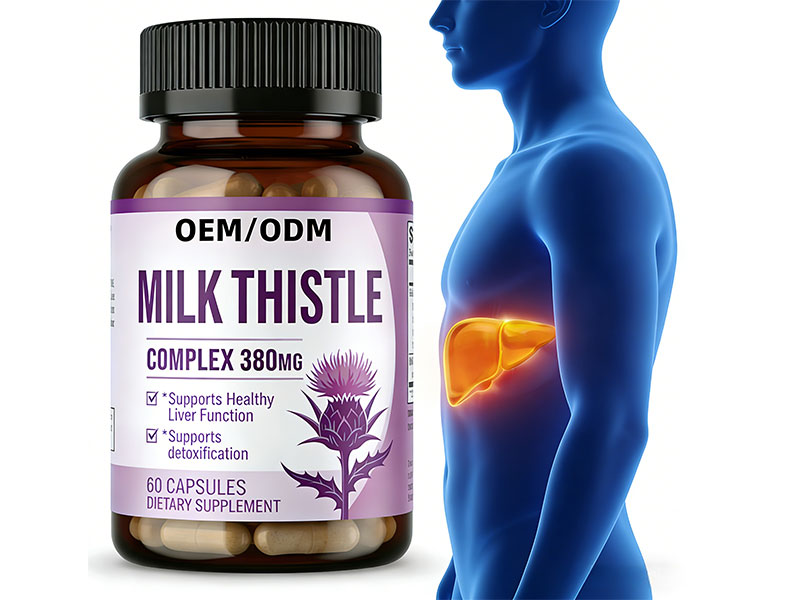
Milk thistle is not a new botanical, but the product category around it is changing quickly. In 2026, the most interesting movement is not a sudden discovery of Silybum marianum. It is the way brands are rebuilding a familiar ingredient around more precise extract specifications, standardized silymarin, combination formulas, modern dosage forms, better testing, and a broader everyday wellness story. The Vitamin Shoppe reported that searches for “liver health” on its website had risen nearly 700% during the year, while liver-cleanse sales had almost doubled, showing that the consumer conversation around this category is becoming more visible and more commercially important.
The key milk thistle supplement trends in 2026 are the shift from occasional detox positioning toward everyday liver wellness, continued strength of capsules, growing experimentation with liquids and gummies, wider use of standardized silymarin, more multi-ingredient formulas, greater interest in bioavailability, and stronger expectations for ingredient transparency, batch testing, traceability, responsible claims, and reliable repeat-order manufacturing across growing sales channels.
That combination creates a useful challenge for product teams. A milk thistle SKU may look simple at the concept stage, yet the decisions that determine whether it feels generic or genuinely differentiated sit several layers below the front label. The most useful question is no longer simply whether milk thistle has demand. It is what kind of milk thistle product can earn a place beside established capsules, premium liquids, multi-botanical blends, and standardized extracts that shoppers can already compare in seconds. The sections below look at those decisions from a practical product-development perspective.
What Is Driving Milk Thistle Demand?
Milk thistle demand is being shaped by stronger interest in liver wellness, wider use of botanical supplements, e-commerce discovery, and a gradual shift from occasional cleanse purchases toward products positioned for regular wellness routines. The opportunity is meaningful, but market momentum should be separated from clinical claims: growing demand does not establish that milk thistle can prevent, diagnose, or treat liver disease.
What Is Driving Interest in Liver Support?
Liver wellness has become easier for consumers to discover and discuss as part of everyday health routines. In June 2026, The Vitamin Shoppe reported that searches for “liver health” on vitaminshoppe.com had jumped nearly 700% during the year, while liver-cleanse sales had almost doubled. More than half of respondents in the retailer’s nationwide survey described liver health as very important to their overall wellness. The same report said the liquid brand Dose increased sales by more than 160% and represented more than 60% of the retailer’s liver-health sales. These figures come from one retailer, so they should not be treated as a universal market share, but they are a strong signal that consumer interest is widening beyond a niche herbal audience.
Commercial market estimates point in the same general direction, although published figures vary because research firms use different definitions and methodologies. Future Market Insights estimates the global milk thistle market at USD 119.9 million in 2026 and projects USD 271.1 million by 2036, equivalent to an 8.5% compound annual growth rate. Coherent Market Insights uses a broader valuation and different segmentation, but it also identifies standardized extracts and liver-health applications as major commercial drivers. The most responsible reading is directional: the category has an established base, demand is expanding, and competition is likely to become more specification-driven rather than disappearing into a generic herb segment.
For product developers, the growth signal matters most when it is translated into a real consumer proposition. Milk thistle benefits from being one of the best-known botanicals associated with liver support, but it now competes with products built around NAC, artichoke, dandelion, choline, turmeric, beetroot, ginger, and broader daily-wellness combinations. A brand that launches another ordinary capsule with no visible specification, no clear reason for the ingredient mix, and no meaningful quality story may technically enter a growing category while still giving shoppers little reason to switch. Category growth and product differentiation are related, but they are not the same thing.
| 2026 Market Signal | Reported Figure | What It Helps Explain |
| Vitamin Shoppe “liver health” searches | Nearly +700% YTD | Consumer discovery around liver wellness is rising quickly |
| Vitamin Shoppe liver-cleanse sales | Nearly 2x | Interest is translating into purchases at a major specialty retailer |
| FMI global milk thistle market | USD 119.9M | Shows an established commercial category |
| FMI 2026-2036 CAGR | 8.5% | Directional forecast for continued category expansion |
| Amazon US Top 50, July 2026 | 198,900 units | Meaningful marketplace demand among tracked listings |
| Amazon US Top 10 unit share | 67.4% | Sales are concentrated around leading products |
Are Consumers Moving Beyond Detox?
The word “detox” remains commercially visible, especially in marketplace titles and short-form product descriptions, but consumer language is broadening. The Vitamin Shoppe characterized liver health in 2026 as moving beyond an occasional response to overindulgence toward a more proactive concern associated by consumers with metabolism, vitality, and healthy aging. That shift changes how a supplement is designed. A short-term cleanse concept and a product intended to become part of a 30-day or subscription routine need different serving counts, package sizes, price-per-day targets, flavor expectations, and replenishment planning, even when milk thistle appears in both formulas.
The broader positioning also creates a responsibility to keep marketing language inside the evidence. The U.S. National Center for Complementary and Integrative Health states that there is not enough high-quality evidence to reach definite conclusions about the effects of milk thistle on health conditions in people, and trials involving several liver diseases have produced conflicting or limited findings. This distinction is important for any brand building long-term trust. It is reasonable to observe that consumer interest in liver wellness is growing; it is very different to turn that market trend into a claim that a supplement treats hepatitis, cirrhosis, fatty liver disease, or another medical condition.
In practice, the best shift is not simply replacing one buzzword with another. A credible daily-wellness product needs a formula, serving pattern, quality standard, and communication style that support repeat use. Teams should look at bottle duration, number of capsules or liquid servings, cost per serving, recurring purchase economics, and whether the product story remains understandable after the novelty of the launch disappears. When a category moves from occasional use toward routine use, operational consistency becomes part of the marketing promise because consumers encounter the product repeatedly rather than once or twice a year.
Which Sales Channels Are Shaping Demand?
E-commerce has made milk thistle unusually easy to compare. Shoppers can evaluate extract strength, standardized silymarin, serving count, combination ingredients, ratings, price, package size, and claims without leaving the search page. Future Market Insights estimates online channels at 38% of milk thistle distribution in 2026, which helps explain why specification clarity now matters so much. A vague label may have been enough when consumers depended mainly on shelf familiarity, but online shoppers can place two Supplement Facts panels side by side and immediately see whether a product is a basic herb powder, a standardized extract, or a multi-ingredient liver-support formula.
Third-party Amazon tracking gives a more granular view of the competitive environment. ASINsight estimated that the top 50 Amazon US listings associated with the search term “milk thistle supplement” sold 198,900 units in July 2026 and generated about USD 6.51 million in revenue. The top ten captured 67.4% of tracked unit volume and 73.3% of tracked revenue, while the average price across the tracked listings was USD 26.77. These are marketplace estimates rather than audited Amazon financial data, but they show a commercially active category with a meaningful concentration of sales around leading products.
The channel should therefore be defined before the formula is frozen. Amazon often rewards immediate specification clarity and a reason to choose one listing over another. A DTC site has more room to explain sourcing, testing, ingredient logic, subscriptions, and the rationale behind a premium format. Pharmacies, distributors, and established retailers may place more weight on traceability, batch documents, shelf life, label accuracy, and replenishment reliability. The ingredient can remain the same while the best commercial product around it changes substantially depending on where and how it is sold.
Which Milk Thistle Formats Are Growing?
Capsules remain the commercial center of milk thistle, but liquids, gummies, tablets, and powders are expanding how the ingredient can be positioned and consumed. Format selection should start with active loading, extract properties, serving size, taste, stability, target price, packaging, and consumer routine. A fashionable dosage form is useful only when the formula can perform reliably inside it and remain practical for repeat purchase.
Are Capsules Still the Leading Format?

Capsules remain the strongest commercial format in current market research. Future Market Insights estimates capsules at 46% of milk thistle form demand in 2026, while Coherent Market Insights estimates a 34.8% share. The percentages differ because the two reports segment the market differently, but both rank capsules first. The format suits milk thistle well because standardized botanical extracts are commonly supplied as powders, and capsules deliver those powders without requiring the consumer to taste the ingredient. They also make serving calculations, vegetarian shell options, bottle counts, and standardized-extract communication relatively straightforward.
The operational advantage is equally important. A capsule project can often move from formula design to bench sample with fewer sensory variables than a gummy or liquid. There is no need to build a sweetness system around a bitter extract, manage a gel matrix, or solve sedimentation in a liquid base. For a single standardized extract or a compact botanical combination, this simplicity can lower development risk and make batch-to-batch control easier. That is one reason capsules continue to dominate even while more visually distinctive formats attract attention online.
The weakness is sameness. If competing brands all offer 60, 90, or 120 capsules in similar bottles with similar liver-support language, a new capsule needs another layer of value. That may come from a clearly declared silymarin standardization, a cleaner ingredient system, better testing transparency, a more convenient serving, or a combination formula with a coherent purpose. Capsule capacity also places a hard boundary on formulation. A concept that looks elegant in a spreadsheet can become inconvenient if the total powder load requires four or six large capsules per day.
How Are Gummies and Liquids Expanding the Category?
Liquids show how strongly format can change the way a traditional herb is experienced. The Vitamin Shoppe’s 2026 trend report noted that Dose, a liquid liver-health brand, increased sales by more than 160% during the year and accounted for over 60% of the retailer’s liver-health sales. That result cannot be generalized to the whole global milk thistle market, but it demonstrates that consumers will accept liver-support products outside the conventional capsule when the format creates a clear routine, distinctive packaging, and a more lifestyle-oriented experience.
The technical tradeoffs are real. Milk thistle extracts can bring bitterness, color, insoluble material, or sedimentation challenges to a liquid. A commercial formula may need work on dispersion, flavor masking, preservation strategy, pH, dose measurement, container compatibility, and shelf-life behavior. Shipping also becomes more expensive because liquid products are heavier and more vulnerable to leakage or breakage. These factors do not make liquids unattractive; they simply mean the premium experience has to justify greater formulation and logistics complexity.
Gummies solve a different consumer problem by making the product easier to take for people who dislike capsules. Their challenge is active loading. A gummy has limited piece weight, and a botanical extract can quickly dominate flavor and texture when the dose becomes too high. Heat exposure, moisture migration, sugar or sugar-free systems, gel strength, color change, and long-term texture all need attention. This is why a successful capsule formula cannot simply be copied into a gummy. The product usually has to be redesigned around the physical limits of the new dosage form.
Which Format Fits Each Market?
A useful dosage-form decision starts with the target daily amount and works outward. If the formula requires a substantial botanical load, a capsule or tablet may be more practical than a gummy. If consumer experience is central to the positioning, a liquid or gummy may justify added development work. Powders offer room for larger serving weights, but milk thistle’s sensory profile can make flavor management difficult unless the product is part of a broader flavored blend. The target retail price, package duration, and distribution method should be tested at the same time rather than after the formula has already been approved.
The manufacturing brief should also consider the physical behavior of the chosen extract. Bulk density affects capsule fill volume, particle size can influence flow and blend uniformity, hygroscopic materials may require moisture-control strategies, and darker botanical extracts can limit the visual palette of liquids and gummies. Zoxizo’s documented dosage-form capabilities include capsules, tablets, gummies, liquid drops, powders, softgels, drink powders, energy gels, and tea-based products, which allows a project to compare more than one delivery option before committing to commercial production.
The most efficient projects treat formula, format, packaging, and economics as one decision. A premium glass liquid bottle, for example, may create a strong DTC experience but increase freight and breakage risk. A capsule may appear less novel but support a smaller package, longer shelf stability, and easier international shipment. A gummy may improve consumer appeal but require a higher minimum order or more development work. The right format is the one that keeps the product understandable, manufacturable, stable, and commercially sensible in the channel where it will actually compete.
| Format | Commercial Strength | Main Technical Constraint | Typical Fit |
| Capsules | Clear dosing; familiar use | Capacity and capsule count | Standardized extracts; botanical combinations |
| Tablets | Compact; scalable | Compression, hardness, disintegration | Value-focused or high-volume products |
| Gummies | Consumer-friendly experience | Taste, loading, moisture stability | Lifestyle and convenience positioning |
| Liquids | Distinctive daily routine | Solubility, sedimentation, preservation | Premium DTC and wellness concepts |
| Powders | Flexible serving weight | Flavor and dispersibility | Broader multi-ingredient blends |
How Are Milk Thistle Formulas Evolving?

Milk thistle formulas are moving beyond simple whole-herb products toward standardized extracts, focused ingredient combinations, and selected absorption-oriented delivery systems. The strongest trend is not adding the longest ingredient list. It is designing formulas in which each ingredient has a clear role, a workable amount, a compatible dosage form, a supportable claim position, a realistic finished-product cost, and a dependable sourcing path for repeat production.
Which Ingredients Are Paired With Milk Thistle?
Current marketplace products show milk thistle being paired with a wide range of botanical and nutritional ingredients. Leading Amazon US listings tracked in July 2026 included combinations with dandelion, turmeric, ginger, choline, beetroot, and artichoke. Other commercial liver-support concepts may use NAC, glutathione-related ingredients, phospholipids, or additional botanicals. This diversity reflects a shift from selling milk thistle as a stand-alone herb toward building a broader product architecture around a consumer need, but it does not mean every popular ingredient belongs in the same formula.
Each additional active changes more than the Supplement Facts panel. It changes total fill weight, powder flow, color, odor, flavor, raw-material cost, supplier count, analytical complexity, and the risk that one component becomes unavailable. In capsules, several new ingredients can increase capsule count. In a liquid, another botanical may create sediment or make flavor masking more difficult. In a gummy, a small increase in extract load can affect texture and bitterness. Experienced formulation teams therefore screen ingredients for role, feasible amount, processing behavior, regulatory status, cost, and testing implications before they become permanent parts of the concept.
A practical ingredient screen asks whether the new component improves the product enough to justify the complexity it introduces. If the only reason for adding an ingredient is that competitors use it, the formula may become longer without becoming more differentiated. A three-ingredient concept with clear specifications and sensible doses can be easier to explain and easier to manufacture than a ten-ingredient blend built mainly for front-label density. This matters especially in a category where consumers can already find very long liver-support formulas and simple standardized extracts within the same search results.
Do Multi-Ingredient Formulas Offer Better Differentiation?
Multi-ingredient formulas can create stronger differentiation when the combination has a clear logic. A single standardized milk thistle product wins on simplicity: the shopper immediately understands what is being purchased. A combination formula has to earn its complexity by creating a broader but still coherent proposition. Marketplace evidence shows both models working. In July 2026, high-volume Amazon listings included a milk thistle and dandelion capsule, a premium liquid combining milk thistle with turmeric, dandelion, ginger, and orange, and a liver-support formula containing choline, beetroot, artichoke, ginger, and dandelion alongside milk thistle or silymarin-related positioning.
The mistake is assuming that more ingredients automatically justify a higher price. Token quantities can create an impressive label while reducing formulation credibility, and a large blend can make it difficult for a consumer to understand which specification actually matters. Product teams should compare the declared amount per serving, extract standardization, total daily serving, package duration, cost per day, and the practical contribution of each ingredient. If a formula needs four capsules twice daily to include every trend ingredient, convenience may be lost even though the label looks sophisticated.
Differentiation can come from places other than ingredient count. A brand might use a better-defined silymarin extract, tighter contaminant specifications, a validated botanical identity program, a distinctive liquid routine, more transparent batch testing, organic sourcing when fully supportable, or a combination of only two or three complementary ingredients. These choices can be harder for competitors to copy than another long proprietary blend because they require operational discipline, documentation, and a supply chain capable of reproducing the same product over time.
How Is Bioavailability Becoming a Product Trend?
Bioavailability is receiving more attention because silymarin has well-known formulation limitations. A 2025 review in Frontiers in Pharmacology describes low aqueous solubility, poor intestinal permeability, and extensive first-pass metabolism as important reasons for limited oral bioavailability. The same review discusses formulation approaches including phospholipid complexes, nanoemulsions, liposomes, micelles, solid dispersions, and nanoparticle systems. Much of that work sits closer to pharmaceutical research than routine supplement manufacturing, but it explains why the question is shifting from simply how much silymarin is present to how the material is delivered.
Phosphatidylcholine complexes have human pharmacokinetic data that illustrate the principle. A crossover study published in 2019 enrolled 23 healthy volunteers and found higher plasma silybin exposure from a silybin-phosphatidylcholine complex in an oily softgel than from conventional silymarin tablets. Earlier work in nine healthy volunteers also reported substantially greater oral bioavailability for a silybin-phosphatidylcholine complex than for conventional silymarin. These studies are useful for understanding absorption, but they should not be stretched into a claim that every enhanced-delivery supplement produces superior clinical outcomes.
For commercial product development, the most useful interpretation is modest. Delivery technology can become a premium differentiator when the ingredient form is well documented, feasible for the target market, stable in the chosen dosage form, and supported by reliable supplier information. It can also increase cost and regulatory complexity. A sophisticated delivery system that cannot be explained clearly, sourced consistently, or reproduced at commercial scale may create more risk than value. Bioavailability is therefore a product-development variable, not a shortcut around evidence or compliance.
How Important Is Silymarin Standardization?
Silymarin standardization is increasingly important because the words “milk thistle” alone do not define the active composition of a raw material. Standardized extracts give product teams a measurable formulation target, support more meaningful supplier comparisons, and improve batch control. Brands should compare extract amount, declared standardization, analytical method, serving size, and batch documentation instead of relying on the largest front-label milligram number.
What Does Standardized Silymarin Mean?
Milk thistle is the botanical Silybum marianum, while silymarin refers to a mixture of flavonolignans associated with milk thistle extracts. NCCIH describes silymarin as the main constituent mixture in milk thistle extract. In commercial formulation, a standardized extract is produced to meet a defined level of a marker or group of markers, allowing a development team to work with a more precise material than generic milk thistle powder. This does not automatically establish clinical effectiveness, but it provides a clearer manufacturing specification and a stronger basis for controlling repeat batches.
Market research suggests that standardization is becoming central to how the category is segmented. Future Market Insights estimates silymarin-standardized extracts at 62% of its 2026 standardization category, while Coherent Market Insights estimates standardized silymarin extract at 42.3% of its extract-type segment. Those percentages cannot be compared directly because the two firms use different market structures, yet both identify standardized silymarin as the leading commercial extract type within their models. That common signal matters more than trying to force the estimates into one supposedly exact market share.
For a product team, the practical benefit is consistency. When a specification states an extract amount and a target silymarin percentage, R&D can calculate the nominal active contribution, purchasing can qualify suppliers against the same target, quality teams can define test expectations, and marketing can avoid vague potency language. The specification also provides a clearer reference when batches change over time. Without that foundation, two materials labeled “milk thistle extract” may behave differently in manufacturing and may provide meaningfully different silymarin profiles.
How Should Silymarin Content Be Compared?
The first step is separating raw herb weight, extract weight, herb-equivalent claims, extract ratios, and standardized silymarin content. These numbers are not interchangeable. If a formula contains 500 mg of an extract standardized to 80% silymarin, the nominal standardized fraction is 400 mg because 500 mg multiplied by 0.80 equals 400 mg. That calculation is meaningful only when the 80% specification applies directly to the material being dosed and is supported by an appropriate analytical method and batch documentation.
The same caution applies to extract ratios. A label that states 10:1 extract tells the reader something about the relationship between starting botanical material and extract, but it does not automatically tell the reader the percentage of silymarin. Likewise, a 1,000 mg proprietary liver blend gives a total blend weight without necessarily showing the individual milk thistle or silymarin contribution. Commercial comparisons become much more useful when every product is converted into the same questions: what material is used, how much is in a serving, what is standardized, and how is that specification verified?
This is also where procurement discipline can protect marketing from overstatement. A dramatic front-label number may refer to an herb equivalent rather than the literal weight of standardized extract in the serving. Before artwork is approved, technical teams should confirm the botanical source, plant part, extract specification, standardization percentage, test method, raw-material COA, proposed serving, and whether finished-product verification is expected. That sequence prevents a common problem in which the marketing headline becomes more precise than the underlying technical file.
| Label or Specification | What It Tells You | What Still Needs Checking |
| 1,000 mg milk thistle powder | Weight of botanical material | Actual silymarin content |
| 500 mg extract, 80% silymarin | Nominal 400 mg standardized fraction | Test method and batch compliance |
| 10:1 extract | Extraction ratio | Standardized silymarin percentage |
| 1,000 mg proprietary blend | Combined blend weight | Individual milk thistle amount |
| 300 mg extract per capsule | Fill quantity per capsule | Capsules per serving and standardization |
Is More Milk Thistle Always Better?
A larger milligram number is not automatically evidence of a stronger or better-quality product. It can describe whole herb, an extract, a botanical equivalent, or the total weight of a multi-ingredient blend. The difference matters because two labels displaying similar milligram figures may contain very different standardized silymarin amounts. This is one reason experienced product teams compare specifications and analytical records rather than judging potency from the largest number on the front panel.
A 2019 Scientific Reports study illustrates the quality-control challenge. Researchers analyzed 26 milk thistle supplements purchased in U.S. and Czech markets during 2016 and 2017 and reported large differences in silymarin composition, including discrepancies between measured content and declared information as well as inter-batch variation. The study is older and the sample was limited, so its findings should not be treated as the current failure rate of the whole market. Its value is showing that botanical identity, active-content specification, contaminant controls, and batch verification are practical issues rather than theoretical paperwork.
The most useful development sequence is therefore identity first, specification second, serving design third, and marketing language last. The team should know exactly what plant material is being used, what extract specification is required, how much of it is delivered per serving, and how the batch will be checked. When those pieces are clear, a product can communicate potency in a way that is easier for retailers, quality teams, and informed consumers to understand.
Which Specifications Matter to Product Developers?
A serious milk thistle specification usually extends beyond one percentage. Product developers may need the Latin name, plant part, extract ratio where relevant, standardized silymarin target, analytical method, carrier or excipient information, moisture limits, microbial criteria, heavy-metal limits, pesticide requirements, residual-solvent information, allergens, storage conditions, and shelf life. The exact list depends on the ingredient and market, but the principle is consistent: the specification should describe enough of the material that purchasing and quality teams can recognize when a future batch is meaningfully different.
Physical properties also matter because a raw material can meet chemical specification and still create manufacturing problems. Bulk density affects how much powder fits into a capsule. Particle size and flow influence blend uniformity and filling efficiency. Hygroscopic behavior can change the need for humidity controls or desiccants. Dark color and botanical odor may be acceptable in a capsule but difficult in a lightly flavored liquid or gummy. The extract should therefore be evaluated as both a chemical ingredient and a physical manufacturing material.
Supplier change control is another practical issue for repeat-order brands. A second supplier may offer the same headline silymarin percentage while using a different carrier, particle-size distribution, extraction process, or moisture profile. Those differences can affect color, fill weight, flow, taste, and even the appearance of a finished batch. For long-term programs, the best specification becomes a shared contract between R&D, sourcing, manufacturing, quality, and the brand rather than a single number copied from a supplier brochure.
Which Quality and Compliance Factors Matter?

Milk thistle quality depends on botanical identity, standardized active content, supplier qualification, contaminant controls, manufacturing consistency, finished-product testing, traceability, and responsible claims. Botanical raw materials can vary by source and batch, so serious brands need an agreed specification and risk-based testing plan. Quality documents should demonstrate what was checked, not function as decorative certificates disconnected from the actual production lot.
Which Raw-Material Specifications Should Brands Review?
Botanical sourcing deserves more attention than a simple ingredient-name check. A useful raw-material specification begins with identity: Silybum marianum, the correct plant part, and the intended powder or extract type. From there, it can address standardized silymarin, appearance, moisture, microbiological criteria, heavy metals, pesticide limits, residual solvents where relevant, allergens, storage conditions, and shelf life. The goal is not to create the longest specification possible; it is to define the characteristics that protect identity, safety, manufacturing performance, and the claims the final product intends to make.
The 2019 Scientific Reports investigation provides a useful risk example. Researchers analyzed 26 commercial milk thistle preparations and used methods targeting 323 pesticide residues, 55 mycotoxins, and 11 plant alkaloids in addition to examining silymarin composition and microbial purity. They reported substantial variability and multiple contamination concerns in the sampled products. Because the products were purchased in 2016 and 2017, this work should not be used to describe current prevalence across the entire market. It does, however, show the kinds of quality failures a botanical control program is designed to prevent.
Experienced sourcing teams therefore move through a sequence: qualify the supplier, agree the specification, review the lot-specific COA, perform or arrange the testing required by the risk assessment, and preserve traceability into the finished batch. A lower-cost extract can become expensive if it produces an out-of-spec result, an investigation, a rejected retailer file, or a reformulation late in the project. Price per kilogram matters, but it should be evaluated alongside the cost of uncertainty and the commercial consequences of inconsistent raw material.
How Do COAs and Batch Testing Support Quality?
A Certificate of Analysis is useful only when it is connected to a specific lot, a defined specification, and an appropriate analytical method. A generic COA showing a few basic items does not automatically prove the characteristic most important to the formula, such as standardized silymarin content. The testing plan should be established before production based on ingredient risk, formula complexity, dosage form, destination market, customer requirements, and the claims or specifications that need to be supported.
For milk thistle projects, relevant testing may include identity, active-content verification, microbiology, heavy metals, pesticides, residual solvents, purity, or stability-related work depending on the raw material and target market. Not every test is necessary on every batch, and specialized third-party analysis can add cost and lead time. The key is to decide deliberately rather than assuming that one standard COA covers every possible requirement. Finished-product testing also needs to be distinguished from raw-material testing because weighing, blending, filling, packaging, and storage can introduce variables after the ingredient has passed incoming inspection.
Zoxizo’s documented quality framework includes 30+ quality and testing personnel supporting raw-material review, in-process controls, finished-product inspection, and batch documentation. Its internal manufacturing facts also describe support for COA and MSDS/SDS documentation, raw-material files, batch records, third-party testing discussions, and traceability depending on project scope. For brands evaluating a manufacturing partner, this kind of evidence chain is more useful than a broad statement such as “premium quality” because it shows how a question can be traced from incoming material to finished shipment.
What Claims Create Compliance Risk?
Milk thistle requires careful claim discipline because consumers commonly associate the ingredient with liver disease topics even though a dietary supplement is not a drug. In the United States, FDA permits certain structure/function and general-well-being claims when applicable requirements are met. The responsible company must have substantiation that the statement is truthful and not misleading, include the required disclaimer, and notify FDA no later than 30 days after first marketing a dietary supplement with a qualifying structure/function claim. Disease-treatment claims fall outside that framework.
The practical boundary is important. Language about supporting normal liver function or general wellness is different from claiming that a product diagnoses, treats, cures, or prevents hepatitis, cirrhosis, fatty liver disease, or another disease. NCCIH’s evidence review reinforces the need for caution because it says that high-quality evidence is insufficient to reach definite conclusions about milk thistle for health conditions in people. A commercial team should therefore review claims against both regulatory requirements and the level of evidence available for the specific product and ingredient form.
Clean-label and certification language needs the same discipline. Organic, Halal, Kosher, Vegan, Non-GMO, and Gluten-Free are not decorative words that can be added because they improve conversion. Their use depends on ingredient sources, formulation, processing, segregation, documentation, certification status, and the rules of the target market. Packaging should be printed only after those conditions are confirmed. A strong compliance process does not weaken marketing; it helps ensure that the claims surviving review are more defensible and more likely to remain usable as the product scales.
How Do Brands Develop a Market-Ready Milk Thistle Product?
A market-ready milk thistle supplement should be designed backward from the target consumer and sales channel. The development brief should define market, positioning, price, dosage form, extract specification, combination strategy, claims, testing, packaging, and expected volume before the formula is locked. Sampling then confirms whether the concept can actually be manufactured, consumed, packaged, tested, and reproduced consistently at commercial scale.
How Should the Target Market Shape the Product?
The first useful question is not how many milligrams of milk thistle to add. It is who will buy the product, where they will see it, what they will compare it with, and what price they are prepared to pay. On Amazon, a shopper can move quickly between standardized-extract capsules, low-priced legacy products, complex multi-botanical formulas, and premium liquids. ASINsight’s July 2026 tracking showed the top ten Amazon US products associated with “milk thistle supplement” accounting for 67.4% of tracked unit volume, which illustrates how strongly established listings can concentrate attention in a marketplace environment.
A DTC brand has a different opportunity. It can spend more time explaining the source of the extract, testing approach, ingredient rationale, package experience, subscription use, and the thinking behind a premium price. A pharmacy chain or distributor may start with another set of questions: is the specification stable, can the same product be supplied next year, are the labels suitable for the intended market, what batch records are available, and how quickly can a quality issue be traced? The commercial brief should reflect those realities before the development team begins optimizing the formula.
A strong brief normally includes at least the destination market, sales channel, target consumer, benchmark products, intended retail price, target landed cost, expected monthly volume, dosage-form preference, package duration, and required documentation. Zoxizo’s documented development process includes reference-based analysis of Amazon listings, Shopify and DTC brands, TikTok trends, iHerb products, ingredient combinations, packaging directions, review pain points, and differentiation opportunities. Used well, that research helps a team avoid producing a technically valid product that has no clear reason to exist in its intended channel.
Which Formula and Format Should Brands Choose?
Formula, format, and packaging should be decided together because each one changes the others. Start with the milk thistle specification and target silymarin contribution, then determine whether the concept is a single-ingredient product or a combination, how much total material the serving requires, and whether the intended dosage form can physically accommodate it. A standardized capsule may prioritize simplicity and specification clarity. A combination capsule may require a larger serving. A gummy may need lower botanical loading or stronger flavor work. A liquid may provide a premium routine while introducing solubility and preservation questions.
Economics should be tested at the same stage. Premium standardized extracts, branded delivery systems, organic materials, complex third-party testing, custom bottles, and low-volume printed packaging can all raise landed cost before the product reaches the shelf. A technically impressive formula that cannot support the customer’s intended retail price and margin is not market ready. Conversely, the cheapest formula may create weak differentiation and make paid acquisition or retailer placement harder. Product development works best when technical feasibility and commercial economics are reviewed in parallel rather than one after the other.
Packaging should protect the formula as well as communicate the brand. Bottle size, closure system, desiccant use where appropriate, light exposure, oxygen exposure, serving device, label area, carton structure, storage, and shipping environment can all influence the finished experience. A liquid intended for international e-commerce has different breakage and freight considerations from a capsule bottle. A gummy may need stronger moisture protection than a tablet. The most efficient development teams compare a small number of realistic formula-format-packaging combinations and choose the one that balances consumer value, manufacturing risk, and repeat-order economics.
How Do Samples Reduce Development Risk?
Sampling is one of the least expensive stages at which a major product problem can still be corrected. For capsules, a sample can reveal fill-volume issues, excessive capsule size, powder flow problems, odor, color, and an inconvenient daily serving. For gummies, it can expose bitterness, active-loading limits, sticking, texture, sweetness, and color change. For liquids, it can reveal sedimentation, poor dispersion, aftertaste, container incompatibility, or an awkward dose. A sample is therefore not only something for the client to taste or photograph; it is an early technical checkpoint.
The review should be structured. Statements such as “I like it” or “make it stronger” are difficult to translate into controlled revisions. Better feedback records sweetness, bitterness, aftertaste, appearance, serving size, capsule count, viscosity, sediment, aroma, and any packaging observations. The development team can then compare version one, version two, and version three against a clear reason for each change. This becomes especially important when several people are reviewing the same product or when weeks pass between sample rounds.
Revision control prevents another common problem: manufacturing the wrong approved version. Once a sample is accepted, the exact ingredient quantities, extract specifications, flavor revision, dosage form, packaging components, artwork version, and test requirements should be locked together. If a competitor product was used as a benchmark, teams should also remember that matching the ingredient names on a label does not reproduce the competitor’s physical experience. Two formulas with similar ingredients can behave differently because of extract carriers, particle size, processing conditions, flavors, and serving design.
What Should Brands Verify Before Scaling?
Before bulk production, the project should have a controlled technical identity. The exact raw-material specification, silymarin standardization target, formula revision, serving size, dosage form, capsule or tablet specification, flavor system where relevant, packaging components, artwork, lot coding, test plan, acceptance criteria, and shipping configuration should be confirmed. The team should also define which substitutions require approval because a change in botanical supplier, capsule shell, carrier, flavor, or extract can alter the finished product even when the marketing name remains unchanged.
Scale introduces new supply-chain questions. A small market test and a recurring multi-thousand-unit program create different requirements for raw-material forecasting, packaging inventory, production scheduling, and quality documentation. Zoxizo’s documented manufacturing profile includes an approximately 17,000 m2 facility supporting R&D, controlled production, packaging, quality control, warehousing, and bulk-order delivery, as well as an approximately 1,000 m2 R&D development area, 25+ R&D personnel, and a library of more than 20,000 formulas. Those capabilities are most valuable when paired with clear forecasting and a frozen product specification rather than used as a substitute for planning.
Testing scope should also be agreed before production. If a specialized active-content, pesticide, stability, or third-party laboratory test is added after the batch is finished, the project may face additional sampling, cost, and delay. The same is true for market-specific documents or certification requirements. Finally, artwork should be checked against the final approved formula rather than an early concept deck. Products often change during development, and the label has to follow the approved reality. A launch becomes far more predictable when formula, quality, packaging, compliance, and replenishment planning are treated as one connected system.
Closing perspective. Milk thistle’s 2026 opportunity is not built on novelty; it is built on higher expectations. Consumers can compare more formulas, formats, prices, and specifications than ever before, while brands are moving toward standardized extracts, broader daily-wellness positioning, combination concepts, and more visible quality documentation. The products most likely to hold their value over time will connect an understandable consumer need with a clearly specified ingredient, an appropriate dosage form, realistic claims, risk-based testing, and a supply chain capable of reproducing the same product when demand grows. For a team developing a new milk thistle line, the best next step is usually not to ask for the strongest formula on paper. It is to define the market, the consumer, the specification, the serving experience, and the evidence that must remain true from the first sample to the hundredth production batch.
Frequently Asked Questions
What are the biggest milk thistle supplement trends in 2026?
The biggest trends are stronger everyday liver-wellness positioning, continued capsule leadership, more liquid and gummy experimentation, increased use of standardized silymarin extracts, broader multi-ingredient formulas, interest in bioavailability-focused delivery systems, and stronger expectations for testing and traceability. The commercial direction is moving away from treating milk thistle as a generic herb and toward products with clearer specifications, better-defined consumer routines, and a more defensible quality story.
Are milk thistle capsules still popular?
Yes. Current 2026 market research still identifies capsules as the leading milk thistle format. Future Market Insights estimates capsules at 46% of form demand, while Coherent Market Insights estimates 34.8% within its own segmentation model. Capsules remain practical because they suit standardized dry extracts, mask botanical taste, allow precise serving design, and are familiar to consumers. Their main challenge is differentiation in a crowded category rather than basic manufacturing feasibility.
What is standardized silymarin in a milk thistle supplement?
Standardized silymarin means the milk thistle extract is produced to meet a defined level of the silymarin flavonolignan mixture rather than being described only by total herb or extract weight. For product developers, standardization makes supplier comparison, serving calculations, quality control, and repeat-batch specifications more meaningful. It does not by itself prove clinical effectiveness, so the percentage should be evaluated together with analytical method, batch documentation, serving amount, and finished-product testing expectations.
Which ingredients are commonly combined with milk thistle?
Commercial liver-support products commonly combine milk thistle with ingredients such as dandelion, artichoke, turmeric, ginger, choline, and beetroot, while some concepts also use NAC, glutathione-related ingredients, or phospholipid systems. A combination should not be built simply by copying a competitor list. Each added ingredient needs a clear role, a workable amount, compatibility with the dosage form, appropriate regulatory status, realistic cost, and a product story that remains easy for consumers to understand.
Are liquid or gummy milk thistle supplements better than capsules?
Not automatically. Liquids and gummies can improve consumer experience and create stronger lifestyle positioning, but they also introduce technical constraints. Liquids need careful work on bitterness, solubility, sedimentation, preservation, packaging, and shipping. Gummies have limited active capacity and require control of taste, moisture, texture, and processing conditions. Capsules remain efficient for many standardized extracts. The best format is the one that fits the dose, consumer routine, stability requirements, price target, and sales channel.
What testing should a milk thistle supplement brand consider?
Testing should be based on the ingredient specification, formula, dosage form, target market, and risk assessment rather than a one-size-fits-all checklist. Depending on the project, brands may consider botanical identity, standardized silymarin content, microbiology, heavy metals, pesticide residues, residual solvents, purity, or stability-related testing. The most useful quality system links incoming raw-material controls, in-process checks, finished-product testing, lot documentation, traceability, and retained samples so that any later question can be investigated efficiently.
How should a brand start developing a private label or custom milk thistle product?
Start with a clear commercial brief rather than a finished formula. Define the destination market, sales channel, target consumer, benchmark products, target retail price, dosage-form preference, package duration, desired milk thistle or silymarin specification, combination ingredients, testing needs, and expected volume. A manufacturer can then evaluate formula feasibility, serving size, packaging, cost, sampling, and compliance requirements together. This sequence usually reduces reformulation and produces a product that is easier to scale after market validation.