Skip to content

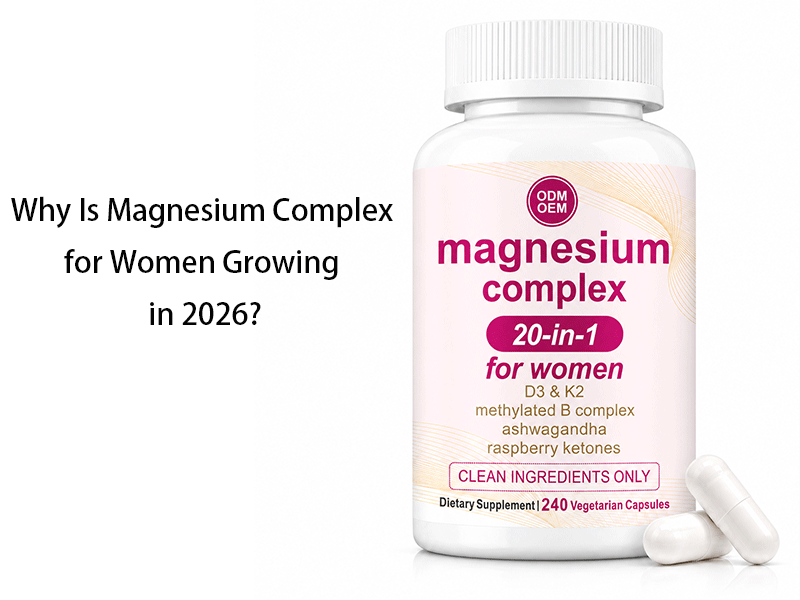
Magnesium used to be one of the quieter products in the supplement aisle. A brand could sell a bottle around a simple milligram claim and a familiar mineral name without explaining much more. That has changed. Consumers now arrive with much more specific questions about glycinate, citrate, sleep routines, stress, perimenopause, gummies, powders, multi-form blends, and supporting ingredients such as vitamin B6 or L-theanine. The category is becoming less about a single mineral and more about how that mineral fits into a woman’s daily routine, preferred format, life stage, and reason for taking supplements in the first place.
Magnesium complex for women is growing because several demand trends are converging at the same time: magnesium has become highly visible in sleep and relaxation routines, women’s wellness is becoming more personalized, midlife health is receiving more attention, and consumers increasingly want multifunctional products that simplify supplement stacks. The opportunity is real, but lasting products still depend on sensible dosing, clear labels, useful formats, credible claims, and a formulation that makes sense beyond the front-panel ingredient count.
The market signals are hard to ignore. NIQ reported in 2025 that perimenopause-support products were up 91% in units in its analysis of wellness convergence, while another NIQ women’s-health report showed magnesium-containing products up 21% in the relevant menopause-oriented data set. At Expo West 2026, SPINS reported that PMS products contributed 41% of new-item dollar growth in women’s health and menopause contributed another 13%. Those figures do not prove that every magnesium product will succeed, but they explain the environment in which a familiar mineral is being reimagined. The interesting question is no longer whether magnesium is popular; it is what kind of magnesium product will still look useful once the trend becomes more crowded.
What Is a Magnesium Complex for Women?
A magnesium complex for women is usually a supplement that combines two or more magnesium sources and may include supporting nutrients for sleep, relaxation, bone health, muscle function, or broader women’s wellness. “Magnesium complex” is not a standardized formula, so products can differ widely in forms, elemental magnesium, supporting ingredients, serving size, dosage form, and the specific consumer group they are designed to serve.
Single-Form vs Multi-Form Magnesium
A single-form product is comparatively easy to understand. Magnesium glycinate, for example, gives the product one recognizable hero ingredient and makes comparison straightforward. A multi-form complex takes a broader approach by combining glycinate with citrate, malate, taurate, L-threonate, oxide, chloride, or other sources. The commercial appeal is obvious because a complex gives the brand more to explain and more ways to differentiate itself from a basic mineral supplement. Yet the number of forms on the front label is not a reliable measure of how well the product has been designed.
A seven-form complex is not automatically more useful than a two-form formula. The practical questions are how much elemental magnesium the complete serving provides, what proportion each form contributes, whether the required raw-material mass fits into the selected dosage form, whether consumers can tolerate and conveniently take the serving, and whether each ingredient has a clear reason to be present. A well-balanced two- or three-form product can be easier to understand, easier to manufacture, and easier to use consistently than a complex built mainly to place a larger number on the front panel.
The distinction also matters because a magnesium compound and elemental magnesium are not the same number. A formula can contain a relatively large amount of magnesium bisglycinate, citrate, malate, or another compound while delivering a much smaller amount of actual magnesium. In the United States, the Supplement Facts panel declares elemental magnesium. That makes the elemental-magnesium amount more useful for comparing products than a large “magnesium complex” number that may refer to total compound weight rather than the mineral itself.
Elemental Magnesium Matters
For adult women, the U.S. National Institutes of Health lists a Recommended Dietary Allowance of 310 mg per day for ages 19-30 and 320 mg per day from age 31 onward. During pregnancy, the RDA rises to 350 mg for ages 19-30 and 360 mg for ages 31-50. These values cover magnesium from all dietary sources, including food and supplements, and they are reference intakes for healthy people rather than instructions for how much every supplement should contain.
A second number is just as important: the adult Tolerable Upper Intake Level for magnesium from supplements and medications is 350 mg per day. That upper level does not include magnesium naturally present in foods. The FDA Daily Value used for Nutrition and Supplement Facts labeling is 420 mg, which serves a different purpose again. These three numbers are often mixed together in consumer discussions, but they answer different questions: recommended total intake, supplemental upper intake, and label reference value. Good product communication should make that distinction clear instead of presenting one number as a universal target.
| U.S. magnesium reference | Amount | What it means |
| Women 19-30 years, RDA | 310 mg/day | Recommended total daily intake from all sources |
| Women 31+ years, RDA | 320 mg/day | Recommended total daily intake from all sources |
| Pregnancy, ages 19-30 | 350 mg/day | Recommended total daily intake during pregnancy |
| Pregnancy, ages 31-50 | 360 mg/day | Recommended total daily intake during pregnancy |
| Adult supplemental magnesium UL | 350 mg/day | Upper level from supplements and medications, not food |
| FDA Daily Value | 420 mg | Reference value used for %DV on U.S. labels |
These reference values are useful during product planning because they prevent the development team from treating dosage as a marketing contest. A product providing 100 mg of elemental magnesium can occupy a different role from one providing 250 mg, particularly if the formula also contains other nutrients or if the consumer is expected to use additional magnesium-containing products. The correct serving depends on the product concept, target population, intended use, local rules, and safety review rather than on the assumption that a higher number will automatically convert better.
Common Magnesium Forms
Magnesium glycinate and citrate are among the most visible forms in today’s consumer market, but they are only part of a much larger formulation toolkit. Malate, taurate, L-threonate, chloride, oxide, lactate, and other forms also appear in supplements. Each raw material has its own elemental-magnesium concentration, solubility, particle characteristics, cost, sensory profile, documentation, and evidence base. That means choosing a magnesium form is not merely an SEO or front-label decision; it is a formulation decision with direct consequences for finished-product size, taste, cost, and manufacturing behavior.
The NIH Office of Dietary Supplements notes that magnesium aspartate, citrate, lactate, and chloride tend to be absorbed more completely than oxide and sulfate. That finding is useful, but it should not be turned into a simplistic ranking in which one magnesium salt is declared universally best. Real products must also account for dose, gastrointestinal tolerance, capsule count, flavor, consumer adherence, and the rest of the formula. A form with an attractive research story may still be a poor choice if the necessary raw-material load makes the serving impractical or pushes the product beyond its target price.
What “For Women” Really Means
Magnesium itself does not become a different mineral when a brand adds “for women” to the label. The meaningful differentiation usually comes from the consumer profile, supporting ingredients, serving experience, life-stage positioning, dosage form, and the wellness priorities emphasized in the product. A formula for an evening routine should not automatically look like a formula for active women, and a product designed for midlife shoppers should not simply be a generic magnesium bottle with different colors and a new audience name.
This is where women’s wellness has become more sophisticated. Consumers increasingly expect targeted products to explain what makes them targeted. That can mean a more suitable serving size, a capsule count that fits a nightly routine, a powder flavor designed for evening use, or a small number of complementary nutrients that reinforce the same product idea. It can also mean knowing when not to add an ingredient. Pregnancy, for example, requires different nutritional and safety considerations, so a general women’s magnesium product should never be assumed appropriate for pregnancy merely because magnesium itself is an essential nutrient.
What Is Driving Demand for Women’s Magnesium Complexes?
Demand is rising because magnesium now sits at the intersection of sleep and relaxation, personalized women’s wellness, life-stage support, and simpler supplement routines. The category is no longer driven only by people seeking a basic mineral. Many shoppers encounter magnesium while searching for a specific routine or wellness priority, giving the ingredient several new entry points into everyday use and product discovery.
Sleep and Relaxation Demand
Sleep is one of the strongest discovery routes into the magnesium category. Many consumers do not begin with the question “Do I need more magnesium?” They begin with questions about bedtime routines, relaxing before sleep, non-melatonin options, muscle comfort after a long day, or which form of magnesium fits an evening supplement routine. That search path naturally brings glycinate and multi-form magnesium into the conversation, especially because social content and wellness retailers have made magnesium a familiar part of nighttime routines.
The science should be communicated with more restraint than the trend cycle sometimes allows. A 2025 randomized, double-blind, placebo-controlled trial enrolled 155 adults with self-reported poor sleep and compared placebo with magnesium bisglycinate providing 250 mg of elemental magnesium daily. At four weeks, the magnesium group showed a statistically greater improvement in Insomnia Severity Index scores, but the reported effect size was small, with Cohen’s d of 0.2. That is useful evidence for continued research and cautious product education, not a reason to promise that magnesium will treat insomnia or produce dramatic results for everyone.
That distinction can improve the commercial product rather than weaken it. A brand that explains elemental magnesium, form, serving size, and realistic use can build more durable trust than one relying on aggressive sleep promises. The strongest magnesium products usually work as part of a routine: a capsule that is easy to take consistently, a powder that creates a recognizable evening ritual, or a gummy that lowers the barrier for consumers who dislike swallowing pills. In each case, the format supports the habit while the label stays within an appropriate wellness framework.
Women’s Health Is Becoming More Specific
Women’s supplements are moving away from a one-size-fits-all multivitamin model. Products are increasingly built around life stage, need state, lifestyle, and the specific reasons women shop for wellness products. SPINS highlighted this change at Expo West 2026, reporting that PMS products contributed 41% of new-item dollar growth within women’s health, reproductive-health products contributed 15%, and menopause products contributed 13%. Those numbers describe a category that is becoming more segmented and more specific, not simply larger.
This matters for magnesium because the ingredient is already familiar. A brand developing an unfamiliar botanical must first teach consumers what it is; a magnesium product starts with much higher recognition. The real work is explaining how the chosen form, dose, format, and supporting ingredients fit a particular routine. That allows magnesium to move into evening wellness, active-lifestyle nutrition, midlife products, and broader daily-mineral concepts without requiring the brand to invent a new category from scratch.
The opportunity also comes with a boundary. A women-focused product does not need to become a hormone-treatment product, and it should not imply that magnesium treats menstrual disorders, menopause, anxiety, or insomnia. More precise positioning is often stronger positioning. If the product is designed for nighttime wellness, say what the formula contains and how it fits that routine. If it is designed for everyday mineral support, keep that story clear. Trying to solve every women’s-health need in one bottle usually makes the formula less believable.
Perimenopause and Midlife Wellness
Perimenopause has moved from a relatively quiet health conversation into a visible consumer category. NIQ reported that 54% of women aged 35-49 in its 2025 analysis were actively seeking supplements for menopause-related concerns. The same report noted that U.S. search interest for “menopause” had risen 32.1% over the preceding year and that magnesium-containing products in the analyzed women’s-health set were up 21%. A separate NIQ analysis reported perimenopause-support products up 91% in units, illustrating how quickly life-stage personalization is developing.
These numbers help explain why magnesium appears more often in midlife wellness assortments, but they do not justify presenting the mineral as a treatment for menopause. Midlife shoppers may be thinking about sleep quality, daily mineral intake, muscle function, bone health, energy, and broader wellbeing at the same time. Magnesium can participate in some of those nutritional conversations while remaining within responsible structure/function and general-wellness boundaries. That is a stronger long-term position than attaching the product to a medical outcome the evidence and regulations do not support.
From a development perspective, midlife positioning also changes the formula brief. The product may need a different balance of simplicity, capsule count, serving size, complementary nutrients, and packaging than a social-commerce gummy aimed at younger consumers. This is where a clear target consumer becomes valuable. “Women 18-65” is usually too broad to produce an especially coherent product. A narrower consumer and use occasion make it easier to choose forms, supporting ingredients, claims, and price architecture that actually fit together.
Consumers Want Fewer Bottles
Convenience is another powerful driver. A consumer may already use a multivitamin, vitamin D, magnesium, an evening relaxation supplement, and another product for a specific wellness goal. Once the daily routine becomes five or six bottles, the attraction of a carefully designed combination product is easy to understand. The value is not just fewer pills; it is fewer decisions, a simpler replenishment routine, and a clearer reason to keep using one product consistently.
The mistake is assuming that “all-in-one” means “put everything into one formula.” Minerals already consume substantial formulation space, and adding L-theanine, inositol, vitamins, amino acids, or botanicals can quickly increase capsule count or gummy size. The product may also become harder to explain. A useful combination formula normally has one hero ingredient, a small number of supporting ingredients that reinforce the same need state, and a serving that remains realistic for daily use.
This simplification trend also favors more thoughtful line extensions. Instead of one overloaded women’s magnesium complex claiming to support sleep, hormones, beauty, energy, digestion, and bones, a brand may be better served by two or three clearly differentiated products. That approach gives consumers an easier choice and allows each formula to use meaningful amounts rather than spreading limited serving space across a long list of fashionable ingredients.
Which Magnesium Forms Are Consumers Looking For?
Consumers most often encounter glycinate and citrate, followed by premium or specialty forms such as malate, taurate, and L-threonate. The right choice depends on more than search popularity. Product teams need to compare elemental-magnesium contribution, evidence, tolerance, supplier specifications, serving size, cost, and format feasibility before deciding whether a single-form product or a multi-form complex is the stronger commercial option.
Glycinate and Citrate
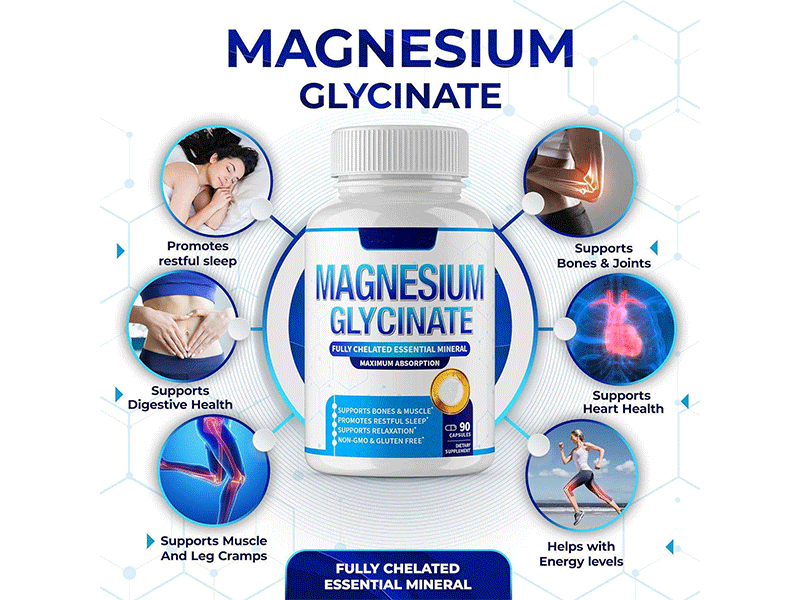
Magnesium glycinate has become one of the most recognizable forms in current wellness products, especially in evening and relaxation-oriented categories. That recognition is commercially useful because consumers often arrive already knowing the ingredient name. It reduces the amount of education required on the product page and gives a new SKU an immediate connection to a well-established search behavior. The risk is overstatement: strong consumer awareness does not prove that glycinate is universally superior for every person, every dose, or every intended outcome.
Magnesium citrate offers a different combination of familiarity and evidence. The NIH includes citrate among the magnesium forms that tend to be more readily absorbed than oxide, and citrate has been used in comparative human research for decades. From a formulation standpoint, however, the choice between citrate and glycinate is not merely about absorption. Raw-material cost, elemental-magnesium percentage, density, sensory properties, intended serving, and gastrointestinal experience can all influence whether a form is practical in capsules, powders, tablets, or gummies.
A development team should therefore resist choosing ingredients solely because competitors use them. If a brand already has a clear glycinate proposition, adding citrate only to turn a one-form product into a “complex” may contribute little. If the product is intended as a broader daily-mineral formula, the combination may make more sense. The useful test is whether the added form improves the product concept, not whether it increases the ingredient count.
Malate, Taurate, and L-Threonate
Malate, taurate, and L-threonate appear frequently in premium multi-form magnesium products because they give brands additional stories beyond basic glycinate or citrate. Malate is often seen in active-lifestyle formulas, taurate in more specialized complexes, and L-threonate in premium cognitive-wellness positioning. These are market patterns rather than proof that each form has a unique outcome in every consumer, so claims need to follow the actual evidence rather than the retail narrative surrounding the ingredient.
L-threonate is a useful example. A randomized, double-blind, placebo-controlled trial published in 2026 enrolled 100 adults aged 18-45 with self-reported dissatisfied sleep and tested 2 grams per day of a branded magnesium L-threonate ingredient for six weeks. The study reported improvements in several cognitive measures and some subjective outcomes, but it found no group differences in objective sleep outcomes measured by a wearable device. That result is more useful than a broad statement that L-threonate “improves sleep,” because it shows both the areas where results were observed and the limits of the study.
The same discipline applies to malate and taurate. If a form is added, the brand should be able to explain what role it plays, what supplier specifications support it, how much space it requires, and how it changes the finished formula. Premium ingredients can support premium positioning, but only when their cost and dose are compatible with the serving and the retail price. Otherwise, they may add complexity without adding enough consumer value.
| Magnesium form | Common market position | Product-development consideration |
| Glycinate / bisglycinate | Evening wellness, premium daily magnesium | Strong consumer recognition; review assay, raw-material mass, and serving size |
| Citrate | General magnesium, daily mineral support | Established absorption data; formulation and GI experience still matter |
| Malate | Active-lifestyle and multi-form products | Useful differentiation when the positioning is clear |
| Taurate | Premium multi-form complexes | More specialized awareness; verify rationale and supplier specifications |
| L-threonate | Cognitive and premium wellness | Higher-cost positioning and lower elemental density can affect serving economics |
| Oxide | Cost-efficient, high elemental density | Absorption profile and gastrointestinal positioning require careful consideration |
More Forms Do Not Automatically Mean Better
The multi-form category has created a simple marketing ladder: three forms sound broader than one, seven forms sound more advanced than three, and ten forms can look even more premium. The problem is that the number of forms does not reveal whether the formula delivers a meaningful amount of elemental magnesium, whether one form contributes almost all of it, or whether several sources are included mainly to create a stronger front-label number.
A useful formula review asks five practical questions. Does every form contribute a meaningful amount? Is there a credible reason for including it? Can the required raw-material mass fit the chosen format? Does it materially raise cost or daily pill count? Can the brand explain the blend without making claims that outrun the evidence? If the answer to several of those questions is no, a simpler formula may be the better product even if it looks less dramatic in advertising.
Supplier documentation is essential here because actual assay determines elemental-magnesium contribution. Development teams should calculate the formula from the specifications of the exact raw materials they intend to buy rather than from generic percentages found online. That calculation affects capsule fill, powder serving weight, gummy feasibility, labeling, and cost. It is one of the reasons serious formulation work needs to happen before the marketing team locks the front panel.
Bioavailability Needs Context
Bioavailability is a useful scientific concept, but it is often reduced to a one-line ranking that ignores how supplements are actually used. The NIH notes that forms such as citrate, lactate, chloride, and aspartate tend to be absorbed more completely than oxide and sulfate. That gives formulators an evidence-based starting point, but it does not answer every commercial question. Dose, gastrointestinal tolerance, diet, medication use, health status, and consistency of use can all change the real-world experience of a product.
A theoretically attractive form can still create a poor finished product if the required serving is too large, the capsules are difficult to swallow, the powder tastes unpleasant, or the formula causes enough digestive discomfort that consumers stop taking it. Adherence is part of practical effectiveness. The product that people can understand and use consistently may outperform a technically sophisticated formula that looks better on paper but creates friction every day.
For this reason, the best formulation decisions balance research with physical product reality. Elemental-magnesium target, supplier assay, dose frequency, format, cost, sensory experience, and expected consumer behavior all need to be considered together. A magnesium complex becomes credible when those decisions reinforce one another, not when one scientific term is used to carry the entire product story or compensate for an inconvenient finished serving.
How Are Women’s Magnesium Formulas Evolving?
Women’s magnesium products are evolving from simple mineral supplements into targeted daily-wellness formulas built around specific routines. The biggest changes are more selective ingredient combinations, clearer life-stage or need-state positioning, and greater emphasis on convenience. The strongest products still keep magnesium at the center, using supporting ingredients only when they strengthen the same consumer proposition and remain practical at a meaningful serving size.
Supporting Ingredients
Vitamin B6, L-theanine, vitamin D, glycine, inositol, taurine, and selected botanicals all appear in modern magnesium formulas, but they do not belong in the same product by default. Each ingredient changes the concept. L-theanine can reinforce a calm-evening position, vitamin D can move the product toward broader nutritional or bone-health support, and inositol may shift the conversation toward a different women’s-wellness need state. The formulation should have one primary idea rather than a collection of unrelated popular ingredients.
Every supporting ingredient also creates technical consequences. It consumes physical space in the serving, can change taste or mouthfeel, may increase cost, introduces additional supplier documents, and can create new stability or claim questions. A capsule that looks elegant in a presentation may require four or five units once the raw-material weights are calculated. A gummy may become too large or too mineral-tasting. A powder may be feasible physically but difficult to flavor. These are not small manufacturing details; they directly affect repeat use and customer reviews.
The most reliable approach is to give every ingredient a job. Magnesium remains the hero, supporting ingredients reinforce the same routine, and optional differentiators are added only if they do not compromise dose, clarity, or user experience. This sounds less exciting than an ingredient-heavy concept deck, but it usually produces a more believable product, a cleaner consumer story, and fewer compromises when the formula moves from concept to production.
From Ingredient Products to Need-State Products
Women’s wellness is increasingly organized around need states rather than traditional supplement aisles. NIQ described this shift in 2025 as consumers shopping around priorities and problems instead of simply shopping by product category. That helps explain why magnesium now appears in nighttime powders, relaxation gummies, active-lifestyle formulas, midlife products, and functional beverages instead of remaining confined to a conventional mineral capsule.
For brands, the shift changes the development sequence. A traditional ingredient-led product starts with “We want to launch magnesium glycinate” and then builds a label around it. A need-state product begins with a more useful brief, such as “We want a simple evening magnesium product for women who dislike melatonin and prefer a drinkable routine.” The second brief immediately gives the development team more direction on form, flavor, supporting ingredients, serving size, packaging, and claims.
This does not mean the product should promise to solve the consumer’s problem in medical terms. Need-state positioning still needs careful claim boundaries. A nighttime product can support a calm evening routine without claiming to treat insomnia; a midlife product can be designed around women’s wellness without claiming to correct hormonal disorders. Clear positioning and conservative claims are compatible, and that combination often holds up better as platforms and regulators become stricter about health language.
All-in-One Formulas Need Restraint
It is tempting to turn a women’s magnesium supplement into a single product for sleep, stress, hormones, beauty, energy, bone health, digestion, and mood. The marketing slide can look impressive because every major wellness theme appears in one place. In the finished dosage form, however, the formula often becomes crowded. Minerals already require meaningful raw-material mass, and adding amino acids, vitamins, botanicals, and other actives can push capsule count, gummy size, powder serving weight, and cost well beyond the original concept.
Reducing all of those ingredients to tiny amounts is not a strong solution. The product may then have a long Supplement Facts panel but little clarity about what the consumer is actually buying. A more disciplined structure uses a recognizable hero ingredient, a small number of supporting actives, and optional differentiation that does not compromise the first two. The consumer should still understand the product after reading the label without seeing an advertisement or watching a three-minute explanation.
Restraint also creates room for future products. A brand with one focused nighttime magnesium SKU can later develop an active-lifestyle mineral product or a midlife daily-wellness formula without making the original product obsolete. A portfolio built around distinct consumer occasions is often easier to merchandise and easier to explain than one overloaded formula trying to own the entire women’s wellness category.
Formula Feasibility Comes Before the Front Label
A concept such as “seven forms of magnesium plus L-theanine and B6” may sound straightforward until every ingredient is converted into actual raw-material weight. The development team must calculate elemental-magnesium contribution from supplier assays, determine the quantity of each compound required, add supporting ingredients and excipients, and then test whether the full serving fits into the intended capsules, gummies, tablets, or powder format. Only after that work can the front-panel claims be finalized responsibly.
For established brands, this feasibility stage is where an experienced product-development manufacturer can prevent expensive mistakes. Zoxizo’s documented capabilities include a 20,000+ formula library, 25+ R&D personnel, approximately 1,000 square meters of R&D trial space, and development work that considers target market, ingredient strategy, dosage-form feasibility, flavor, stability, cost, packaging, and compliance before bulk production. The same documentation describes sample trials, sensory evaluation, solubility checks, texture adjustment, and early-stage stability observation as part of product development.
The practical value of that process is not simply speed. It is the ability to challenge a concept before the brand pays for large volumes of raw materials or custom packaging. A product can be reformulated while the cost of changing direction is still low. That is particularly important in magnesium, where raw-material mass, capsule count, gummy loading, and taste can change the economics of a concept much more than a spreadsheet suggests.
Do Capsules, Gummies, and Powders Serve Different Needs?
Yes. Capsules, gummies, and powders can all work for women’s magnesium, but they solve different product problems. Capsules usually offer the simplest route for mineral-heavy formulas, gummies prioritize convenience and lifestyle appeal but have tighter loading limits, and powders provide more physical room for active ingredients while demanding more sensory work. Format should be chosen alongside the formula because it directly affects dose, cost, packaging, and daily use.
Capsules for Formula Efficiency
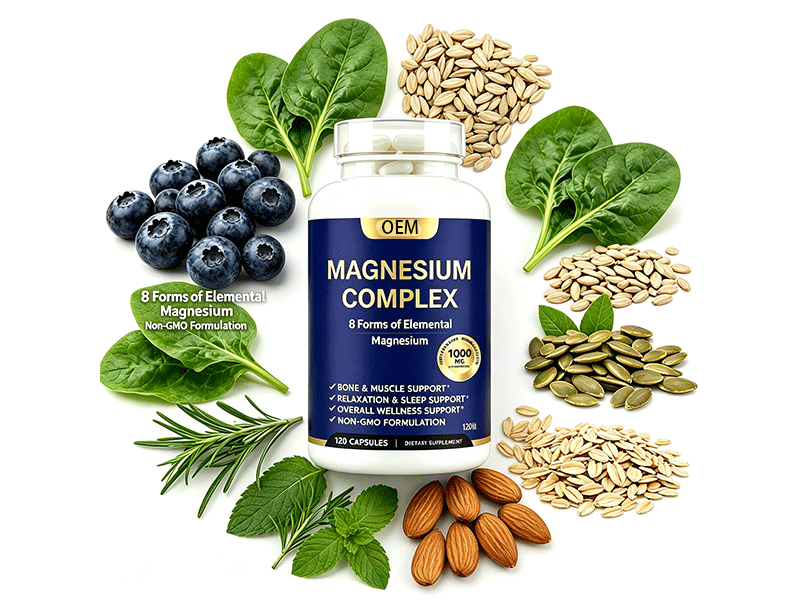
Capsules are often the most straightforward format for magnesium complexes because they avoid the taste and texture challenges of gummies and powders. Multiple dry mineral ingredients can be blended and filled without a flavor system, and the format is familiar to consumers who already take supplements. This makes capsules particularly useful for premium multi-form products in which the brand wants ingredient flexibility without turning the product into a beverage or confectionery project.
The limitation is fill volume. A target of 200 mg of elemental magnesium does not mean that only 200 mg of magnesium raw material needs to fit into the capsules. Depending on the selected forms and supplier assays, the compound weight can be much higher. Supporting ingredients add more mass, while flow agents and other excipients may also be required. A concept that appears to fit into two capsules can easily become a three- or four-capsule serving once the formula is converted from marketing quantities into manufacturing quantities.
Capsule count influences more than convenience. It changes bottle count, serving count, capsule-shell cost, filling time, bottle dimensions, label size, carton configuration, freight weight, and warehouse density. A 30-serving bottle requiring four capsules daily contains 120 capsules, the same count as a 60-serving product requiring two per day, but the consumer proposition and economics are very different. These calculations should be made before the final package size is approved.
Gummies for Convenience and Lifestyle Appeal
Gummies can make magnesium feel less clinical and more like part of an everyday wellness routine. They are visually appealing, easy to demonstrate in social content, and attractive to consumers who dislike swallowing capsules. For brands selling through DTC, Amazon, TikTok Shop, or retail environments where packaging and sensory experience strongly influence trial, that convenience can create a real commercial advantage.
Magnesium, however, is not an effortless gummy ingredient. Mineral raw materials can contribute bitterness, chalkiness, saltiness, or other off-notes, and high active loading can affect texture and piece weight. The developer must balance the elemental-magnesium target against the gelling system, sweetness, acidity, flavor strength, moisture, serving count, and finished-piece size. If the desired formula cannot fit comfortably into two gummies, the team may need to increase the serving count, lower the magnesium target, remove supporting ingredients, or reconsider the dosage form.
Packaging also matters because gummies are sensitive to moisture and temperature. Hot warehouses, long shipping lanes, weak moisture barriers, or an unsuitable bottle configuration can affect finished-product quality over time. A gummy should therefore be treated as a complete formulation-and-packaging system rather than a capsule formula that has simply been moved into a more attractive format, especially when the product will pass through warm climates or long e-commerce fulfillment routes.
Powders for Higher Ingredient Loads
Powders provide considerably more physical room than capsules or gummies, which makes them attractive for broader magnesium formulas. A scoop or stick pack can accommodate several grams of material, allowing the developer to use larger quantities of magnesium compounds and still have room for complementary ingredients. This is especially useful when the product concept involves a nighttime drink, an active-lifestyle mineral blend, or a flavored daily wellness routine rather than a traditional pill experience.
The trade-off is sensory performance. Minerals can create bitterness, chalkiness, metallic notes, sediment, or poor mouthfeel, and those problems become very noticeable in a beverage. Solubility, dispersibility, sweetness, acidity, aroma, serving volume, and flavor intensity all have to work together. A powder that is nutritionally elegant but unpleasant to drink may generate poor repeat purchase regardless of how strong the ingredient story looks online.
Powders also create a different habit. A capsule can be swallowed in seconds, while a powder requires water, mixing, and several minutes to consume. That can be an advantage for an evening ritual because the drink becomes part of the routine. It can be a disadvantage for consumers who prioritize speed and portability unless individual stick packs or sachets are used. Format therefore shapes behavior as much as it shapes manufacturing.
| Format | Main advantage | Main constraint | Practical development focus |
| Capsules | Formula flexibility without flavor burden | Fill volume and daily capsule count | Density, flow, serving count, swallowability |
| Gummies | Strong convenience and lifestyle appeal | Mineral loading, taste, texture, moisture | Flavor masking, piece count, stability, packaging barrier |
| Powder | More room for magnesium and supporting actives | Taste and mixing experience | Solubility, sediment, flavor, serving weight |
| Stick-pack powder | Portable, pre-measured serving | Packaging complexity and higher print/setup requirements | Fill accuracy, film barrier, pack dimensions |
| Tablet | Efficient for some mineral formulas | Compression, disintegration, swallowability | Hardness, tooling, coating, tablet size |
Serving Size Changes the Economics
Dosage form has a direct effect on cost. A four-capsule serving can require twice as many capsules, more filling time, and a larger bottle than a two-capsule serving. A four-gummy serving can increase bottle size and shipping weight dramatically. A powder with a five-gram serving consumes packaging and freight differently from a two-gram serving. These differences are easy to overlook during concept development because the ingredient cost is often the first number everyone discusses.
At scale, packaging and serving architecture can become just as important as the raw-material cost. Bottle dimensions affect case pack, pallet efficiency, Amazon fulfillment fees, and shelf presence. Stick packs may improve portability and dose control but introduce film-printing minimums and additional production steps. Gummies may improve conversion while increasing weight and temperature risk in transit. None of these formats is inherently better; each creates a different operating model for the brand.
This is why early feasibility sampling is so valuable. A team can compare a three-capsule formula with a flavored powder version, or a two-gummy formula with a lower elemental-magnesium target, before it commits to large quantities of packaging. The best format is usually the one that protects the nutritional concept while creating the least friction for the consumer and the supply chain.
How Should Brands Evaluate This Product Opportunity?
Brands should evaluate women’s magnesium as a complete product concept, not simply as a rising keyword. A strong opportunity has a defined consumer, clear use occasion, rational elemental-magnesium target, appropriate forms, practical dosage form, defendable claims, reliable testing, and sustainable economics. Trend demand can create discovery, but product clarity, user experience, repeatability, and supply-chain performance determine whether the SKU remains valuable after the category becomes more competitive.
Start With the Consumer, Not the Ingredient Count
Before choosing three, five, or seven magnesium forms, the team should define who is actually expected to use the product. A 25-year-old consumer looking for a simple evening capsule does not necessarily need the same formula as a 45-year-old consumer shopping in a midlife-wellness category or an active woman looking for a broader daily mineral product. Those consumers may prefer different formats, supporting ingredients, serving sizes, price points, packaging, and explanations.
Channel is equally important. An Amazon product needs clear comparison points, strong search relevance, and an easy-to-understand Supplement Facts panel because shoppers often compare several listings quickly. A DTC brand has more space to educate consumers and may support a more differentiated formula or subscription routine. Pharmacy and health-retail channels often place more weight on documentation, predictable supply, shelf clarity, and conservative claims. Social-commerce products benefit from formats and ideas that can be explained visually within seconds.
A useful product brief therefore defines the target consumer, target market, primary use occasion, preferred format, expected daily serving, target retail price, competitive references, and the specific reason the product should exist. Once those choices are clear, form selection becomes much easier. Without them, the formulation team is effectively being asked to create a product for everyone, which usually produces a product that feels distinctive to no one.
Balance Dose, Format, and Cost
Magnesium product development is a three-way negotiation between nutritional intent, physical feasibility, and commercial economics. The elemental-magnesium target determines how much raw material is needed. Raw-material mass affects capsule count, gummy loading, or powder serving size. Supporting ingredients increase the total further. The dosage form then changes packaging, freight, manufacturing time, fulfillment cost, and consumer convenience. A change made in one part of the formula can therefore move several other parts of the business at the same time.
The concept should be stress-tested before bulk production. If the intended formula requires four large capsules twice daily, the team should ask whether the consumer will realistically maintain that routine. If a gummy only works by cutting the original magnesium target in half, the brand should decide whether the sensory advantage is worth changing the nutritional proposition. If a premium raw material pushes manufacturing cost beyond the planned retail architecture, it may be better used in a more premium SKU rather than forced into the launch formula.
Established brands also need room for distribution economics. The ex-factory cost is not the final cost of selling the product. Freight, fulfillment, marketplace fees, promotions, samples, returns, advertising, distributor margins, and retail margins can all sit between manufacturing cost and the final shelf price. A product that looks profitable in the formulation spreadsheet can become difficult to scale if those costs are ignored during development.
Claims Need to Be Designed Early
Claims should be considered while the formula is being designed, not after bulk production is complete. In the United States, structure/function claims for dietary supplements must be truthful, non-misleading, and substantiated, and they cannot claim to diagnose, treat, cure, or prevent disease. That creates a meaningful boundary between language about supporting normal physiological functions or general wellness and statements that suggest treatment of insomnia, anxiety, menopause, hormonal disorders, or other medical conditions.
Magnesium for women sits close to several high-interest health topics, so the temptation to make aggressive claims can be strong. A product page may want to talk about sleep, stress, hormones, muscle function, bone health, and mood at once. The more specific the claim becomes, however, the more important the evidence and regulatory review become. A safer and often more credible approach is to keep the product promise narrow enough that the formula, label, and supporting evidence tell the same story.
This is also helpful for AI search and long-term SEO. Pages that distinguish established nutrition facts from emerging evidence, explain limitations, and avoid medical overclaiming are more likely to remain useful after the initial trend wave. They give search engines and AI systems clearer factual statements to extract, while giving human readers a reason to trust the brand’s explanation rather than treating the page as another promotional supplement article.
Testing and Supply Matter After the Trend
The first sample proves only that a concept can be made once. A commercial product needs to be reproducible across raw-material lots, production runs, seasons, and increasing order volumes. That means raw-material identity, supplier specifications, COAs, in-process controls, finished-product testing, microbiological and heavy-metal requirements where appropriate, packaging integrity, batch documentation, and traceability all become part of the product rather than administrative tasks around it.
For brands evaluating a manufacturing partner, these systems matter more as order volume grows. Zoxizo’s company documentation lists 30+ quality and testing personnel supporting raw-material review, in-process checks, finished-product inspection, and batch documentation. The same documentation describes a 17,000-square-meter manufacturing facility, 100,000-class clean production workshops, multiple dosage-form capabilities, and support for COA, MSDS/SDS, raw-material documents, batch files, and testing discussions depending on the product and market. These capabilities are most valuable when the brand expects repeat orders rather than a one-time trial run.
A serious development conversation should therefore move beyond “Can you make a ten-form magnesium product?” The more useful questions are who the product is for, what one serving should realistically deliver, which forms and supporting ingredients have a clear role, whether the chosen format is pleasant enough for daily use, what claims can be supported, and whether the same specification can still be produced consistently when demand is ten times larger. Those questions are less glamorous than a trend headline, but they are much closer to what determines a durable supplement business.
Magnesium complex for women is likely to remain an important product-development category even after the current wave of social attention becomes less intense. The underlying forces are broader than one ingredient trend: women are shopping more specifically by life stage and need state, sleep and relaxation remain major wellness priorities, functional ingredients are crossing into new formats, and consumers increasingly value products that simplify daily routines. The brands that last will not be the ones that simply add another magnesium form. They will be the ones that make the formula easier to understand, easier to take, easier to trust, and practical to manufacture repeatedly at commercial scale.
Is magnesium complex better than magnesium glycinate alone?
Not automatically. A magnesium complex may combine several sources to create a broader formulation story, while magnesium glycinate provides a simpler single-form proposition that many consumers already recognize. The better choice depends on the elemental-magnesium target, intended use, supporting ingredients, dosage form, gastrointestinal tolerance, cost, and how clearly the product can be explained. A well-designed single-form product can be stronger than a poorly balanced seven-form complex, so ingredient count should never be the only comparison point.
Which magnesium is most commonly used in women’s supplements?
Magnesium glycinate and citrate are among the most commonly encountered forms in women’s wellness products, while malate, taurate, L-threonate, oxide, and other forms appear in broader complexes. Glycinate is especially visible in evening and relaxation-oriented products, whereas citrate is widely used in general magnesium supplementation. The exact form should be selected according to the intended serving, elemental-magnesium contribution, supplier specifications, evidence, dosage format, tolerance, and cost rather than popularity alone.
How much magnesium do women need each day?
According to the NIH, the Recommended Dietary Allowance for adult women is 310 mg per day for ages 19-30 and 320 mg per day from age 31 onward. Pregnancy increases the RDA to 350-360 mg depending on age. These figures refer to total intake from food and supplements. The adult upper limit of 350 mg per day applies specifically to supplemental magnesium and magnesium from medications, not to magnesium naturally present in foods.
Is magnesium glycinate proven to improve sleep?
Magnesium glycinate and bisglycinate are widely used in nighttime products, but the evidence should be described carefully. A 2025 randomized controlled trial in 155 adults with poor sleep found a statistically greater improvement in insomnia-severity scores with 250 mg of elemental magnesium from bisglycinate than with placebo after four weeks, but the effect size was small. The result supports continued interest and research, not a claim that magnesium glycinate treats insomnia or works the same way for everyone.
Can magnesium complex be made as gummies?
Yes, magnesium complexes can be developed as gummies, but mineral loading makes the format more challenging than a simple vitamin gummy. The required magnesium compound weight can affect taste, chalkiness, texture, piece size, moisture behavior, and the number of gummies needed per serving. A high elemental-magnesium target combined with several supporting ingredients may be more practical in capsules or powder, so feasibility testing should happen before the brand commits to a gummy format or printed packaging.
What should a brand check before developing a women’s magnesium product?
A strong development brief should define the target consumer, target country, primary wellness need, elemental-magnesium target, preferred magnesium forms, supporting ingredients, dosage form, daily serving, price position, packaging, claims, and testing requirements. The team should then confirm raw-material specifications, actual elemental contribution, serving feasibility, sensory quality, label language, and production economics. This process reduces the risk of approving an attractive marketing concept that becomes too expensive, too large, or too difficult to manufacture consistently.
Are more magnesium forms a stronger selling point?
They can be a selling point, but only when the forms have a defensible role in the finished formula. A higher form count may improve perceived differentiation, yet it can also create a crowded label, higher cost, greater raw-material mass, and token inclusion levels. Consumers and experienced product teams increasingly look beyond “7-in-1” or “10-in-1” language to the elemental-magnesium amount, serving size, ingredient rationale, evidence, and actual product experience. Meaningful formulation is a more durable advantage than form count alone.