 Skip to content

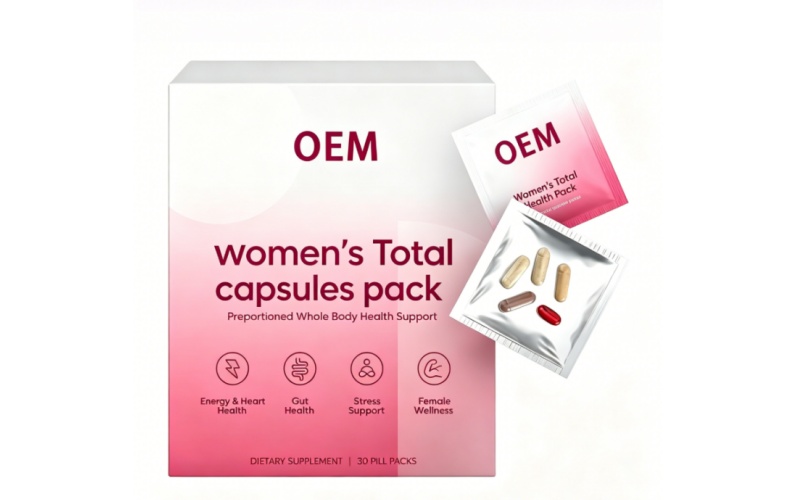
Women’s supplements are changing in a more meaningful way than simply adding another botanical to a multivitamin. The market is becoming more specific about life stage, more demanding about evidence, and more creative about the way products fit into everyday routines. A woman choosing a cycle-support gummy, an active woman taking creatine, a consumer preparing for pregnancy, and someone entering perimenopause may all shop in the same broad category, yet they expect very different formulas, formats, claims, and experiences.
The leading women’s supplement product trends in 2026 are life-stage-specific nutrition, menopause and perimenopause support, female-focused creatine, reproductive and PMS products, gut and intimate wellness, multifunctional collagen, sleep and stress support, convenient dosage forms, and more personalized formulas. The strongest products combine a clearly defined consumer need with credible ingredients, workable serving levels, suitable formats, compliant claims, and repeatable manufacturing quality.
That sounds straightforward until a product team tries to turn a trend into something people will actually use every day. A fashionable ingredient may work beautifully in a capsule but taste unpleasant in a gummy. A seven-benefit formula may look impressive on a concept sheet yet become expensive, under-dosed, difficult to manufacture, or confusing on a shelf. The more useful story in 2026 is therefore not which ingredient is loudest online, but which product concepts can survive the full journey from market signal to formulation, sampling, compliance review, production, repeat purchase, and long-term line expansion.
What Is Driving Women’s Supplement Demand in 2026?
Women’s supplement demand in 2026 is being shaped by life-stage specificity, preventive wellness, active aging, personalization, easier daily routines, and higher expectations for evidence and transparency. Instead of relying on one generic “women’s formula,” brands are developing products around menstrual wellness, reproductive health, pregnancy, perimenopause, menopause, performance, digestion, sleep, beauty, and healthy aging, with each need influencing formulation and format decisions.
Life-Stage Demand
The clearest structural change is that “women’s health” no longer behaves like one broad product category. A formula created for an active 25-year-old does not automatically make sense for a woman preparing for pregnancy or someone managing the transition into menopause. Innova Market Insights reported a 6% compound annual increase in supplement launches carrying women’s-health positioning between October 2022 and September 2025, suggesting that manufacturers and brands are increasingly creating products around narrower and more recognizable use cases rather than relying only on general multivitamin positioning.
SPINS data presented around Natural Products Expo West 2026 shows the same movement at the subcategory level. PMS products contributed 41% of new-item dollar growth in women’s health, while reproductive health contributed 15% and menopause 13%. Those figures describe contributions to new-item growth rather than total category market share, but they are still useful because they show where product development activity is gaining traction. For a product team, this means a narrow life-stage concept can now carry more commercial relevance than an undifferentiated “for women” label.
| 2026 Market Signal | Reported Data | Product-Development Meaning |
| Women’s-health supplement launches | +6% CAGR, Oct. 2022-Sep. 2025 | Targeted innovation is expanding |
| PMS products | 41% of women’s-health new-item dollar growth | Cycle-focused concepts show strong innovation activity |
| Reproductive health | 15% of new-item dollar growth | Fertility and reproductive wellness are becoming clearer subcategories |
| Menopause | 13% of new-item dollar growth | Midlife wellness is becoming a major product platform |
| Menopause-claim launches | +17% globally, Apr. 2021-Mar. 2026 | Life-stage specialization is expanding internationally |
The important point is not that every growing segment deserves a new SKU. Growth data becomes useful only when it is paired with a realistic target consumer, channel, price point, ingredient strategy, and repeat-purchase reason. A menopause product designed for a pharmacy channel may need a different evidence and packaging approach from a social-commerce gummy, while an established direct-to-consumer brand may prefer a more differentiated formula with a stronger subscription story. Life-stage segmentation is valuable because it makes those commercial choices more specific from the beginning.
Trust and Personalization
Consumers now reach a supplement product page with far more information than they did a few years ago. Search engines, social platforms, podcasts, health professionals, retailer reviews, and AI assistants allow shoppers to compare ingredients, doses, claims, adverse comments, and competing products within minutes. That access increases opportunity for new brands, but it also raises the cost of weak explanations. A product that relies on vague phrases such as “female balance” without clearly explaining its intended use, ingredient logic, or quality controls can look dated very quickly.
Personalization is one response, although in commercial product development it rarely means manufacturing a unique formula for every individual. The more practical model is to define smaller groups around life stage, routine, and health goal. Women preparing for pregnancy, active women focused on strength, consumers seeking cycle support, women entering perimenopause, and older women focused on healthy aging may share several ingredients, but they differ in priorities, serving formats, tolerability concerns, and acceptable messaging. Personalization works best when it changes the product itself, not merely the front-label language.
Trust also comes from restraint. A shorter formula with clearly selected ingredients and defensible amounts can be more credible than a twenty-ingredient blend designed mainly to create a long Supplement Facts panel. The same applies to claims. Consumers may initially notice bold promises, but retailers, platforms, regulators, and informed shoppers increasingly expect language that distinguishes general wellness support from disease treatment. In practice, evidence, transparent labeling, batch documentation, and sensible claims are becoming part of the product experience rather than back-office details that only appear when a problem occurs.
Routine and Convenience
A supplement has little commercial value if people dislike taking it. This is one reason convenience has become a formulation issue rather than a packaging afterthought. A capsule can be technically efficient but unattractive to someone already taking several pills each morning. A gummy may feel easier but become impractical if the formula requires six or more pieces per serving. A powder can handle gram-level ingredients such as collagen or creatine, yet it creates new requirements around taste, solubility, measuring, portability, and the time needed to prepare a drink.
The growing interest in gummies, soft chews, drink powders, stick packs, liquid shots, and other alternative formats reflects this tension between efficacy and routine. Nutritional Outlook’s 2026 discussion of alternative dosage formats emphasized active loading, sugar, bitterness, serving size, and daily compliance as practical constraints. The lesson is not that newer formats should replace capsules and tablets. It is that product teams should understand how the intended consumer actually uses supplements before they lock in the formula and packaging architecture.
For women’s products, routine can also become a point of differentiation. A portable morning stick pack, a nighttime magnesium powder, a once-daily capsule, and a flavored gummy are not interchangeable experiences even when their ingredient stories overlap. Product development improves when the team defines the use occasion early: before breakfast, during training, at a desk, while traveling, or before bed. That simple behavioral decision can guide serving size, flavor system, packaging, ingredient load, and even the type of claim consumers are most likely to understand.
Which Women’s Supplement Categories Are Growing?
The strongest 2026 growth signals are appearing around menopause and perimenopause, PMS and reproductive wellness, female performance nutrition, gut and intimate wellness, beauty-from-within, sleep and stress, and healthy aging. These areas increasingly overlap, but the most convincing products still have one primary job. A focused formula usually communicates more clearly and makes dose, cost, taste, and compliance easier to control.
Menopause and Reproductive Wellness
Menopause has moved from a relatively narrow niche into a larger product-development platform. Innova Market Insights reported a 17% increase in global supplement launches carrying menopause claims from April 2021 through March 2026. Industry coverage also points to greater separation between perimenopause, menopause, and post-menopause rather than treating midlife as one uniform stage. That matters because sleep, stress, muscle maintenance, bone health, cognition, digestive wellness, and beauty may become relevant at different points and with different levels of priority.
Reproductive health is becoming more segmented as well. PMS, fertility planning, prenatal nutrition, and postpartum wellness increasingly appear as distinct product spaces rather than one broad “female hormone” category. Innova data on pregnancy-positioned launches found that 45% of the analyzed launches came from Europe, vitamin B9 was the leading ingredient, and capsules were the leading format. These figures reinforce an important product-development point: mature nutritional foundations still matter even when the category is surrounded by newer botanicals, gummies, microbiome concepts, and lifestyle-led branding.
| Category | 2026 Signal | Product Opportunity | Main Development Challenge |
| PMS / cycle wellness | 41% of women’s-health new-item dollar growth | Cycle-specific capsules, gummies, powders | Clear positioning without medicalizing normal symptoms |
| Reproductive wellness | 15% of new-item dollar growth | Fertility-planning and reproductive-wellness products | Evidence, intended-user definition, and sensitive claims |
| Menopause | +17% global launch growth, Apr. 2021-Mar. 2026 | Sleep, stress, healthy-aging, bone and multi-benefit concepts | Avoiding overly broad formulas with weak amounts |
| Prenatal | 45% of analyzed pregnancy launches were European | Preconception and prenatal formulas | Nutrient load, tolerability, safety, and market-specific review |
| Postpartum | Increasingly treated as a distinct life stage | Nutrition and recovery-oriented concepts | Conservative formulation for sensitive intended users |
The commercial opportunity is therefore wider than “hormone balance.” A brand can build a coherent women’s-health portfolio around distinct life stages without forcing every concern into one bottle. A cycle-support product can stay focused on its routine, a prenatal line can prioritize foundational nutrition and tolerability, and a menopause platform can separate nighttime support from active-aging products. That approach creates clearer consumer education and makes it easier to evaluate each formula on its own technical and regulatory merits.
Female Performance
Creatine is one of the clearest crossover trends of 2026 because it shows how a familiar ingredient can move into a new demographic without needing to be reinvented. The ingredient has historically been marketed around bodybuilding and male sports nutrition, but women are increasingly encountering it through strength training, active aging, performance, and general wellness conversations. The shift matters because it expands both the addressable audience and the types of formats, packaging systems, and brand identities being developed around the category.
SPINS reported that powder still represented 74.7% of creatine dollar share in the data highlighted at Expo West 2026, showing that conventional powder remains commercially important. At the same time, creatine gummies posted 277% dollar growth and 244% unit growth, illustrating how quickly a convenience-oriented format can change the way consumers enter an established category. These numbers do not mean gummies will replace powders. They show that different users are willing to trade some formulation efficiency for portability, taste, or a simpler daily routine.
For a women’s performance line, the useful question is not whether the label should look more feminine. It is whether the product solves a real routine problem. A straightforward powder may be the strongest choice for a performance-led audience that values gram-level dosing and price efficiency. A portable format may make more sense for travel or casual daily use. Supporting ingredients should be added only when they strengthen the same consumer story. The goal is to build a coherent product, not to decorate a popular ingredient with unrelated trends.
Gut, Beauty, and Sleep

Gut health, beauty-from-within, intimate wellness, and sleep are increasingly connected in women’s product development because consumers experience these needs at the same time even when retail shelves separate them. Digestive products are expanding beyond conventional probiotics toward prebiotic fiber, postbiotics, synbiotic concepts, and broader microbiome positioning. Women’s urinary-wellness formulas often combine familiar ingredients such as cranberry with D-mannose, while beauty products increasingly move from standalone collagen toward combinations built around skin support, hydration, or active lifestyles.
SPINS highlighted collagen’s shift from narrow hair, skin, and joint positioning toward multifunctional formulas combining collagen with ingredients such as hyaluronic acid, vitamin C, colostrum, or electrolytes. That development is commercially attractive because a powder or stick pack can create a daily ritual with several related benefits. It also increases formulation complexity. Every additional ingredient affects taste, solubility, serving size, cost, analytical testing, and the clarity of the final message, so a multi-benefit formula needs a clear hierarchy rather than an expanding list of claims.
Sleep and stress add another layer, particularly around perimenopause and menopause. Magnesium, L-theanine, GABA, and botanical ingredients are frequently considered for evening products, but the product should still answer one understandable need. A formula that tries to cover sleep, mood, cognition, digestion, beauty, hormones, and metabolism can become difficult to dose and even harder to explain. In practice, the most durable combination concepts usually connect benefits that naturally belong to the same use occasion, such as evening relaxation and sleep quality or collagen and hydration in a daytime beauty routine.
Which Ingredients Are Shaping 2026 Formulas?
Creatine, collagen, probiotics, prebiotics, cranberry, D-mannose, magnesium, folate, iron, vitamin D, B vitamins, calcium, and selected botanicals are shaping women’s formulas in 2026. The important change is not simply the arrival of new ingredients. Stronger products are matching ingredients more carefully to life stage, evidence quality, serving level, dosage form, sensory profile, target-market rules, and the specific claim a brand needs to support.
Creatine and Performance Ingredients
Creatine stands out because its current momentum comes from several directions at once: a broader demographic, wider format availability, new combination products, and greater interest in healthy aging and cognition alongside traditional performance. This makes it a useful case study for product developers. A rising ingredient can create opportunity without requiring an unnecessarily complicated formula. In many cases, the differentiation comes from format, routine, flavor, packaging, education, or the target consumer rather than from adding a large number of secondary actives.
The technical constraint is serving size. Creatine is normally discussed in gram-level use, which naturally favors powders and other formats with substantial physical capacity. When it moves into gummies, soft chews, beverages, or multi-ingredient systems, developers need to look closely at active loading, product stability, water activity, texture, taste, serving count, and landed cost. A format can be technically possible yet commercially weak if the user has to take too many pieces, the product becomes expensive, or the serving experience no longer feels convenient.
This is a useful discipline for other performance ingredients as well. Electrolytes, protein-related formulas, amino acids, and recovery blends may all appear in women’s wellness portfolios, but their dosage requirements are very different from those of a low-dose vitamin or botanical extract. Product teams should calculate the physical serving early, before investing heavily in branding or packaging. If the desired formula cannot comfortably fit the intended format, changing the delivery system is usually better than forcing the formula into a compromised product.
Cranberry, Probiotics, and Collagen
Cranberry remains highly recognizable in women’s urinary-wellness products, but modern concepts increasingly use it as part of a broader formulation rather than as a standalone ingredient. D-mannose is often considered alongside cranberry where the formula, evidence, and target-market claims support that strategy. The commercial value comes from creating a more specific use case, not from simply adding another ingredient to the label. Clear serving instructions, sensible combinations, and careful wording matter more in this space because products can easily drift into implied disease-treatment claims if the positioning becomes too aggressive.
Probiotics require a different type of discipline. A probiotic product is not defined only by a large CFU number on the front panel. Developers need to think about strain identity, viable count targets, processing conditions, water exposure, packaging barriers, storage expectations, and what level is intended to remain through shelf life. Capsules, powders, stick packs, and gummies can expose microorganisms to very different manufacturing and storage conditions. For that reason, probiotic product development should involve stability and packaging decisions from the beginning rather than treating them as final-stage details.
Collagen illustrates the opposite trend: a very mature hero ingredient is becoming a platform for broader wellness concepts. Powder formats make it relatively easy to combine collagen with vitamin C, hyaluronic acid, electrolytes, or other complementary components, but the formula still needs a reason to exist as one product. Multi-benefit positioning works best when the ingredients share the same routine and the finished serving remains palatable, affordable, and easy to explain. A long ingredient list does not automatically create a stronger beauty product if the consumer cannot understand the primary value.
Foundational Nutrients
Trend discussions can make foundational nutrients look less exciting than they really are. Iron, folate, vitamin D, calcium, magnesium, and B vitamins remain important because many women’s-health products are built on everyday nutritional needs rather than novelty. Prenatal products are the clearest example. Folate and iron continue to play central roles, while choline, DHA, calcium, magnesium, and other nutrients receive additional attention as brands try to build more complete products for preconception, pregnancy, and postpartum routines.
The key is context. Iron should not be inserted automatically into every product carrying a women’s label, because the intended consumer matters. A prenatal product, a general adult multivitamin, and a postmenopausal product represent different formulation contexts. The same is true for calcium, folate, vitamin D, and magnesium. Experienced development begins with the user profile and nutritional rationale, then determines serving level and delivery form. It does not begin with a generic checklist of ingredients associated with women.
Emerging botanicals and specialty ingredients deserve an even higher evidence threshold. Rapid growth from a small base can look impressive in a trend chart, but commercial potential depends on more than percentage growth. Absolute category size, clinical support, effective serving amount, ingredient cost, sourcing continuity, regulatory status, flavor impact, and competitive density all influence whether an ingredient belongs in a finished product. A strong development team can be interested in a trend without feeling obligated to launch it immediately.
Which Dosage Forms Are Winning in 2026?
Gummies, powders, stick packs, soft chews, liquids, and other experience-led formats are gaining attention in 2026, while capsules and tablets remain important for dose efficiency and formulation flexibility. There is no universally winning format. The best choice is the one that can carry the intended dose, remain stable, taste acceptable, fit the target price, suit the consumer’s routine, and be manufactured consistently over repeated commercial batches.
Gummies and Soft Chews
Gummies continue to attract brands because they turn a supplement into a more familiar food-like experience. Flavor, texture, color, and portability can make a daily routine easier, especially in categories such as beauty, sleep, and general wellness. The appeal is real, but the technical limitations are equally real. Active ingredients take up physical space, minerals can create unpleasant tastes, botanical extracts can be bitter, and high active loads can interfere with texture, water activity, or the number of pieces required per serving.
Nutritional Outlook’s 2026 discussion of alternative formats gave a practical example: a multi-ingredient product that requires about 12 gummies to deliver the intended serving is not a good consumer solution even if each gummy is technically manufacturable. The same discussion emphasized sugar, taste masking, serving size, and active loading as central decisions. This is especially relevant to women’s multi-benefit products, where the initial formula can become crowded quickly as teams try to include cycle, stress, sleep, beauty, and digestive ingredients in one concept.
The creatine category shows both the opportunity and the constraint. Gummies are growing rapidly, yet powder still dominates because it accommodates larger quantities efficiently. A gummy can be the right commercial choice when convenience and taste support the audience, but the product should be evaluated as a finished serving rather than as a single attractive piece. The number of gummies per day, total active delivery, texture throughout shelf life, sugar or sweetener system, and cost per effective serving all matter more than the novelty of the format.
Powders and Stick Packs

Powders remain one of the most flexible delivery systems for products requiring larger ingredient quantities. Collagen, creatine, fiber, hydration blends, greens, and multifunctional drink products can often be formulated more realistically in powder form than in capsules or gummies. The format also gives developers more room to adjust flavor systems, acidity, sweetness, and serving size. Its weakness is equally clear: the consumer has to prepare and drink the product, so sensory performance becomes a major part of repeat purchase.
Stick packs add portability to the powder format by providing a measured single serving that can travel in a handbag, gym bag, desk drawer, or suitcase. They are particularly well suited to hydration, collagen, creatine, fiber, and nighttime drink concepts where convenience matters but gram-level ingredient capacity is still required. The packaging can also support subscription programs and organized daily routines because each serving is physically separated and easy to count.
The challenge is that a good powder must work in a glass, not only on a specification sheet. Solubility, dispersion, sediment, foam, sweetness, acidity, bitterness, aroma, aftertaste, powder flow, hygroscopicity, and color stability all influence the real experience. Zoxizo’s documented development resources include an approximately 1,000 square meter R&D space used for formulation trials, sensory evaluation, solubility checks, texture adjustment, and early-stage stability observation, which is the kind of work that becomes especially relevant for flavored women’s powders and drink mixes.
Format and Formula Fit
The most reliable way to choose a dosage form is to start with the required serving and work outward. A product team should estimate active load, excipients, serving count, taste challenges, stability risks, packaging needs, and target retail price before committing to the final format. Switching a finished capsule concept into a gummy late in development is not simply a branding decision; it can require substantial reformulation because the physical and sensory constraints are completely different.
| Format | Practical Strength | Strong Product Fit | Common Development Constraint |
| Gummies | Enjoyable, portable, familiar routine | Beauty, sleep, daily wellness, selected lower-load formulas | Active loading, taste, water activity, serving count |
| Powders | High ingredient capacity | Collagen, creatine, fiber, hydration | Flavor, solubility, sediment, moisture |
| Stick packs | Pre-measured powder serving | Travel, hydration, daily drink routines | Packaging cost, powder flow, fill consistency |
| Capsules | Efficient for concentrated actives | Botanicals, probiotics, vitamins | Capsule count increases with bulky ingredients |
| Tablets | Dense and cost-efficient | Multivitamins and minerals | Compression behavior, disintegration, swallowability |
| Softgels | Useful for oil-based systems | Omega-3 and fat-soluble nutrients | Specialized production and shell compatibility |
| Drops / liquids | Flexible liquid serving | Selected vitamins, minerals, botanicals | Flavor, preservation, concentration, stability |
A manufacturer with several dosage-form capabilities gives a brand more room to match each SKU with the most appropriate delivery system. Zoxizo’s documented production scope includes powders, capsules, tablets, gummies, drops, softgels, drink powders, energy gels, and tea-based products. That range is most valuable for brands building a product line rather than a single SKU, because a collagen powder, botanical capsule, omega softgel, and lifestyle gummy can share one brand strategy without being forced into the same manufacturing format.
How Are Women’s Products Becoming More Personalized?
Women’s supplements are becoming more personalized through life stage, health goal, lifestyle, format preference, and purchasing context. In practice, personalization usually means creating better-defined products for groups such as reproductive-age women, prenatal consumers, active women, perimenopausal women, or healthy-aging consumers. This approach produces more useful formulas than simply placing an age range or the word “women” on otherwise generic products.
Life-Stage Formulation
Life stage is becoming more useful than the old “women 18+” category because nutrition priorities, physiology, routine, and product expectations change over time. A reproductive-wellness product may need a very different ingredient and evidence strategy from a menopause formula. Prenatal nutrition requires particularly careful review because the intended population is sensitive, while healthy-aging products may place greater emphasis on bone, muscle, cognition, cardiovascular wellness, or daily nutritional adequacy rather than on the concerns that dominate earlier life stages.
Clinical thinking is moving in the same direction. Industry researchers increasingly argue that evidence generated in younger adult populations should not automatically be assumed to represent perimenopausal or postmenopausal women. Nutritional Outlook’s 2026 menopause coverage emphasized life-stage-specific clinical validation and the heterogeneity of menopause experiences. For product developers, the practical implication is that “for women over 40” is not enough. A product becomes meaningfully personalized when the formulation, serving format, evidence, and communication all reflect a defined need within that stage.
This approach can also make a product line easier to navigate. A brand might separate cycle support, prenatal nutrition, active performance, perimenopause nighttime support, and healthy-aging formulas rather than building one universal product. Some ingredients can overlap, but each SKU has a clearer job. That clarity improves product education, retailer communication, search relevance, and the ability of AI systems to understand which consumer problem the product is designed to address.
Prenatal and Postpartum Needs
Prenatal nutrition shows how detailed life-stage development can become. The category is moving beyond a single “pregnancy multivitamin” toward greater attention to preconception, pregnancy, and postpartum needs. Innova’s analysis of pregnancy-positioned launches found vitamin B9 leading ingredient use, while broader industry discussions continue to highlight folate and iron alongside growing attention to choline, DHA, calcium, magnesium, and microbiome-related concepts. These developments create room for stronger products, but they also increase formulation and safety complexity.
Comprehensive formulas can become physically large quickly. More nutrients may mean multiple capsules, larger tablets, or several daily servings. Moving the same formula into a gummy does not eliminate the constraint; it may make active loading more difficult. Tolerability also matters. During pregnancy, swallowability, flavor, odor, and digestive comfort can influence whether a consumer continues a routine. Product teams therefore need to consider nutrient architecture, serving burden, intended-user safety, sensory characteristics, and packaging instructions together rather than treating dosage form as a final cosmetic choice.
Postpartum nutrition is increasingly being treated as a separate opportunity rather than an automatic continuation of the prenatal bottle. The intended consumer may have different nutritional priorities, lifestyle pressures, and format preferences after delivery, and some products may also be used during breastfeeding. That makes conservative formulation and market-specific regulatory review especially important. Brands entering prenatal or postpartum categories should involve qualified regulatory and scientific expertise early, before final claims, serving instructions, and packaging are locked in.
Perimenopause and Healthy Aging
Perimenopause is strategically important because it brings together needs that the supplement industry historically treated as separate categories. One consumer may simultaneously think about sleep, stress, muscle maintenance, bone health, cognition, digestion, skin, and everyday energy. Nutritional Outlook notes that more than two million women in the United States enter menopause each year, creating a continually renewing population rather than a short-lived demographic trend. That scale helps explain the steady expansion of menopause-focused innovation.
The temptation is to respond with an all-in-one formula carrying a long list of ingredients and benefits. That approach can work only when the serving remains sensible and the benefits belong together. Otherwise, the product becomes expensive, difficult to dose, and hard to explain. A stronger strategy is often to define a primary routine. A nighttime product can prioritize relaxation and sleep quality, while an active-aging formula can emphasize strength, muscle, or bone-related nutrition. A beauty-focused midlife product can use a different ingredient and format architecture again.
Healthy aging is also changing the boundaries of the women’s category. Creatine, protein-oriented nutrition, magnesium, hydration, and other active-lifestyle products increasingly sit beside traditional beauty, reproductive, and multivitamin products. This broader definition is likely to be durable because it reflects how women actually think about aging: not as one isolated hormonal event, but as a combination of physical performance, resilience, appearance, energy, sleep, and long-term health routines. Brands that understand this can build portfolios around real behavior rather than outdated category stereotypes.
How Should Brands Develop a Competitive Women’s Supplement?

A competitive women’s supplement should move through a disciplined sequence: define the target consumer, validate the market need, establish one clear primary benefit, select evidence-supported ingredients, confirm workable serving levels, choose the right dosage form, develop taste and stability, review claims and labels, validate samples, define quality specifications, and plan for repeatable production. Trend data identifies opportunities, but execution determines whether the idea becomes a durable product.
Trend Validation
Good product development begins before the formula. Social attention can reveal curiosity without proving repeat demand, while search growth can show interest without showing whether consumers will reorder. Retail data may confirm traction but can lag behind new behavior. A stronger decision uses several signals together: category growth, retailer activity, review patterns, search demand, competitive density, scientific support, ingredient supply, manufacturing feasibility, price architecture, and regulatory risk. When several independent signals point in the same direction, a product concept deserves deeper work.
Menopause and female creatine are useful examples because their momentum does not depend on a single channel. Menopause has demographic scale, rising launch activity, more specialized clinical attention, and expanding product formats. Creatine has strong category growth, a widening female audience, new delivery systems, and use cases extending beyond traditional bodybuilding. That does not guarantee success for every SKU, but it creates a stronger foundation than a trend driven mainly by a short-lived social-media spike or a single celebrity endorsement.
Brands should also ask what happens when a trend becomes crowded. If twenty competitors can buy the same standard formula and repeat the same front-label claims, early entry alone is not a durable advantage. Differentiation may need to come from a better serving experience, more defensible evidence, clinically studied ingredients, distinctive flavor, stronger sourcing, smarter packaging, a narrower life-stage position, or a better product-line strategy. Trend validation is complete only when the team can explain both the market opportunity and the reason its finished product deserves to exist.
Formula and Claims
Once the opportunity is validated, ingredient selection becomes an optimization problem. Every additional ingredient changes something: cost, serving size, bitterness, solubility, color, moisture sensitivity, stability, capsule count, analytical testing, supply-chain risk, or label complexity. A useful formulation question is not “What else can we add?” but “What does this ingredient contribute strongly enough to justify everything it changes?” That mindset is especially important in women’s multi-benefit formulas, where ingredient lists can expand quickly.
Claims should be developed with the same discipline. In the United States, FDA allows certain structure/function claims when they are truthful and not misleading, appropriately substantiated, and accompanied by the required disclaimer. The responsible firm must notify FDA no later than 30 days after first marketing a dietary supplement with a qualifying structure/function claim. Such language cannot become a claim to diagnose, treat, cure, or prevent disease. In practical terms, “supports sleep quality” belongs to a very different regulatory category from “treats insomnia.”
Market differences also matter. A formula and label intended for the United States should not automatically be assumed suitable for the European Union, United Kingdom, Australia, Canada, the Middle East, or other markets. Ingredient status, maximum amounts, permitted claims, warnings, label structure, import requirements, and documentation can change. Product teams save time when target markets are confirmed before final formulation and packaging, because late regulatory changes can affect ingredients, dosage, serving instructions, and the physical label itself.
Manufacturing Proof
A strong manufacturing partner should be able to translate a promising concept into a repeatable finished product rather than simply quote an existing SKU. Useful questions are operational: how are raw materials qualified, who reviews specifications, what is checked during weighing and blending, how are flavor revisions documented, what happens when the proposed active load does not fit the chosen format, which finished-product tests are available, and how will the approved version be reproduced when the brand reorders months later.
Sampling should function as validation rather than decoration. A prototype can reveal bitterness, poor dispersion, an unexpected color, excessive sweetness, capsule-size problems, texture instability, or a cost structure that no longer matches the planned retail price. Discovering those issues during sample development is valuable because changing a prototype is far less expensive than changing commercial inventory. Sample review should therefore include sensory feedback, serving practicality, packaging compatibility, cost, and any known stability concerns, not simply a yes-or-no approval of flavor.
For brands evaluating manufacturing capacity, measurable resources can help separate marketing language from operational capability. Zoxizo’s supplied company documentation describes an approximately 17,000 square meter manufacturing facility, a 1,000 square meter R&D development area, 25+ R&D personnel, a 20,000+ formula library, and 30+ quality and testing personnel. The same documentation states that its quality workflow can include raw-material review, in-process checks, finished-product inspection, batch documentation, and support for multiple dosage forms and market-specific documentation where applicable.
Those facts matter only when they improve project decisions. A formula library is useful when it accelerates benchmarking and prototyping. An R&D area is useful when the team can test taste, solubility, texture, and early stability. A quality team is useful when it creates traceable controls around incoming materials, production, finished goods, and repeat orders. The strongest manufacturing relationship is therefore not the one that agrees with every initial request. It is the one that can explain when a concept is sound, when a format is unrealistic, when a claim creates risk, and how the approved product can be reproduced as demand grows.
The direction of women’s supplements in 2026 is becoming clearer: the market is not simply producing more products for women; it is producing more specific products for different stages, routines, and priorities. Menopause, reproductive wellness, female performance, gut health, beauty, sleep, and healthy aging all create real opportunities, but the winning products will not be defined by trend participation alone. They will be defined by how well the formula, serving size, format, evidence, quality controls, and message fit together.
For brands planning the next product cycle, that is an encouraging development because it rewards product discipline rather than noise. A team does not need to chase every fast-growing ingredient. It needs to understand the customer clearly enough to choose one valuable problem, build a formula that can deliver a credible experience, and work with partners capable of carrying the idea through sampling, documentation, production, and repeat supply. In a crowded category, specificity and execution are becoming stronger forms of differentiation than simply having the newest claim on the label.
Frequently Asked Questions
What women’s supplements are trending in 2026?
The strongest 2026 trends include menopause and perimenopause support, PMS and reproductive wellness, female-focused creatine, gut and intimate wellness, multifunctional collagen, sleep and relaxation, prenatal specialization, and healthy-aging products. Format innovation is also important, particularly gummies, stick packs, powders, and soft chews. The common theme is greater specificity: products are increasingly designed around a life stage, routine, or clearly defined wellness goal instead of a generic “women’s formula.”
Is creatine for women a major supplement trend in 2026?
Yes. Creatine is one of the clearest crossover trends because its audience is expanding beyond traditional male bodybuilding and performance consumers. SPINS reported that powder still represented 74.7% of creatine dollar share in its Expo West 2026 analysis, while creatine gummies showed 277% dollar growth and 244% unit growth. For product developers, the opportunity is not simply gendered packaging; it is building formats, serving routines, and education that fit women’s performance and healthy-aging use cases.
Which women’s health category has the strongest growth signal?
There is no single number that proves one category is universally the fastest-growing, because datasets define the market differently. However, several strong 2026 signals stand out. SPINS reported PMS products contributing 41% of women’s-health new-item dollar growth, while Innova reported a 17% increase in global launches carrying menopause claims from April 2021 through March 2026. These figures point to cycle wellness and menopause as particularly active areas for new-product development.
Are gummies or powders better for women’s supplements?
Neither format is automatically better. Gummies can improve taste, portability, and daily enjoyment, but active-loading space and serving count can limit complex or gram-level formulas. Powders can accommodate larger amounts of collagen, creatine, fiber, and hydration ingredients, but they require good flavor, solubility, and preparation. The best format is the one that can deliver the intended serving reliably while matching the consumer’s routine, price expectations, shelf-life requirements, and preferred experience.
How should a brand approach menopause supplement development?
A menopause product should begin with a specific need rather than a broad promise to address every aspect of midlife. Sleep and relaxation, active aging, bone support, beauty, digestive wellness, and daily nutrition can each produce different formula architectures. Brands should define the intended life stage, primary use occasion, evidence standard, dosage form, and market before choosing ingredients. This usually creates a more credible product than combining a large number of trending actives into one under-dosed all-in-one formula.
What should brands look for in a women’s supplement manufacturer?
Brands should look beyond a product catalog and evaluate formulation capability, dosage-form experience, raw-material controls, sampling, sensory development, finished-product testing, batch documentation, regulatory awareness, packaging support, repeat-order consistency, and the ability to scale. The manufacturer should also be willing to challenge an unrealistic serving size or risky claim. A useful development partner does not only confirm that a formula can be made; it helps determine whether the finished product can be stable, usable, compliant, commercially sensible, and repeatable.



