Skip to content
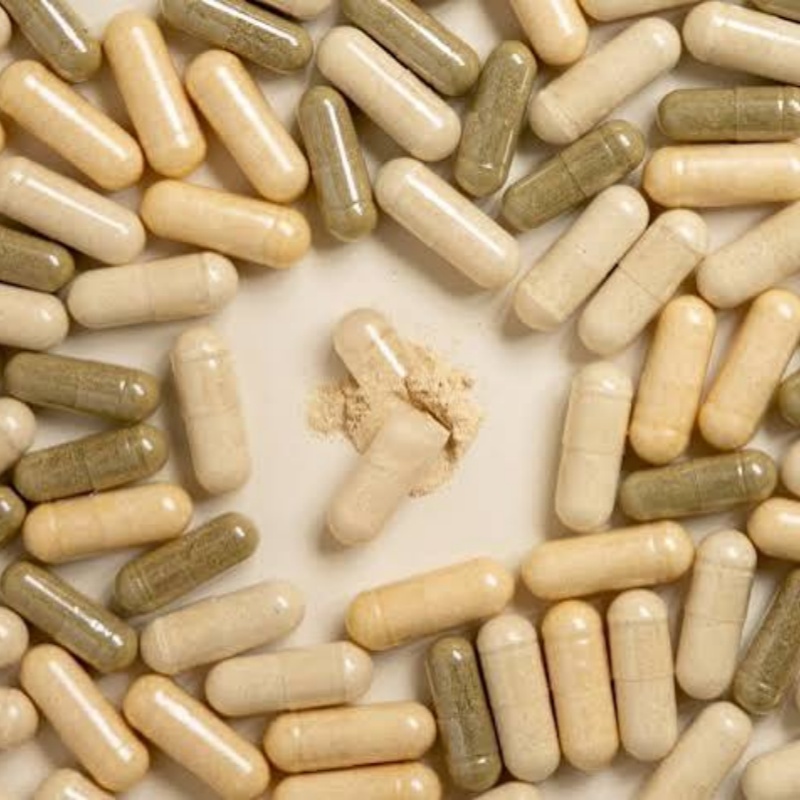
Choosing between gelatin and HPMC can look like a minor specification buried somewhere between formula approval and packaging selection. In reality, the shell sits in direct contact with the formula for months or years, travels through changing temperatures and humidity, passes through high-speed encapsulation equipment, and becomes part of the consumer’s first impression of the finished supplement. A shell that works perfectly for a straightforward vitamin blend may be a poor fit for a hygroscopic botanical extract, a live probiotic, or a product positioned for vegan consumers.
Neither gelatin nor HPMC is universally the better capsule shell. Gelatin remains a proven and economical choice for many conventional dry-fill supplements, while HPMC is often preferred for vegetarian positioning, lower shell moisture, moisture-sensitive formulas, or projects where gelatin cross-linking is a concern. The right choice depends on formula chemistry, storage conditions, target market, manufacturing performance, packaging, certification requirements, and total commercial cost.
That distinction matters because capsule problems rarely begin with the shell alone. A moisture-sensitive ingredient can still deteriorate inside an HPMC capsule if the bottle has a weak barrier. A gelatin shell can perform reliably for years when the formula, packaging, and storage environment are well controlled. A vegan shell does not automatically make the finished product vegan, and a cheaper empty capsule does not always create the lowest-cost finished product. The most useful comparison therefore starts with the actual supplement being developed rather than with a simple list of material advantages.
| Decision Factor | Gelatin | HPMC |
| Main shell material | Animal-derived gelatin | Cellulose-derived hypromellose |
| Typical moisture tendency | Higher | Lower |
| Vegetarian positioning | Not suitable | Commonly suitable |
| Vegan-oriented projects | Not suitable | Commonly preferred, subject to verification |
| Gelatin cross-linking | Possible under certain conditions | Not applicable |
| Conventional dry fills | Widely used | Widely used |
| Moisture-sensitive fills | Requires closer evaluation | Often advantageous |
| Material cost tendency | Usually lower | Usually higher |
| Halal/Kosher suitability | Depends on source and certification | Still requires documentation |
| Best selection method | Formula-specific | Formula-specific |
What Are Gelatin and HPMC Capsules?
Gelatin and HPMC are two widely used materials for two-piece hard capsules. Gelatin is a protein produced from animal collagen, while HPMC, or hypromellose, is a modified cellulose polymer. Both can carry powders, granules, vitamins, minerals, botanical extracts, and other suitable supplement fills, but their origin, moisture behavior, dietary positioning, physical properties, and interaction risks differ enough to influence product development.
Shell Materials
Hard gelatin capsules are made primarily from gelatin and water. Commercial gelatin commonly comes from bovine or porcine collagen, although other sources can also be used. Water is not simply residual moisture in this system; it contributes to the flexibility of the gelatin film. That is one reason conventional gelatin shells perform best within a controlled humidity range rather than in extremely dry or excessively humid conditions.
HPMC stands for hydroxypropyl methylcellulose, also known as hypromellose. It is produced from cellulose and is widely used for vegetarian hard capsules. Commercial HPMC capsules can contain additional materials used for gelling, coloring, or processing, depending on the capsule system. For this reason, professional product development should identify the actual shell grade and supplier specification instead of treating every product sold as a “vegetable capsule” as technically identical.
Conventional hard gelatin capsules often contain moisture in approximately the low-to-mid teens as a percentage of shell weight, while many commercial HPMC shells operate at noticeably lower moisture levels. Exact specifications vary among suppliers and storage conditions, so these ranges should be used for technical orientation rather than as universal acceptance criteria. The difference becomes especially relevant when the fill can absorb water or lose performance after prolonged moisture exposure.
Vegetarian Is Not a Technical Specification
“HPMC,” “vegetarian capsule,” and “vegan capsule” are often used casually as though they describe exactly the same product. They do not. HPMC describes the principal shell polymer, while vegetarian or vegan language describes dietary positioning that may require additional verification of the complete shell formulation and the finished supplement.
One HPMC capsule can also behave differently from another. Polymer properties, gelling systems, wall thickness, moisture specification, dimensional tolerances, coloring materials, and manufacturing methods can influence shell strength, opening behavior, disintegration, and performance on filling equipment. Large commercial programs should therefore approve an exact shell specification or a carefully controlled equivalent rather than allowing unrestricted substitution.
The same principle applies to gelatin. The animal source, shell dimensions, moisture range, color system, mechanical strength, and supporting certificates can differ among suppliers. A purchasing team that approves only “size 00 gelatin capsule” leaves more variability than it may realize, particularly when production is expected to remain consistent across multiple batches and repeated annual orders.
Capsule Size and Fill Capacity
Shell material does not determine whether a requested dose will physically fit. Capsule capacity is governed by internal volume and the true bulk density of the finished blend. Size 00 and size 0 are widely used in dietary supplements because they offer a practical balance between fill volume and swallowing comfort, but the number of milligrams that fit inside them varies considerably between formulas.
A size 00 capsule has an internal volume of roughly 0.9 mL, while size 0 is approximately 0.68 mL. A dense mineral powder can occupy much less space per gram than a fluffy botanical extract, meaning two formulas with the same labeled weight can require different capsule sizes. Particle size, flowability, compression during filling, and the amount of excipient also influence practical capacity.
This is why a request such as “put 750 mg into a size 0 capsule” cannot be approved reliably from a spreadsheet alone. The actual blend needs to be evaluated. In some cases, changing ingredient forms, improving powder density, reducing unnecessary excipients, moving to size 00, or using two capsules per serving produces a more stable and manufacturable product than forcing the original concept.
The Shell Is Part of the Product
Capsule shells are sometimes treated as packaging because they visually surround the formula. Technically, they behave more like part of the formulation. The shell and fill remain in intimate contact for the entire shelf life, and both can exchange moisture with each other and with the environment.
The shell also affects more than physical stability. Its animal or cellulose origin influences dietary positioning, its dimensions affect dose design, its mechanical characteristics influence production efficiency, and its color or transparency changes the appearance of the finished product. Shell material can even become part of retailer, distributor, or certification discussions before a product reaches the market.
For that reason, shell selection should begin while the formula is still flexible. Waiting until every ingredient and dosage has been finalized can force unnecessary compromises if the intended shell later proves incompatible with the moisture profile, serving size, certification goal, or market positioning of the product.
Which Shell Fits Different Supplement Formulas?
Both gelatin and HPMC can perform well with conventional dry supplement blends. Gelatin is often suitable when the formula is stable, relatively non-hygroscopic, and does not require animal-free positioning. HPMC becomes particularly attractive for vegetarian formulas, moisture-sensitive fills, certain probiotics and enzymes, and formulations where lower shell moisture or avoidance of gelatin-specific interaction risks offers a practical advantage.
Vitamins and Mineral Blends
A conventional vitamin or mineral formula with good powder flow, controlled moisture, and no unusual shell interaction can often be filled successfully into either material. In these situations, gelatin frequently wins on cost and established manufacturing familiarity, while HPMC may be chosen because of product positioning rather than a fundamental technical requirement.
A basic magnesium, zinc, multivitamin, or botanical blend aimed at a mainstream market may gain little from moving to a more expensive shell if it already demonstrates reliable stability in gelatin. The situation changes when the same formulation is intended for vegetarian consumers, natural-product retailers, or a brand portfolio that has standardized on animal-free capsules across multiple SKUs.
Mineral blends deserve individual attention because several mineral salts can be hygroscopic, dense, abrasive, or difficult to flow depending on their chemical form. Magnesium oxide, magnesium glycinate, zinc compounds, calcium salts, and trace-mineral blends can behave quite differently even when they appear under the same broad category on the front of the bottle. Formula behavior, rather than the marketing category, should lead shell selection.
For large programs, the cost difference also needs to be viewed at bottle level. A small increase per empty capsule becomes more noticeable in products containing 90, 120, or even more capsules per bottle. When annual production reaches substantial volumes, shell choice can meaningfully affect cost of goods, making unnecessary material upgrades difficult to justify.
Hygroscopic Formulas
Hygroscopic ingredients absorb moisture from their surroundings. Some botanical extracts, mineral salts, amino-acid systems, probiotic blends, and specialized functional ingredients can display this behavior. When placed inside a shell containing more available water, a strongly hygroscopic fill may draw moisture inward, changing powder texture, flow, color, chemical stability, or the mechanical properties of the shell itself.
HPMC is often considered for these projects because its shell moisture is generally lower than that of conventional gelatin. This can reduce one potential moisture source, but it should never be interpreted as complete moisture protection. The blend can still absorb water while ingredients are being weighed, mixed, transferred, filled, packaged, stored, or repeatedly exposed after the bottle is opened.
Production-room humidity, container barrier properties, closure design, induction sealing, and desiccant selection can therefore be just as important as shell material. A highly hygroscopic formula placed in HPMC and then packed in a weak moisture-barrier system can still fail stability testing. Conversely, a well-designed gelatin product with suitable packaging may remain entirely stable when its formula is not overly sensitive.
| Formula Type | Main Risk | Practical Starting Point | Additional Control |
| Standard multivitamin | Cost and fill density | Gelatin or HPMC | Confirm serving size |
| Mineral blend | Density and moisture | Formula-dependent | Flow and moisture testing |
| Probiotic | Moisture and viability | Often HPMC | Desiccant and stability |
| Digestive enzyme | Moisture and activity | Often HPMC | Activity retention |
| Botanical extract | Hygroscopicity and reactivity | Test as needed | Carrier and moisture review |
| Vegan formula | Animal-derived material | HPMC | Verify full ingredient system |
| High-dose blend | Limited internal volume | Either shell | Optimize size and serving |
| Reactive fill | Shell interaction | Consider HPMC | Compatibility testing |
Probiotics and Enzymes
Probiotic development is one of the clearest cases where selecting a capsule purely by appearance or price can create problems later. Live microorganisms are sensitive to their environment, and finished-product performance depends on strain identity, starting CFU, overage, carrier system, moisture exposure, temperature, oxygen, packaging, and expected viable count at the end of shelf life.
Lower shell moisture is one reason HPMC is frequently selected for probiotic capsules, but shell material is only one part of the stability system. A low-moisture capsule cannot compensate for an unstable strain, excessive heat exposure, a poor bottle seal, or packaging that allows moisture to enter during storage. Desiccants and high-barrier containers are often more important than they initially appear.
Digestive enzymes create a similar need for careful control. Enzymatic activity can decline during storage, and some formulas contain ingredients or degradation products that may influence gelatin behavior. A development trial using the actual commercial blend can reveal powder flow, capsule closure, shell appearance, fill consistency, and early stability changes before a brand commits to a full-scale production quantity.
For products with a sensitive biological component, it is useful to think beyond the question “Will the capsule survive?” The better question is whether the complete system—active ingredient, carrier, shell, package, and storage conditions—will continue meeting the intended product specification at the end of its stated shelf life.

Herbal Extracts
Herbal capsules can look straightforward on a product brief but behave very differently on a manufacturing line. Some standardized extracts are dry, free-flowing powders with good stability. Others can be sticky, resinous, highly hygroscopic, strongly colored, electrostatic, or extremely light in bulk density.
An extract ratio such as 10:1 or 20:1 also does not predict how the powder will behave. Carrier composition, residual moisture, particle size, extraction method, active-marker level, and supplier processing can dramatically affect fill performance. A lightweight extract may require a much larger capsule than expected even though the weight shown on the Supplement Facts panel seems modest.
Strong odors create another practical issue. Neither gelatin nor HPMC should be treated as a complete odor barrier. Concentrated botanicals such as valerian, garlic-derived materials, certain mushrooms, or strong herbal blends may still produce an obvious smell when the bottle is opened. Bottle liner, closure system, secondary packaging, and raw-material quality can matter as much as the shell.
This is why professional capsule development begins with representative raw materials rather than category assumptions. “Herbal formula” is not a sufficient technical description for deciding between gelatin and HPMC.
How Do Moisture and Stability Compare?
Gelatin shells normally contain more water and depend more heavily on that moisture for flexibility, while HPMC generally contains less shell moisture and tolerates dry environments differently. HPMC is therefore frequently considered for moisture-sensitive formulas. However, long-term capsule stability depends on the complete system, including fill properties, relative humidity, temperature, packaging barrier, closure, desiccant, shipping conditions, and storage after opening.
Moisture Movement
Water in a finished capsule does not remain permanently confined to the shell or powder. Moisture moves toward equilibrium among the shell, fill, bottle headspace, desiccant, and external environment. The speed and direction of that movement depend on the materials involved and the temperature and humidity surrounding the package.
Gelatin requires a certain level of moisture to remain mechanically flexible. If a highly hygroscopic fill pulls too much water from the shell, gelatin can become more brittle. During counting, bottling, shipping, or consumer handling, brittle shells are more likely to crack or split. At the opposite extreme, excessive humidity can soften gelatin and encourage changes in shell texture or powder condition.
HPMC typically begins with less water and is less dependent on a high moisture level to remain functional. This is a major reason it is often evaluated for low-humidity environments and sensitive fills. Still, HPMC is not moisture-proof. It remains a hydrophilic polymer and will respond to changes in environmental humidity.
A useful stability assessment therefore considers not only “How much water is in the shell?” but also “Where can water move during the full life of the product?”
Stability Means Several Things
A capsule can be physically attractive and still be chemically unstable. It can also retain active potency while the shell becomes brittle, discolored, distorted, or difficult to open. The word “stability” is therefore more useful when it is divided into measurable product characteristics.
For a probiotic, viable microorganism count may be the most sensitive attribute. For a botanical extract, marker-compound level, color, odor, moisture, and shell interaction may deserve greater attention. Mineral blends may need closer monitoring for moisture uptake, powder hardening, appearance, and dosage consistency. Other formulations may require particular attention to disintegration or active-content retention.
A practical stability program can therefore monitor capsule appearance, moisture behavior, active-ingredient specification, microbial limits where relevant, disintegration characteristics, odor, and package integrity according to the actual risks of the formula. Not every product needs the same testing panel, and testing more parameters does not automatically make a program better if the important failure modes are ignored.
This risk-based approach is especially valuable for complex formulas because it directs time and budget toward the attributes most likely to influence product quality during commercial storage.
Packaging Can Change the Outcome
The package surrounding the capsules can substantially alter their stability. HDPE bottles are common because they are durable, light, compatible with automated packaging, and available in many sizes. PET offers transparency and strong visual presentation, while glass can provide excellent barrier performance but increases weight, freight cost, and breakage risk.
Desiccants are widely used when moisture control is important, but adding a random sachet or canister is not a scientific moisture strategy. Desiccant capacity should reflect the bottle volume, headspace, capsule count, expected moisture load, packaging barrier, and intended shelf life. The needs of a 30-count bottle may not be identical to those of a 120-count bottle.
Induction sealing is another practical control that is often underestimated. A properly sealed bottle limits moisture exchange before first opening and provides additional tamper evidence. This can be especially valuable for products that spend weeks or months in international shipping, third-party warehouses, fulfillment centers, and retailer inventory before reaching the consumer.
Shell selection and packaging should therefore be approved together. Improving one while neglecting the other often produces disappointing results.
Real Distribution Conditions
Stability does not end when finished goods leave the production facility. A batch may move from controlled manufacturing rooms into warehouses, trucks, shipping containers, ports, fulfillment centers, retail stores, and finally a consumer’s home. Temperature and humidity can change substantially during that journey.
This matters particularly for international programs. A capsule sold within one controlled distribution network does not experience the same environmental history as a product transported by sea through tropical ports and later delivered by parcel carrier during a hot season. Dry climates can create a different challenge by encouraging moisture loss from certain shell systems.
Accelerated stability testing can help identify potential weaknesses, while real-time testing provides information under longer storage conditions. The exact program should reflect the ingredient system, market requirements, expected shelf life, and commercial risk rather than relying on one generic protocol for every supplement.
The important commercial lesson is simple: a two-week sample that looks perfect does not prove that a capsule will remain unchanged for 18 or 24 months. Shell material contributes to long-term performance, but the entire distribution and storage environment must be considered.
How Do Dissolution and Manufacturing Performance Differ?
Gelatin and HPMC can both support immediate-release dietary supplement capsules, but they do not behave identically in every formulation or test environment. Gelatin has decades of conventional manufacturing experience, while HPMC performance can vary with polymer grade and shell technology. The practical choice should be qualified using the actual shell, formula, production equipment, and relevant disintegration or dissolution requirements.
Disintegration and Release
Consumers often picture a capsule entering the stomach and disappearing almost instantly. In reality, shell opening and release are influenced by temperature, fluid composition, pH, shell formulation, fill material, and gastrointestinal conditions. These factors are one reason laboratory disintegration and dissolution testing uses standardized conditions instead of relying on visual assumptions.
Both gelatin and modern HPMC shells are commonly designed for immediate-release applications, but it is inaccurate to say that every HPMC capsule dissolves faster or that every gelatin capsule behaves identically. Commercial HPMC technologies can use different gelling approaches and polymer systems, and these differences can influence performance under acidic, neutral, fasted-state, or fed-state conditions.
For ordinary supplements, manufacturers do not need to turn every capsule project into pharmaceutical clinical research. They do, however, need a sensible specification when release characteristics matter. Products that make aggressive claims about rapid release should have evidence appropriate to the finished product rather than relying on generic statements provided for an empty shell.
The most reliable development practice is to evaluate the complete filled capsule because the powder itself can influence how fluids enter the capsule and how quickly the contents disperse after shell opening.
Gelatin Cross-Linking
Gelatin can undergo a phenomenon known as cross-linking under certain conditions. Reactive compounds, particularly aldehyde-related species, can create additional bonds between gelatin protein chains. Heat, humidity, storage time, and specific formula components or degradation products can increase the likelihood.
When cross-linking becomes significant, a thin resistant layer can form on the shell. This layer is sometimes described as a pellicle and may alter normal dissolution or disintegration behavior. The phenomenon is well enough recognized that specialized dissolution approaches may be used in appropriate laboratory circumstances to determine whether an apparent failure is related to gelatin cross-linking.
This should not be interpreted as evidence that gelatin capsules commonly fail. Conventional gelatin remains successful across a very large number of commercial products. Cross-linking is a formulation-specific concern rather than a universal defect.
The value of understanding it is knowing when to investigate. If a formula contains potentially reactive ingredients, shows changing disintegration results during stability work, or experiences prolonged heat and humidity exposure, shell compatibility deserves closer attention. HPMC avoids this particular protein cross-linking mechanism, which can make it useful in selected high-risk formulas.
Filling-Line Performance
A commercial encapsulation line performs a sequence of precise operations. Empty capsules must feed correctly, separate into cap and body, accept the intended fill, close securely, pass through polishing and inspection, and survive counting, bottling, and shipping without cracking or leaking.
Manufacturers typically monitor shell identity, capsule size, target fill weight, weight variation, shell breakage, powder leakage, locking quality, exterior cleanliness, and visual defects. Counting accuracy also matters because retail bottles commonly contain predetermined quantities such as 30, 60, 90, or 120 capsules.
Gelatin and HPMC can both run efficiently on modern filling equipment, but machine settings may require adjustment when changing shell material or supplier. Differences in elasticity, static behavior, dimensions, and moisture can affect opening or closing performance, especially when machines operate at higher speeds.
This is one reason unrestricted shell substitution can create avoidable production problems. A supplier change that appears insignificant on a purchase order can affect reject rate, appearance, or machine efficiency. Established programs usually control the approved shell specification more carefully.
Powder Flow Is Often the Real Problem
When fill-weight consistency becomes poor, the empty capsule is often blamed first. In practice, the powder can be the more important variable. Very fine, fluffy, cohesive, electrostatic, or unevenly sized particles can produce inconsistent movement through the dosing system regardless of shell material.
Particle-size differences can also encourage segregation during handling. Heavy components may settle while lighter powders remain near the top of the blend, creating content-uniformity concerns if the formulation and mixing process are poorly designed. Low-density botanical extracts can create a different challenge because the required dose may occupy more volume than the chosen capsule can accept.
Depending on formulation requirements, manufacturers may improve performance through particle-size control, blending sequence, suitable excipients, flow aids, or a larger capsule size. The exact solution should preserve the intended formula rather than simply adding excessive processing aids to make the filling machine run faster.
Commercial sampling should therefore use a representative blend under realistic filling conditions whenever possible. Ten capsules prepared manually can look excellent even when the same powder performs poorly at normal production speed.
Are HPMC Capsules Better for Vegan, Halal, and Kosher Products?
HPMC is generally the easier starting point for vegetarian and vegan-oriented supplements because its main structural material is cellulose-derived rather than animal-derived. It can also simplify some Halal and Kosher projects. However, using an HPMC shell does not automatically make the finished supplement vegan, Halal, or Kosher because the complete formula, minor shell ingredients, processing aids, production conditions, and supporting documentation still matter.
Vegan and Vegetarian Positioning
Conventional gelatin capsules are produced from animal collagen and are therefore not appropriate for a supplement marketed as vegetarian or vegan. HPMC provides a straightforward alternative because its primary polymer is cellulose-derived, which is why it is widely used in plant-focused wellness products, botanical supplements, probiotic formulas, and premium natural-product lines.
The qualification comes from the ingredients inside the shell. An HPMC capsule containing collagen, an animal-derived specialty ingredient, or another non-vegan component does not become a vegan product simply because its shell is cellulose-based. Some vitamins, flavors, carriers, and processing materials can also have different origins depending on their supplier and manufacturing route.
For strict vegan positioning, documentation should therefore cover every relevant raw material rather than only the empty capsule. This approach also protects the brand when suppliers change. If a raw material is replaced later, purchasing and quality teams can immediately identify whether its origin affects the claim before the new batch enters production.
The wording printed on the package should be the final step in that process, not the first.
Halal Projects
Halal requirements are more complex than simply avoiding porcine gelatin. Bovine or other animal-derived gelatin may be acceptable in some programs when source, processing, slaughter conditions, traceability, and certification satisfy the applicable standard. HPMC can simplify the shell decision because it removes animal collagen, but the complete product still requires evaluation.
A Halal review can involve the shell formulation, botanical or animal-derived ingredients, flavor systems, carriers, solvents where relevant, processing aids, manufacturing conditions, cleaning procedures, and the certification requirements of the intended market. Different certification bodies or destination markets may also apply different documentation expectations.
This becomes particularly important for global products because an empty-capsule supplier certificate does not automatically certify the filled supplement. The scope of each certificate must be understood before it is used as evidence for the final product.
For projects where formal Halal certification is commercially important, the requirements are best confirmed before samples and printed packaging are finalized. Changing shell or ingredient sources after artwork approval can create unnecessary cost and delay.
Kosher Projects
Kosher projects follow a similar principle: ingredient source and certification matter more than the broad material name. Gelatin requires particular attention because acceptability depends on the source and the certification system involved. It is unsafe to assume that all bovine gelatin is automatically suitable or that all non-porcine materials will be accepted.
HPMC often simplifies the discussion because the primary polymer is cellulose-derived, but the shell alone does not determine finished-product status. Flavors, carriers, enzymes, processing aids, specialized nutrients, and production conditions can all influence certification.
Some brands also choose HPMC even when a formal Kosher or vegan claim is not the central selling point. A cellulose-based capsule can reduce questions from consumers, distributors, or retail teams that prefer products without animal-derived shell materials. Whether that advantage justifies the additional shell cost depends on the target market and expected sales volume.
For established brands, keeping certification requirements within the controlled product specification makes repeat production more reliable and reduces last-minute documentation problems.
Claims Need Evidence
Vegetarian, vegan, Halal, Kosher, organic, non-GMO, and gluten-free may appear together on supplement packaging, but they are not interchangeable and do not share one universal evidence standard. Each claim should be supported by the relevant ingredient, supplier, production, and certification information.
A disciplined development process reviews the shell composition, fill ingredients, excipients, flavor systems, supplier declarations, production requirements, and target-market expectations before artwork is approved. This order prevents the common problem of discovering that a marketing claim cannot be supported after labels, cartons, and other printed packaging have already been produced.
Large-volume programs benefit from maintaining a controlled document file for important claims. When a raw-material or shell supplier changes, the effect on dietary positioning can then be assessed before manufacturing begins rather than after finished products have been packed.
For international distribution, this documentation-first approach is often more valuable than selecting a shell simply because it carries a familiar marketing description.

How Should Supplement Brands Choose Between Gelatin and HPMC?
Gelatin is usually a strong choice when the formula is compatible, animal-free positioning is unnecessary, and cost efficiency matters. HPMC is often preferred when lower shell moisture, vegetarian positioning, or avoidance of gelatin-specific interactions adds meaningful value. The final selection should consider the real formula, capsule size, manufacturing trial, packaging system, certification needs, target market, expected shelf life, and annual commercial volume.
Start With Formula Risk
The most useful first question is not whether HPMC is more premium or whether gelatin is cheaper. It is whether the formula creates any technical reason to prefer one material.
A conventional dry vitamin or botanical blend with controlled moisture and no special dietary positioning may perform very well in gelatin. A highly hygroscopic blend, moisture-sensitive probiotic, sensitive enzyme system, or formulation with potential gelatin interaction deserves closer evaluation of HPMC.
Some projects remain uncertain until actual samples are made. In those cases, testing two shell systems can be commercially reasonable, especially when future production volume is large enough that correcting a wrong choice after launch would be expensive. The trial should use the intended commercial blend rather than a generic demonstration powder.
Appearance should also be evaluated during this stage. Capsule color, transparency, size, odor, and swallowing experience may influence consumer acceptance even when the technical performance of both shell materials is acceptable.
The goal is to remove avoidable risk before the product enters full-scale production.
Confirm Capsule Size
The shell material cannot solve an unrealistic dose-volume relationship. Before choosing between gelatin and HPMC, developers need to confirm that the intended formula fits the desired capsule size under normal manufacturing conditions.
| Capsule Size | Approximate Internal Volume | Typical Application |
| 000 | ~1.37 mL | Very high-volume powders |
| 00 | ~0.91 mL | High-dose supplements |
| 0 | ~0.68 mL | Vitamins and botanical blends |
| 1 | ~0.50 mL | Moderate-dose formulas |
| 2 | ~0.37 mL | Smaller-dose products |
| 3 | ~0.30 mL | Low-dose formulas |
| 4 | ~0.21 mL | Very small fills |
These figures represent approximate internal volume, not guaranteed milligram capacity. The actual weight depends on bulk density. A dense mineral may allow far more milligrams per capsule than a low-density herbal extract.
If a formula does not fit comfortably, increasing capsule size is only one possible solution. Developers can also review ingredient forms, reduce non-essential excipients, improve powder density where technically appropriate, or divide the daily dose between two capsules.
Serving design should also consider the consumer. A technically possible size 000 capsule may be less attractive if the target audience strongly prefers easier-to-swallow products.
Compare Total Commercial Cost
Gelatin generally has a material-cost advantage, while HPMC commonly carries a premium. Comparing only the price of one empty shell, however, can lead to a poor commercial decision.
A small shell difference becomes meaningful when multiplied by 60, 90, or 120 capsules per bottle and then by annual production volume. This matters for mainstream products where retail pricing is competitive and manufacturing margin is tightly controlled.
The reverse can also be true. If HPMC allows a brand to enter a vegetarian product line, supports a meaningful market claim, reduces a real moisture-related development risk, or simplifies international product positioning, the premium can generate greater commercial value than its raw-material cost.
Additional packaging should also be considered. A shell that appears less expensive may require a more demanding moisture-control strategy for a particular formula. Stability failures, production rejects, reformulation, relabeling, and delayed launches all cost far more than the initial price difference between two empty capsule materials.
The right comparison is therefore total product economics, not shell price in isolation.
Approve the Complete Specification
A commercial product specification should identify more than “gelatin” or “HPMC.” The approved shell material, capsule size, color, opacity where relevant, intended fill weight, bottle count, packaging configuration, dietary positioning, certification expectations, and any approved supplier or equivalent requirements should be clearly documented.
Sampling should confirm practical characteristics such as fill consistency, capsule closure, leakage, cracking, appearance, bottle presentation, counting accuracy, and swallowing size. Moisture-sensitive formulas should also be evaluated with the intended bottle, seal, and desiccant rather than testing capsules in isolation.
A useful final review includes:
- Is the blend hygroscopic or moisture-sensitive?
- Are any ingredients reactive with gelatin?
- Does the product require vegetarian or vegan positioning?
- Are Halal or Kosher requirements involved?
- Does the requested dose fit the selected capsule size?
- Has the real powder been assessed for flow and density?
- Has the shell been trialed on commercial filling equipment?
- Is the packaging barrier appropriate?
- Is a desiccant required?
- What shelf life is expected?
- Which markets and climates will receive the product?
- What annual volume is forecast?
- Does the shell premium create measurable technical or commercial value?
The most defensible choice usually becomes clear once these questions have been answered. Gelatin remains practical, proven, and economical for a large share of dietary supplement capsules. HPMC offers meaningful advantages when lower shell moisture, animal-free positioning, or avoidance of gelatin-specific interaction risks directly addresses the needs of the formula or market.
The important point is not to turn the comparison into a contest. A successful capsule product is the result of several decisions working together: ingredient selection, dose, powder properties, shell material, capsule size, production conditions, packaging, stability controls, certification, and distribution environment. When these variables are considered as one product system, shell selection becomes much easier to defend technically and commercially.
For brands developing a new capsule or improving an existing formula, the strongest manufacturing conversation starts with the real product brief rather than a predetermined shell preference. Sharing the target market, intended formula, daily dose, dietary positioning, package format, certification needs, and expected order scale gives the development team enough information to compare gelatin and HPMC against actual project requirements. That approach usually produces a more stable product, cleaner scale-up, and fewer expensive changes after commercial production begins.
Frequently Asked Questions
Are HPMC Capsules Healthier Than Gelatin Capsules?
HPMC capsules are not automatically healthier than gelatin capsules. Both materials are widely used as hard capsule shells, and the better option depends on formulation needs and consumer positioning rather than a universal health advantage. HPMC is useful for consumers avoiding animal-derived materials and can offer lower shell moisture, while gelatin remains a practical material for many conventional supplements. Ingredient quality, appropriate dosage, manufacturing controls, and finished-product stability matter far more to overall product quality than choosing one shell solely because it sounds healthier.
Do HPMC Capsules Dissolve More Slowly Than Gelatin?
HPMC capsules can show different disintegration behavior from gelatin, but it is inaccurate to say that they always dissolve more slowly. Performance depends on the specific HPMC shell technology, gelling system, test medium, temperature, fill formulation, and gastrointestinal conditions being simulated. Modern HPMC capsules are widely used for immediate-release products. When release speed is important to a particular supplement, the finished capsule should be evaluated under an appropriate test method rather than relying on a general comparison between the two polymer types.
Are HPMC Capsules Better for Probiotics?
HPMC is frequently selected for probiotic supplements because its lower shell moisture can reduce one source of moisture exposure for sensitive microorganisms. That advantage can be useful, but the shell alone cannot guarantee probiotic stability. Strain selection, starting CFU, overage, carrier system, manufacturing temperature, oxygen exposure, bottle barrier, desiccant, and storage conditions all affect viability. A strong probiotic product therefore combines an appropriate shell with a complete moisture and stability strategy rather than depending on HPMC as the only protective measure.
Can Gelatin Capsules Be Halal?
Gelatin capsules can potentially be suitable for Halal products when the gelatin source, processing method, traceability, and certification comply with the requirements of the relevant Halal authority. Porcine gelatin is generally unsuitable, while properly certified bovine or other acceptable sources may be used in some programs. The finished supplement still requires review because Halal status depends on more than the capsule shell. Fill ingredients, flavors, processing aids, production conditions, and the scope of certification can all affect whether the final product qualifies.
Are All HPMC Capsules Vegan?
HPMC capsules are commonly used for vegan-oriented products because hypromellose is cellulose-derived, but the word HPMC alone does not prove that the complete finished supplement is vegan. Other shell components, colors, processing materials, and the ingredients inside the capsule need to be reviewed. A supplement filled with an animal-derived ingredient does not become vegan because the outer shell is HPMC. Brands making a strict vegan claim should verify the entire ingredient and supplier documentation chain before final packaging is printed.
Which Capsule Is Better for Hygroscopic Ingredients?
HPMC is often the stronger starting choice for hygroscopic or moisture-sensitive ingredients because conventional HPMC shells generally contain less moisture than gelatin shells. Even so, shell selection is only one part of moisture control. Production humidity, raw-material exposure, bottle barrier, induction sealing, desiccant capacity, headspace, shipping environment, and consumer storage can all influence the finished product. For a technically sensitive formula, the best decision comes from testing the actual blend in its intended shell and packaging system before commercial scale-up.